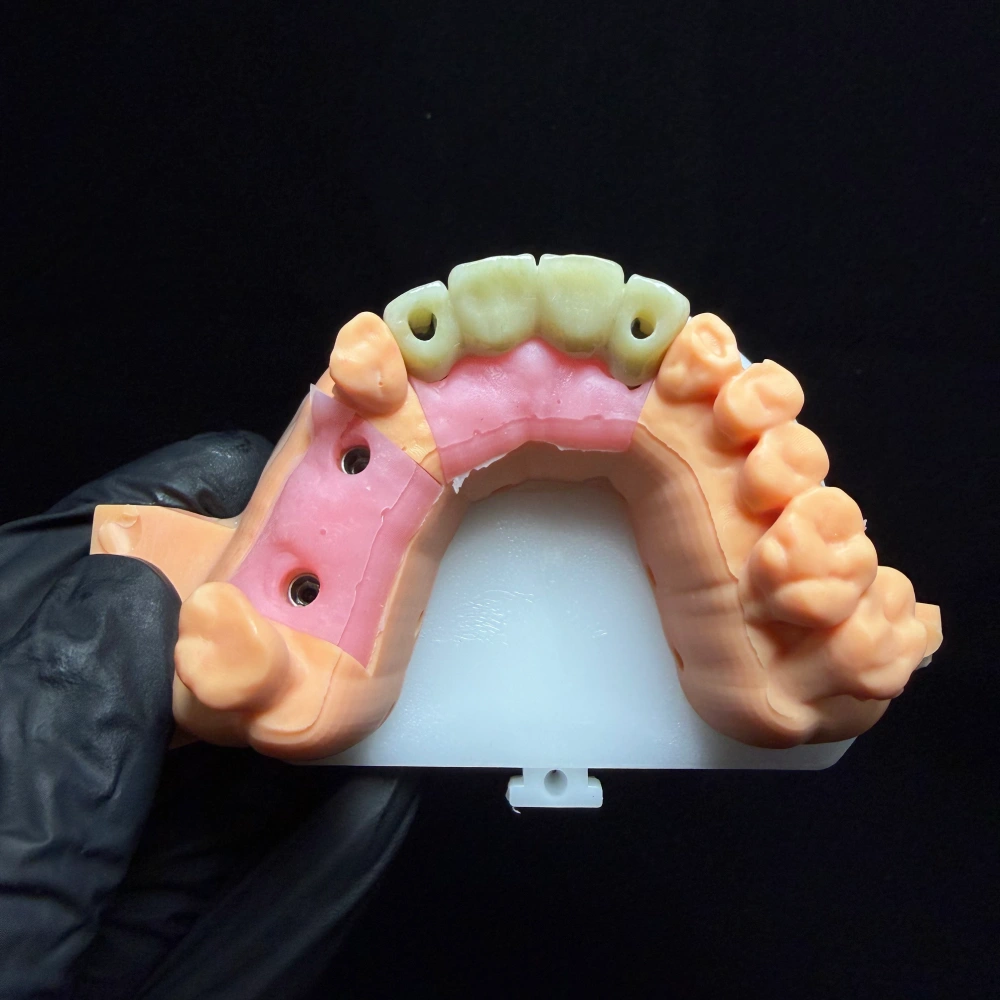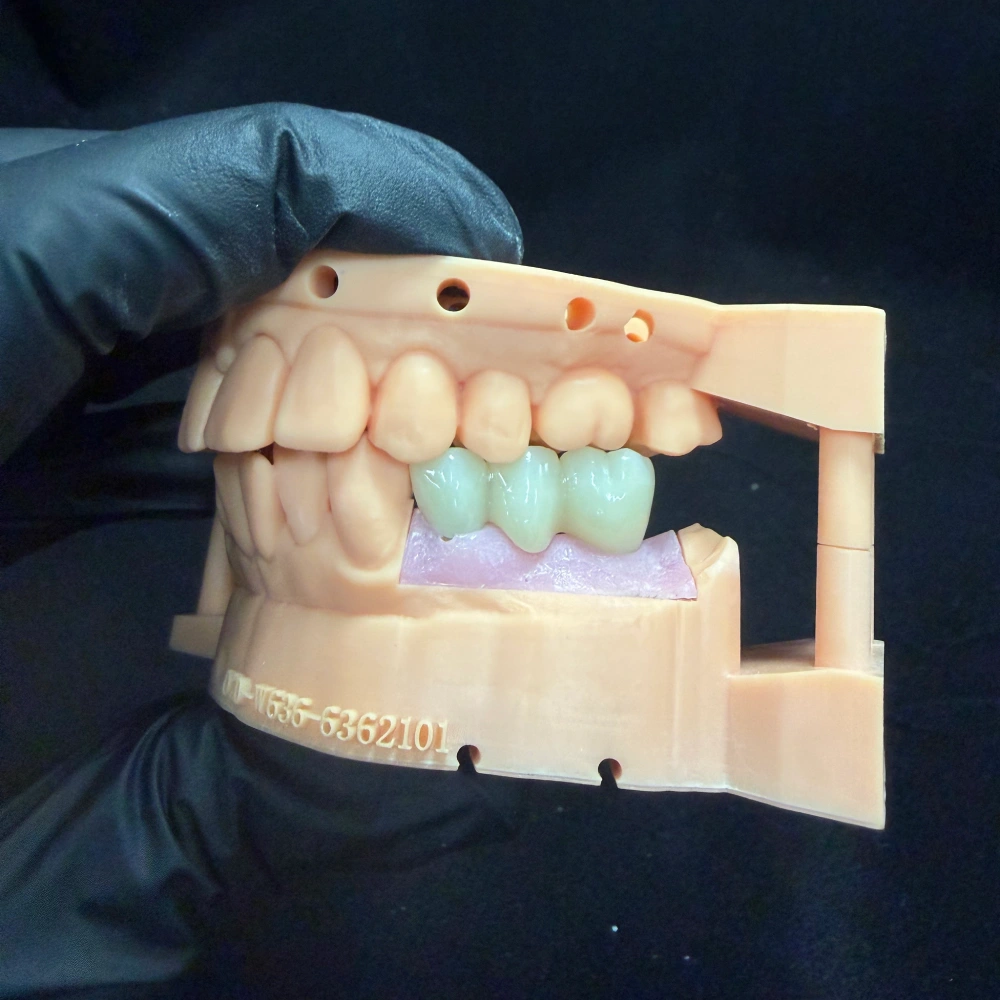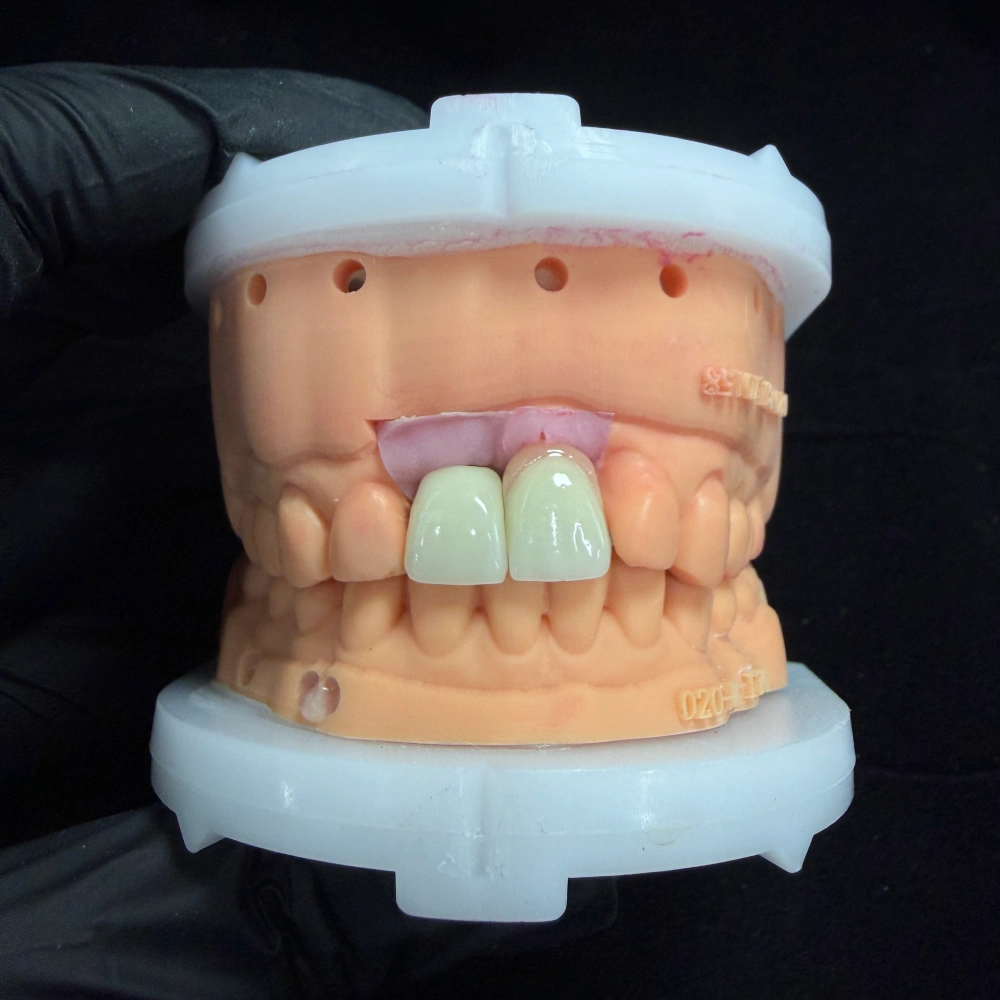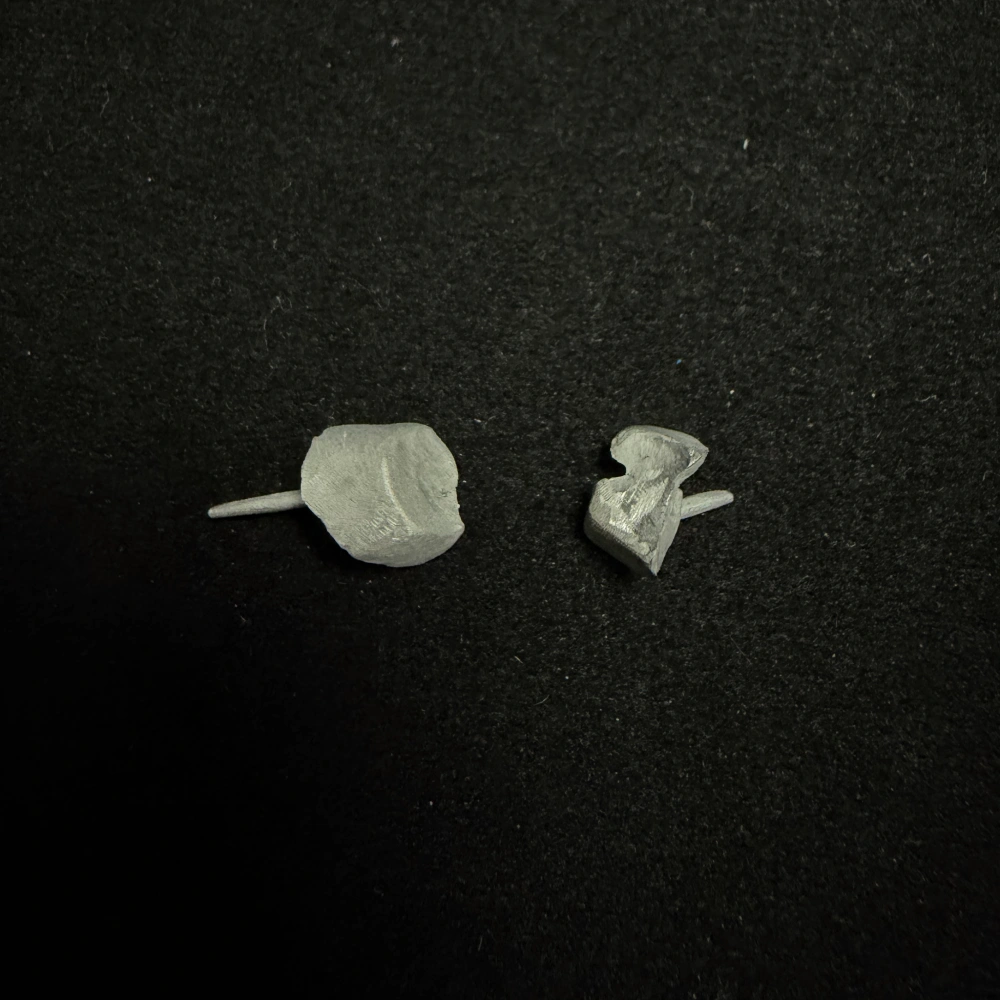
E.max Inlays & Onlays — Pressed or Milled, Made In-House


When you type “inlay emax” or “e max inlay” into your lab portal, you want lithium-disilicate partial-coverage work that fits the first time — no second seat, no margin chase, no shade redo. We are a full-service dental lab with our own production floor: every inlay e.max and e max onlay we ship is designed, milled or pressed, finished, and quality-checked inside our Shenzhen and Huizhou facilities, never sent out to a third party. If you are a dentist, clinic, DSO, or another dental laboratory looking for a lab partner who can deliver inlay emax and e.max onlay work without you chasing the case, this page walks through what we make, how we make it, and what you actually get when you submit a case to our dental laboratory.
What you are actually ordering when you search “inlay emax”
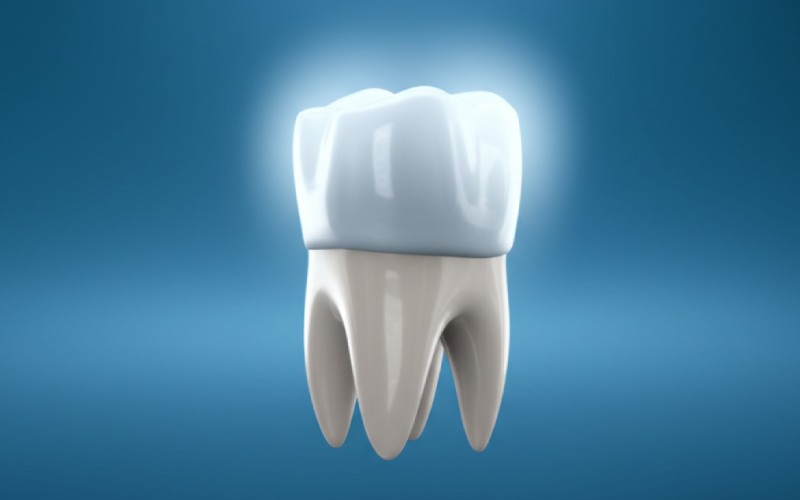
E.max is the trade name for Ivoclar’s lithium disilicate (Li₂Si₂O₅) glass-ceramic — a metal-free, tooth-coloured material pressed or milled into a single block, then crystallised to its final strength (Ivoclar — IPS e.max CAD product page, Ivoclar — IPS e.max Press product page). It is not a zirconia — ZirCAD is the zirconia line within the same Ivoclar family; E.max CAD and Press are lithium disilicate.
Two restoration shapes sit on top of that material, and a single dental lab page usually handles both:
| Term | What it covers | Typical indication |
| Inlay (the “inlay emax” or “e max inlay” you typed) | Fits inside the cusps, no occlusal coverage | Single-surface or multi-surface intracoronal defect |
| Onlay (sometimes searched as “e.max onlay”) | Covers one or more cusps but not the whole crown | Larger defect, cusp replacement, post-endodontic coverage |
| Overlay (we treat as onlay) | Covers the entire occlusal table | Cracked-tooth syndrome, full-cusp reconstruction |
Heads up for the search term. “Inlay emax”, “e max inlay”, “e.max inlay”, and “emax inlay” all get typed into the same box — they are the same product written four different ways. We treat them as one case type and price them the same way.
How we make your inlay e.max or e max inlay in our dental laboratory
We run every production step in-house, end to end, so your inlay emax or e.max inlay case never leaves our floor: the lab fee you pay is the lab fee we keep, and the quality control is the quality control we own. Here is the path a typical inlay e.max or e max inlay walks through our dental laboratory from your file to your post:
- File or impression intake. Digital scan (Trios / 3Shape / Medit / iTero / DS Core / Panda, etc.) lands in our inbox; physical VPS or polyether impressions are mailed in, with disinfection logged at your end.
- Model prep + die trim. If you sent a physical impression, we pour a Type IV die-steaded die stone, trim dies with separate margin ditches, scan it on a 3Shape or 3Series scanner. If you sent a digital scan, we verify the bite, the margin, and the prep height before we start designing your inlay e.max or e max inlay.
- CAD design. Our CAD technician (one of ~100 in our CAD department) designs the restoration in Exocad or 3Shape Dental System, sets the cement gap to ~30 µm and the marginal ramp to ≤100 µm, then sends the design to the milling or pressing queue.
- Milled (CAD/CAM) or pressed.
- Pressed (lost-wax + press) — wax-up is sprued, invested, burnout, pressed into an IPS e.max Press ingot at ~920 °C, then divested. Used for thin e max inlay shells and matching cases.
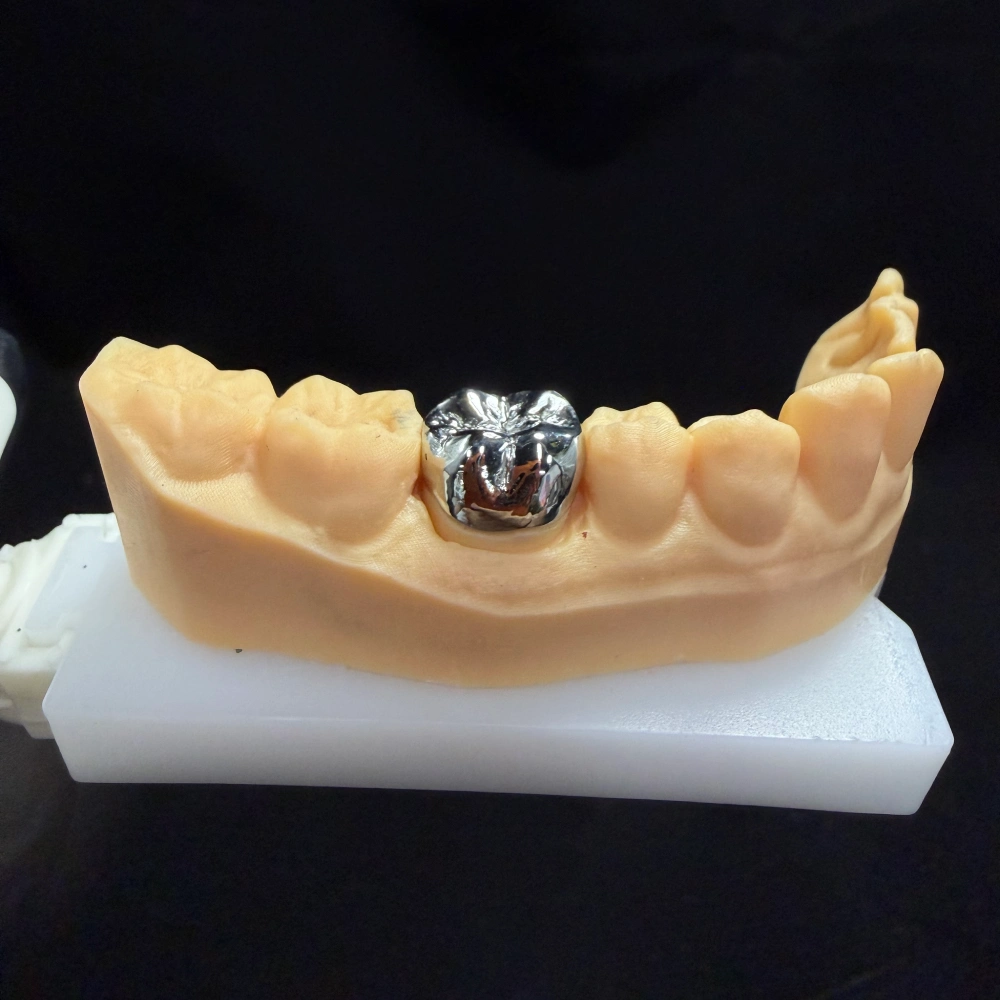
- Milled (CAD/CAM) — designed file is nested into an IPS e.max CAD block and cut on a 5-axis mill. CAD blocks come out pre-crystallised (blue state) for easy milling, then go back through a ~850 °C crystallisation cycle to reach their final strength (Ivoclar CAD Chairside IFU mirror, Ivoclar Press IFU mirror).
- Cut-back + layering (optional, anterior cases). For anterior e.max inlay / onlay in the aesthetic zone, the technician can hand-layer a thin enamel of porcelain over the lithium-disilicate core for shade gradient.
- Stain + glaze. Stains baked at ~770 °C, then a clear glaze for surface seal.
- Polish + glaze + fit check. Margins are checked on the die under 10× microscope and on the solid model; contact points adjusted with 50 µm and 25 µm shim stock; occlusion checked on an articulator.
- Three-stage QC + release. Incoming material QC, in-process QC at the design and post-mill/press stages, then a final fit and finish QC by an independent inspector before your inlay emax or e max inlay is bagged.
- Pack + ship. Sealed in a labelled pouch with your case ID, die model, return shipping label slot, and shipped back to your clinic or to your dental laboratory if you are a partner lab.
In-house production = traceable inlay emax and e max inlay
What kind of E.max restoration suits which prep
Same material, different prep, different restoration. The table below is what our dental laboratory looks at when it opens a new inlay e.max or e max inlay case file. It is also roughly the split used in the source documents we work from (DDS Ltd IPS e.max Press clinical guide, Mabel Dental IPS e.max clinical guide).
| Prep / cavity | Recommended E.max shape | Why |
| Single-surface small intracoronal, plenty of remaining enamel | Inlay e.max | Lithium disilicate bonds adhesively, looks like tooth, conservative tooth removal |
| Multi-surface intracoronal, no cusp involvement | E max inlay | Same logic; we add a marginal bevel and ramp up the cement gap to 30–40 µm on the proximal box |
| Cusp involvement, post-endodontic posterior | E.max onlay (covers ≥1 cusp) | Cuts the wedge risk; 11-year monolithic onlay data is stronger than the inlay data |
| Cracked-tooth syndrome, full occlusal table | Overlay | Splints the cusps; better long-term fatigue behaviour than a fragile intracoronal inlay |
| Anterior aesthetic + structural | Veneer / crown | E.max’s flagship use; covered on our emax veneers page |
Press vs CAD for inlay e.max and e max inlay
Both are lithium disilicate, both reach the same final strength after crystallisation. The trade-off is convenience vs cost vs marginal fit, not strength.
| Factor | Pressed (IPS e.max Press) | Milled (IPS e.max CAD) |
| Marginal fit on e max inlay | Slightly tighter on long thin margins (thermal-press vs CAD/CAM marginal adaptation, PubMed 29961628) | Slightly looser, but well within clinical tolerance |
| Thin shell (≤1 mm) | Better — less risk of chip on the mill | Risk of marginal chip on milling of very thin shells |
| Cost to the lab | Higher lab time (wax + invest + press) | Lower lab time, lower lab cost |
| Lead time | ~2 days added for the press cycle | Same-day mill + crystallise |
| Common use | Anterior aesthetic inlay e.max / onlay / single-tooth aesthetic | Standard posterior inlay emax, batch cases, same-day-reshade cases |
When in doubt for an inlay e.max or e max inlay case, we will mill it. Milling is faster and cheaper for us, the marginal difference is small in clinical practice, and if the prep is a normal intracoronal inlay or onlay, the result is functionally identical.
Cementation and bonding (this is where inlay e.max lives or dies)
A lithium disilicate inlay or onlay does not work without resin cement and an adhesive protocol. This is one of the strongest signals in the inlay emax and e max inlay peer-reviewed literature and a place where most of the comparison content is either wrong or silent:
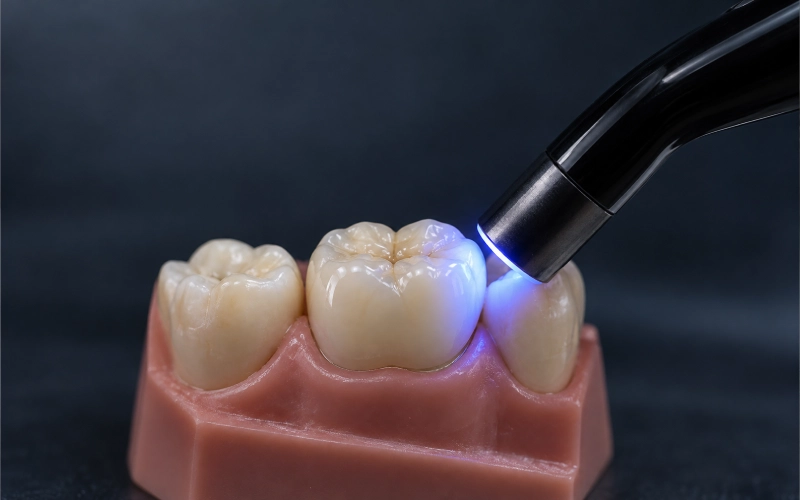
- Clean the intaglio. Ultrasonic + alcohol + 5% hydrofluoric (HF) acid etch for 20 seconds, then rinse + dry (HF etching + glass phase + silane chemistry review, Springer).
- Silane. Apply a fresh silane coupling agent (e.g. Monobond Plus) to the etched intaglio, let it react, then warm-dry.
- Prep the tooth. Isolate (rubber dam or cotton roll + suction), etch the enamel with 37% phosphoric acid for 15 seconds, etch the dentin for 10–15 seconds, rinse, blot-dry the dentin to leave it visibly moist (not dry, not pooled).
- Adhesive. Apply your preferred universal or total-etch adhesive; do not self-cure-only unless the system calls for it.
- Resin cement. Seat with a dual-cure or light-cure resin cement in the shade you measured (try-in with water-soluble glycerin first to verify contact and shade, then clean + re-apply silane).
- Tack-cure + remove excess. Tack-cure 1–2 seconds to peel off gross excess, then full cure.
- Margins. Polish margins with fine diamond and rubber points under 10× magnification, then glaze touch-up if needed.
If a doctor’s office tries to “just cement it with RMGI like a PFM”, the inlay emax or e max inlay will fall out within months. We flag this in the case notes whenever we see the prep geometry suggesting a non-adhesive plan.
For an authoritative walkthrough of the bonding chemistry, see the IPS e.max clinical guide from Mabel Dental and the surface-chemistry data in ScienceDirect — surface chemistry of lithium disilicate.
What the manufacturer numbers mean (and don’t mean)
- IPS e.max Press flexural strength ~470 MPa after crystallisation (PMC10301111 — crystallisation + flexural strength).
- IPS e.max CAD flexural strength ~360 MPa after crystallisation.
- Fracture toughness ~3.0–3.5 MPa·m½ for both.
- Translucency varies by ingot/block shade (HT, LT, MO, Impulse).
Inlay vs onlay vs overlay vs occlusal veneer vs crown — terminology that gets searched, decided here
A short block, because this is what people searching inlay emax / e max inlay most often want to check before they submit. There is some disagreement in the literature, so we tell you the working definition we apply in our dental laboratory:
| Term | Definition (our working usage) | When we recommend it |
| Inlay e.max / e max inlay | Intracoronal partial-coverage, no cusp capping | Small intracoronal defect, plenty of enamel, anterior-friendly |
| E.max onlay | Covers ≥1 cusp, ≤ full crown | Cusp involvement, post-endodontic posterior, cracked-tooth |
| Overlay | Covers the full occlusal table | Splint all cusps when full occlusal coverage is the aim |
| Occlusal veneer | Prep mostly on the occlusal surface, occlusal clearance ≥1 mm | Vertical dimension changes, erosion cases |
| Crown | 360° coverage | The prep calls for full coverage; we will not push you back to an e max inlay if the prep calls for a crown |
This is the path a single dentist walks through when reading the inlay emax / e max inlay decision tree, and we use the same vocabulary when we write back to you.
What e.max is not (do not confuse on the way back to the clinic)
Two name collisions bite inlay emax and e max inlay search results all the time, and a third one bites lab buyers:
- E.max is not zirconia. IPS e.max ZirCAD is zirconia (Y-TZP). It is a different material, with different prep design, different cementation, different indication. If a case calls for zirconia, we make a separate ZirCAD inlay/onlay in our zirconia line; if you want lithium disilicate for translucent anterior work, you want e.max CAD or Press.
- E.max is not a generic “all-ceramic”. There are many all-ceramic systems (feldspathic, leucite-reinforced, zirconia-reinforced lithium silicate, zirconia). Each behaves differently. Lab comes back to you with material name, not with a generic “all-ceramic” label, on every inlay e.max or e max inlay case.
- E.max is not “approved” by FDA the way a drug is. FDA clearance for inlay e.max or e max inlay material is “listed” in the Class II device registry — we mirror that wording in our case documents, not “approved”. See Ivoclar’s regulatory page for the underlying listing language.
What we send back
- Sealed pouch containing the inlay emax or e max inlay restoration on the solid model (or the printed model, if you sent a scan).
- Try-in shade tab (if you requested try-in).
- Die model + bite model + small articulator record.
- Pre-lab card with material batch, design file name, pressing date, QC report.
- Return shipping label slot.
Compliance, materials, and traceability for inlay e.max / e max inlay
- ISO 13485 certified manufacturer.
- FDA-listed Class II for inlay e.max and e max inlay restorative materials (mirror the wording from the manufacturer’s regulatory documentation, not “approved”).
- MDR-compliant technical file for the EU export path.
- MHRA-registered for the UK.
- Lot-traceable ingot / block batch code printed on every case card.
- Material safety data sheet (MSDS) available on request for any inlay e.max or e max inlay case.
- Conflict-mineral declaration on request.
- White-label packing, labelling, and prescription-format friendly — we will not put our logo on the box if you do not want us to.
If your dental office or dental laboratory needs a specific regulatory document for a procurement file, ask your sales rep or contact us; we have a standard package for inlay e.max / e max inlay procurement reviews.
Why dentists and other dental laboratories send inlay e.max / e max inlay cases to us
Short, because the inlay emax / e max inlay value is in the specifics, not the slogan list.
- Same-day to 3-day lab time on a routine inlay e.max or e max inlay case, in either CAD or Press.
- One floor, one QC chain — the dental laboratory you submit to is the dental laboratory that presses / mills / finishes / QC’s your case.
- Press and CAD both in-house — no wait for an outside pressing shop on either path.
- No middleman markup — the lab fee you pay is the lab fee the technician who packs your inlay e.max or e max inlay earns.
- English-speaking case managers — written + spoken English for case communication; English-language regulatory documents; English-language technical meetings with the technician if needed.
- Brand-flexible shipping — white-label packing, your shipping account or ours, your return address or ours.
- Honest about what we are not — if a case calls for full-coverage crown, a PFM, or a zirconia restoration, we tell you and offer the option; we will not force your prep into an inlay e.max or e max inlay to win the order.
If you are another dental laboratory sub-contracting overflow inlay emax or e max inlay work, we are happy to white-label, share the file format you prefer, and use your return labels. We are also happy to share our pressing/milling recipes if you want them in writing for your own dental laboratory audit.
What we are good at
what we do well, for your inlay e.max or e max inlay case:
- Single-unit posterior inlay e.max / e max inlay / onlay, monolithic, milled.
- Anterior aesthetic single-unit e.max onlay with cut-back + hand-layer.
- Thin-shell (≤1 mm) inlay e.max in pressed (we press these routinely; mill is more risky at this thickness).
- Try-in / shade-match verification against your shade photo.
- White-label inlay e.max / e max inlay for partner dental laboratories and DSOs.
Submitting a case (inlay e.max / e max inlay)
Two paths, depending on whether you are sending a digital file or a physical impression:
- Digital: upload the STL / PLY / DXF from your scanner to our intake portal, fill in the prescription with the fields from the submission checklist above, pick material (default = milled E.max CAD), pick restoration type (inlay / onlay / overlay), pick shade, and submit.
- Physical: mail the disinfected VPS / polyether impression + bite + shade photo to our intake address (the address we send you on the welcome packet), include the paper prescription with the same fields.
We confirm receipt within one working day. Standard inlay e.max / e max onlay turnaround is ~2–3 working days for design + mill + finish + QC. Add 1 day for pressed. Add 2 days for layered anterior e.max onlay. International shipping is on top of that.