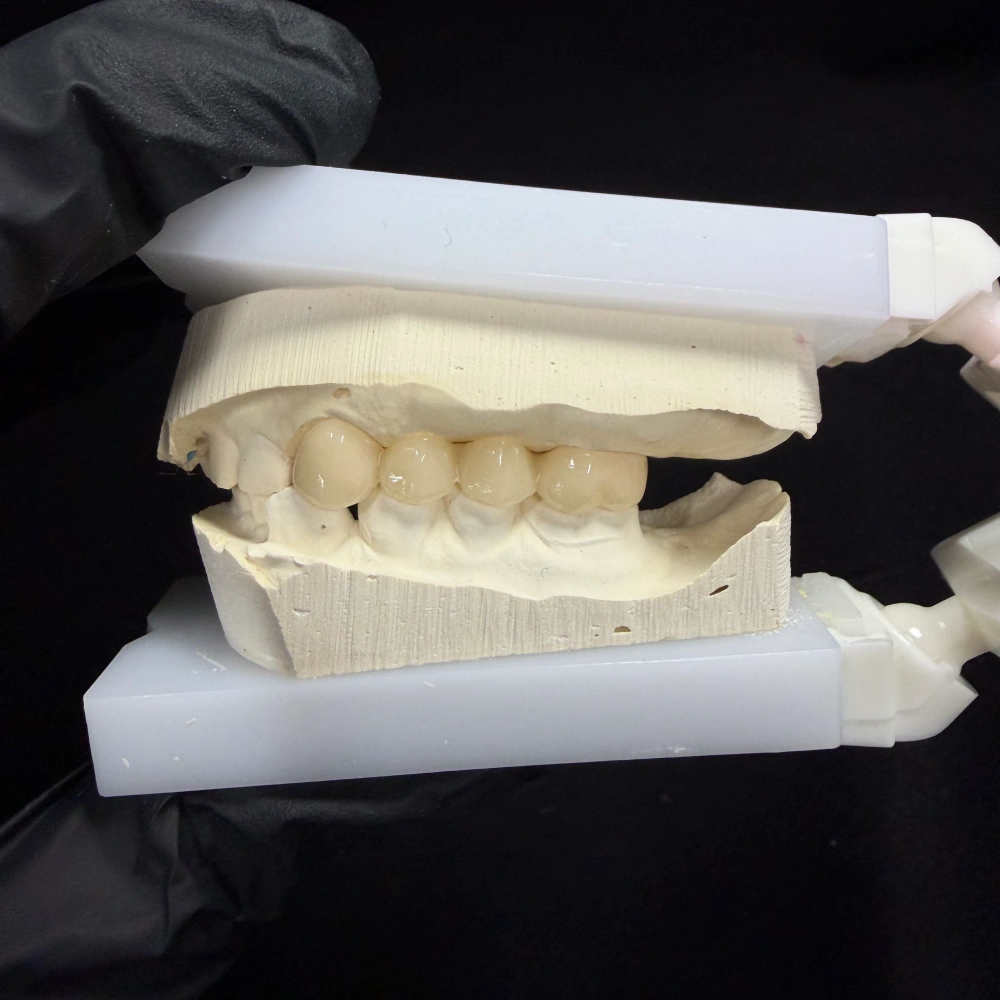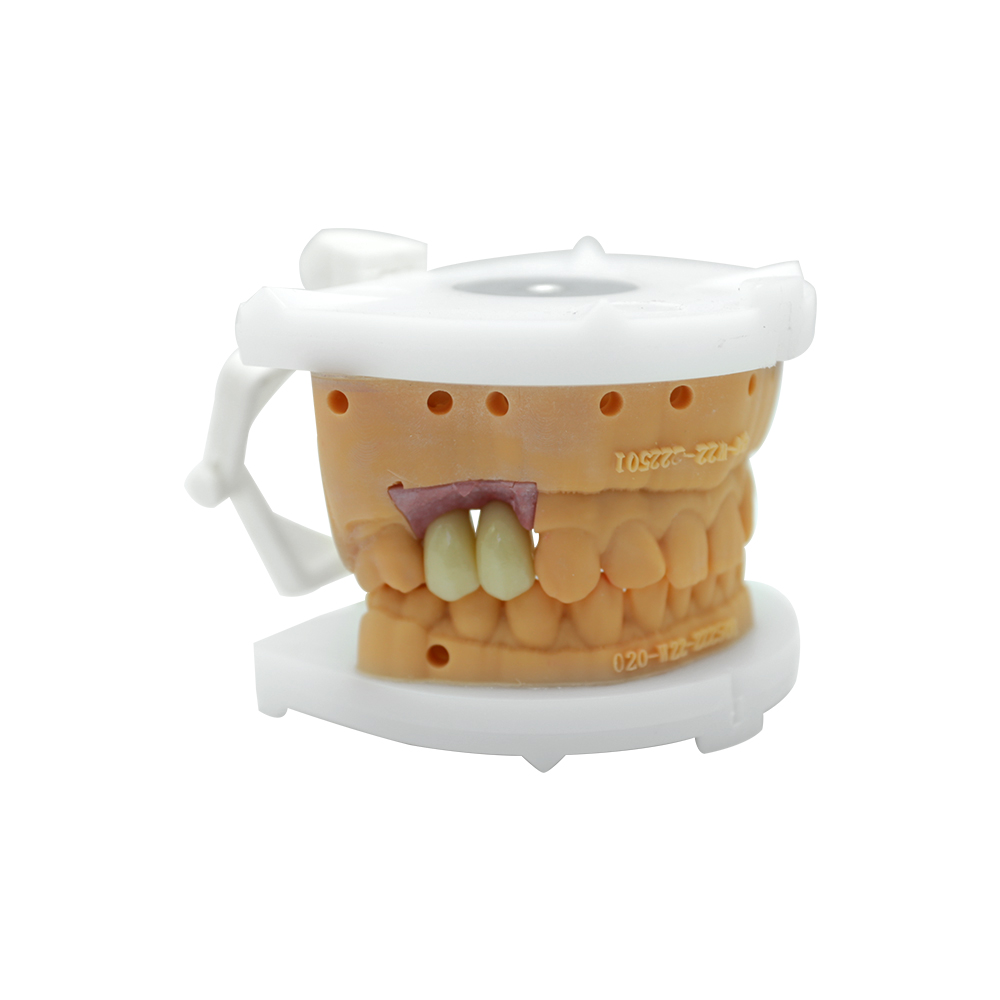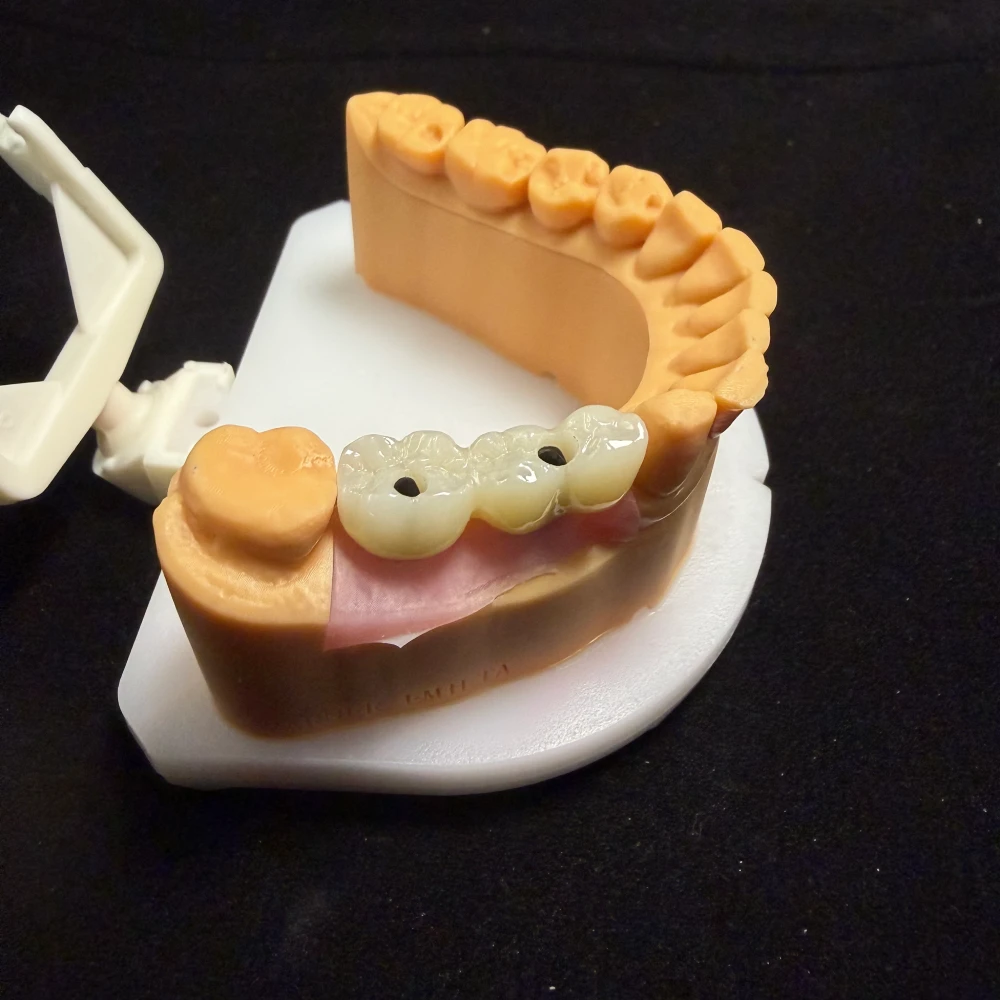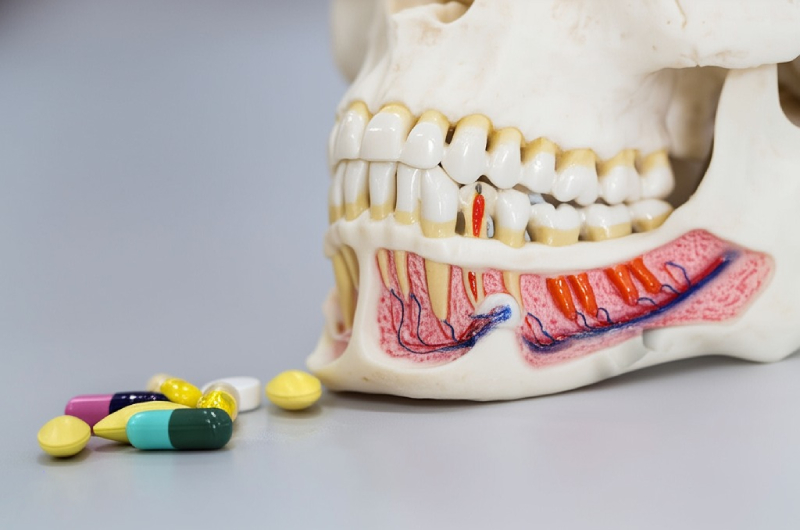
Vitallium Denture — Precision Cast Frameworks Built by a Full-Service Dental Lab
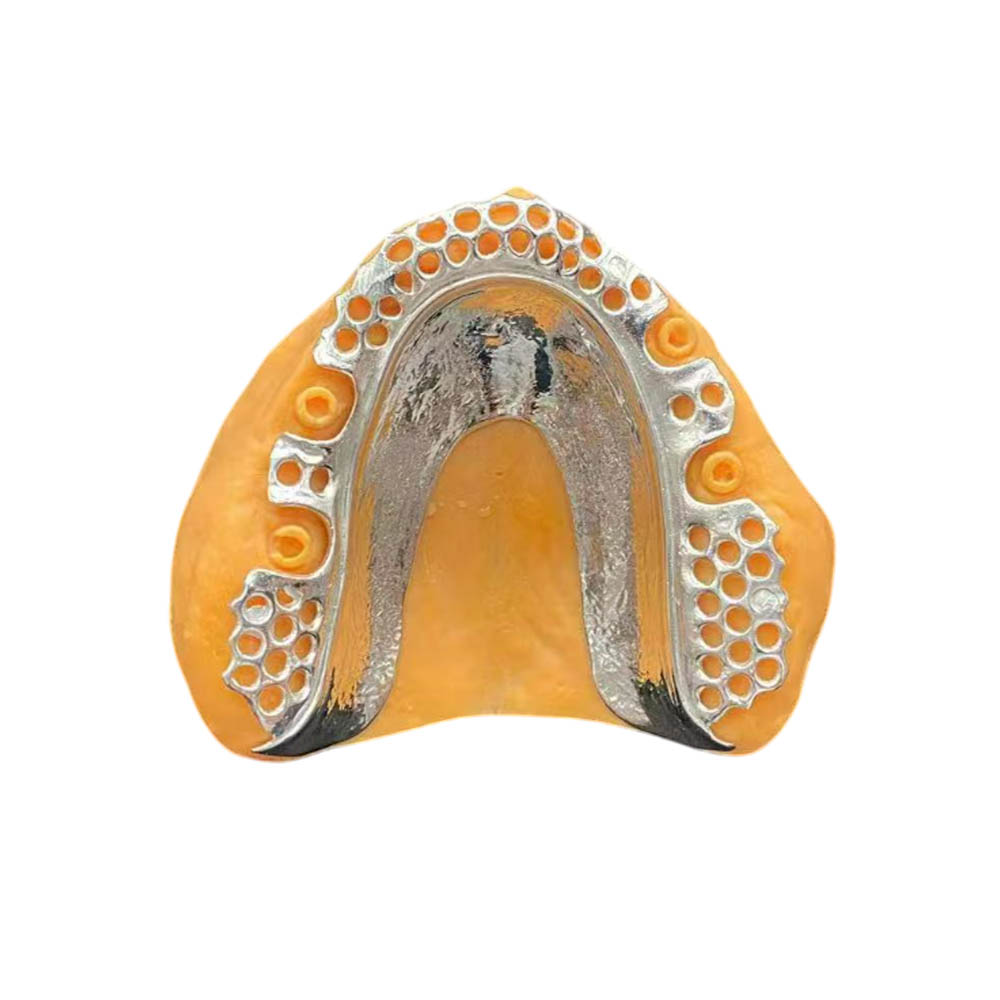

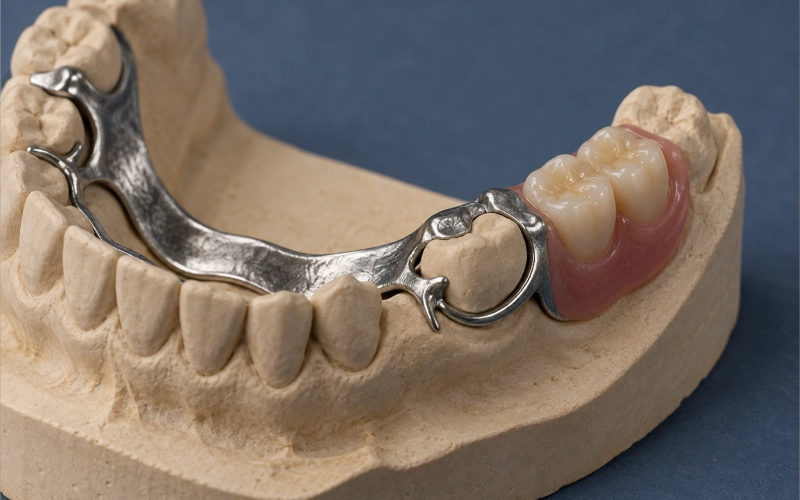
A Vitallium denture is the metal skeleton that carries a removable partial — the piece the dentist rarely sees on the finished case, but the piece that decides whether the case sits still, holds its bite, and stays put across the next decade of chewing. We cast that skeleton in a cobalt–chromium alloy (Co-Cr-Mo) family sold under the Vitallium name, then finish it with acrylic and denture teeth for a full Vitallium partial denture case.
ASD Dental Lab is a direct-to-manufacturing dental lab based in Shenzhen and Huizhou. We started in 2012. Our removable department alone runs 55 in-house technicians, with a ceramic-and-metal group of 70 next door, so a Vitallium denture case never leaves the building until it ships back to your practice.
The Vitallium Denture Product Collection
We build the framework, and then we build the case around it. Below is what dental practices, DSOs and lab-to-lab partners order most often.
1. Vitallium Partial Denture — Full Case (framework + acrylic + teeth)
The standard Vitallium partial denture: a cast Co-Cr framework, denture teeth (VITA, Ivoclar or Shofu shades on request), and a heat-cure acrylic base. Cast with rests, minor connectors, a major connector and clasp arms designed on the surveyed digital model.
Use case: Kennedy Class I / II / III / IV partials, single-arch or dual-arch, tooth-borne or tooth-tissue-borne.
2. Vitallium Framework Only (metal-only, no set-up)
For labs that want us to cast, fit and polish the framework and ship it back for their own tooth set-up and processing.
Use case: labs with strong finishing benches but no casting or milling line.
3. Metal Base Overdenture
A Vitallium metal base for a full-arch overdenture, usually paired with implant attachments (Locator, ball, bar) or root copings.
Use case: overdentures where the client wants a thinner, more thermally responsive base than acrylic alone.
4. Combined Case (crown-and-partial)
Attachment-retained cases (precision attachment, milled rest seat, extra-coronal or intra-coronal) where the fixed side and the Vitallium partial denture side ship together from one lab, keyed to each other.
5. Repair, Add-a-Tooth, Reline
Framework repair, replacement clasps, add-a-tooth to an existing Vitallium partial denture, and hard/soft chair-side or lab reline services when the case comes back years later.
6. Digital Try-in Print
Before we cast metal, we can 3D-print a resin try-in of the framework path-of-insertion and clasp positions for chair-side review. Handy for complex Kennedy Class I cases where clasp esthetics need a second look.
What we accept for intake: mailed impressions, mailed models, or intra-oral scans in STL / PLY / OBJ / DCM plus native 3Shape and exocad files. If you send a physical model, VPS (addition silicone) is the material we prefer.
Why Choose a Vitallium Denture (and Why Choose This Lab to Cast It)
Vitallium is not a trademark we invented — it is a cobalt–chromium–molybdenum casting alloy family with a long documented history in prosthodontics. What matters is what the alloy does inside the mouth, and how the lab that casts it handles the small stuff.
The material story — in plain terms
- Base metal: cobalt, chromium, molybdenum. No mercury. Independent characterisation of Co-Cr dental alloys and their prosthodontic use is summarised in a peer-reviewed review of physico-mechanical properties of cobalt–chromium dental alloys, and the alloy family itself has an entry on Wikipedia’s cobalt-chrome page covering its history and cross-industry use.
- Nickel-controlled. Vitallium 2000 alloys are formulated so that residual nickel is held to a very small fraction of the alloy — the manufacturer publishes the composition and directions for use in the Vitallium 2000 Directions For Use (Dentsply Sirona PDF). Safety data are in the Vitallium Alloys Safety Data Sheet (Dentsply Sirona PDF). If your patient is nickel-sensitive, we can flag the case, use a low-nickel or nickel-managed formulation, and record the material batch in the case file.
- Beryllium-free. The Vitallium 2000 family is a beryllium-free casting alloy — again documented in the DFU linked above.
- Standard the alloy is tested against. Removable partial denture base metal alloys are covered by ISO 22674, the FDA-recognised consensus standard for metallic materials for fixed and removable restorations. When you ask us for a compliance file, this is the standard the material sits under.
- Regulatory status of the finished device. A cast Co-Cr partial denture is a Class II dental device under 21 CFR Part 872 (Dental Devices, U.S. Code of Federal Regulations). Base metal casting alloys are 872.3710 (product code EJH). The clearance route in the U.S. is the 510(k) premarket notification process. That is a clearance, not an approval — a distinction the FDA spells out on its Device Approvals and Clearances page. We keep the paperwork correct on the label and the material certificate so your practice can too.
The lab story — in numbers
- Founded 2012. Two owned production sites in Shenzhen and Huizhou, China. No case is outsourced to a third-party lab.
- ~460 in-house staff, of which the removable-denture department runs 55 technicians and the QC group runs 25.
- Monthly Vitallium partial denture capacity: ~4,000 cases in a normal month, ~6,500 in peak season. Enough headroom that a spike from your practice does not push a case behind schedule.
- Registered where it needs to be: FDA establishment registration and device listing (custom crowns, bridges, veneers, custom implant abutments and superstructures, full and partial dentures, temporaries), EU MDR custom-device notification (Annex XIII), UK MHRA, ISO 13485. The FDA registration is publicly searchable in the FDA’s open database — you don’t need an account.
- English communication, English case files, English tech meetings. English versions of the custom-made declaration, material certificate and product label are on file.
Long-term data — what the research actually says
Removable partial dentures made with cobalt–chromium frameworks have decades of longitudinal data. A 2024 longevity study of acrylic and cobalt–chromium removable partial dentures and a systematic review of patient satisfaction with removable partial dentures both sit in the mainstream prosthodontic literature. A 2024 biomechanical study of removable partial denture frameworks compares Co-Cr and titanium under chewing loads. For a broader base-metal overview, see the review on base-metal alloys used in dental restorations and implants. When your patient asks how long a Vitallium partial denture is expected to last, these are the sources we point back to — instead of quoting a headline number without a citation.
Insurance & reimbursement — the piece dentists actually have to file
We do not file claims on the patient’s behalf, but every finished Vitallium denture case ships with the material and device paperwork your billing person needs. The claim code your team enters is a CDT code from the ADA Guide to Dental Procedures — cast metal partials sit in the D5210–D5286 range, and D5213 / D5214 are the two you will use most often on maxillary and mandibular cast frameworks. If Medicare eligibility is part of the discussion, the current federal position on dental benefits is at CMS Medicare Dental Coverage, and state-by-state Medicaid dental services are at the KFF Medicaid Benefits: Dental Services tracker. Ship the finished case, hand your billing person the CDT code, and the paperwork holds up on the payer side.
Our Vitallium Denture Manufacturing Process
Everything below happens in ASD’s own building — no CAD outsourced, no casting outsourced, no set-up outsourced. That is the reason a case ships in 2 to 3 working days of lab bench time once we have a clean impression or scan.
Step 1 — Case intake & prescription review
You mail the impression, model or a digital file. Every case is bound to a unique job number. The case coordinator (the removable department has 40 case coordinators between it and the fixed side) checks:
- Kennedy classification
- Rest seat prep status
- Guide plane requirements
- Major connector preference (lingual bar, lingual plate, palatal strap, A-P bar, full palate)
- Clasp assembly preferences (cast circumferential, I-bar, T-bar, RPA, RPI)
- Shade note (usually VITA classical, but Ivoclar and Shofu shades are accepted)
- Deadline
If any of those fields are missing, we send a single consolidated question back the same working day.
Step 2 — Scan & survey
If the case arrived as a physical model, we digitise it on a lab desktop scanner. If the case is fully digital already, we open it in the design software directly (native 3Shape and exocad files supported; STL / PLY / OBJ / DCM also fine).
The digital cast is surveyed to find the height-of-contour on every abutment, define undercuts, and lock the path of insertion. Blocked-out regions and rest seats are traced. Nothing gets cast until the survey is signed off.
Step 3 — CAD framework design & design approval
The framework is drawn in CAD — major connector, minor connectors, rest seats, clasp arms, retentive network for the acrylic. A design image and short spin video are sent to the prescribing dentist for approval. We do not proceed to metal until the design is confirmed in writing. This is the single biggest source of remakes in this category, and it is fixable at the design stage in minutes.
Step 4 — Framework production
The approved framework is produced by CAD/CAM. We use selective laser melting (SLM) on the Vitallium powder for most cases, and lost-wax investment casting for cases that prefer a traditional cast. Both routes end at the same acceptance criteria: fit on the master cast without rocking, clasp tips passive, connector clear of soft tissue.
Step 5 — Framework try-in on cast, fit adjust, polish
Framework is seated on the master cast. Clasp fit is confirmed under magnification. Connector clearance and tissue relief are checked with disclosing paste. Any rework here is silent — the case does not leave the department carrying a shortcut.
Step 6 — Tooth set-up & wax try-in
Denture teeth are set on a wax base against the opposing model, following your written prescription for shade, size, midline and lip support. If you asked for a clinical try-in, we ship the wax at this stage; if the case is direct-to-final, we move straight to the next step.
Step 7 — Processing (packing, curing, deflasking)
The wax base is boiled out and replaced with heat-cure acrylic. On premium cases we use Lucitone 199 (Dentsply) as the imported denture base; on standard cases we use a mainland-manufactured heat-cure PMMA that meets the same functional spec.
Step 8 — Occlusion adjust & polish
Case is remounted, centric contacts are balanced, protrusive and lateral excursions are cleaned up, then buffed. Polish stops short of the tissue surface — we protect the intaglio.
Step 9 — Multi-stage QC
Every case passes three formal QC gates: raw-input check (paperwork and impression quality), inter-process spot check (design and try-in), and final acceptance by an independent QC technician. Complex cases (implant-retained overdentures, full-arch, high-esthetic anteriors) go through a fourth specialty check. Records of technician, machine, material batch, sintering curve and each QC gate are stored against the case number, and can be pulled on request.
Step 10 — Ship
Case leaves in labelled packaging with the material certificate, the batch record, and (on request) a printed patient-care card. Packaging can be white-labelled — no ASD branding on the box, prescription, label or paperwork if that is what your practice needs.
Standard bench turnaround for a full Vitallium partial denture case: 2–3 working days once the case is in the building. Transit time is separate and depends on your courier.
How We Work With You — The Partnership Workflow
A dental lab is a supply relationship, not a transaction. Here is what setting one up looks like from the dentist / DSO / lab-to-lab side.
First case — the test case
Send one case. We do not require a minimum order to start. Ship a physical model or a scan. We build the Vitallium denture case to your written prescription and return it. You seat it, you tell us what to keep, what to change. Design preferences (clasp esthetics, connector style, tooth mould, base tinting) go into your account file so the next case starts already tuned.
Regular workflow
- Case pickup: we can pair with your existing courier, or set up a prepaid shipping label on our side.
- Case tracking: status is updated at intake, design, production, QC and dispatch.
- English service window: case-management team on line 9:30–18:00 China Standard Time; the department managers stay on late for urgent cases and can extend the window to midnight when a case is time-critical.
- Prescription format: paper, PDF, digital form, or your existing lab-management platform. If your practice runs on a multi-doctor system, each doctor’s preferences are separated inside our case system, so we do not blur them together.
- Design approval loop: every framework design ships back to you for sign-off before casting.
- Rework policy: if the fault is on us — margin open, clasp not seating, framework rocking, wrong shade, occlusion off — the rework is free and we cover the return leg. If the model is unreadable or the design brief changes after casting, we tell you before we start the rework and only then does a rework cost apply.
Documentation and compliance
Any case bound for the U.S., EU, U.K., Switzerland, Australia, Middle East or elsewhere ships with the paperwork the destination market requires — custom-made declaration, batch traceability, material safety data on request. Because compliance changes by country, we confirm the destination at intake and route the paperwork to match.
White-label / private-label
Not every practice or lab wants to show its manufacturing partner. Packaging, prescription slip, label, shipping label and correspondence can all be produced without ASD’s name on them. Confidentiality is covered by a signed NDA on request; quality and supplier agreements can be signed at the same time.
Factory visit or video audit
Two working factories, in Shenzhen and Huizhou, open for visits year-round. If travel is not possible, we run a live video audit — a technician walks the phone through casting, design, set-up, processing, QC and shipping bays, and answers questions in English on camera.
Product Data
| Field | Detail |
| Framework alloy family | Cobalt–chromium (Co-Cr-Mo), sold as Vitallium 2000 and Vitallium 2000 Plus formulations |
| Alloy standard | ISO 22674 (FDA-recognised) |
| U.S. device class | Class II (21 CFR 872, base metal casting alloy 872.3710, product code EJH; framework device under the applicable partial-denture regulation) |
| U.S. clearance route | 510(k) premarket notification, where required, per the FDA guidance linked above |
| Nickel content | Held to a small controlled fraction — see the manufacturer’s Directions For Use and Safety Data Sheet linked above |
| Beryllium content | Beryllium-free |
| Denture base material | Lucitone 199 (Dentsply) for premium cases; heat-cure PMMA on standard cases |
| Teeth brands accepted | VITA, Ivoclar, Shofu (specify in the prescription) |
| Digital files accepted | STL, PLY, OBJ, DCM, native 3Shape, native exocad |
| Physical impression material preferred | VPS (addition silicone); polyether and condensation silicone also accepted |
| Bench turnaround | 2–3 working days for a full Vitallium partial denture case in-house |
| CDT codes typical | D5213 (maxillary cast partial), D5214 (mandibular cast partial); other codes as clinically indicated |
| Lab certifications | FDA registration + device listing, EU MDR custom-device notification, MHRA, ISO 13485 |
| Case traceability | Job number → technician → equipment → material batch → sintering curve → 3 QC gates |
| Rework policy | Lab-fault rework free of charge, return shipping covered |
| Confidentiality | NDA, quality agreement, supplier agreement all supported on request |
Frequently Asked Questions
Is a Vitallium denture the same thing as a cast metal partial?
For dental terminology purposes, yes. Vitallium is the brand-family name of the cobalt–chromium–molybdenum alloy the framework is cast in, and a Vitallium partial denture is a cast metal removable partial denture built on that framework. When you write D5213 or D5214 on a claim, you are describing this device.
Is the alloy safe for nickel-sensitive patients?
The Vitallium 2000 family is formulated to keep nickel to a small, controlled fraction of the alloy — the composition is published in the manufacturer’s Directions For Use (linked in the material section above). If your patient has a known nickel sensitivity, note it on the prescription. We record the batch on the case file and can supply the material certificate.
Is a Vitallium partial denture “approved” by the FDA, or “cleared”?
Cleared. Class II devices such as base-metal partial denture alloys and their frameworks generally reach the U.S. market by 510(k) clearance, not by premarket approval — the FDA’s own page on device approvals and clearances explains the distinction. If a spec sheet, catalogue or web page uses the word approved for this class of device, the accurate phrase is 510(k) cleared.
Can you cast a Vitallium framework for a patient who chose flexible resin last time?
Yes. A flexible resin partial denture and a Vitallium partial denture are two different clinical decisions. A cast metal framework is thinner across the palate, more dimensionally stable under load, and easier to add a tooth to later. A flexible resin case is more forgiving on undercuts and clasp esthetics but is harder to repair. Case selection stays on your side; the design brief is what tells us which route you want.
Do you ship the CDT / claim paperwork with the case?
The material certificate, batch number and product label ship with every case. The CDT code itself is entered by your billing team — cast metal partials commonly file under D5213 / D5214; see the ADA Guide to Dental Procedures for the exact wording.
Do you accept a single test case, or do we have to commit to a monthly volume?
You can send a single test case. We keep the pricing on a test case fair, but bear in mind international courier costs on a single-case shipment, so most practices settle into a weekly or fortnightly shipping rhythm after the first case.
How do you handle a remake?
If the framework does not seat, the clasp is loose, the occlusion is off, the shade is wrong, or the case shows anything else that is our fault, we redo it for free and cover the return shipping. If the model was unreadable or the design brief changes after the framework has been cast, we tell you before we start the rework, and only then does a rework fee come up.
Can we visit the factory before we place cases?
Yes — both Shenzhen and Huizhou sites accept visits year-round. If a trip is not on the cards, we run a live video audit through the production lines and QC bays, and answer questions in English on camera.
Can you keep our brand on the packaging and paperwork?
Yes. The prescription slip, box label, shipping label and patient-care card can all be produced without ASD branding. NDAs and quality agreements are supported.
Send Us A Case
If you are a dentist, a dental clinic, a hospital dental department or a dental laboratory, the fastest way to see what a Vitallium denture from our bench looks like is to send us one case.
- Send a scan — STL, PLY, OBJ, DCM, native 3Shape or exocad
- Send a model — VPS impression or a poured stone model, mailed with your prescription
- Ask for a quote — write in with your monthly volume, case mix and turnaround target, and we will come back with a per-case price sheet, a lead-time commitment, and the compliance file for your target market
Experience faster turnaround times with our cutting-edge technology
Recommended