Dental Ceramics Laboratory for Precision Crown, Bridge & Implant Restorations
Direct manufacturing. Full-process in-house workflow. Case-level traceability on every unit. Our dental ceramics laboratory produces custom crown-and-bridge, implant, and removable restorations for dentists, dental clinics, DSO groups, and partner dental labs — delivered on time and matched to the Rx under the operatory light.
Our Dental Ceramics Laboratory Product Catalog
Restorations are organized the way dentists choose them: by indication, then by material. Typical turnaround: 2–3 lab working days for standard cases, 5–7 for complex implant and full-arch cases, counted from the moment we have a complete record on file. Material families come from Ivoclar, 3M, and other recognized dental material suppliers. CE marks and ISO 10993 biocompatibility documents are on file for every ceramic, alloy, and resin we use, and can be shared with any case on request.
Fixed crowns and bridges
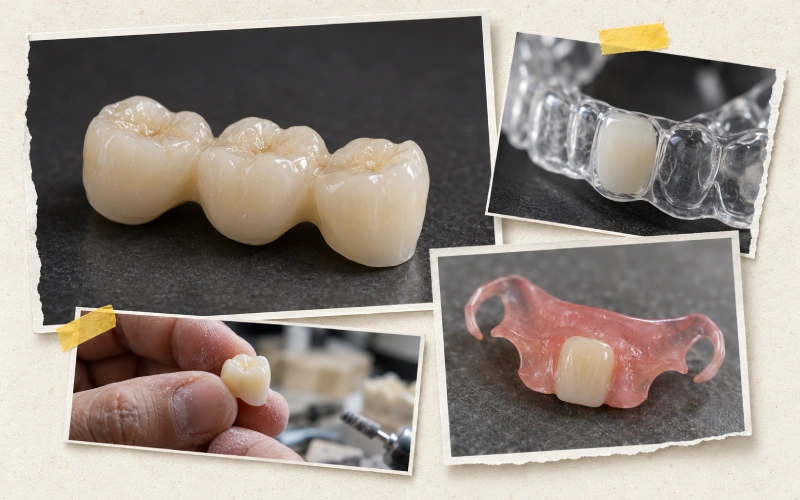
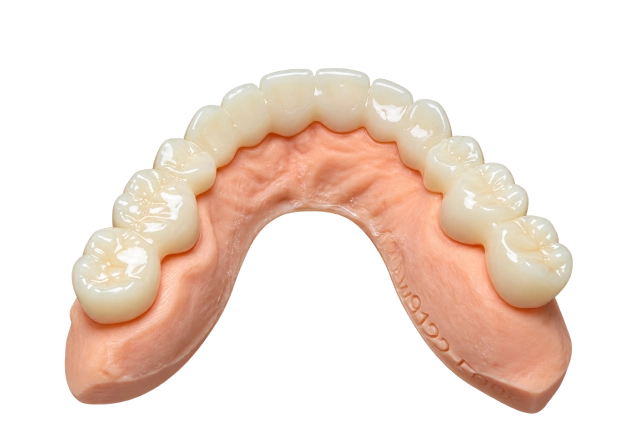
Single crowns and 3-unit bridges in monolithic zirconia, multi-layer zirconia, lithium disilicate (IPS e.max®), PFM, or full-cast metal — posterior strength and anterior aesthetics both supported through material selection on the Rx.
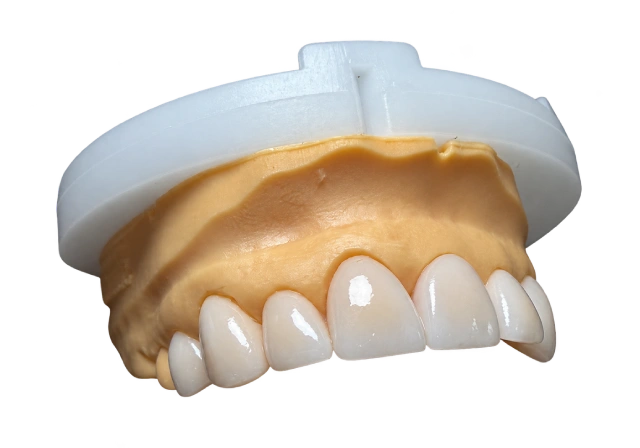
Veneers, inlays, and onlays
Lithium disilicate, feldspathic ceramic, and layered zirconia for anterior shade / shape / position changes; lithium disilicate or monolithic zirconia for partial-coverage posterior work.
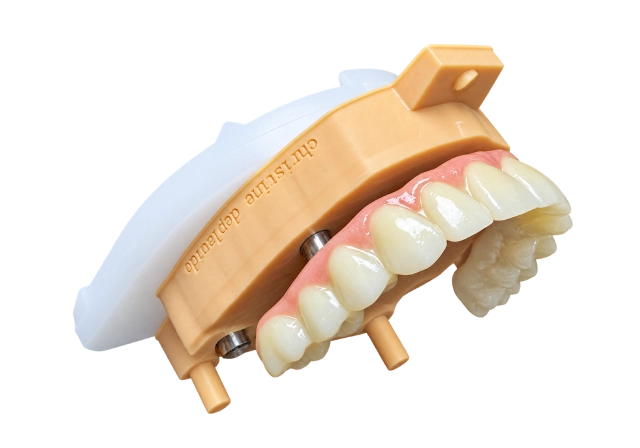
Implant prosthetics
Custom abutments in titanium, titanium-base + zirconia hybrid, or zirconia direct-to-fixture. Screw-retained implant crowns in monolithic zirconia, lithium disilicate, or PFM.
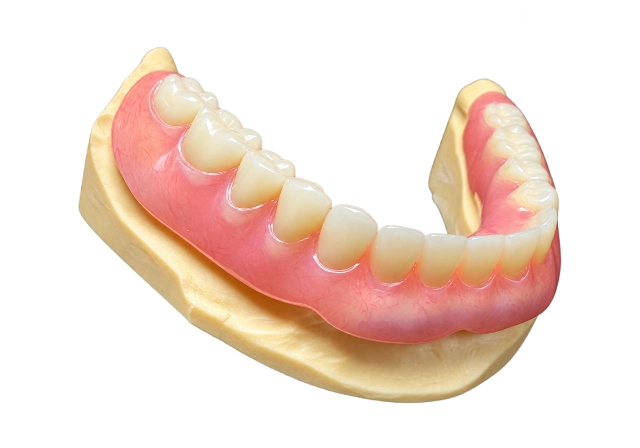
Removable prosthetics
Partial dentures (metal framework or flexible resin), full dentures (conventional and digital), immediate dentures, and implant-retained overdentures. Setup, flasking, pressing, finishing, and polishing all happen under one roof.
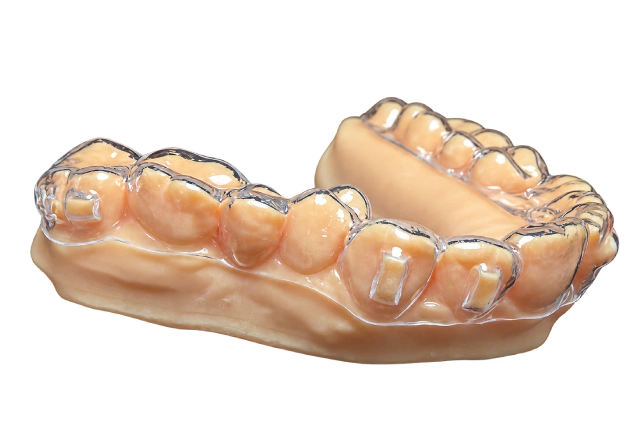
Occlusal guards, splints, and retainers
Custom hard, soft, and dual-laminate occlusal guards; TMJ splints; periodontal splints; orthodontic retainers — thickness, extension, and retention measured against each Rx before shipment.
Capabilities you can verify, not adjectives.
Why Choose Our Dental Ceramics Laboratory
Direct manufacturing, not a middleman. Every production station is our own staff on our own equipment. Cases don’t leave the building, and we don’t resell outsourced work under our name.
A technician team deep enough to specialize
Roughly 460 professional employees — ~100 in CAD design, ~70 in CAM milling, ~80 in implant prosthetics, ~70 in ceramic and metal (porcelain and PFM), ~55 in removable dentures, ~25 in quality control, ~40 in customer service and case coordination, plus ~50 trained backup technicians on hand for peak-season surges.
Capacity you can plan around
A normal month ships roughly 8,000 zirconia single crowns, 2,000 zirconia bridges, 20 All-on-X arches, and 4,000 removable dentures; peak capacity scales to ~15,000 crowns, 3,000 bridges, 40 arches, and 6,500 dentures. When volume spikes, confirmed cases keep their original delivery date — you'll hear about any new-order rescheduling up front, not after the fact.
About ASD — A Dental Ceramics Laboratory Since 2012
ASD is a professional dental ceramics laboratory and direct manufacturing facility founded in 2012, built on a full-service model from day one. Manufacturing is based in Shenzhen and Huizhou; we work with dentists, dental clinics, DSO groups, and dental laboratories across the United States, the United Kingdom, the Netherlands, Germany, France, Belgium, Austria, Luxembourg, Switzerland, and other European markets.
What we do: full-process ceramic restoration manufacturing, plus the quality system and account management that make it usable at scale.
What we don’t do: broker cases, resell outsourced work under our name, or move cases offshore without telling you.
A longer company profile — org chart, department-level capacity, retained-records policy, markets served — is available in a single English PDF on request.
01.
Case-level traceability on every unit
Each case carries a unique ID bound to the technician on each station, the equipment serial, the material brand and batch, and the QC result at every checkpoint. The material brand, origin, batch number, and material certificate can be pulled for any case we've produced.
02.
An account manager you can actually reach
Every account has a named manager and a case-coordination team. Technical questions in local working hours (09:30–18:00, extended to 24:00 on urgent cases) typically come back within one hour; across time zones, within 7–8 hours, 12-hour maximum. English technical reviews and compliance Q&A on request.
03.
Patient data handled correctly
Clinics don't need to forward the full chart — our case-intake team pulls only the production-relevant fields, and each case is referred to by its unique ID on the floor so patient identifiers stay out of shop-floor conversation. Confidentiality agreements can be signed with the practice and the coordinators; records are retained for approximately three months, extended on request.
Inside the Factory — Our Dental Ceramics Lab in Shenzhen & Huizhou
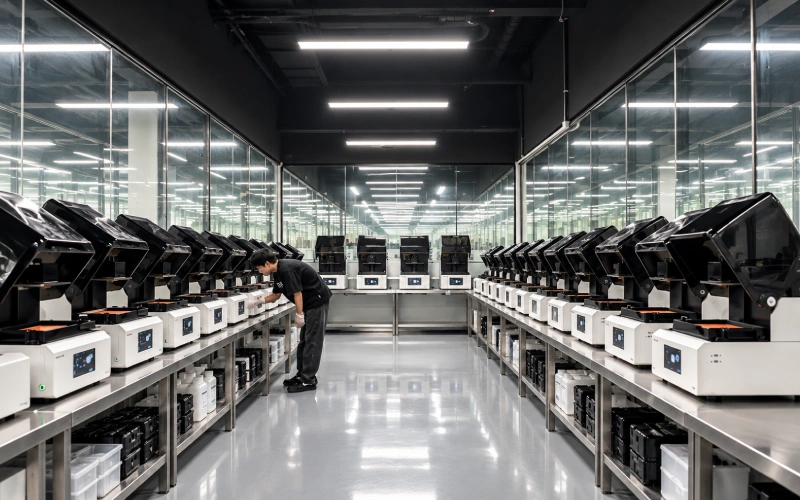
The production halls run on industrial-grade dental equipment, maintained on a logged calibration and preventive-maintenance schedule:
- Scanning: industrial-grade dental model scanners.
- Design: dental CAD software for crown-and-bridge, implant, and removable workflows.
- Milling: multiple dental CNC mills across wet and dry stations.
- Sintering: zirconia-dedicated furnaces running locked, logged programs, with each cycle archived against the case ID.
- 3D printing: photopolymer printers for models, surgical guides, and provisionals.
- Finishing: dedicated porcelain-layering studios for anterior aesthetics and complex implant prosthetics.
- Quality control: a QC room where every unit is inspected before packaging.
New materials and batches pass sample runs and dimensional validation before entering live production. Equipment brand list, serial-level maintenance history, and sinter-cycle logs can be shared under NDA.
How to Partner With Our Dental Ceramics Laboratory
Step by step, the way an account gets opened and stays productive.
First message
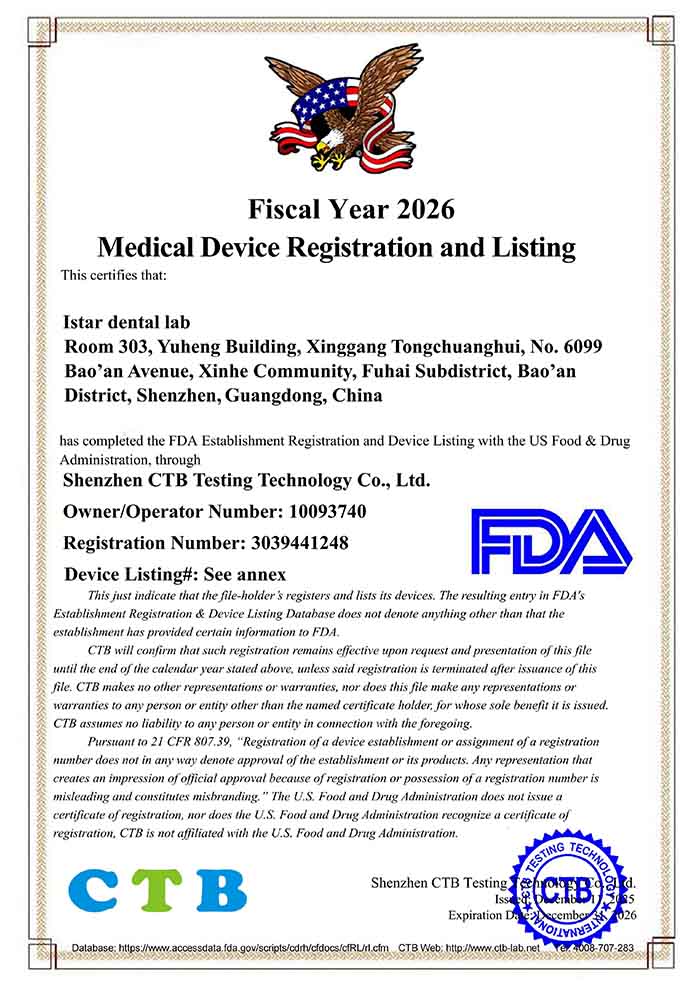
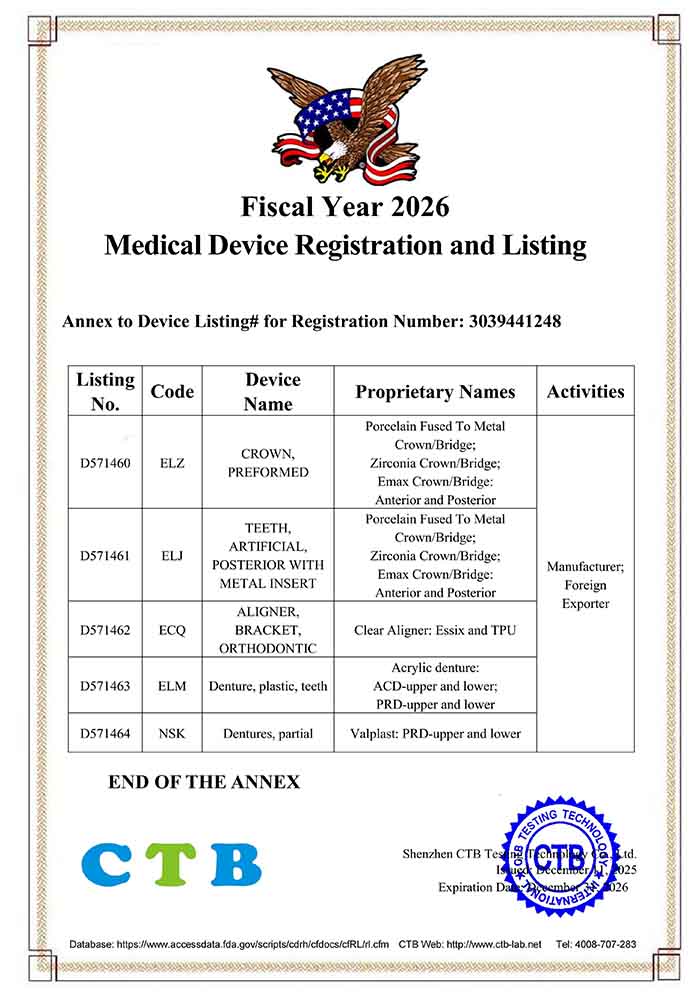
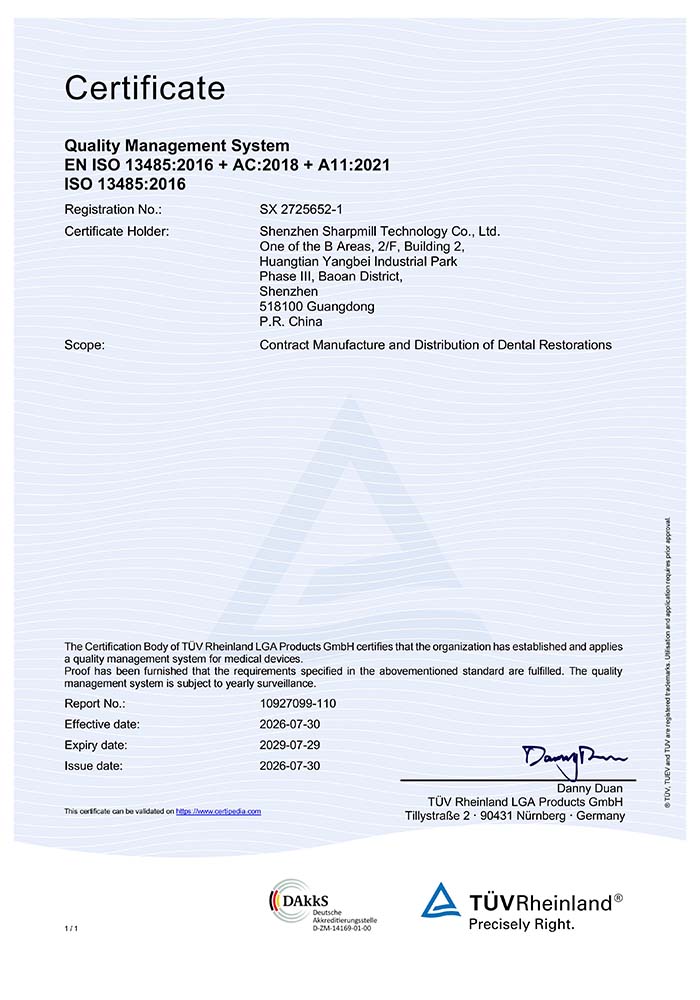
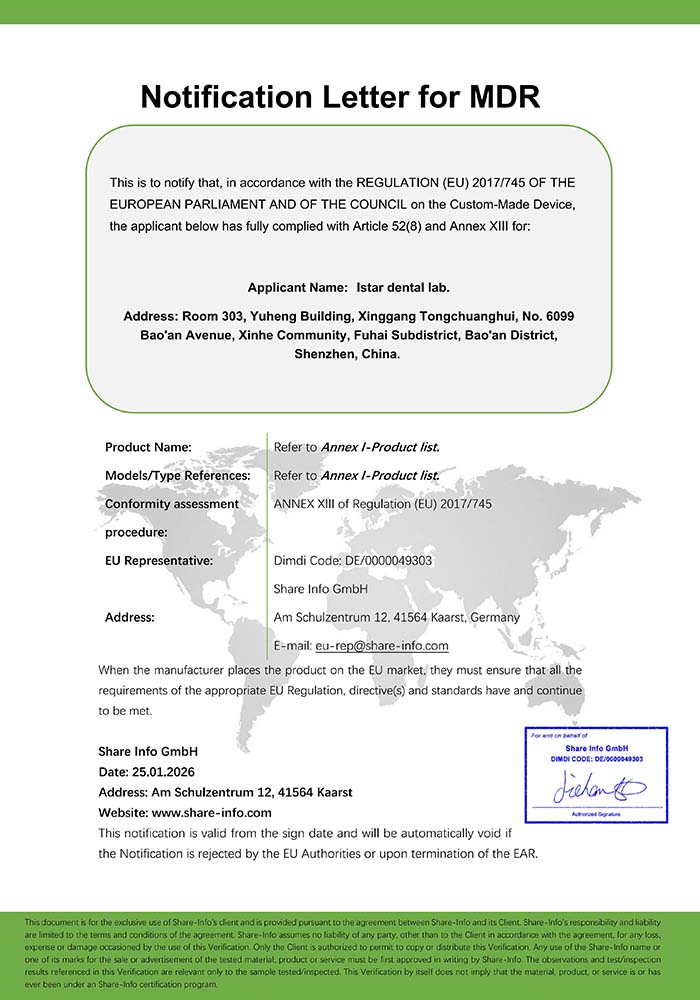
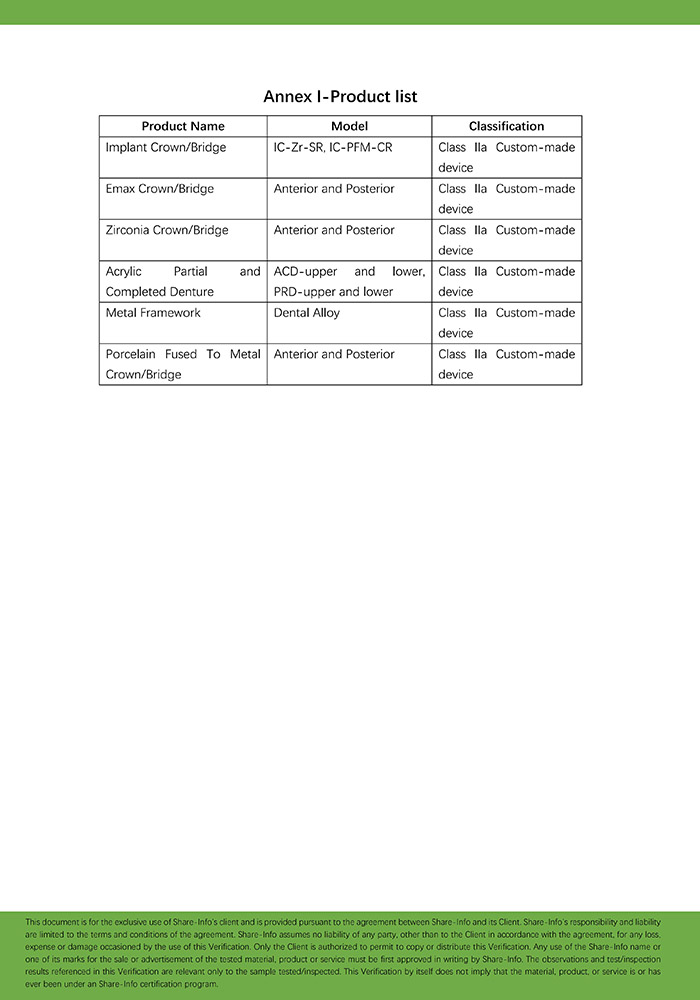
Send your role (dentist, clinic, DSO group), country, case mix, preferred submission method, and any specific documents you want up front (FDA registration number, ISO 13485 certificate, MDR custom-device statement, material certificates). Reply within one business hour in local hours, 7–8 across time zones, 12-hour maximum.
Account setup and trial case
A named manager is assigned within 24 hours. We open with a trial case — usually a standard crown — so you can audit the workflow end-to-end before any volume commitment. No minimum for individual dentists beyond the international courier; ongoing accounts run from roughly US$500 / month in lab fees.
Submission standards
Digital scans via 3Shape Communicate, iTero, Medit Link, Shining 3D, Dexis, Primescan, DS Core, Panda, WeTransfer, or secure email. Files: STL, PLY, OBJ, DCM, plus native 3Shape and exocad CAD. Physical records: VPS or polyether preferred; alginate excluded (warps in transit).
Quote, then production
Lab fee is units × material × design complexity. The sales team sends the current fee schedule on request, and the full case cost is frozen in writing before production starts. Precious or semi-precious alloys, implant parts and screws, custom staining, and expedited turnaround are quoted separately.
Production and quality inspection
Each case carries a unique ID bound to the technician, equipment, material batch, and QC result at every checkpoint. Every unit is fully inspected before packaging — fixed work for margin fit, contact, occlusal clearance, color accuracy, shape, and defects; removable work for occlusion, denture-base extension, clasp fit, and polish.
Packaging, shipping, and aftercare
Each shipment is labeled by case ID; implant screws and small parts are bagged separately and double-checked before packing. We ship via DHL, FedEx, UPS, and SPIDER (France), with tracking on dispatch day and dedicated staff following each parcel. Transit time is quoted separately from lab working days — customs clearance and remote-area last-mile sit outside the carrier estimate.
Remakes, adjustments, and review
Free when the issue is on us (margin open, contact open, high occlusion, mis-seated crown, color off-shade, visible aesthetic defect, denture base rocking, poor clasp fit); charged when the trigger is clinic-side (change of color, change of material, new scan, new design, or production on a known-poor record with written consent). Report try-in issues within 24 hours with case ID, patient initials, complaint, and close-up photos.
Account review
A quarterly walk-through covers remake count by reason, on-time delivery, materials used, and spec changes. An annual volume review sets pricing for the following year and aligns capacity around your growth plan.

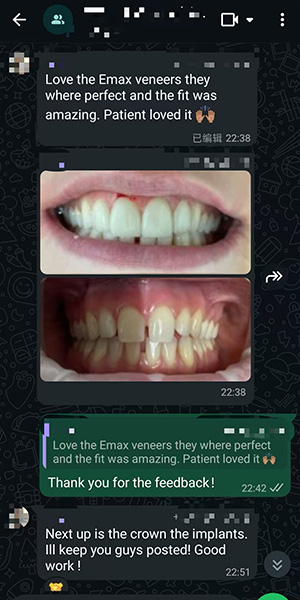
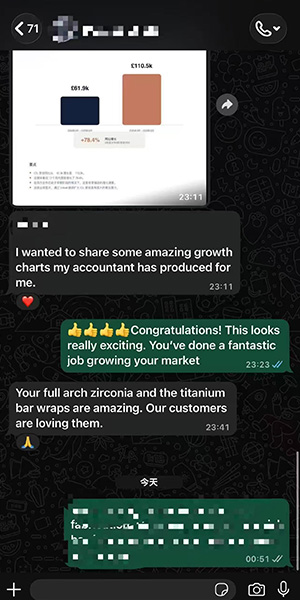
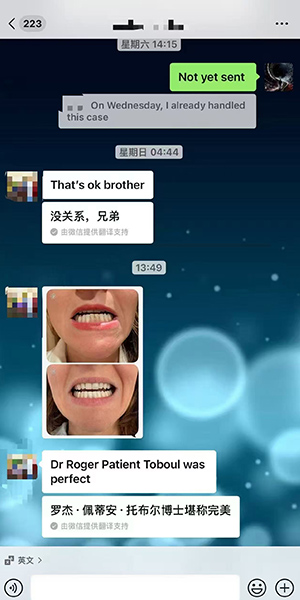
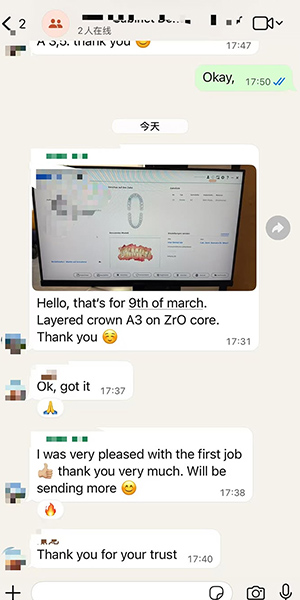
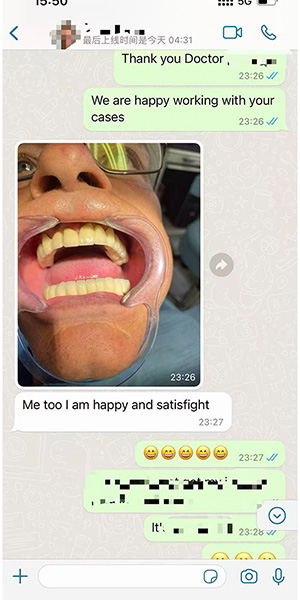
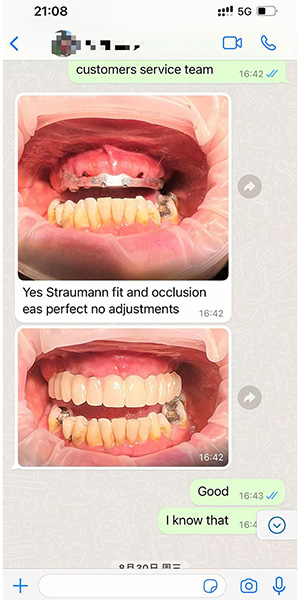
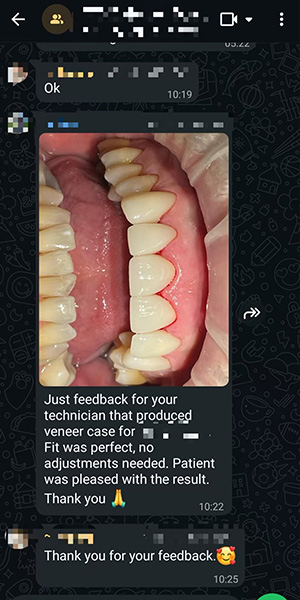
What Our Doctor’s Say
The happiest moment for us isn’t when we receive payment from a dentist, but when we hear that they truly value and appreciate our work. That’s when we feel we’ve genuinely helped them.
Contact Our Dental Ceramics Laboratory for a Quote
To get the current fee schedule, the material and brand list, the equipment list, or to book an on-site visit or a video audit, write to our sales team.
What to include in your first message so the quote comes back accurate the first time:
- Your role (dentist, clinic, DSO group, or dental lab partner)
- Country / state
- Case mix (restoration type, approximate monthly volume)
- Preferred submission method (3Shape Communicate, iTero, Medit Link, Primescan, DS Core, email, or physical shipping)
- Any specific documentation you want up front (FDA registration number, ISO 13485 certificate, MDR custom-device statement, material certificates)
Dental Ceramics Laboratory FAQ
Diagnostic and decision questions. Operational details on turnaround, team, capacity, certifications, and the partnership flow are above.
Ask the laboratory to walk you through every station a zirconia bridge touches between case receipt and shipment. If a station cannot be shown — or the answer is “a partner handles that” — the model is a hybrid or a brokerage, not a full-service dental ceramics laboratory. The same test applies to a dental ceramist lab for anterior or All-on-X work: ask who sits at the layering bench, how long they’ve been there, and whether that technician’s initials show up on the QC record of the case you’re sending. We’re happy to pull any of these up on a scheduled video audit.
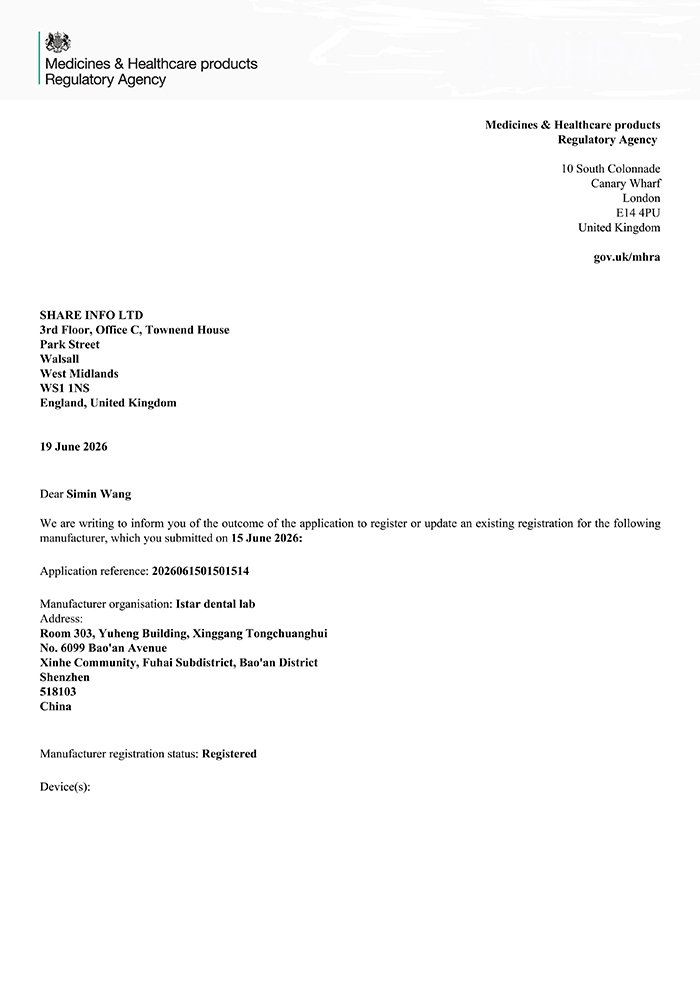
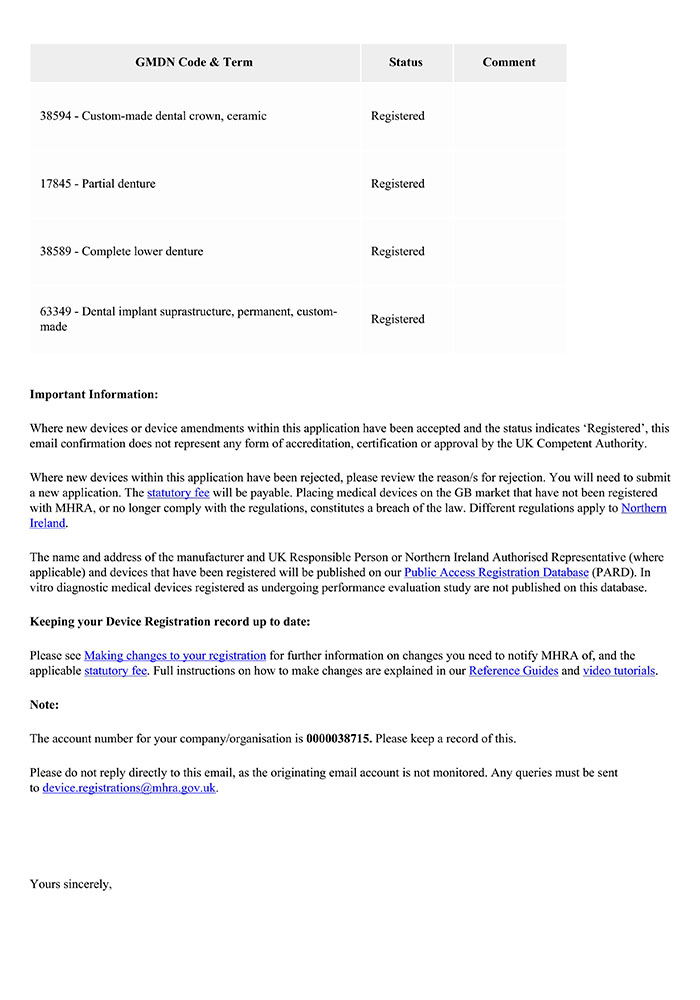
Yes. The FDA registration and device listing database is public and doesn’t need an account — ask our sales team for the registration numbers before you search. One quick clarification: establishment registration confirms who is making the device and what categories are listed, which is not the same as 510(k) clearance or FDA approval. The FDA’s own registration and listing guide explains the distinction, and custom dental restorations are generally produced under the custom-device pathway.
No. ISO 13485 is a voluntary quality management system standard unless another regulatory requirement forces it. We hold it because customers in the US, EU, and UK ask to see it, and because it maps cleanly to the quality-system expectations in the FDA Quality Management System Regulation (QMSR).
No, and the difference is where most delivery disappointments start. A lab working day is a day a case is on the production floor with a complete record on file — it doesn’t include weekends, carrier transit, customs clearance, or last-mile delivery. Add transit on top of the lab-day figure; your account manager will give you a calendar-day estimate once the shipping address is in.
For crown-and-bridge: digital scan or VPS impression, opposing-arch record, bite registration, Rx with margin design, contact strength, pontic design, shade, patient initials, and deadline. For implant cases: implant brand, platform diameter, and connection type (packaging-label photo ideal), scan-body data, soft-tissue emergence information, and a bite record. For anterior aesthetic cases: a shade photo in daylight-balanced lighting (5500 K ring-flash or dual-head macro flash — no window light), smile photo, retracted frontal, and the DSD or mock-up reference where available.
Both sides share it, and the records settle the question. Our rule: if we see something off in the impression, scan, or Rx, we call before producing — if you then ask us to proceed on a known-poor record, that production is noted and no-fault for the lab. If we produced from a clean record and the restoration still misses, we remake at our cost. Double-arch records, a proper opposing scan, and a shade photo on anterior cases cut most of the ambiguity before it starts.
Free when the issue is on us (margin open, contact open, high occlusion, mis-seat, off-shade, defect, incorrect shape, denture base rocking, poor clasp fit, or occlusion out) and when the dentist re-preps. Charged when the trigger is clinic-side — change of color, material, impression, scan, or design, or production on a known-poor impression with written consent. A shade change driven by a new patient target after we matched the original Rx may be chargeable but is routinely waived on request. Report issues within 24 hours of receipt with case ID, patient initials, complaint, and close-up photos.
The base lab fee covers CAD design, CAM milling, sintering, finishing, standard QC, and packaging, priced on units × material × design complexity. Billed separately: precious or semi-precious alloys, implant parts and screws (OEM parts recommended for best fit; verified aftermarket at a lower band), custom staining beyond standard shade match, and expedited turnaround outside published windows. The full case cost is frozen in writing before production starts.
Outbound courier is on you; return / rework shipments above a parcel-value threshold are on us, with a shared cost below that threshold. Import duty, broker fees, and remote-area surcharges are billed by the carrier directly to the consignee. Default parcels are uninsured; paid declared-value insurance is available, capped at the production fee plus the insured amount — indirect losses are not covered.
Thirty-day credit after a short qualification. Invoicing is batch-based by default, with monthly statements available for larger accounts. Payment-processing fees and FX differences sit with the paying side at the day’s exchange rate. No minimum for individual dentists if you cover the courier; ongoing accounts run from roughly US$500 / month in lab fees. Rush cases carry no surcharge up to about 10 per month.
Latest from Blog
Explore dentistry trends, dental lab insights, digital dentistry updates, and tips for dentists on implants, crowns, restorations, and dental technology.
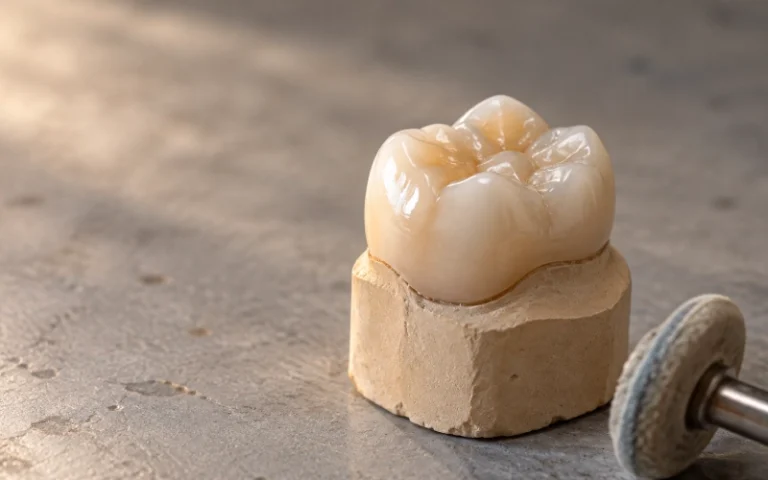
Glazing Zirconia Crowns: A Lab Guide for Dentists
When a zirconia crown case leaves the practice, one question keeps coming up: glaze it, polish it, or both?…
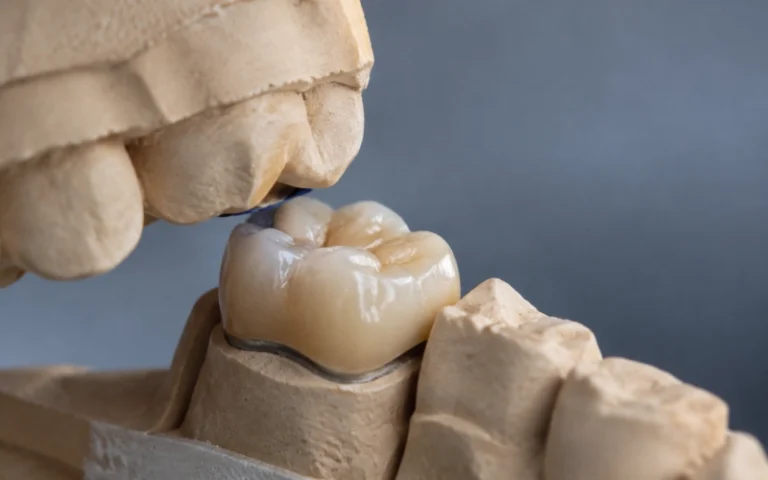
Occlusal Reduction for PFM Crowns: What to Verify Before the Case Leaves the Chair
When a PFM crown comes back and does not seat, or chips within months, the issue often traces back…
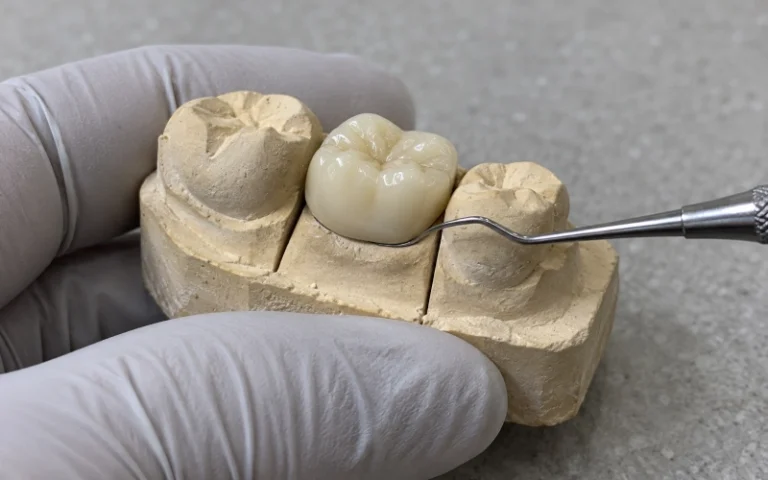
Cementing PFM Crown: Professional Cementation Guide for Porcelain Fused to Metal Restorations
Cementing a PFM crown properly starts before you even seat it. The luting agent you pick, how you prep…
< class="ct-module-title">
Trending Now