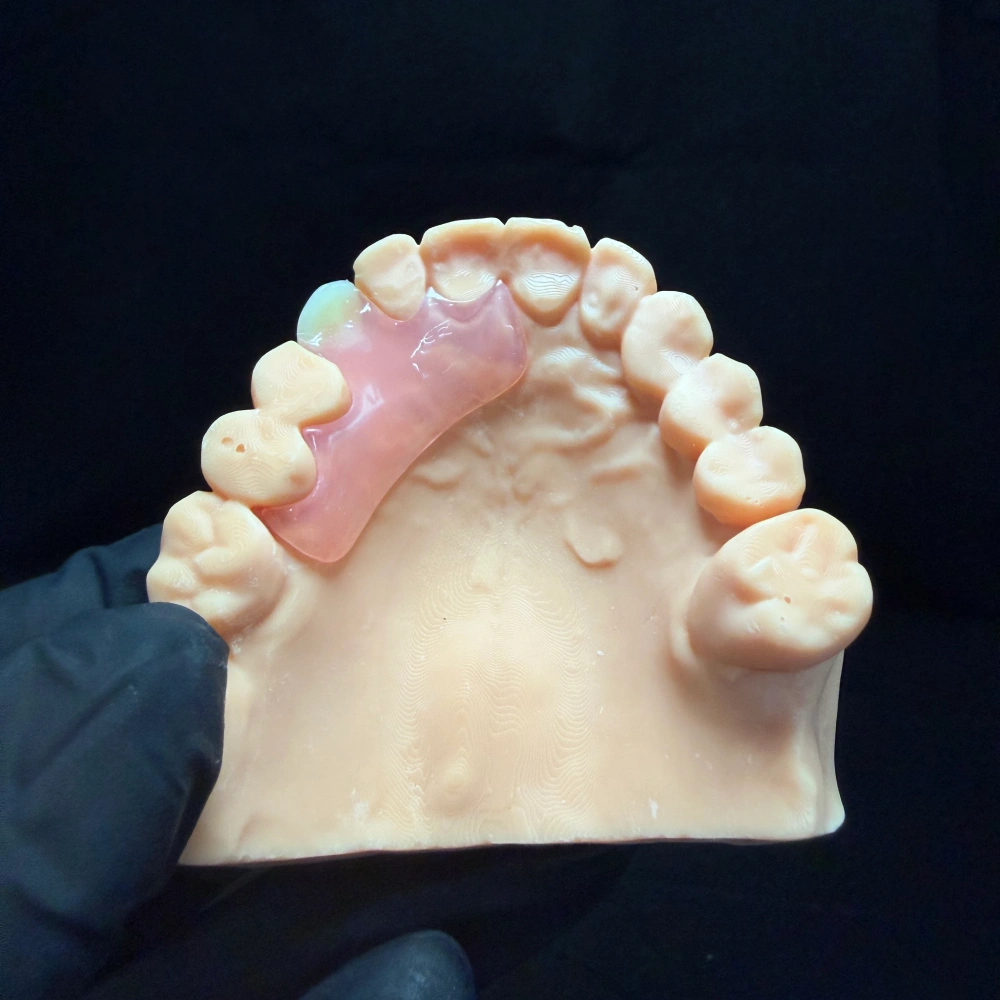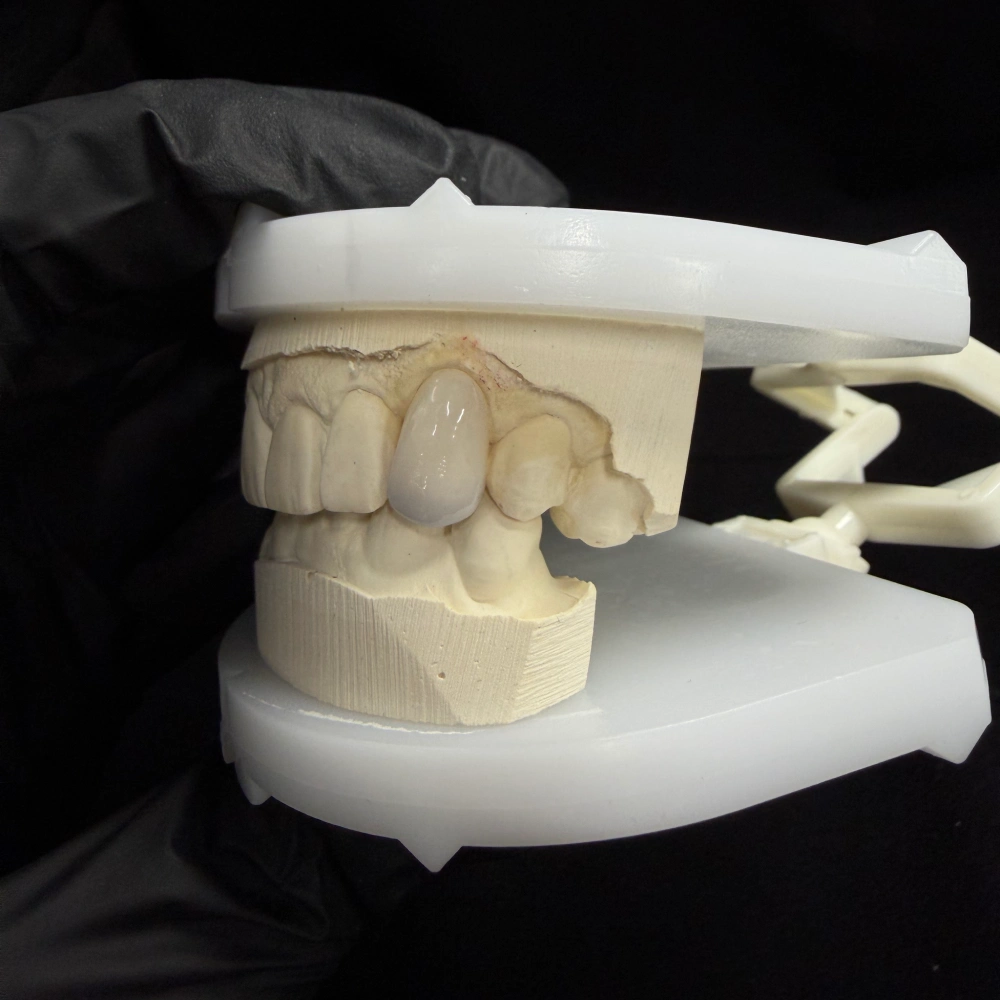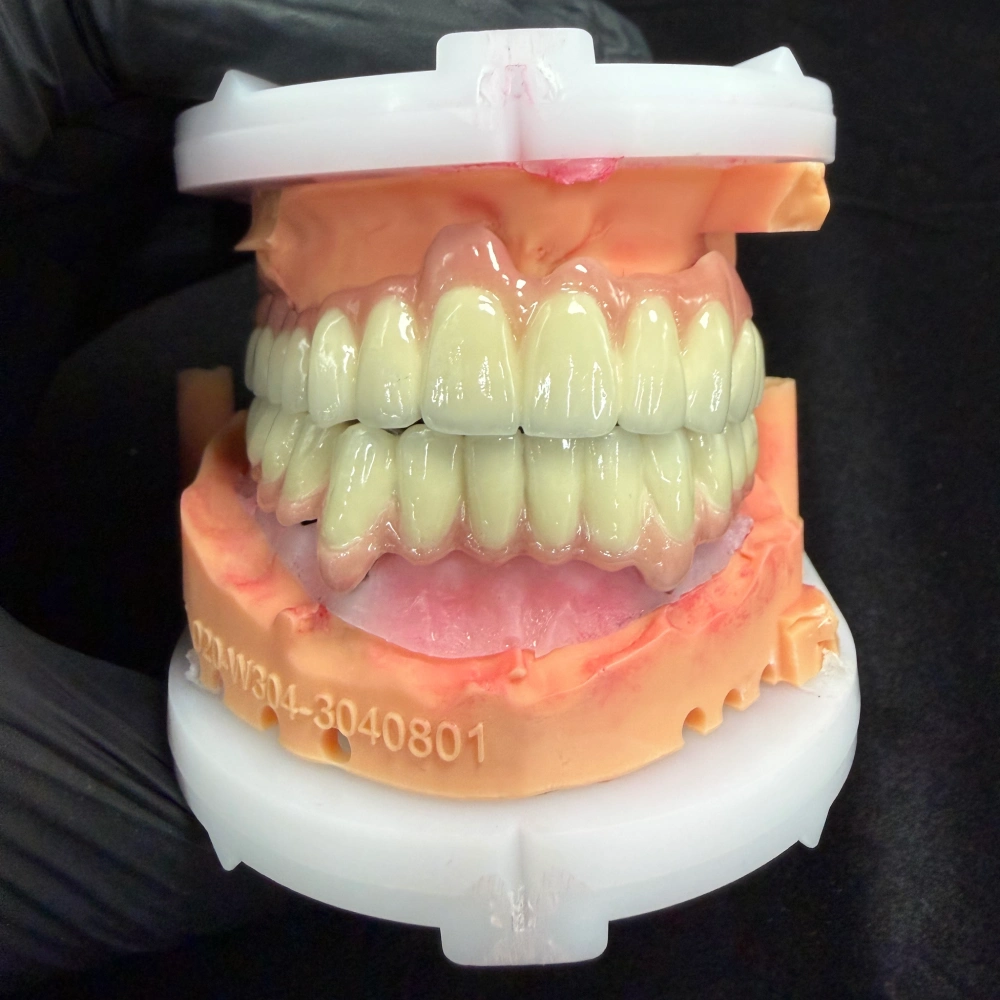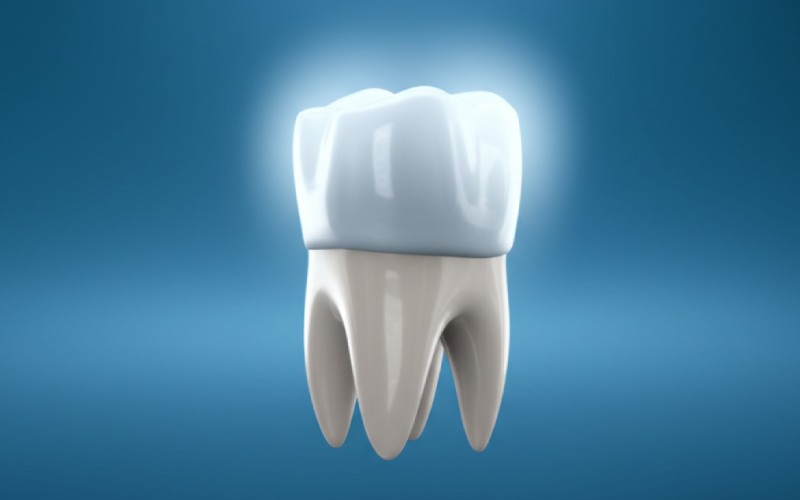
Implant Full Zirconia Crown
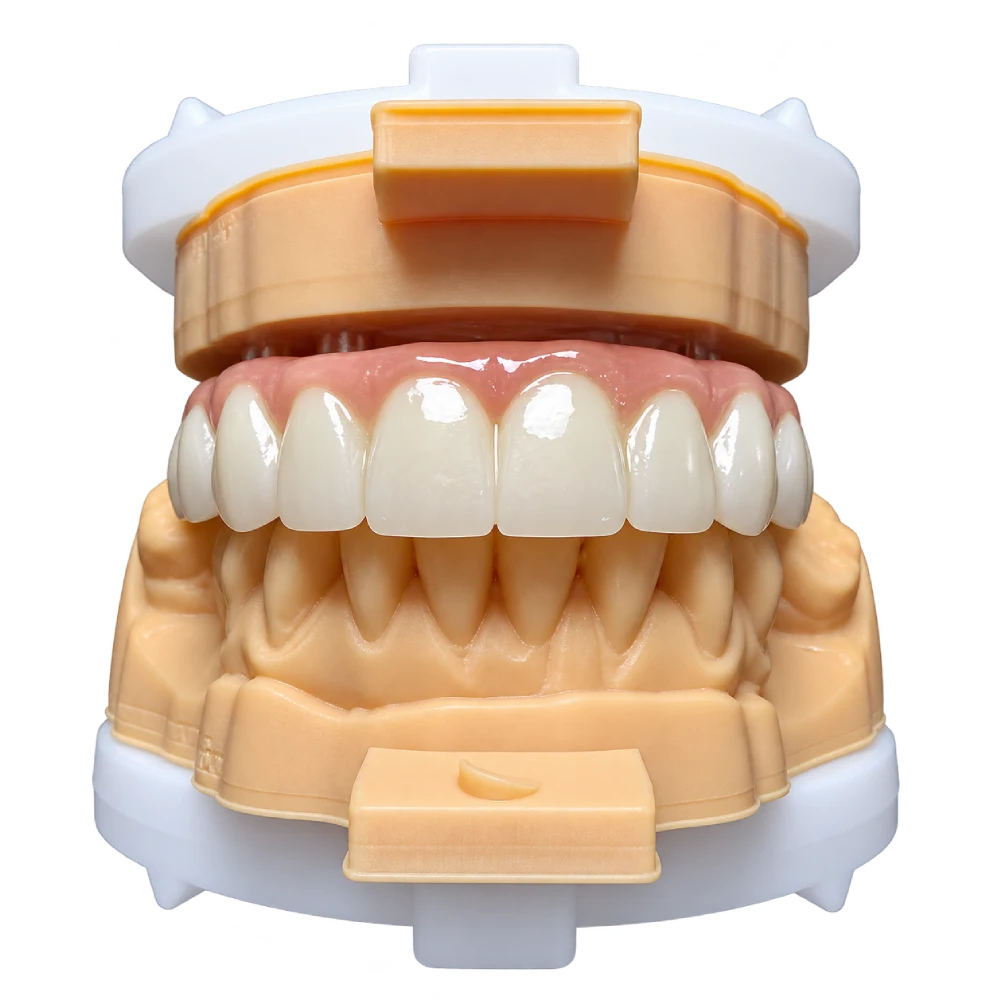
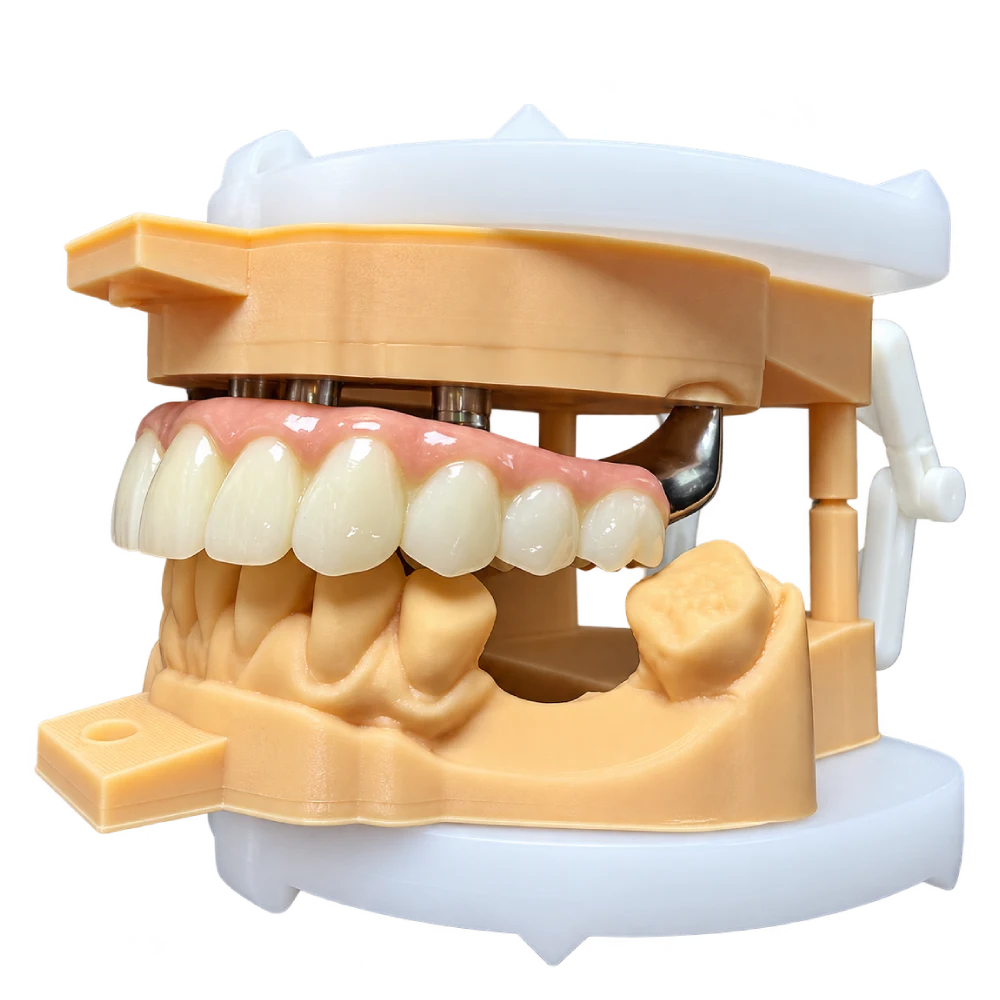
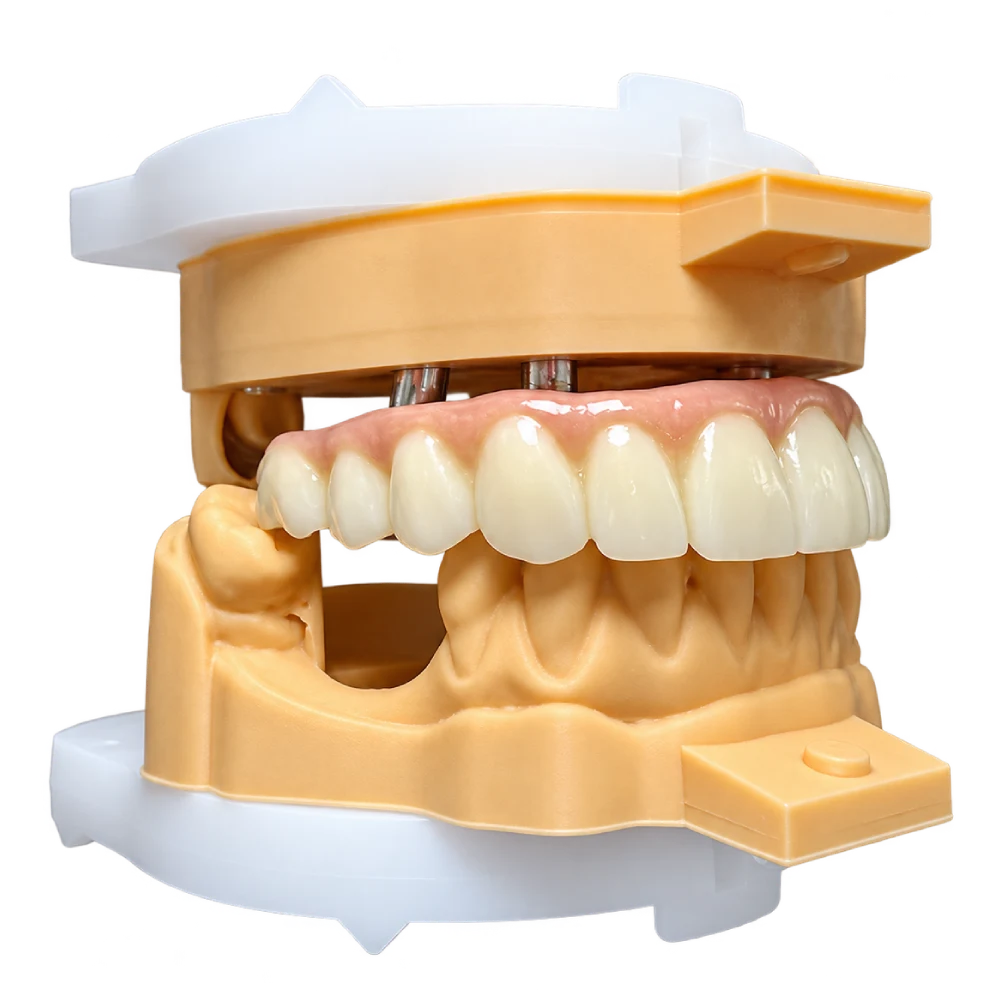
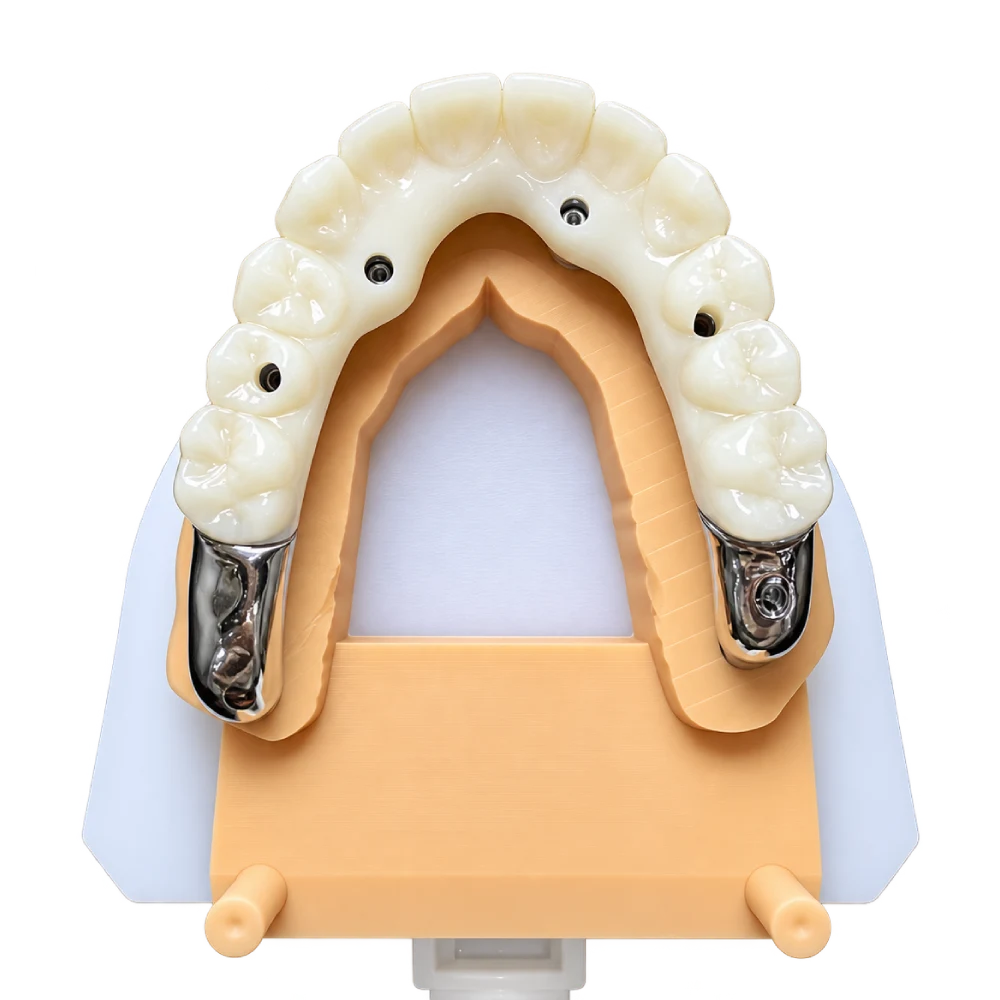
Monolithic zirconia single-unit restoration, screw- or cement-retained, on stock or custom titanium abutments. Manufactured in-house by an ISO 13485 dental lab, FDA-listed for the US and MDR Annex XIII notified for the EU.
Product features
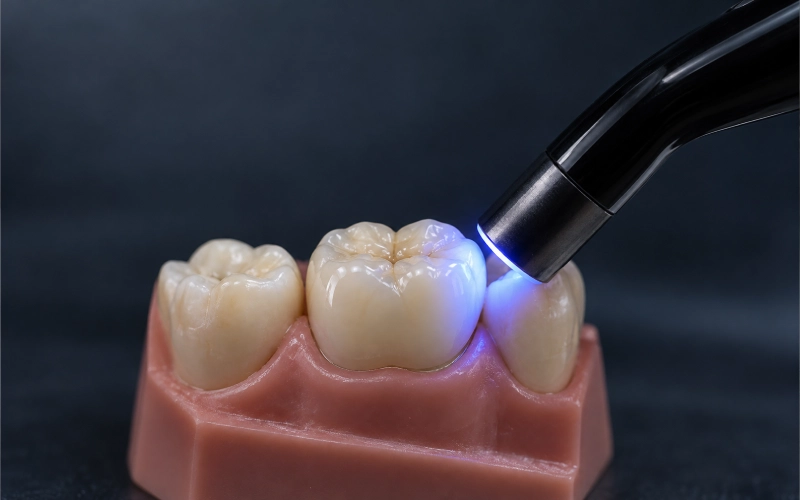
An implant full zirconia crown is a one-piece, monolithic zirconia restoration that seats directly on a dental implant — either screw-retained onto an abutment, or cement-retained over a stock or custom abutment. There is no metal substructure and no layered porcelain veneer. The crown itself is the final piece, milled from a single block of yttria-stabilized zirconia (3Y-TZP, 4Y-PSZ, or 5Y-PSZ, picked to match the indication) and finished by sintering, staining, and polishing (ACP definitions of implant prostheses; zirconia composition review, PMC).
In the implant classification, this restoration sits in the implant-supported category — supported by the implant, retained by either a screw or cement. The terms “implant-supported,” “implant-retained,” and “implant-assisted” refer to different things, and getting them mixed up on a prescription creates real downstream problems (ACP definitions of implant prostheses).
The category covers a single posterior crown through a full-arch monolithic bridge on multiple implants. Published reviews on monolithic zirconia implant-supported single crowns put material survival in the high single digits at five years (Jung et al., systematic review, Clin Oral Implants Res, 2022), and a randomized five-year comparison showed biological outcomes that track with cemented metal-ceramic controls (Kernen et al., 5-year RCT, PMC). A fifteen-year recall on zirconia cores found that the long-term loss drivers are technical — debonding, screw loosening, chipping — not catastrophic ceramic fracture (Fifteen-year recall, BDJ Open, 2024). That is the honest baseline for this restoration class.
Once polished, monolithic zirconia also produces substantially less enamel wear on the opposing dentition than earlier zirconia generations, and less than many glass-ceramic alternatives in head-to-head lab testing (Amer et al., J Esthet Restor Dent, 2020; comparative enamel wear, PMC). Glazed-only and polished-only surfaces do not behave the same against opposing dentition — a distinction that matters when the opposing arch is also restored.
Where it fits
A good match for:
- Single posterior crowns in the molar and premolar region under normal occlusal load.
- Single anterior crowns where a high-translucency 4Y/5Y formulation hits the esthetic target.
- Full-arch or long-span screw-retained bridges on multiple implants, when a monolithic block is preferred over a veneered framework.
- Cases where the patient has a history of chipping or debonding of layered restorations, or where preparation space is tight.
- Bruxism cases where the restoration has to take repeated loading without a porcelain veneer to chip.
Not the right pick for:
- Highly esthetic anterior cases where layered porcelain or glass-ceramic still outperforms a monolithic block on characterization and translucency.
- Very thin veneer preparations where the minimum material thickness (about 0.5 mm occlusal for most modern high-translucency zirconia) cannot be respected.
- Cases where the implant angle forces the screw channel into an esthetic or load-bearing surface and no custom abutment with a corrective angle can resolve it.
Screw-retained or cement-retained?
The default is screw-retained unless there is a specific reason to cement. In a moderate-certainty evidence comparison, cement-retained and screw-retained prostheses showed similar peri-implant disease risk overall (peri-implant disease incidence, PubMed 37793953), but screw-retained removes one failure mode the cement path creates: residual subgingival cement. That residual cement is one of the documented drivers of peri-implantitis around otherwise sound restorations, and it is also the hardest complication to diagnose after the fact (PDL BruxZir white paper).
How we sequence these cases:
- Default to screw-retained. It allows retrieval, abutment inspection, soft-tissue assessment, and prosthetic-screw replacement without destroying the crown.
- Switch to cement-retained when the screw channel would exit through an esthetic or load-bearing surface, or when a custom abutment can correct the angle without giving up retrievability.
- Use angled screw channels (ASC) when the channel position is awkward but the case is still better as screw-retained.
- Use multi-unit abutments (MUA) for full-arch cases and for any case where the platform-to-platform angulation crosses about 15°.
When a case arrives with the retention choice still open, the design review identifies the implant platform, angulation, tissue depth, and esthetic zone — and proposes the retention and abutment type from there.
Implant systems we work with
The lab works with the implant systems in current clinical use. The practical rule on the inbound side is that the prescription needs to identify the platform accurately enough that the design and milling libraries match it. A complete implant ID on the inbound side carries:
- Brand and system (Straumann, Nobel Biocare, MIS, Zimmer Biomet, Dentsply Sirona, BioHorizons, Neodent, Bicon, and others in active clinical use).
- Platform diameter (the platform-specific label such as NP / RP / WP, plus the millimeter value).
- Connection type (internal conical / tri-channel, external hex, internal hex, conical hex).
- Implant diameter and length.
- Scanbody or abutment label photo when available — the label is the single most reliable identifier when library matching is ambiguous.
When the case ships with the original manufacturer’s components — a genuine Straumann or Nobel abutment, a genuine MIS Multi-Unit — the lab uses them as supplied, and the milling library matches the genuine library for that system and platform. When the case ships with a third-party or generic abutment, the lab checks the milling library against the actual scanbody geometry before cutting. Library mismatch is often a prescription-side issue, and the lab catches it before the cut goes to the mill.
For full-arch and complex multi-implant cases, the lab can also supply titanium bars, titanium alloy bars, multi-unit abutments (MUA), temporary cylinders, and the matched prosthetic screws and drivers, on a billable basis when the prescription calls for it.
A note on procedure coding
The crown itself is reported under the implant-supported restoration code set — for example, D6065 for implant-supported porcelain/ceramic crowns. When the case is delivered with a separate custom abutment, the abutment carries its own code (D6057). Billing the abutment and the crown as a single line is a recurring cause of claim denial on implant-supported restorations, and the lab’s outbound paperwork separates the two so the clinician’s billing side stays clean (DrBicuspid coding guidance; Delta Dental implant coding).
Why choose this lab
One lab, one production chain, no hand-offs
Every full zirconia implant crown is built inside the same factory, by the same team, on the same equipment. The full chain — CAD design, model work, CAM milling, zirconia processing, finishing, and quality control — sits inside the lab, with no outsourcing to a third-party lab at any stage. That is the structural reason we can hold a consistent tolerance and a consistent turnaround.
The production team is organized by function: about 100 CAD designers, about 70 milling technicians, about 80 in the implant department, about 70 in ceramic and metal, about 25 in QC, plus customer service and case coordination. Across categories, current capacity runs roughly 8,000 zirconia single crowns per month in normal season and scales to about 15,000 per month at peak, supported by a trained backup workforce. That means a sudden bump in cases does not eat into existing-case turnaround.
Failures are interface failures — we own our part of that
The long-term loss drivers on monolithic zirconia implant crowns are technical, not material: debonding, screw loosening, chipping, passive-fit issues at the interface. The lab is set up to catch each of these before the restoration leaves the bench.
- Interface fit on the implant analog. No flash, no debris at the platform junction, alignment accurate.
- Screw channel. Internal diameter and angulation match the design; the prosthetic screw threads in cleanly with no binding.
- Passive seating. The crown seats without external force, without rocking, without spring-back.
- Component match. Every part in the package matches the prescription — abutment, screw, torque specification.
- Margin and emergence. Margin continuous; emergence profile smooth from platform to contour.
- Occlusion and contacts. Contacts and occlusal scheme verified against the prescription.
Quality control is built into the workflow with explicit checkpoints, not appended at the end. Photographic records of design confirmation and finishing steps are kept on the case file. For implant and full-arch cases, the design review escalates to a technical-lead review before milling.
Materials and regulatory standing
The lab holds FDA registration and device listing for the custom dental restorations shipped into the United States — that listing covers custom crowns, fixed bridges, inlays and onlays, veneers, custom implant abutments, implant-borne superstructures, and full and partial dentures. The implant bodies themselves are manufactured and listed by the implant OEM; the lab’s listing covers the lab’s components on top.
EU exports are covered under MDR Annex XIII custom-device notification for Class IIa custom dental restorations, with the technical file, custom declaration, and EUDAMED notification maintained by the EU representative. UK exports are MHRA-registered. The lab’s quality system runs on ISO 13485. Material-side certifications carried with each restoration include CE marking and ISO 1993 biocompatibility documentation on the zirconia raw materials used, and material traceability is maintained per case.
What the lab does not claim
The lab does not use absolute performance language on this restoration class. The published evidence on this restoration class is honest about long-term loss modes, and the lab’s communication matches that. Warranty is handled by cause: a remake caused by a lab-side issue (fit, shade, design error) is covered at no charge including re-shipping; a remake caused by a clinical change (new preparation, new shade target after the original was approved) is billable; remakes caused by a third-party component supplied to the lab are evaluated case by case.
How we make it
The production chain does not change between a single unit and a full-arch case.
| Stage | What happens |
| Case intake | Prescription and scan / impression data checked for completeness against the submission checklist. |
| CAD design | Senior design technician lays out the design; a second senior designer reviews margin, emergence profile, connector geometry, and occlusal scheme. |
| Model / print | Working model 3D printed from the digital data when the case is digital; poured and sectioned from a verified VPS or polyether impression when the case is physical. |
| CAM milling | Dry or wet milling depending on the zirconia formulation. |
| Sintering | Standard sintering program, locked temperature ramp and dwell time, per-batch temperature log retained. |
| Finishing | Hand finishing, stain, glaze or polish per the prescription. |
| Multi-stage QC | In-process checks during finishing, then a dedicated final QC pass. |
| Pack and ship | Independent unit-level packaging; small parts (prosthetic screws, abutments) bagged separately and labeled with the case ID. |
Sintering temperature control is handled as a controlled process, not a vendor setting. The furnace program is locked, every batch of zirconia is paired with a reference test block to verify shrinkage compensation, and any new batch or new material goes through a test cut before clinical production. If a sintering anomaly shows up in the curve log, the batch is held.
Compatible with the digital workflow on the inbound side
Open standard scan files are accepted (STL, PLY, OBJ), as well as DCM (3Shape native). The lab connects through the cloud portals already in clinical use: 3Shape TRIOS, Medit Link, iTero, DS Core, CEREC Primescan, Shining 3D, Panda, and others. Files can also arrive through WeTransfer when no portal is convenient. There is no requirement for a specific scanner — as long as the export is one of the standard open formats and the scan captures the implant region with the scanbody in place, the case can move forward.
The design phase accepts native editable design files from exocad and 3Shape when a clinician or partner lab wants to send a design for review or for finishing only. The lab also takes cases for any individual stage (CAD design, CAM milling, staining, polishing) when a partner wants to hand off a single step rather than the whole case.
How to work together
What the clinician sends, what the lab sends back
A complete submission on the inbound side carries:
- Digital intraoral scan in open format (STL / PLY / OBJ / DCM) with the scanbody in place, or a verified VPS / polyether physical impression with implant analog.
- Opposing arch scan or model.
- Bite registration in STL or as a scanned physical bite.
- Shade prescription: shade tab, photos (frontal smile, retracted, occlusal), stump shade for translucent cases.
- Implant system identification: brand, platform, connection type, implant diameter and length, scanbody label photo when possible.
- Restoration specification: screw-retained or cement-retained; abutment choice (stock / custom / lab-supplied); emergence profile notes; design preferences.
Missing items delay the start of the clock. The turnaround clock starts when the case is complete enough to start.
On the outbound side, the restoration ships back with the matched prosthetic screw or abutment in a separately labeled bag, the case ID printed on every component, and disinfection completed before packing. The lab also ships under a partner lab’s or clinic’s own label on request — outbound branding is configurable.
Inbound packaging: physical impressions ship in rigid containers with adequate padding; digital files go through the chosen portal. VPS, polyether, and 3D-printed resin models are accepted, including sectioned master casts with implant analogs. Alginate impressions are not accepted for international transit because of dehydration and quarantine risk; if alginate is the only option, the scan is the preferred path.
Turnaround
Turnaround is quoted in in-lab working days from an approved complete case, not from receipt. Design approval wait time, missing-information back-and-forth, and client-side replies do not count against the lab’s clock.
A few working conventions:
- In-lab working days exclude Chinese weekends and Chinese statutory holidays.
- Design approval, missing-data waits, and client reply waits do not count against turnaround.
- Shipping transit, customs clearance, and last-mile delivery are quoted separately from the lab turnaround.
- International shipping default goes via courier; clients can request a specific carrier or service level.
- Case-by-case exception handling covers technical questions, rescan, or remakes that surface mid-production — these are handled as expedited and reclocked.
For a routine single implant full zirconia crown, that translates to 2–3 in-lab working days once the case is complete. Complex multi-implant or full-arch cases run longer and are quoted against the design, typically 5–7 in-lab working days. Rush cases are accepted with an explicit rush fee.
Pricing and accounts
Pricing is not published on the product page — quotes are issued case-by-case or under a partner-lab framework. The quote depends on the unit count (base), the material (base), the implant components (adder), and the design complexity (adder). Quotes are inclusive of design, model work, components supplied by the lab, packaging, and standard outbound shipping; optional services (paid shipping insurance, expedited turnaround, third-party components sourced on request) are itemized separately.
Account terms: bank transfer and PayPal are accepted, in the currencies quoted. New accounts can request net-30 terms after the initial orders. Transaction fees and FX differentials are borne by the client; settlement uses the exchange rate on the day of payment. For outsourcing labs, a minimum monthly lab fee applies — small one-off orders from individual clinicians are accepted when the client covers shipping.
Remakes and rework
Remakes and adjustments are handled by cause, not by default. The rework path follows a defined sequence: cause analysis first (what failed and where in the workflow it happened), then agreed correction, then reclocking under the expedited turnaround. Photo and design records are used to confirm the cause before correction starts.
To open a case or request a quote
- For an existing partner lab or clinic, the standard submission channels (3Shape Communicate, Medit Link, iTero, DS Core, Primescan, WeTransfer) are all accepted; the lab replies with a case ID and a quote on receipt.
- For a new account, a short onboarding covers the systems, materials, and turnaround expectations; onboarding is light and does not lock the lab into a fixed monthly commitment on the clinician side.
- For complex or multi-implant cases, the lab recommends a design-review call before milling — a 20-minute call typically resolves design questions that would otherwise sit in the comment thread for two cycles.
Regulatory standing by destination
FDA-registered for US exports, MDR Annex XIII custom-device notified for EU exports, MHRA-registered for UK exports, ISO 13485 quality system at the lab. Specific destination-country requirements beyond these are confirmed at quote time.