Temporary Tooth Implant
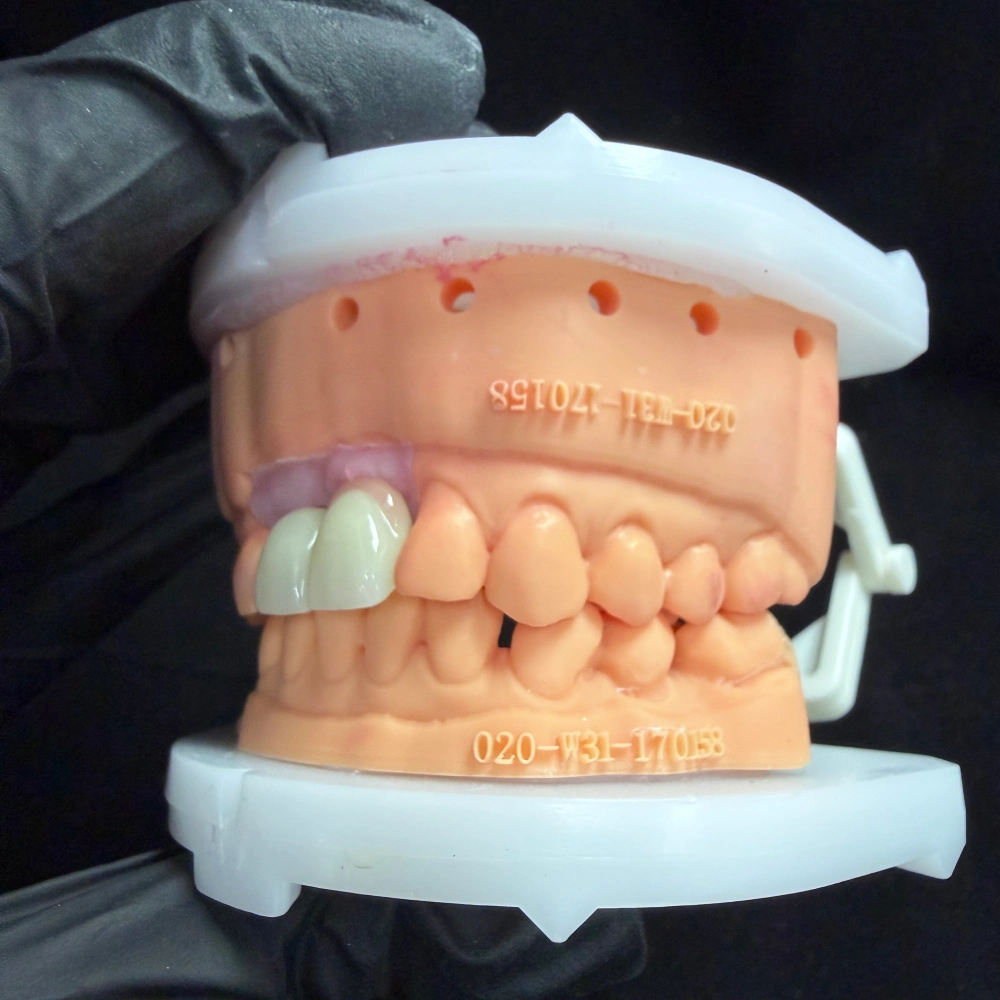
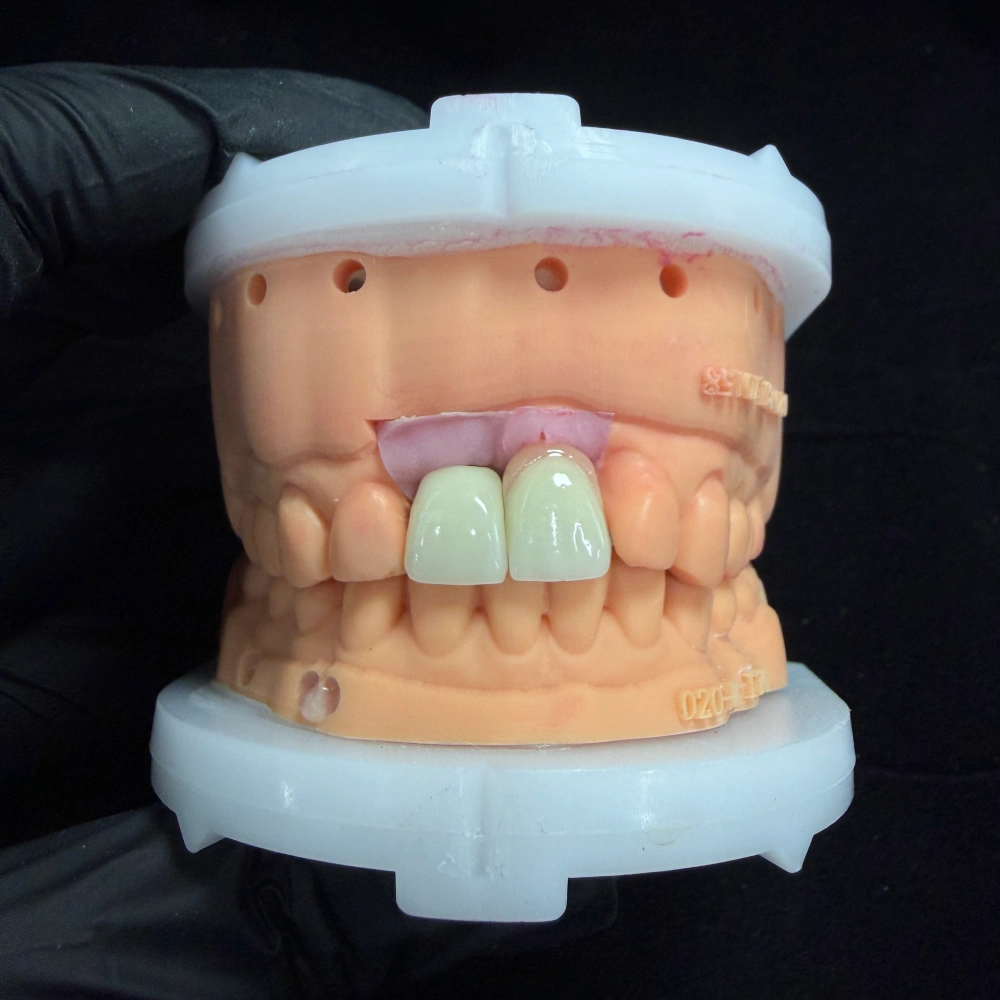
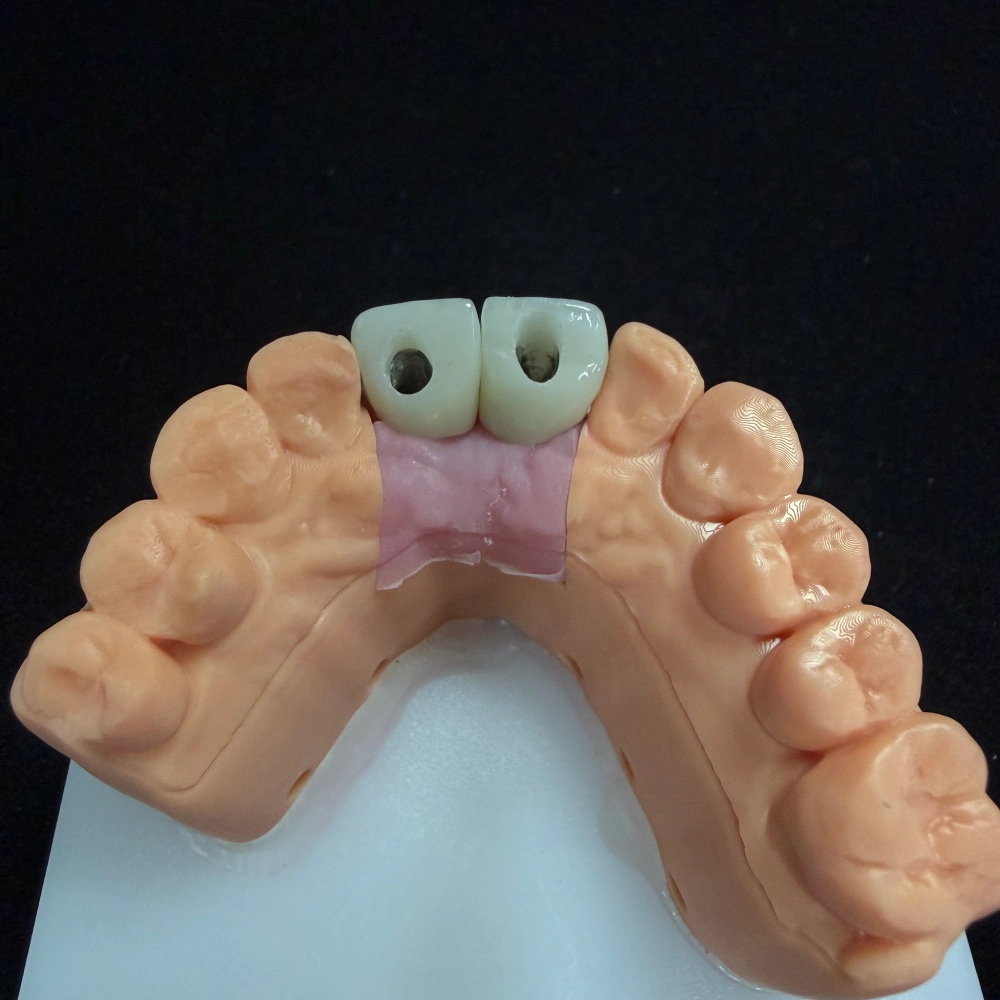
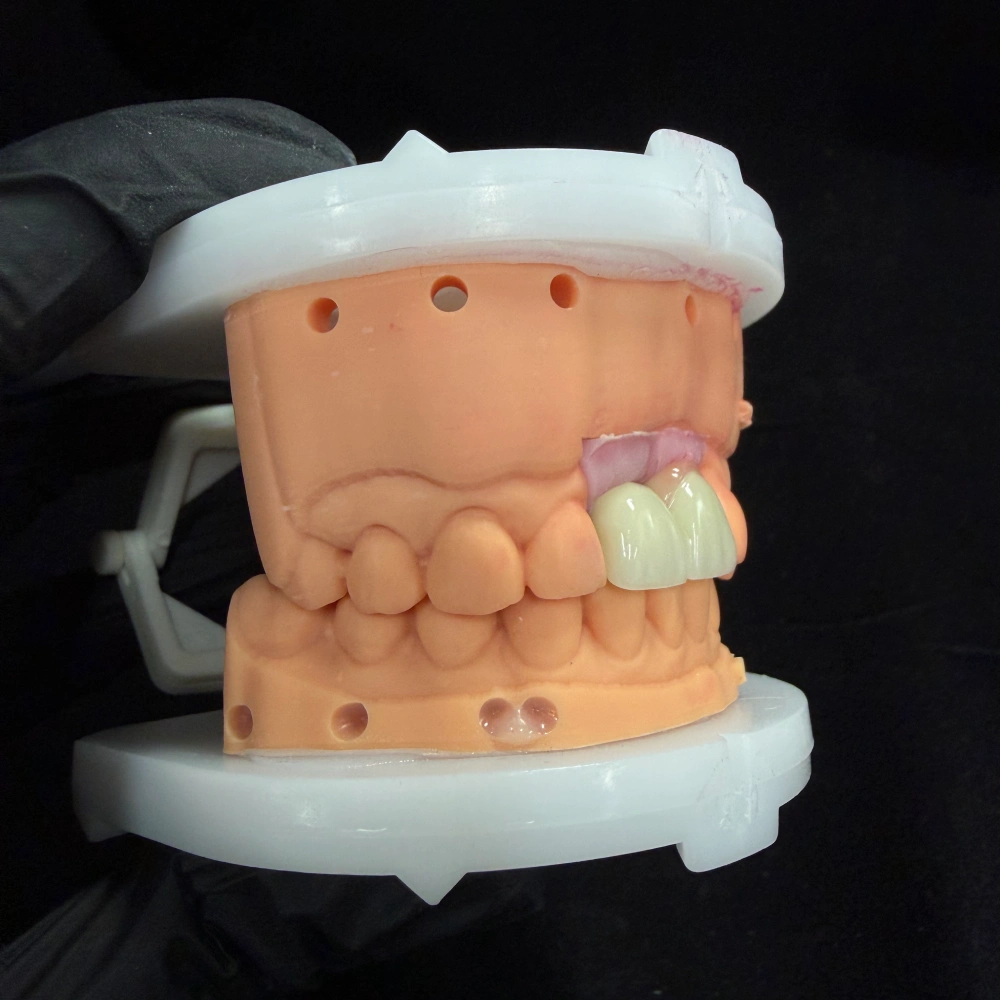
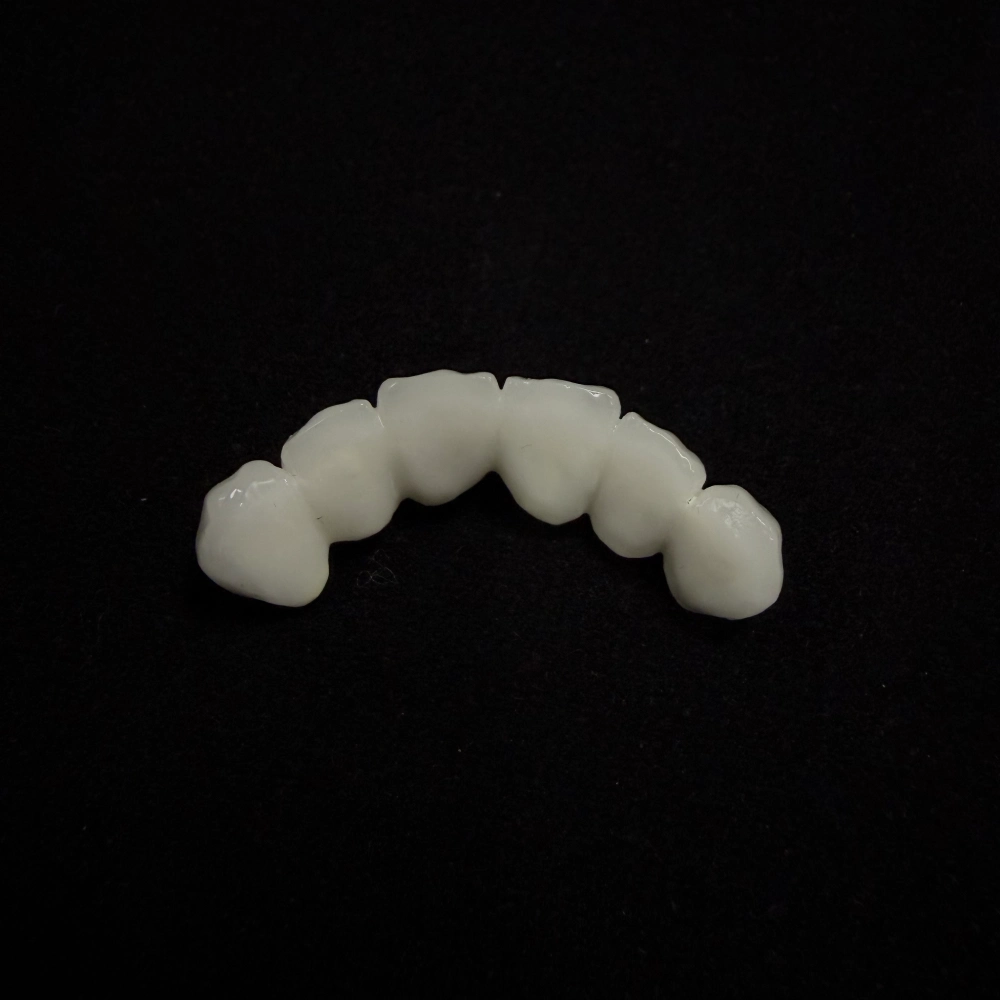
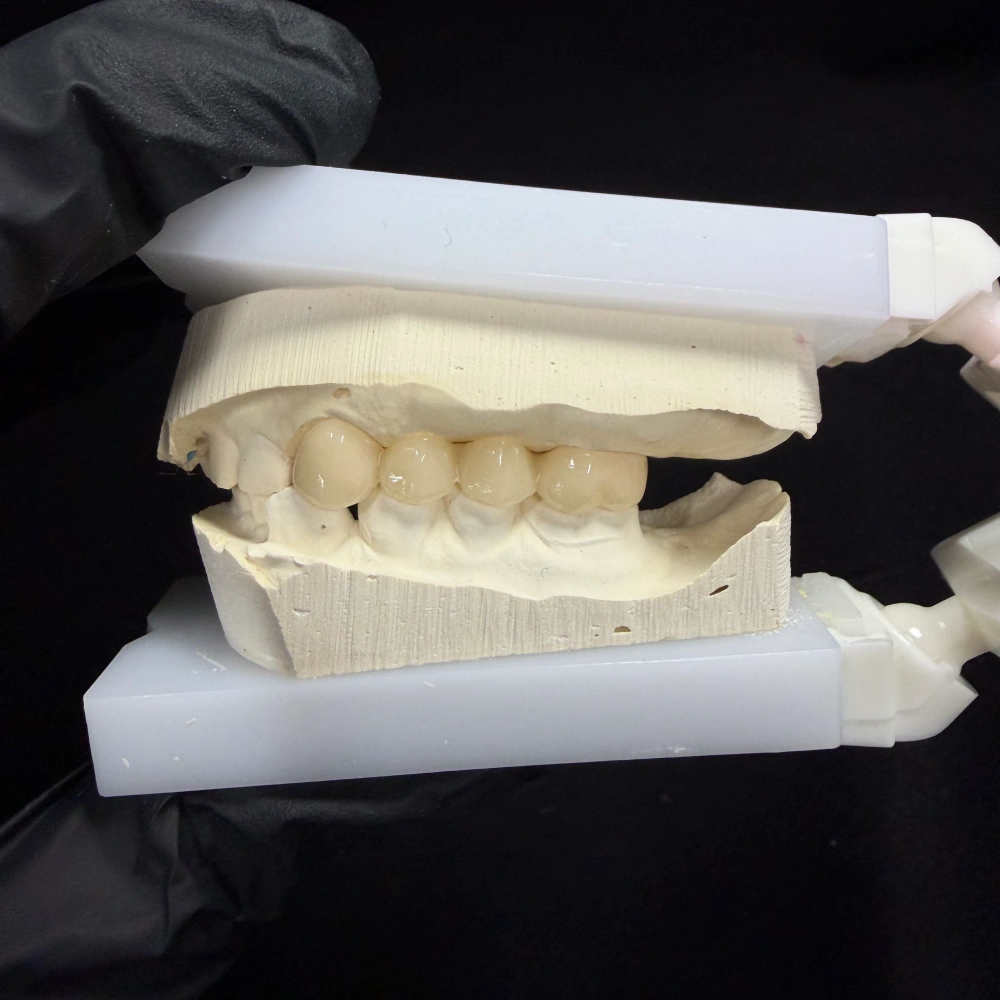
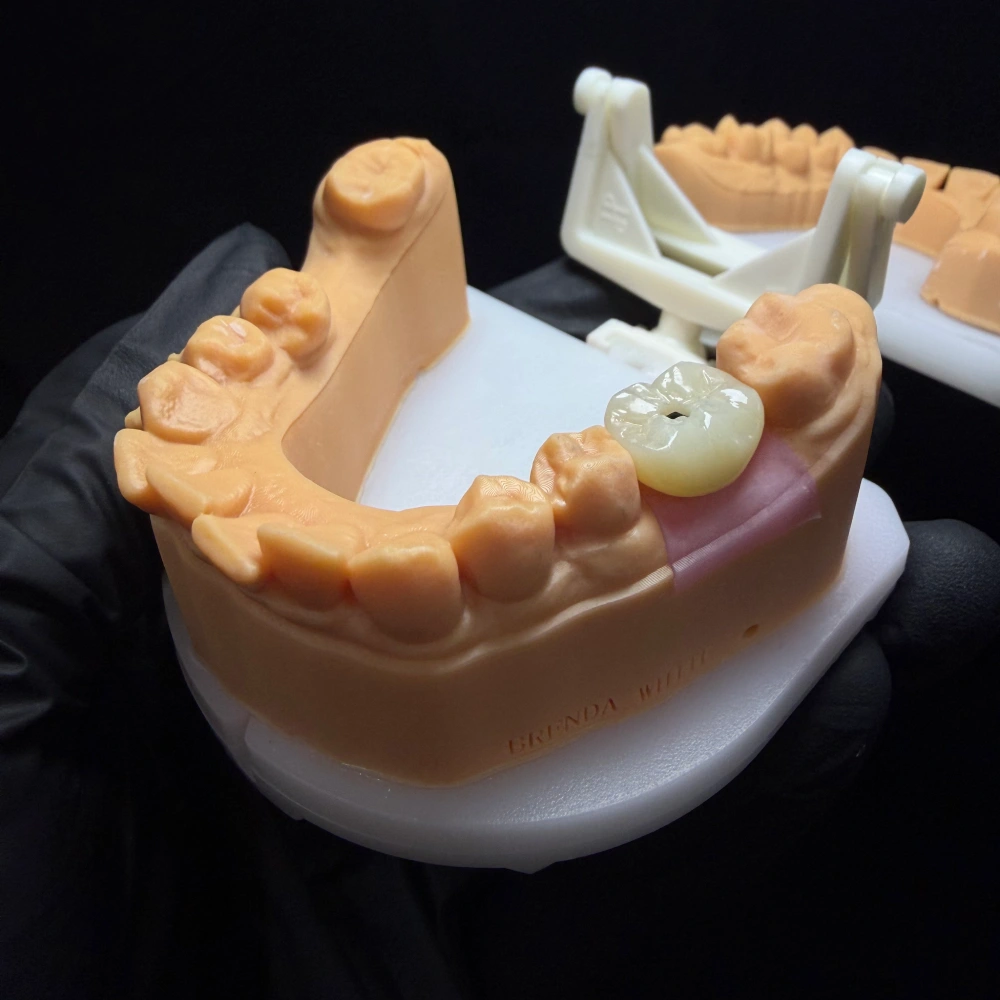
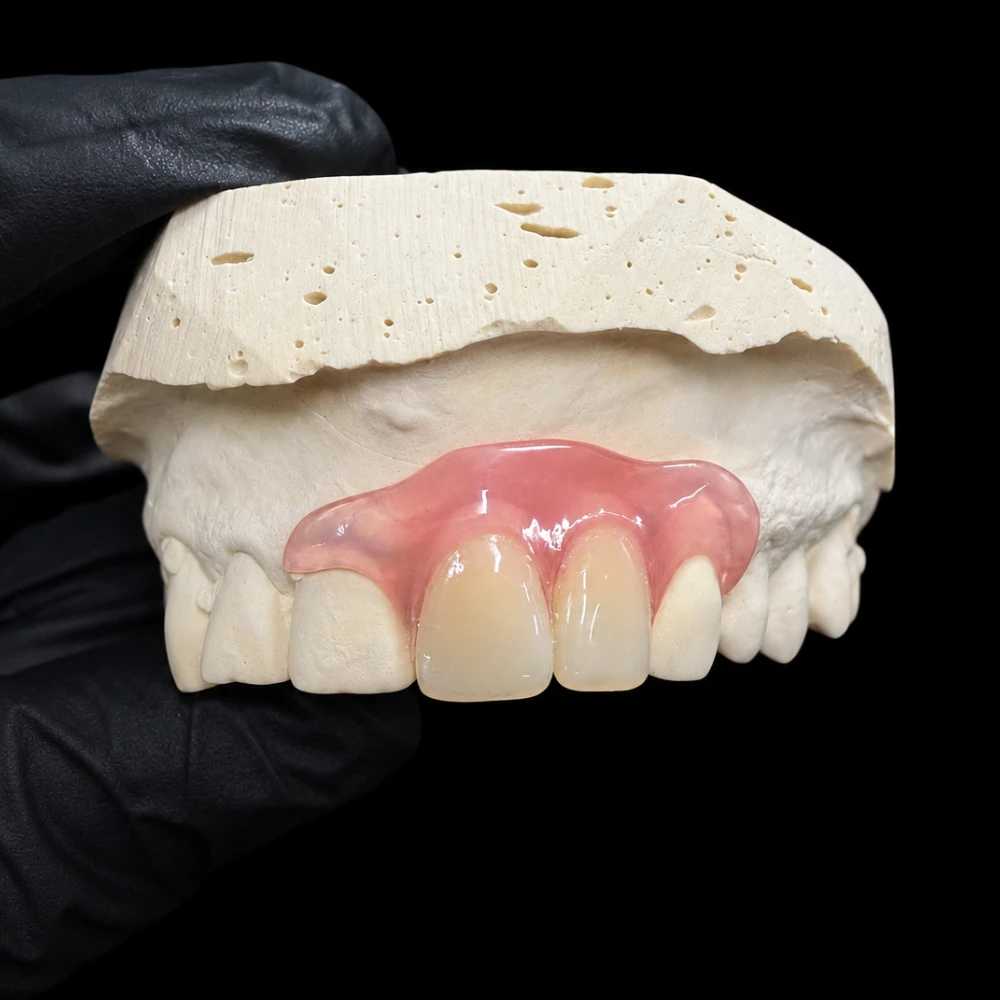
A temporary tooth implant is the lab-fabricated provisional layer — crown, bridge, or full-arch — that sits on an implant fixture during the months before the definitive prosthesis. Milled or printed, screw-retained by default, designed to fit passively and shape the soft tissue while the bone integrates.
1. Temporary Tooth Implant Features & Specifications
1.1 Specs at a glance
| Spec | Value | Notes |
| Fixture-side classification (US) | Class II — 21 CFR 872.3770 | Provisional crown and bridge resin |
| Fixture / abutment reference | 21 CFR 872.3640 / 21 CFR 872.3630 | Endosseous implant / healing abutment — the provisional sits above these |
| Resin biocompatibility | ISO 10477:2018 | Dentistry — polymer-based crown and bridge materials |
| Milled PMMA | Pre-cured blank, 5-axis mill | Long-wear single / bridge / full-arch |
| Bis-acryl composite (lab-processed) | Milled or pressed | Short-wear, diagnostic, prototype |
| 3D-printed provisional resin | Validated LCD / DLP, washed and post-polymerized per manufacturer | Prototype, complex emergence, low-cost multi-unit diagnostic |
| Screw-recommended torque | Follow original implant-system manufacturer specification | Lab can supply reference value; OEM manual is the source of truth |
| Try-in stage | Prototype / wax-up verification before milling | Recommended on full-arch and complex cases |
1.2 Five case types, one product family
| Type | When it’s the right fit | When it’s not |
| Single provisional implant crown | One fixture, screw-access available, 3–6 month wear | Esthetic-zone angulation that cannot be corrected |
| Multi-unit provisional bridge (2–4 units) | Adjacent fixtures splinted, 3–9 month wear | Span that would require verification jig to confirm passive fit |
| Custom healing abutment | Stage-two surgery, soft-tissue conditioning | Stock healing cap from OEM already adequate |
| Full-arch immediate-load provisional (All-on-4 / All-on-X) | Edentulous arch or terminal dentition converted same-day, 4–12 month wear | Primary stability below immediate-loading threshold; limited mouth opening |
| Prototype / try-in | Wax-up verification before provisional or definitive | No diagnostic wax-up, mock-up, or existing prosthesis available to copy |
1.3 Five things this provisional has to do
- Seat passively — no force, springs, or rocking. Multi-unit and full-arch go through a verification jig before final milling.
- Clear screw channel — aligned to the abutment, clear of the opposing cusp, driver passes without binding.
- Shape the emergence profile — narrow at the platform, natural at the cervical margin, no shelf that traps plaque.
- Survive the wear period — no fracture, no wear-through, no occlusal drift across the months it has to last.
- Stay tissue-friendly — high gloss at the cervical margin so biofilm does not accumulate.
2. Why Choose Our Temporary Implant Restorations?
- Survives the wear period — milled PMMA carries full-arch immediate-load provisionals for 4–12 months; printed resin carries prototypes and short-wear bridges; bis-acryl covers diagnostic stages.
- Passive fit, verified — design preview sent before any material is committed; verification jig on multi-unit and full-arch; full-arch cases get a chair-side try-in to confirm VDO, midline, lip support, and esthetics before the final provisional is milled.
- Screw-retained by default, alternatives engineered — angulated screw channel, multi-unit abutment, contour change, and cement are the four-step ladder when angulation blocks a straight screw channel.
- Emergence profile designed, not improvised — the design is sent back as a digital preview or 3D-printed try-in for in-mouth approval; the milled part only runs after the clinician signs off.
- Coverage across most implant systems — the digital library matches the scan body on the work order; the case opens in the right CAD environment from the first import.
- Traceable case file — implant system, platform, diameter, connection, design approval timestamp, and every QC checkpoint are recorded; if a screw loosens or a framework does not seat, the chain tells the story.
- Compliance posture included — ISO 13485 quality system, FDA establishment registration, EU MDR Annex XIII custom-made device framework; documentation travels with the case for your regulatory affairs contact.
3. Temporary Tooth Implant Fabrication Process
3.1 Material × process selection
| Material | Process | Wear period | Best for |
| Milled PMMA | 5-axis mill | 3–12 months | Long-wear single / bridge / full-arch |
| Bis-acryl composite (lab-processed) | Mill or press | Up to a few weeks | Short-wear, diagnostic, prototype |
| 3D-printed provisional resin | Validated LCD / DLP, washed, post-polymerized | Weeks to a few months | Prototype, complex emergence, multi-unit diagnostic |
3.2 Mill vs print — when each one wins
| Case | Mill | Reason | |
| Single crown, 3–6 months | ✓ | ◯ | Margin fidelity and surface detail come from milling |
| Multi-unit bridge, 3–9 months | ✓ | ◯ | Span length and fatigue favor milled PMMA |
| Full-arch immediate-load, 4–12 months | ✓ | ✗ | Wear period exceeds the validated fatigue envelope of printable resins |
| Prototype / try-in | ◯ | ✓ | Lower cost per unit for a try-in that gets adjusted chair-side and discarded |
| Complex emergence profile | ◯ | ✓ | Printing captures undercuts milling cannot reach |
| Soft-tissue conditioning diagnostic | ◯ | ✓ | Short-wear, low-load, geometry-sensitive |
3.3 QC checkpoints
Design review · milling / print inspection · seat check on model or verification jig · screw channel check · final QC · technical-lead sign-off on complex implant and full-arch cases.
4. Working With Us
4.1 Send these on every work order
- Implant system, platform, diameter, connection — label photo or scan-body / abutment photo
- Scan body brand and CAD library name
- Intraoral scan — arch with scan body, opposing arch, bite
- Diagnostic reference — existing provisional, wax-up, mock-up, or setup prosthesis
- Shade tab, intraoral photo, smile-line photo
- Soft tissue reference — existing healing abutment or provisional, gingival cuff, emergence-profile notes
- Work order notes — retention preference, material preference, wear-period expectation, constraints
4.2 Lead times
| Case | Days (working) |
| Single provisional implant crown | 3–5 from approved design |
| Multi-unit provisional bridge (2–4 units) | 4–6 from approved design |
| Full-arch immediate-load (no prototype) | 5–7 |
| Full-arch with prototype / try-in | 7–10 including try-in verification |
| Custom healing abutment | 3–5 |
| Diagnostic wax-up / mock-up | 2–4 |
4.3 Send a case
- Portal — direct upload via the case portal
- Shared link — from any of the supported intraoral scanners
- Email — to the case intake address below
- First case — opens with a short onboarding conversation so implant libraries and defaults are on file
Regulatory references in this document are technical coordination references, not certification or approval claims. Material and process references cite the published standard or the manufacturer’s published specification at the time of writing.