Complete Dentures & Full Dentures
Ordering a full denture from a new supplier always comes down to the same question: will this arrive fitting the way the design file said it would, and will it still fit the way you left the case. That’s the standard we build every complete denture, full denture, and removable complete denture against, from the primary impression through the final polish. Whether your case is described on the chart as a full denture, a complete denture, or a removable complete denture is a matter of local convention — the records we need and the workflow we run are the same.
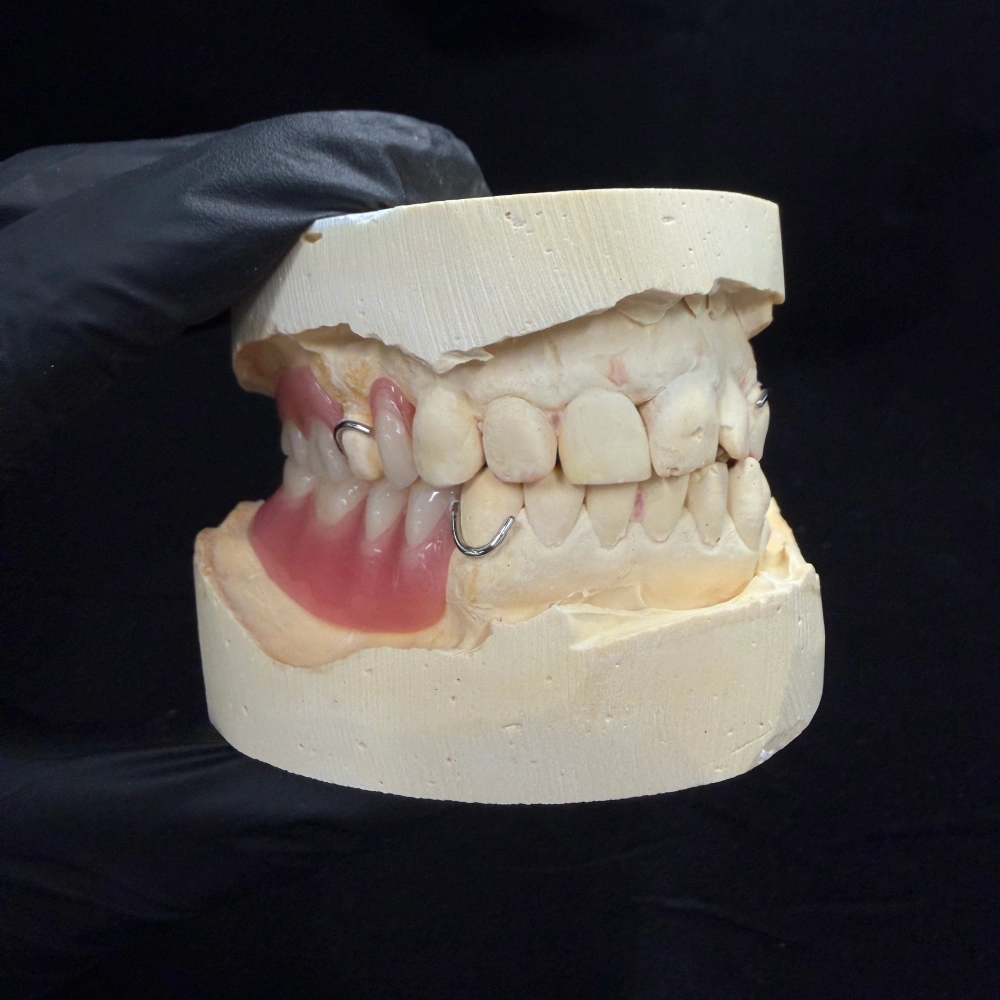
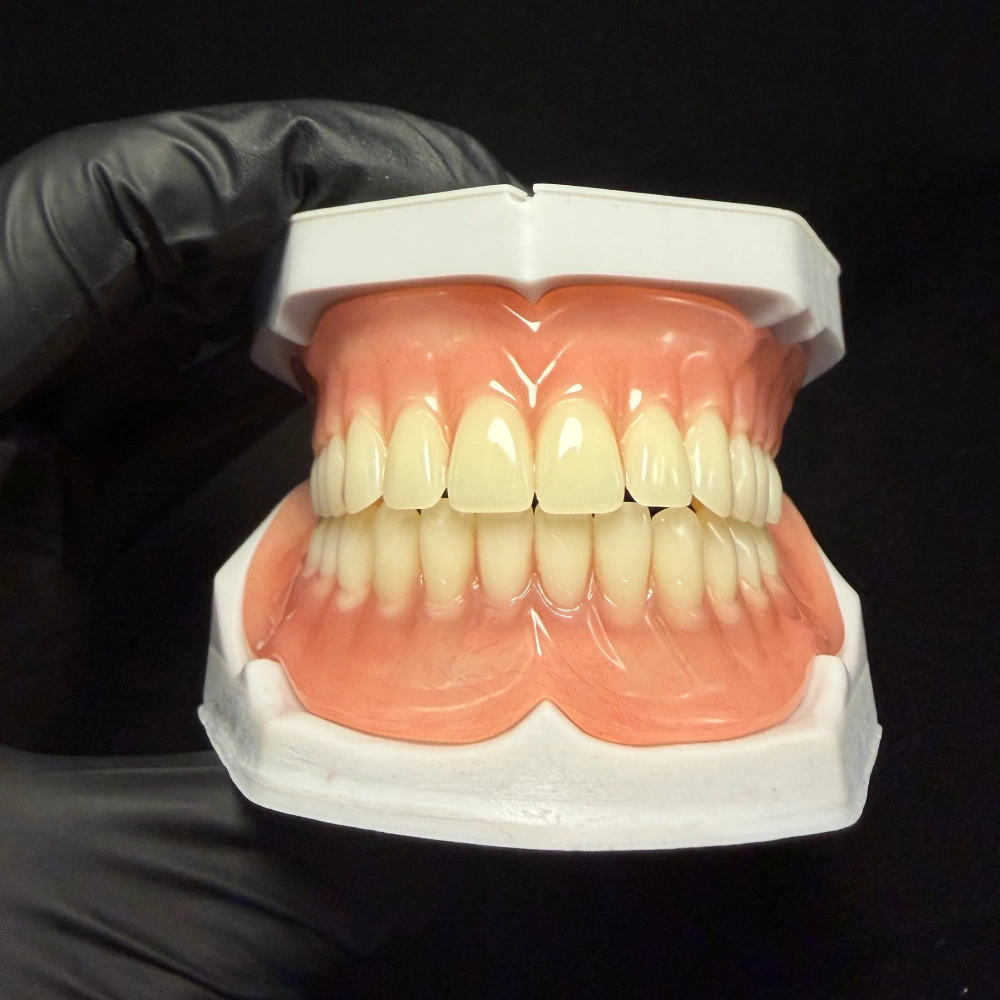
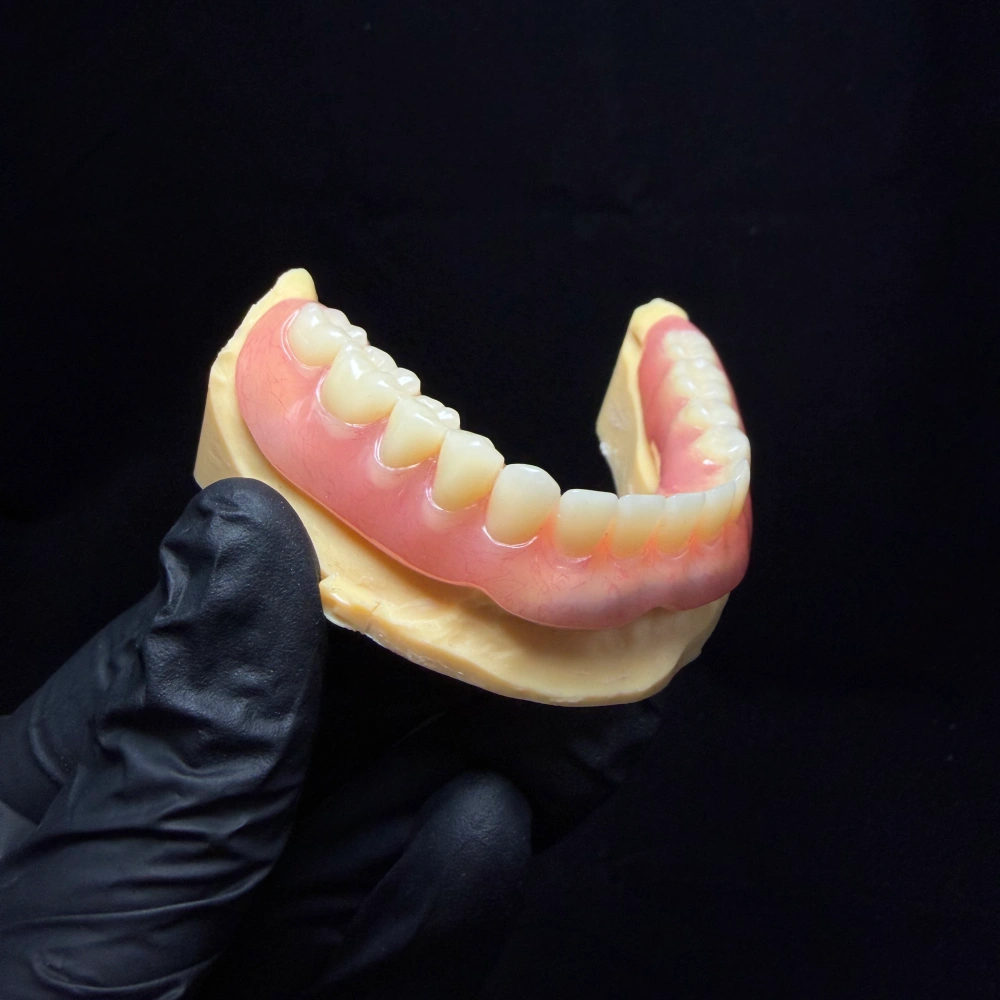
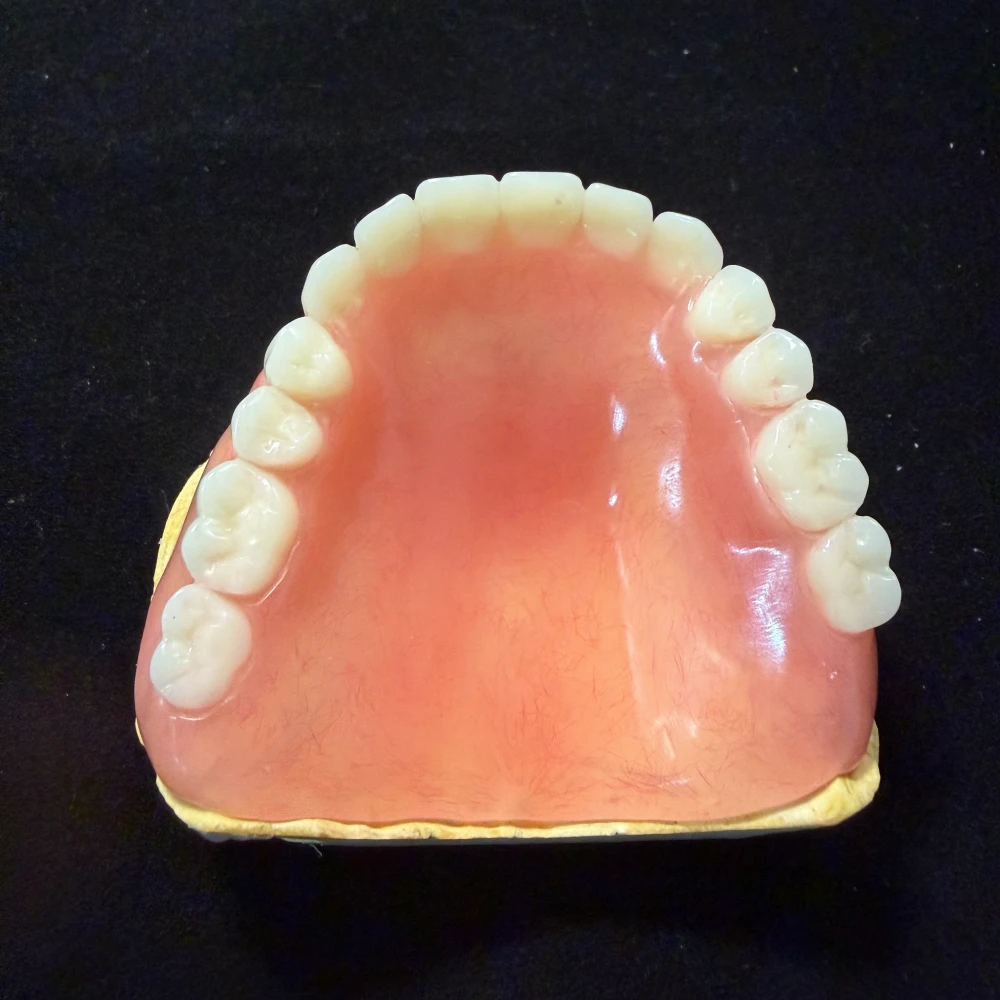
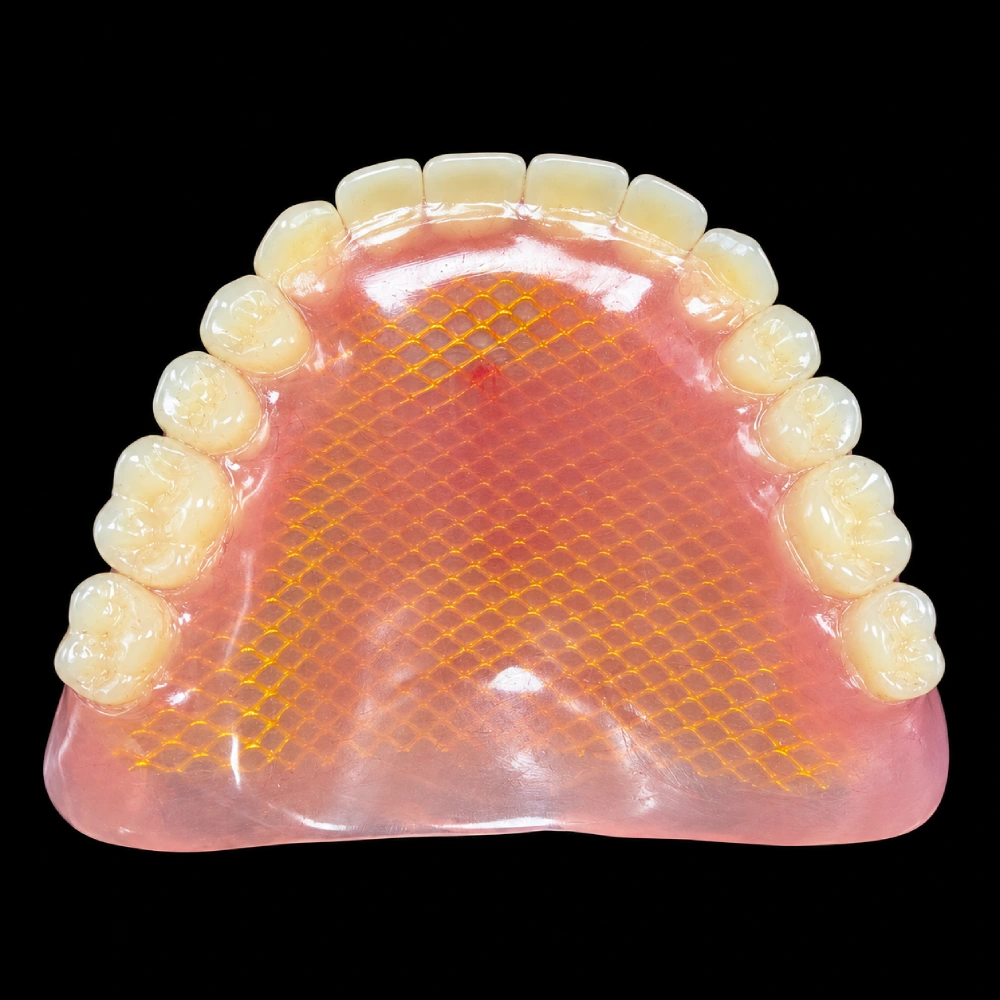
What you get with every complete denture case
We tabulate what most labs only describe in a phone call, because a dentist choosing a lab for complete dentures shouldn’t have to guess at tolerances or turnaround.
Item | Specification |
Base material | Heat-cured or injection-molded PMMA (Lucitone 199 or equivalent imported grade), high-impact acrylic, or flexible resin for select cases |
Tooth material | Composite resin, acrylic resin, or porcelain denture teeth, matched to shade and mould from your prescription or a reference photo |
Design workflow | Conventional wax try-in, fully digital, or hybrid — your case, your call |
Standard turnaround | 2–3 business days for routine complete dentures once we have a complete case; 5–7 business days for complex full-arch or implant-related cases |
Turnaround clock | Starts the day we receive a complete case; design-approval waits, missing information, and customs clearance are not counted against it |
Quality checkpoints | Three independent checks — incoming case audit, in-process inspection, final QC release by a technician who did not fabricate the case |
Rework threshold (no charge) | Denture base not seating, flange overextension, unreasonable clasp design, occlusion off, tooth shade mismatch |
Shipping | DHL, FedEx, UPS, or Spider (France), with tracking issued the day the case ships |
If any of those numbers need to flex for your specific case mix, that’s a conversation, not a form — send us your current case volume and we’ll tell you plainly what we can commit to.
Complete Denture Features & Material Options
Denture types we produce. Complete dentures (full upper, full lower, or full-arch pairs), overdentures and implant-supported overdentures with Locator- or bar-compatible attachments, immediate dentures fabricated from your pre-extraction records, and relines, rebases, and repairs for existing removable complete dentures already in service.
Base and tooth material options. Acrylic bases can be heat-cured, injection-molded, or CAD-milled from pre-polymerized disks. Heat-cured is the lower-cost, traditional route; injection molding shrinks less and seats more consistently; milling gives the most repeatable result for a fully digital case but needs a hybrid finishing step where soft-tissue detail matters. Base resins used in denture manufacturing are expected to meet FDA performance guidance for denture base resins — that’s a materials-safety baseline, not a claim that one qualifying resin outperforms another clinically. We’ll tell you which option fits your case rather than defaulting to whichever is cheapest for us to run that week.
Digital, conventional, or hybrid — your choice, not ours. A fully digital workflow means your intraoral scan goes straight into design; a conventional case still needs a physical impression and a plaster or 3D-printed model. Digital cases typically ship one to two days faster because there’s no model-casting step and no risk of an impression being lost or distorted in transit. We support both, and we support switching between them case by case.
Individual attention on jaw relation records. We rebuild vertical dimension of occlusion, midline, and lip support from your bite records, face-bow transfer, digital smile design input, and reference photos of the patient’s existing denture, rather than from the impression alone. For edentulous cases, we confirm centric relation with a wax rim or Gothic arch tracing and validate it against a trial tooth set-up before final processing — not after.
Tooth selection that starts from what the patient already wears. When a photo or the existing denture is available, we carry forward the fullness and tooth proportions the patient has already adapted to, and correct only the specific problems you flag — an occlusal discrepancy, a crowded midline, a shade that’s drifted. We don’t discard a working baseline to start from a stock mould.
Impression logistics we actually spell out. Physical impressions travel internationally on VPS (vinyl polysiloxane, our default recommendation) or polyether — not alginate, which absorbs and loses water in transit and carries a customs risk from mold growth on a biological material. Before a case leaves your clinic, we ask for the impression to be rinsed, disinfected, and dried, and for the tray to be checked for tears, drags, and voids at the margin before it’s boxed; a defect in a non-critical area of soft tissue can stay, a defect at the finish line cannot. Models arrive to us bubble-wrapped and rigid-boxed. If you’d rather skip all of that, scan and send digitally — the option exists precisely because the physical route has more places to go wrong.
Attachments and metal frameworks handled as their own workflow. Cast metal partial frameworks are designed from a surveyed model with clasp type, rest seats, and major connector position marked and sent back to you for sign-off before casting or milling starts. Overdenture attachments — Locator, bar, ball, or magnet systems — need the implant brand, platform, diameter, and position confirmed up front, because that’s the information that can’t be inferred from a scan alone.
Why Choose ASD Dental Lab for Complete Dentures?
A direct manufacturer, not a broker. Every stage — CAD design, printing or milling, wax set-up or acrylic processing, polishing, and the three QC checkpoints — happens inside our own facility. We don’t subcontract complete denture cases to a third lab and relabel the box; if a step touches your case, one of our roughly 460 in-house technicians did it, in a dedicated removable-prosthetics department separate from our crown-and-bridge and implant lines.
Capacity that doesn’t buckle in your busy season. Our removable department alone processes on the order of 4,000 cases a month in normal periods and scales past 6,500 in peak season, with cross-trained backup staff brought in rather than case queues stretched. If a confirmed delivery date is at risk from an unplanned surge in our own order book, we renegotiate the new orders’ scheduling — not the dates we already gave you.
A defensible standard, not a marketing claim. We’re not going to tell you one acrylic system chews better than another or that a milled base is clinically superior to a heat-cured one long-term — the published evidence on complete denture materials and fabrication methods doesn’t support a universal winner, and a supplier claiming otherwise is selling you certainty the research doesn’t have. A 2024 systematic review comparing milled, 3D-printed, and conventional complete dentures found outcomes converge across fabrication methods rather than one method dominating. What we commit to instead is process control you can audit: specified materials, documented QC gates, and a rework policy that names the defects it covers.
Compliance paperwork that’s already done. Custom removable prostheses shipped into the US fall under FDA facility registration and device listing under the same CDT code framework the ADA maintains for prosthodontic procedures; into the EU, they’re handled as MDR Class IIa custom-made devices under the Annex XIII pathway with a signed statement of conformity — not a routine CE mark, because a single-patient custom device isn’t standardized production. We keep both current and can provide documentation on request rather than after your compliance officer asks twice. A CDT code on our paperwork describes the procedure performed; whether a specific payer reimburses it is a separate question we don’t have visibility into and won’t guess at on your behalf.
Our Complete Denture Manufacturing Process
- Case intake. Physical impressions or digital scans, jaw relation records, a face-bow transfer where indicated, photos of the patient’s existing denture if one exists, and a shade/mould reference arrive together. We confirm receipt and flag anything missing before the clock on your turnaround starts.
- Model and design. Physical impressions are poured or 3D-printed into a working model; digital scans go straight to design software. Vertical dimension, midline, and lip support are set from your records, not assumed from the arch form alone.
- Tooth set-up and wax try-in. Teeth are selected and arranged to the prescribed mould, shade, and occlusal scheme. For conventional cases we send a wax try-in stage where you and the patient confirm esthetics, midline, and bite before we commit to final processing — catching a correction here costs a courier trip, not a remake.
- Base processing. The acrylic base is heat-cured, injection-molded, or milled per the workflow selected for the case, then trimmed to the prescribed extensions.
- Occlusal remount and adjustment. The finished denture is remounted on the articulator against your original bite records to correct any processing shift, then adjusted through centric, protrusive, and lateral movements to eliminate premature contacts before it ever reaches the patient’s mouth.
- Three-point quality control. Incoming-case audit at intake, mid-process inspection during set-up and processing, and a final release check performed by a technician who did not fabricate the case — fit, occlusion, flange extension, clasp engagement (for partials and overdentures), and polish are all checked against your original prescription.
- Packaging and shipment. The finished case is boxed individually with cushioning, disinfected before it leaves our facility, and shipped with a tracking number issued the same day, with photos of any pre-existing damage documented before dispatch.
How to work with us
Getting started. Send a test case — either a digital scan file or a physical impression with a prepaid or ASD-account shipping label — to our intake address, and we’ll walk you through pricing and turnaround for your specific case type before you commit to a second one.
Design approval. For anything beyond the most routine reline, we send a digital design or wax try-in preview for your sign-off before final processing. Approved changes made early don’t move your delivery date or your invoice; changes requested after milling or curing has started may.
If something needs adjusting after delivery. A base that won’t seat, an overextended flange, a clasp that’s binding or too loose, an occlusion that’s off, or a shade that doesn’t match the approved design are corrected at no charge. We ask for the specific defect and, where possible, a photo — that’s what lets us fix the actual problem instead of guessing and re-shipping the same error.
Multi-location accounts. If you run more than one clinic or work with several dentists inside one practice, we track each doctor’s design preferences and case history separately in our system, so a preference set at one location doesn’t get lost when the next case comes from a different provider under the same account.
Complete Dentures FAQs
Laboratory fees for complete dentures vary by base material, whether the case is conventional or digital, and whether it includes a wax try-in stage — ask for a quote against your specific case type rather than a category-wide number, since a heat-cured single-arch case and an injection-molded full-arch pair with a try-in aren’t priced the same way. What a patient’s insurance reimburses is a separate question entirely — Medicare’s own coverage rules and state Medicaid fee schedules vary enough that we’d rather point you to the payer directly than guess on your patient’s behalf.
The clinical decision is yours; what changes on the lab side is the records we need. A conventional complete denture is built from impressions, a bite record, and a tooth-shade reference. An implant-supported overdenture additionally requires the implant brand, platform, diameter, position, and attachment system — Locator, bar, ball, or magnet — because that hardware can’t be inferred from a scan.
Yes. Digital cases skip the model-casting and impression-shipping steps entirely, which is typically one to two days faster and removes the risk of an impression distorting or being damaged in transit. Physical cases remain fully supported for clinics without scanning equipment, with VPS or polyether impressions recommended over alginate for anything traveling internationally.
A routine complete denture is 2–3 business days on our side once we have a complete case; complex full-arch or implant-related cases run 5–7 business days. The clock starts the day we receive complete records and pauses whenever we’re waiting on you — a design approval, a missing shade note, a replacement impression — with the balance restarting from the moment you send the missing piece. International shipping and customs clearance sit outside the lab clock and are quoted separately.
The denture base is acrylic (PMMA), usually heat-cured or injection-molded, and the teeth are composite resin, acrylic, or porcelain depending on the case. Both categories are standard prosthodontic materials with a long history of documented use — see the American College of Prosthodontists’ position statement on denture replacement for the reference framework we work against. We can match the specific system to the material the patient’s clinician has had success with before.
Neither is universally better; each has its use. Porcelain teeth are harder-wearing and hold shade well but transmit force more directly to the ridge and are heavier; acrylic and composite teeth are lighter, kinder to opposing dentition, easier to adjust chairside, and simpler to bond back into a base during a repair. On our end, we’ll produce either — the answer for a given patient depends on their opposing occlusion, ridge condition, and how much chairside adjustment you want to keep possible.
Those go straight into our no-charge rework category. Base not seating, flange overextension, unreasonable clasp design, occlusion off, tooth shade mismatch — send us a description of the defect with a photo if possible, and we correct against the original approved design. The reason we ask for the specific defect is so we can fix the actual problem, not re-run the same design and ship the same error back.
Yes to both. We accept a patient’s existing denture as a fullness and tooth-position reference — many of our best-received cases carry forward what the patient has already adapted to and only correct the specific flaws you name. For a repair or reline, we need the existing denture, current impressions, and a bite record; a broken denture needs an impression and a bite before it’s sent, since the fracture surfaces alone don’t reproduce the original vertical dimension. Digital cases can reuse a saved scan and typically save one to two days on the reline side as well.
Yes. Our case management system stores each doctor’s preferences (tooth mould defaults, occlusal scheme, flange preferences, shade calibration) as a separate profile under one account, so a preference set by one provider isn’t overwritten the next time a different provider in the same clinic sends a case.