Partial Dentures – Custom Removable Partial Dentures
Partial dentures replace one or more missing teeth when some natural teeth are still in the mouth. They rest on the remaining teeth and gum tissue, held in place by clasps, precision attachments, or flexible retention. As a full-service dental lab, we fabricate every kind of removable partial denture in-house — cast metal, titanium, PEEK, flexible thermoplastic, and combination cases — and we ship them back to your practice ready to seat.
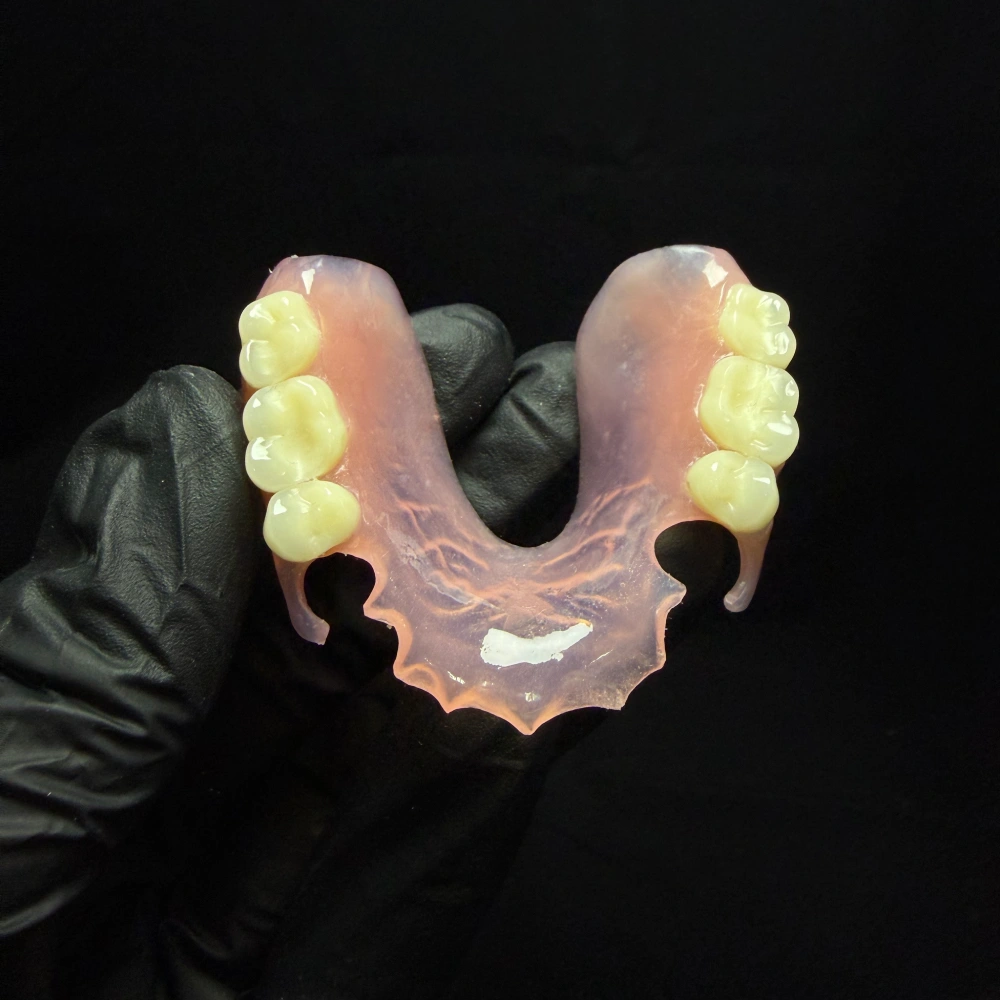
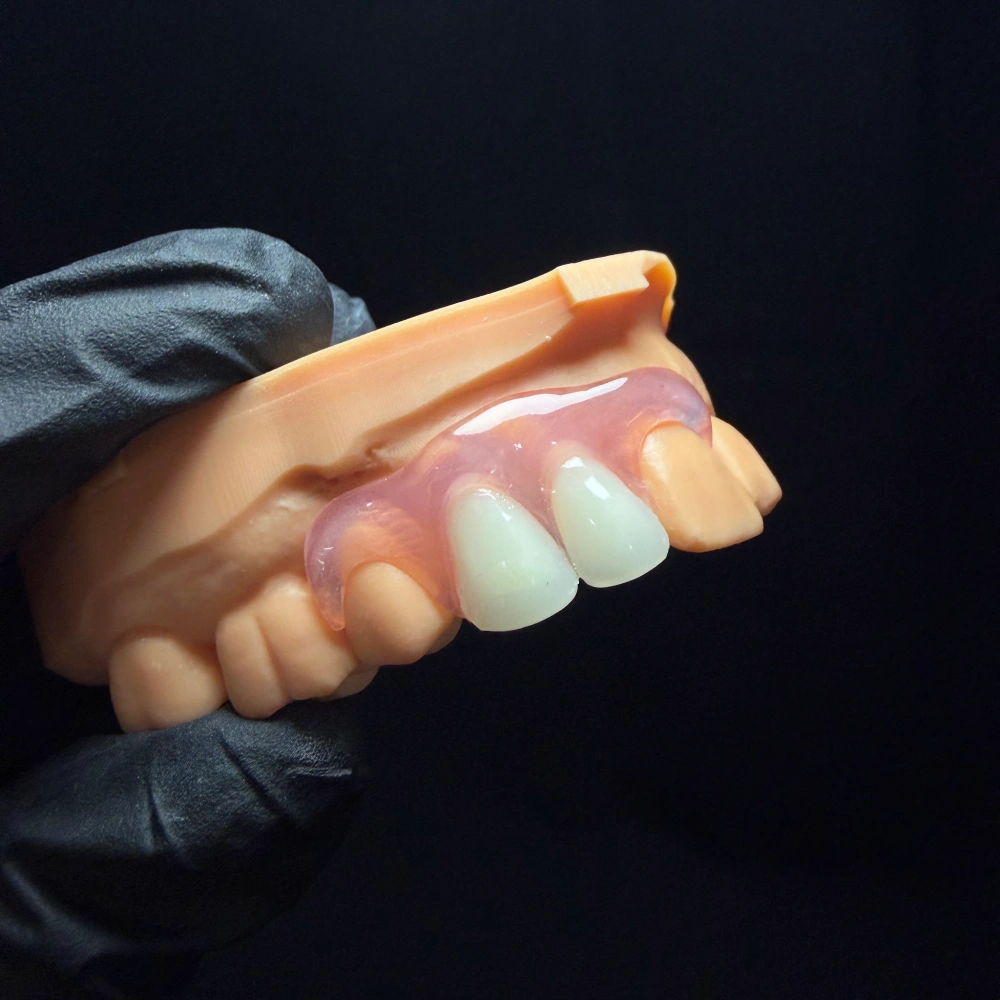
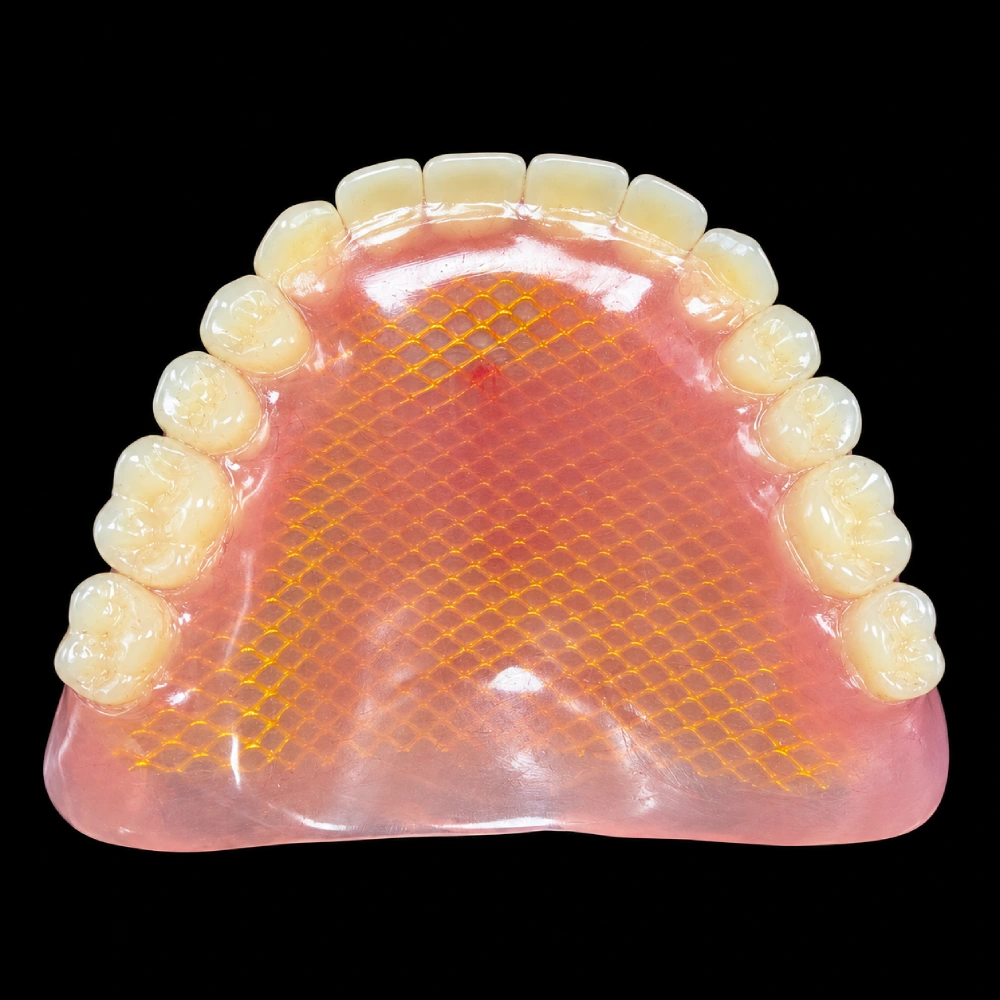

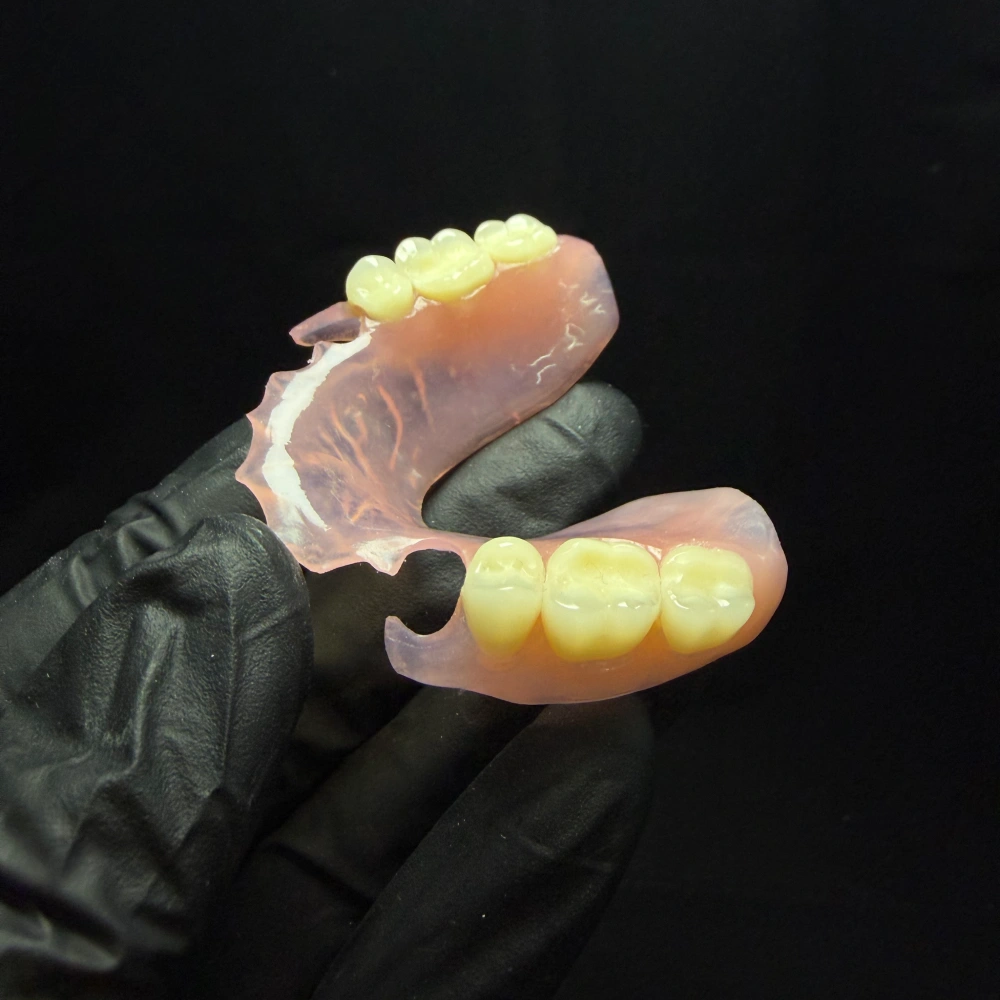
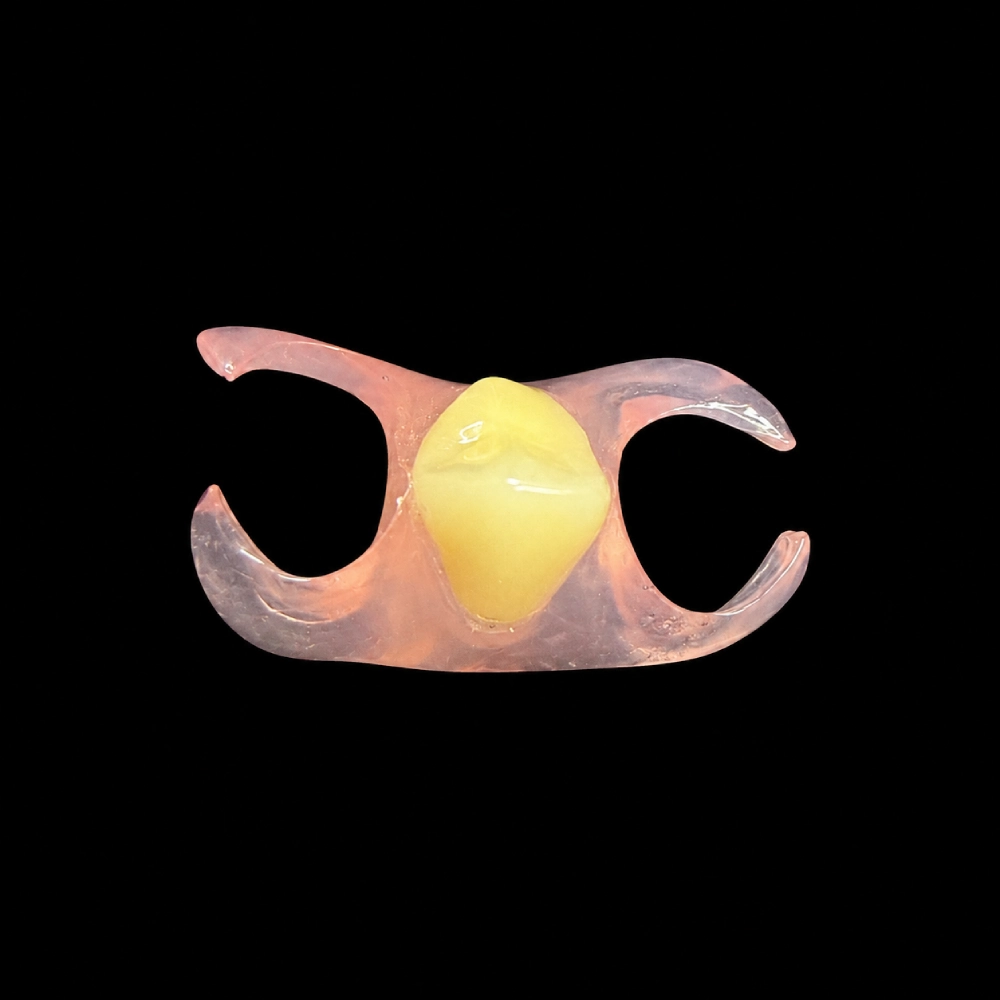
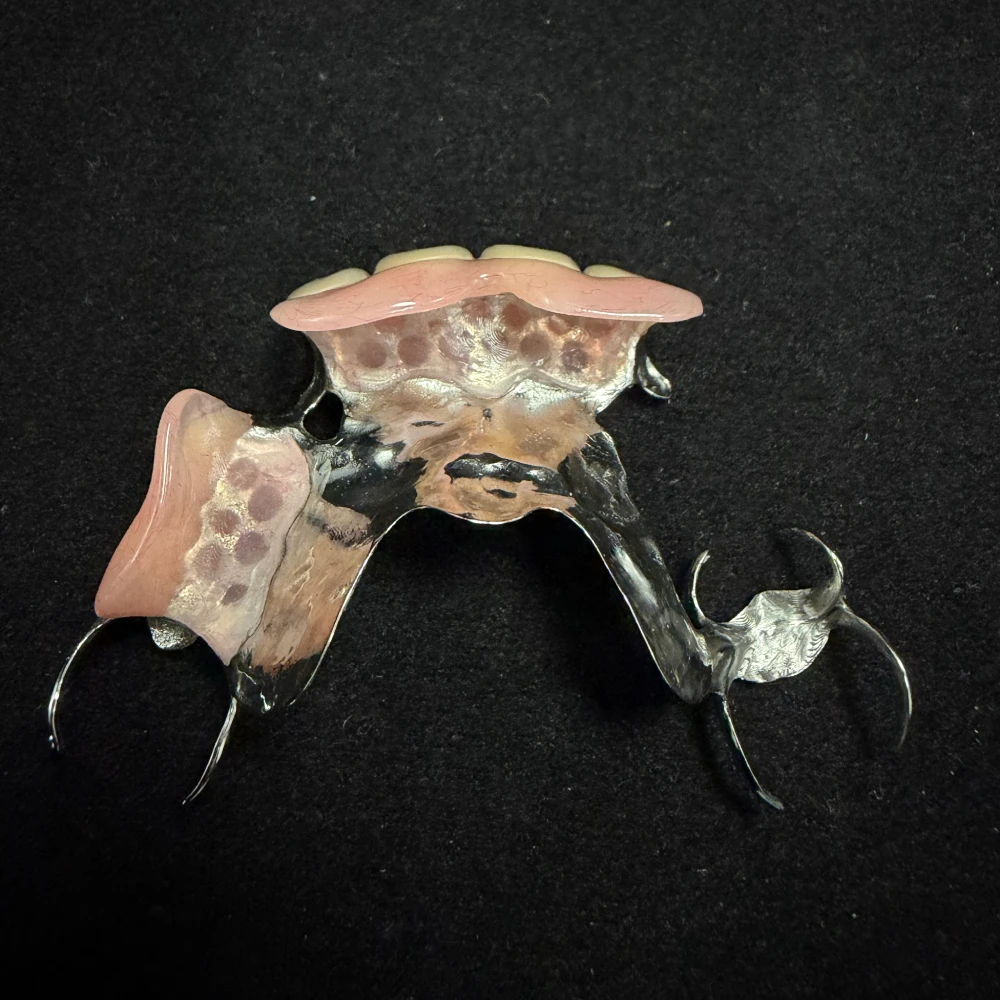
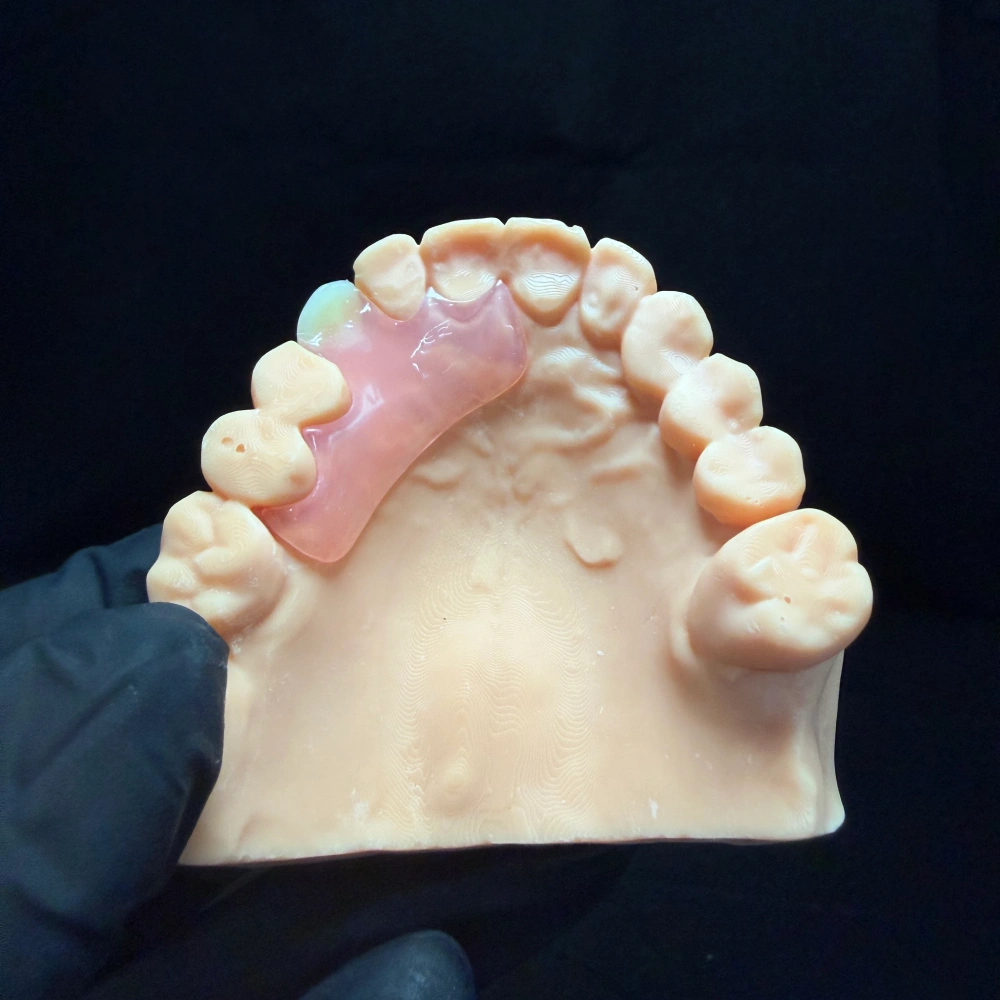
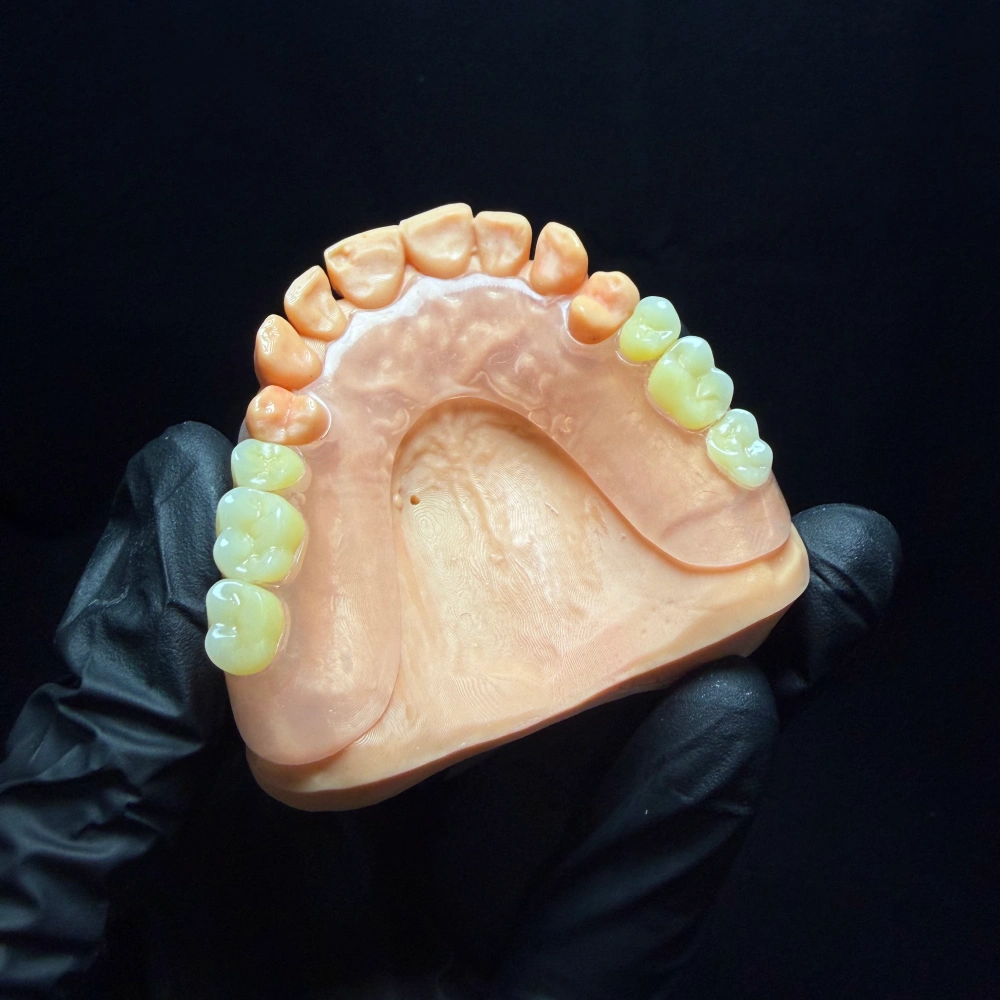
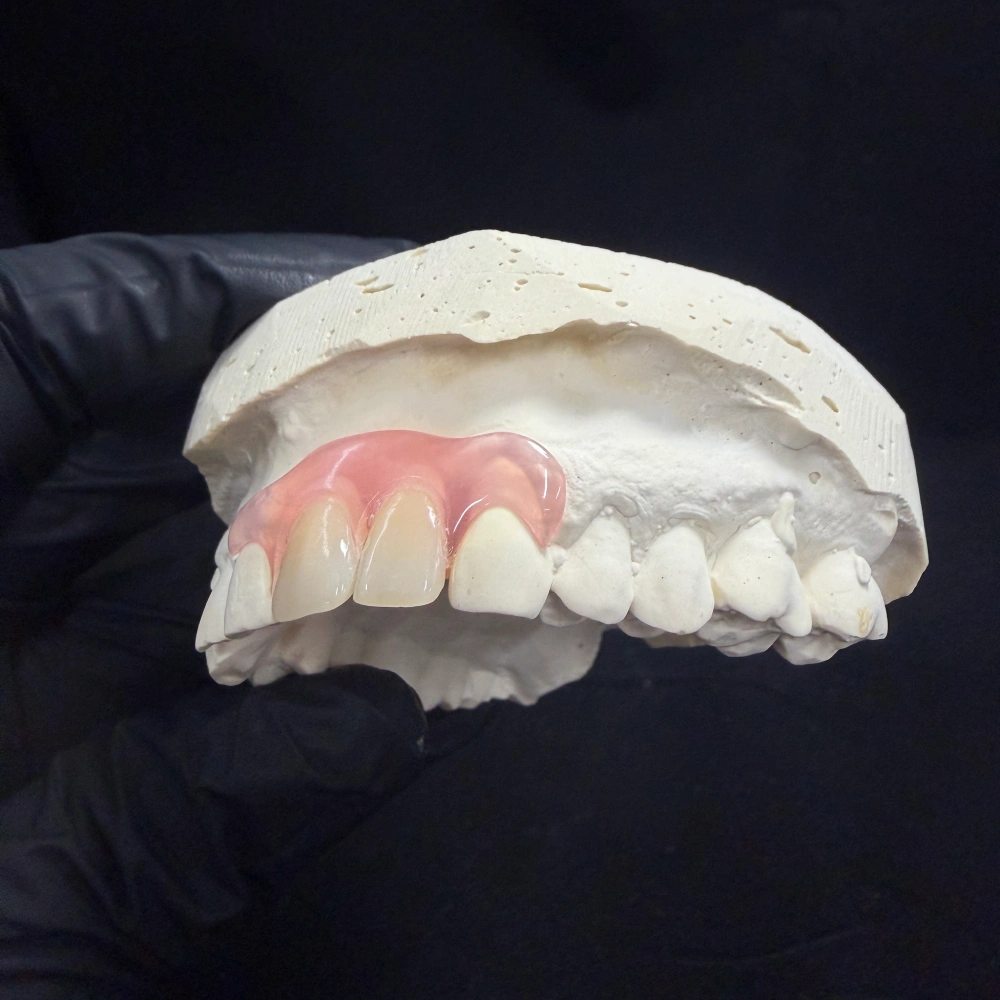

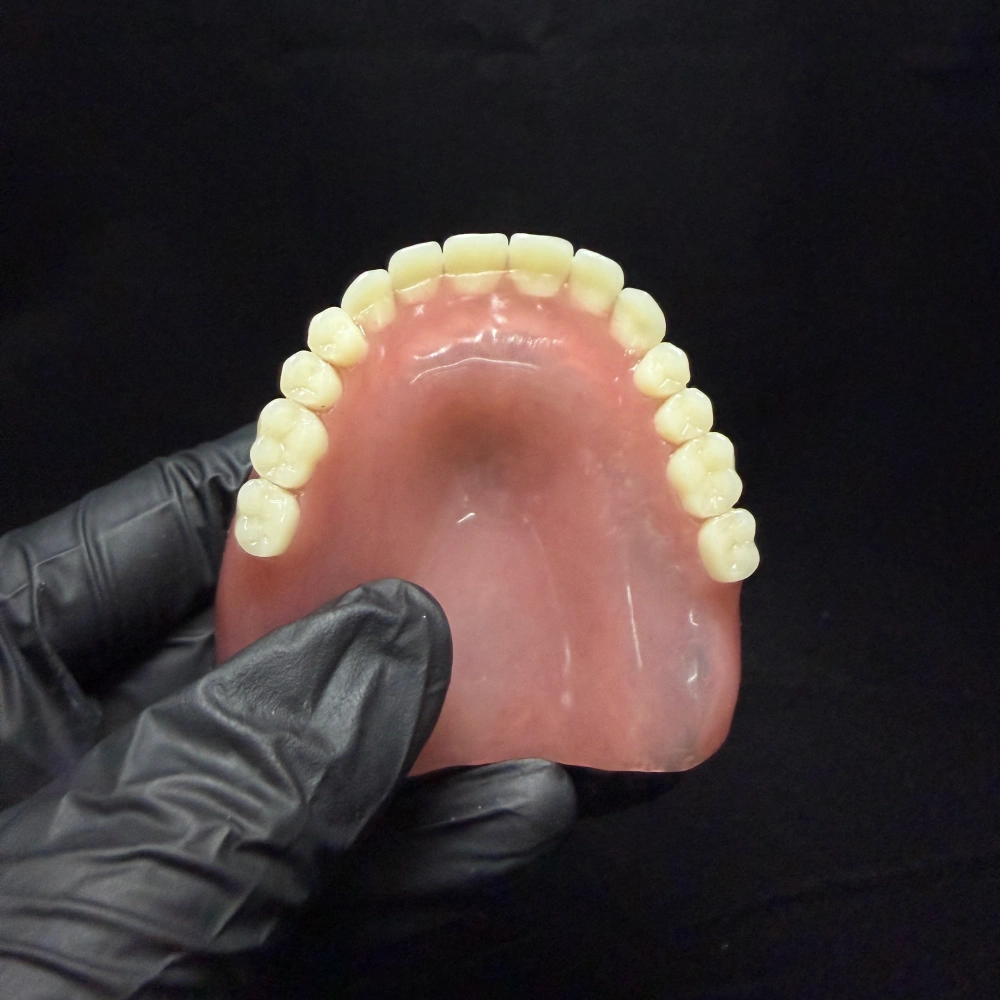
The design mechanics of a well-made dental partial denture come down to three things: how the framework distributes force across the abutments and ridge, how the retention elements engage without stressing the teeth, and how the base fits the tissue. The JADA literature on RPD design and the ADA oral health topic on dentures lay out the fundamentals that guide every case we build.
Types of Removable Partial Dentures
Here is what we make. Each option below is a different removable partial denture we can quote and produce for you.
1. Cast Cobalt-Chromium RPD
- Framework: Cast Co-Cr alloy, mirror-polished, with rests, clasps (I-bar, C-clasp, RPI, embrasure), and major connector to your design.
- Base: Heat-polymerized acrylic (Lucitone 199) with mechanical retention lattice.
- Teeth: VITA, Ivoclar, or Shofu — your call.
- Best for: Kennedy Class I, II, III cases where rigidity and long service life matter.
- Nickel-free formulations available on request — write it on the Rx.
2. Vitallium 2000 Framework
- Framework: Vitallium cobalt-chromium-molybdenum, known for corrosion resistance and biocompatibility.
- Base + teeth: Same options as the Co-Cr line.
- Best for: Practitioners who prefer a specific brand-name alloy or have patients with metal sensitivities documented for standard Co-Cr.
3. Pure Titanium RPD
- Framework: Direct metal laser sintered pure titanium.
- Weight: Roughly half of a comparable Co-Cr framework.
- Best for: Large maxillary designs, patients who report heaviness with cast metal, cases where metal sensitivity is a stated concern.
4. PEEK Frame RPD (Metal-Free Rigid)
- Framework: Polyetheretherketone milled from pucks.
- Look: Tooth-colored or gum-colored options, no visible metal.
- Best for: Anterior esthetic cases, patients who want a rigid frame without metal.
- Note: Metal-free is not the same as allergy-free. Material composition sheets available on request.
5. Flexible Thermoplastic Partial (Valplast / Duraflex family)
- Framework: Injection-molded nylon-based thermoplastic. FDA 510(k) cleared materials in this family.
- Retention: Gum-colored flexible retention arms — no visible metal clasps.
- Best for: Short-span cases, anterior esthetic zones, patients with undercuts unfriendly to rigid clasps.
- Honest limits: Not the right pick for heavy occlusal load or long-span distal extensions. Reline and repair are possible on many flexible cases (our removable department has processed both), but for older bases and large tissue changes a remake usually gives a more predictable result.
6. Digital RPD (Fully Digital Workflow)
- Input: STL scans (intraoral or model), digital bite.
- Output: Milled or printed framework, digital try-in, milled or processed base.
- Turnaround: About 1 to 2 working days faster than the analog path.
7. Combination Cases
- Implant-supported overdenture opposing an RPD — occlusal scheme coordinated across both prostheses.
- Precision attachment partials — crown-and-partial pairings with slide, ball, or magnet attachments.
- Repair, reline, and add-a-tooth on existing partial dentures we did not originally fabricate.
Why Choose ASD Dental Lab for Partial Dentures
A real lab, not a middleman
ASD Dental Lab has been running since 2012. Two production sites — Shenzhen and Huizhou — and around 460 in-house technicians. We do not resell, we do not broker. Every step happens under our own roof, including a dedicated removable department of about 55 people.
Capacity you can plan around
Our removable line produces roughly 4,000 partial and complete denture cases per month in regular seasons and scales to 6,500 per month in peak periods. About 50 standby technicians come on when volume spikes, so your turnaround does not slip in Q4.
Real people on your case
Around 40 case coordinators and customer service staff handle communication. If you send a case Monday morning, you have a name and a direct line by Monday afternoon.
We do not misrepresent regulatory language
FDA-cleared and FDA-approved mean different things. Materials we use for removable partial dentures reference the classification framework in 21 CFR Part 872. If we say a material is 510(k) cleared, that is what we mean. We will not upgrade the language on any paperwork we send you.
You can see how we work
Live video walkthroughs of the removable production floor are open to clinical partners on request. On-site factory visits welcome. If you want to watch your case go from case-in to shipping before you commit volume, ask.
Track record
Currently serving 50+ dental laboratories, 100+ dental clinics, and 400+ individual dentists — mostly across the United States, the Netherlands, Germany, France, Belgium, Austria, the United Kingdom, Luxembourg, Switzerland, and the wider European market.
Partial Denture Manufacturing Process
This is what actually happens to a partial dentures case once it lands on our dock.
Stage | What we do | Typical time |
1. Case intake | Cross-check your Rx, models, bite record, shade, framework preference, and any special notes. We message you within one working day if anything is missing or unclear. | Day 1 |
2. Scan & model work | Scan physical impressions or import STL. Pour, mount, and articulate for analog cases. | Day 1–2 |
3. CAD design & internal review | Survey line analysis, rest seat layout, clasp arm selection (I-bar / C-clasp / RPI), major connector choice, retention mesh placement. Every design gets a second-pair-of-eyes review. | Day 2 |
4. Framework fabrication | Casting patterns or direct metal printing for Co-Cr / Ti. Milling for PEEK. Injection for flexible frames. Framework verified on the model for passive seating. | Day 3–5 |
5. Wax rim & tooth setup | Tooth arrangement to your occlusal records. Wax try-in shipped on request. | Day 5–6 |
6. Flasking & processing | Injection molding, heat-polymerized packing, or milled base. Controlled polymerization to hold dimensions and cut porosity. | Day 6–8 |
7. Finishing & polishing | Contouring and polishing around borders, framework-acrylic junctions, and clasp arms. Metal-resin bonds rely on mechanical retention — mesh, beads, undercuts — so we finish carefully around these interfaces. | Day 8–9 |
8. Multi-stage QC | Inspection at model, wax, setup, and final stages. Bite, tooth arrangement, base fit, clasp engagement, polish quality. Bubbles, voids, and thin spots screened out. | Throughout |
9. Cleaning & shipping | Disinfected, individually packed, case documentation included. | Day 9–10 |
Materials for Removable Partial Dentures
- Metal frameworks: Co-Cr (nickel-free formulations available), Vitallium 2000, pure titanium, PEEK.
- Denture teeth: VITA, Ivoclar, Shofu, and reinforced composite lines.
- Acrylic bases: Lucitone 199 heat-polymerized (Dentsply), injection-mold flexible thermoplastic, milled PMMA.
- Attachments: Common precision attachment systems on request — send the manufacturer and part number.
Digital vs analog turnaround
Fully digital cases (STL in, digital design, milled or printed components) ship roughly 1 to 2 working days faster than analog cases. We support both. Send us physical impressions if that is your workflow — we will scan and go digital from there. Send us STL if you have it. Either way is fine.
Quality standards
Our facility maintains records aligned with FDA establishment registration and device listing obligations for the removable prosthetic devices we fabricate. Material composition sheets, batch records, and shade verification are available with any case on request.
How to Order Custom Partial Dentures
What to send
- Prescription (Rx): patient case ID, tooth chart, missing teeth, opposing dentition, shade, mold, framework material, design preferences (or “lab’s choice”), and any notes.
- Impressions or STL: sealed PVS or alginate, or digital scans (intraoral or model scans in STL / PLY).
- Bite record: interocclusal registration or digital bite scan.
- Survey information for cast frameworks: drawn survey lines, undercut markings, rest seat locations, and preferred clasp / connector positions. If you would rather we survey the case, send an unmarked mounted diagnostic cast and we will return a proposed design for your sign-off.
- Reference material welcome: sketches, photos of the current prosthesis, wax-ups, temporary restorations, or shade photos with a reference tab.
What comes back
- Digital design proposal for cast RPDs and complex cases — approval before fabrication.
- Optional wax try-in stage on request.
- Final case with QC checklist and material documentation.
- Direct communication with your assigned case coordinator.
Multi-doctor and multi-location practices
Every case is tagged by prescribing dentist. Per-doctor preferences — default framework material, tooth mold, tissue shade, packaging notes — are stored and honored. No mixed cases across locations in a group practice or DSO.
Remake and repair
If a removable partial denture we fabricated does not seat, has flange trouble, has clasps that will not engage, has an unacceptable shade, has an incorrect bite, or has esthetic issues, we remake it at no charge. Framework corrections typically turn around in 3 to 4 working days. Repairs, relines, and add-a-tooth on existing prostheses — including many flexible cases — are quoted case by case.