Custom Mouth Guards & Dental Guards | ASD Dental Lab
In-house lab making custom dental guards, custom mouth guards and custom fit mouth guards — digital workflow, per-case traceability, remake policy.

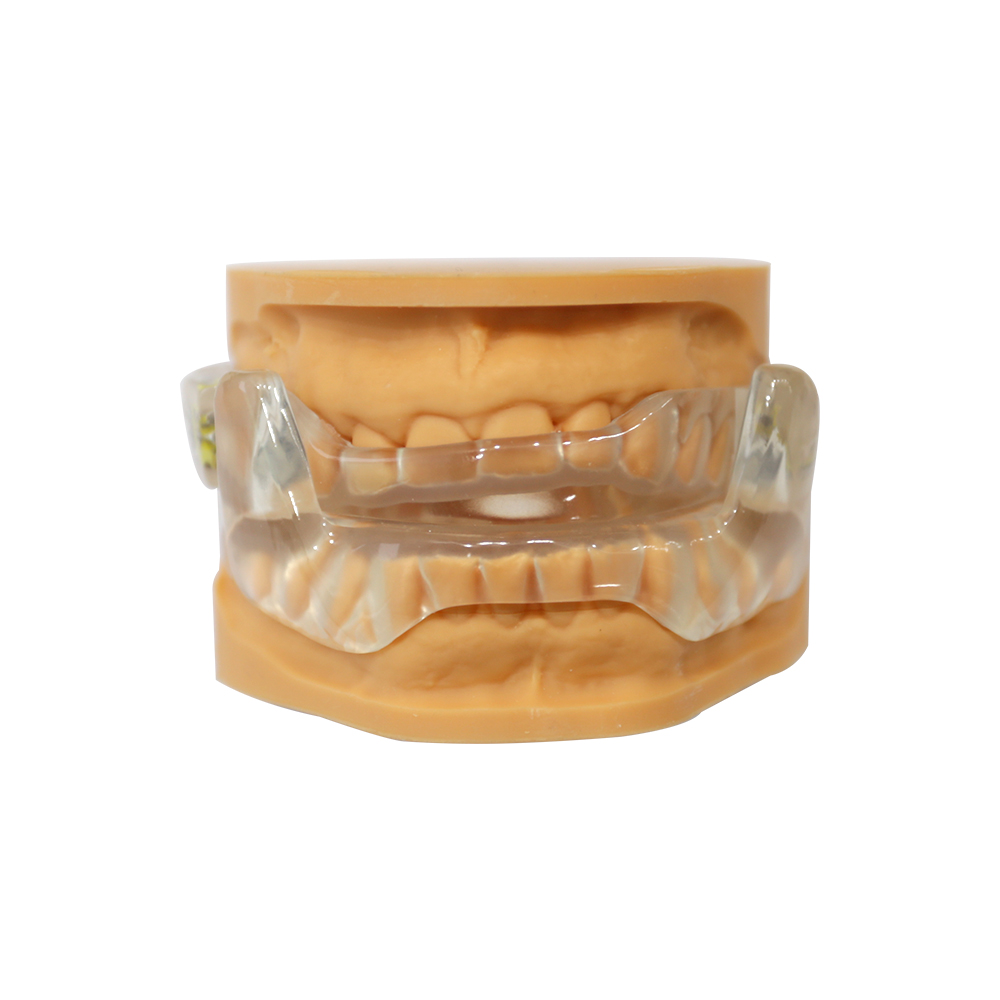


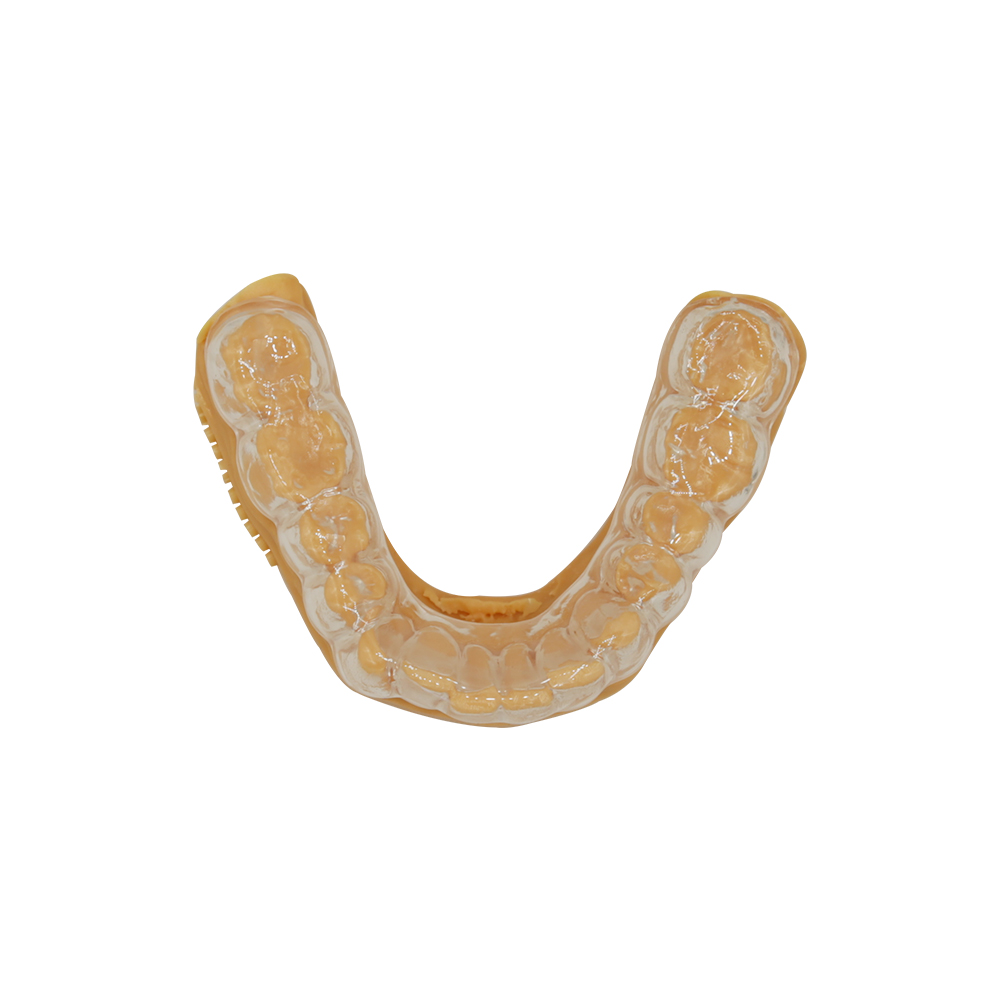


Custom Dental Guards Built The Way You’d Build Them Yourself
You send us a scan. We fabricate. You seat it. That’s the whole loop, and every stage of it happens inside our own facility — no outsourcing to a second lab, no middleman between the design bench and the milling floor.
We make custom dental guards for the practices that already send us cases, and for practices moving over from a supplier where the case never quite comes back the way it left. If you’re here for a custom mouth guard, an athletic custom fit mouth guard, an occlusal splint or a retainer, this page tells you what we make, how we make it, what we need on your end, and what we put in writing when a case doesn’t seat.
Types of Custom Mouth Guards & Dental Guards
Everything here is patient-specific, fabricated to your prescription, and shipped back with the same case ID you assigned. Pick the appliance, tell us the indication and the material, and we build to it.
Custom Dental Guards — Occlusal / Bite Splints
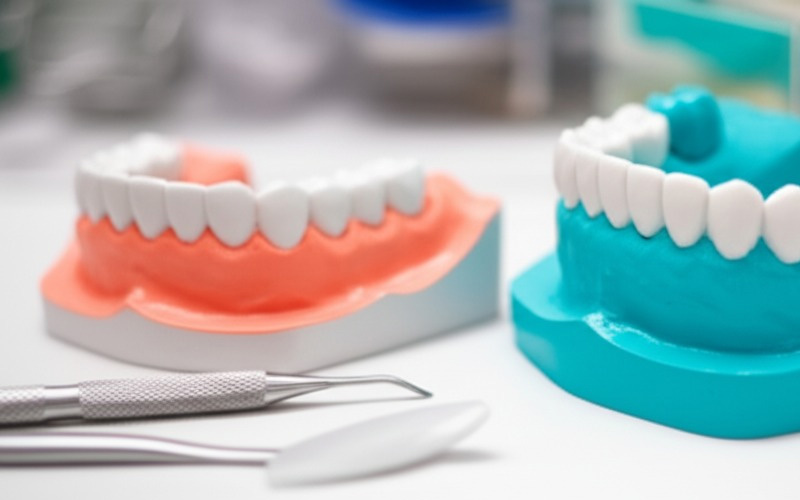
Full-arch splints for bruxism, clenching and TMJ management. Hard, soft and dual-laminate builds. Hard splints for heavier grinders and cases where you want to distribute occlusal load; soft splints for lighter presentations; dual-laminate where a soft internal surface with a hard external surface is called for. A clinician-prescribed occlusal splint is a different appliance from a self-molded, boil-and-bite over-the-counter guard — different indication, different build, different accountability. We spec each device to the appliance it actually is; you can see the American Dental Association’s framing of the two categories in the ADA Oral Health Topic on Athletic Mouth Protectors.
Custom Mouth Guards — Sport & Contact
Full-coverage custom mouth guards for contact sport, martial arts, hockey, football, basketball, box lacrosse. We build to the wearer’s arch and to the sport, referencing the construction categories set out in ANSI/ADA Standard No. 99 for athletic mouth protectors. If you’re fitting a growing athlete or an athlete in orthodontic treatment, tell us — the design changes.
Custom Fit Mouth Guards For Special Cases
Custom fit mouth guards built over fixed appliances, over active orthodontics, or over remaining dentition in a partially edentulous arch. Where the American College of Prosthodontists calls for specialist design (see their position statement on mouthguards in sport), we build in the relief, retention and coverage the case needs. We do not treat these as ordinary sport guards.
Retainers And Adjunct Appliances
Hawley retainers, Essix / vacuum-formed retainers, bonded / lingual retainers, and stage aligners. Bagged and labeled per stage so nothing goes on the wrong tooth on the wrong week. Not the point of this page, but useful to know if you already send us your removables.
Digital Print-in-house
3D-printed models, temporary restorations, and other patient-specific parts printed on dental-grade printers, with in-house validation checks (test parts sized and measured on a routine cadence) so the print bed doesn’t drift on you.
Why Choose ASD Dental Lab?
The reason to send a custom dental guard to us instead of assembling it across three suppliers is not a slogan, it’s the failure modes you don’t see on a marketing page.
Every step in one building. For a splint case, the flow — case intake → CAD design → model 3D print → thermoforming or milling → trim, polish, finish → QC → pack — happens in our own facility. That means when a case comes back wrong, we can pull the file, the model and the operator record without emailing a third party. It also means we don’t need to inherit anyone else’s scan quality or trimming style. The FDA’s own framing of who is legally the “manufacturer” of a mouth-formed dental protector — and why that matters when a case has to be traced — is set out in the eCFR at 21 CFR Part 872, Dental Devices.
Registers and clearance are separate things. The regulatory pieces get mixed up in casual writing, so we keep them straight here: the U.S. category most custom night guards sit under is Product Code OBR (see FDA Product Classification, OBR); establishments must be registered and listed with the FDA — how to register and list a medical device; and 510(k) clearance, when applicable, is a device-level pathway — the plain-English FDA page on Premarket Notification 510(k), and the FDA’s explicit distinction between “cleared”, “registered” and “approved” on this consumer notice. We use each term the way the agency uses it, and we can supply the record for any device we make you.
Biocompatibility that can be referenced, not asserted. Materials that touch oral tissue are evaluated to the ISO 10993 series, and dental-specific evaluation is covered by ISO 7405. When you need a batch certificate or material data, we hand it over per case.
Realistic on evidence. What the literature says is worth reading first-hand: the Cochrane review on occlusal splints for sleep bruxism, and the systematic evaluation of splint types in this comparative analysis of occlusal splints for sleep bruxism. We build the appliance you prescribe; you set the expectation with the patient.
Sport-related concussion — the honest framing. Dental-trauma reduction is well supported. Concussion prevention is not settled; the meta-analytic evidence is mixed across sport and design. Our marketing copy says exactly that.
Mouth Guard Materials, Thickness & Design
There is no single number that works for every case, so we lay out what we actually build to.
Thickness — condition, not slogan. For a custom mouth guard in sport, some laboratory work (see the 2002 EVA study, how thick should they be?) points to a target near 4 mm under specific conditions; contemporary print-vs-thermoform work still recommends further clinical validation of protective performance (see the digital vs conventional custom-fit mouthguard trial in Dental Traumatology). For an occlusal splint we ask you to specify the target; if you leave it to us, we defer to the surface distribution described in the ADA topic above, and finish flat and even at multiple contact points.
Materials. EVA and dual-laminate for sport; hard acrylic / rigid copolyester for bruxism splints; soft EVA where you’ve prescribed it. Batch and origin are recorded case by case so we can produce a material trace when you ask. The materials-level surface deterioration and cleaning behaviour we design around are documented in this open-access analysis of mouthguard surface behaviour.
Fit and retention. We check retention on the printed model at seat and removal, look for burrs or edge lift at every buccal / lingual sweep, and hand-polish rather than over-adjust the intaglio — internal-surface trim gets treated as a fit-of-last-resort, because over-thinning kills seating on the model you sent us.
Our Custom Mouth Guard Manufacturing Process
Every case runs through the same nine stops. There aren’t alternate rails.
- Case intake and evaluation. Digital case: email or a data-transfer platform. Impression case: we can send you a prepaid label, or you post it and share the tracking number. Patient full names are not required — a clinic-side case number is fine (please redact if it needs redacting).
- CAD design. Occlusion, arch coverage, thickness targets, relief for brackets, wires or bridgework, dual-laminate stack (if specified). Design goes back to you for approval; the standard package is one design + two free revisions, and versions are numbered so nothing gets confused mid-thread.
- Model print. Patient-specific model on dental-grade resin. Print-bed drift is monitored on a routine cadence with dimensioned test parts.
- CAM milling / thermoforming. Splints and guards are typically thermoformed to your spec. Milling and print routes are available where the appliance calls for it.
- Ceramic and metal work. Not typical for guards. Runs on the same floor when the case combines with a fixed restoration.
- Polish and finish. Edge check, burr check, seat check on the model.
- QC. Thickness measured at multiple points against the prescription. Edge, margin extension, model fit and retention are verified before it leaves the department.
- Packaging. High-pressure clean, individually bagged and labeled with your patient identifier. Stage appliances are separated stage by stage.
- Ship. Tracking on delivery. Direct-to-clinic shipping is available for multi-location groups.
What We Need From You On A Custom Dental Guard Case
The single most avoidable delay on a custom fit mouth guard case is missing records at intake. If you send these on the first pass, we build to it; if any of them are missing, we ask and the clock waits.
Records checklist
- Full arch scan (working arch)
- Opposing arch scan — coverage all the way distal to the last molar, mesial into the anteriors, plus adjacent gingival tissue
- Bite record — wax registration is fine; we cross-check against the scan and remount before we build
- Prescription with: appliance type, arch (upper / lower / both), indication (bruxism / TMJ / sport / contact / retainer), material, target thickness or hardness, and any relief for existing bridgework / brackets / implants
- For deep-bite or reduced clearance cases, note occlusal space inadequate and give the residual thickness — we’ll spec a thinner build or a different material rather than guess
- Any patient-identifier convention you want us to use (clinic case number is fine; no PHI required)
For a first case with a new practice, digital is preferred; if it’s impression-only, we can ship a shipping label.
Turnaround, Remake And What Happens When It Doesn’t Seat
Turnaround. Working-day counts vary by appliance and by the queue. We share a live estimate on case acceptance. Capacity has held through peak; monthly runs sit around 8,000 zirconia single units, 2,000 bridge cases, 4,000 removable cases and 20 All-on-X arches in normal season, and roughly double that at peak. We plan intake against that headroom, not against best-case, so promised dates are dates we hit.
Design revisions. One design plus two free revisions per case is standard, in line with our version-controlled design approval workflow.
Remake / refit. If a custom dental guard doesn’t seat, we want it back with a note describing what didn’t work and — where possible — photos on the model or in-mouth. We evaluate on our side, and where it’s a lab-side fabrication issue we remake at no cost to you. Return postage for the returned appliance sits with the sending practice; that keeps the policy clean and predictable.
Traceability. Every case ID is tied to a design version, an operator record, a material batch and a QC sign-off. When a patient asks why a device does or doesn’t carry a specific FDA designation, we can pull the record for the device we made you. This is why the “full-service, in-house” framing above isn’t just a slogan.
A note on numbers we deliberately don’t publish. There is no reliable national dataset for lab turnaround on a custom mouth guard or custom dental guard. Vendor claims exist, national averages don’t. We prefer to give you our number for your case rather than a market average we can’t defend.
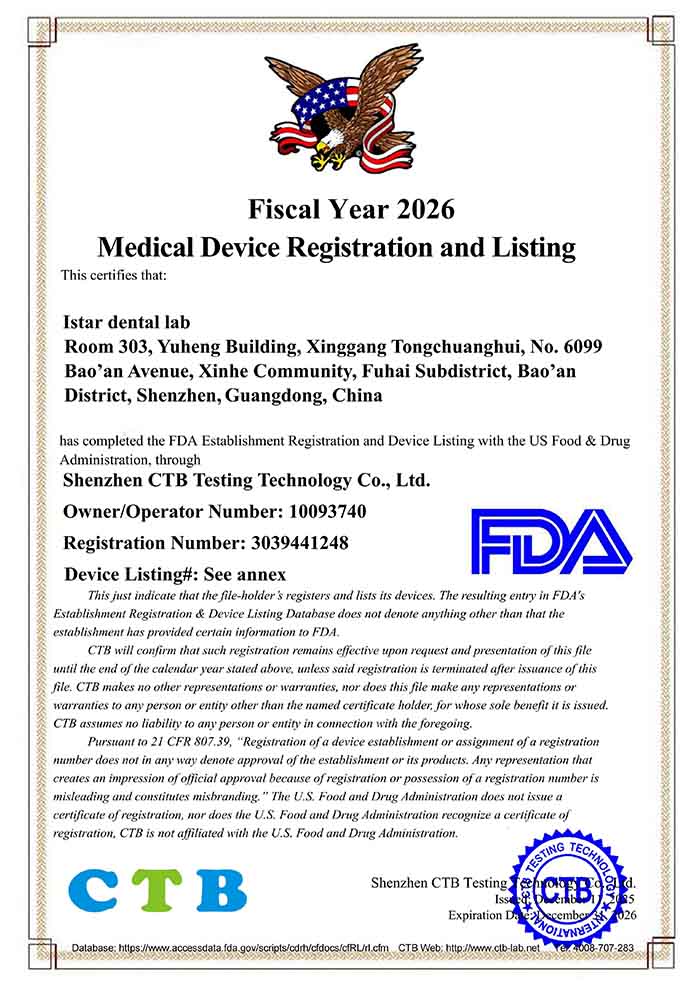
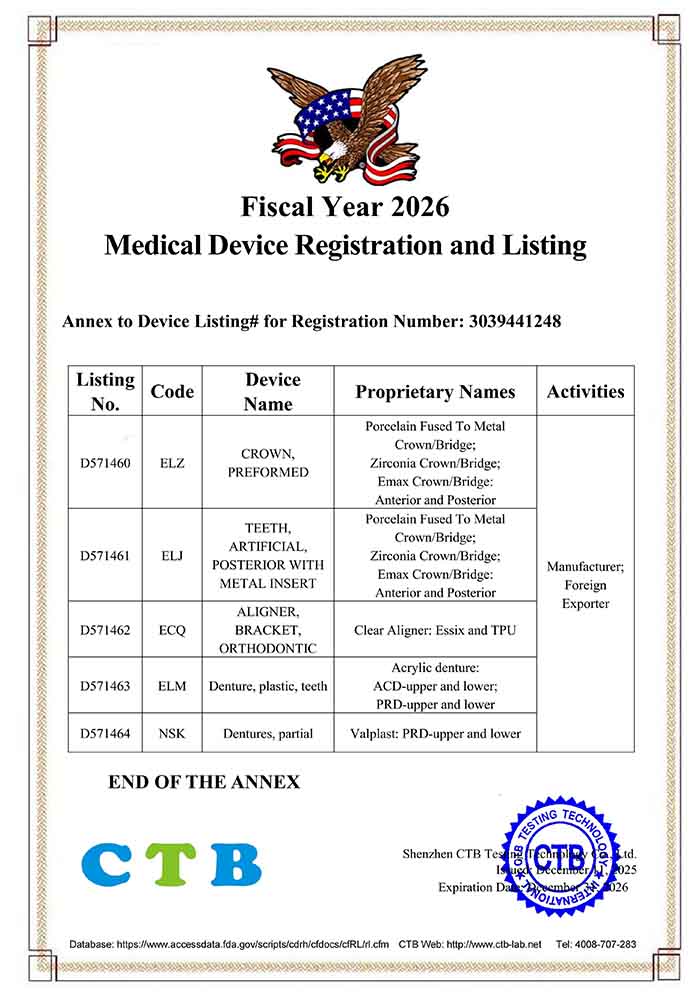
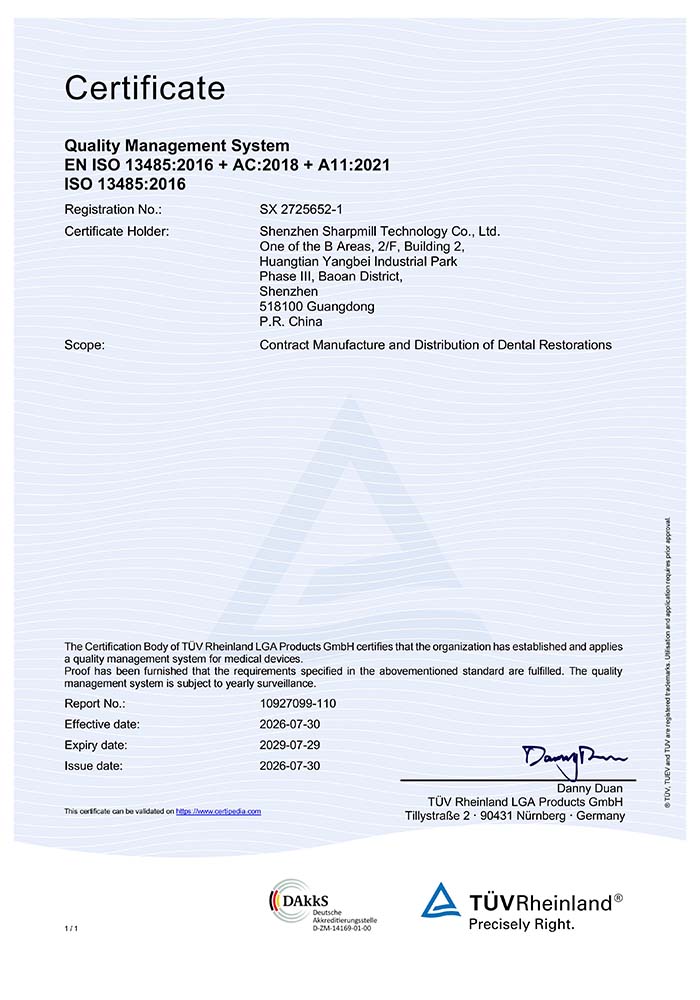
Certificates ASD Have Obtained
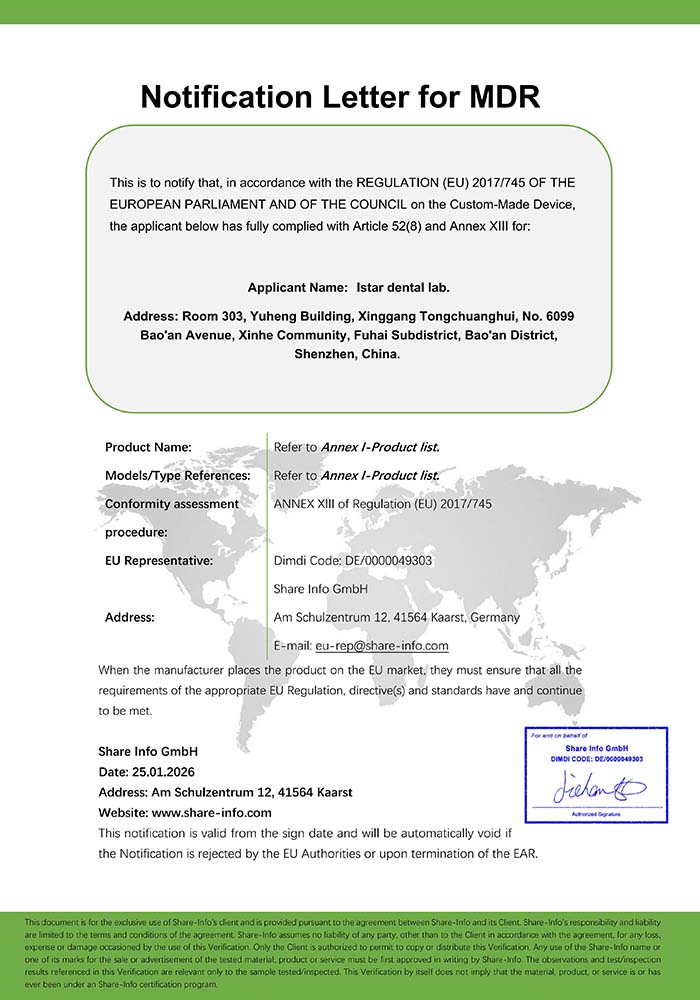
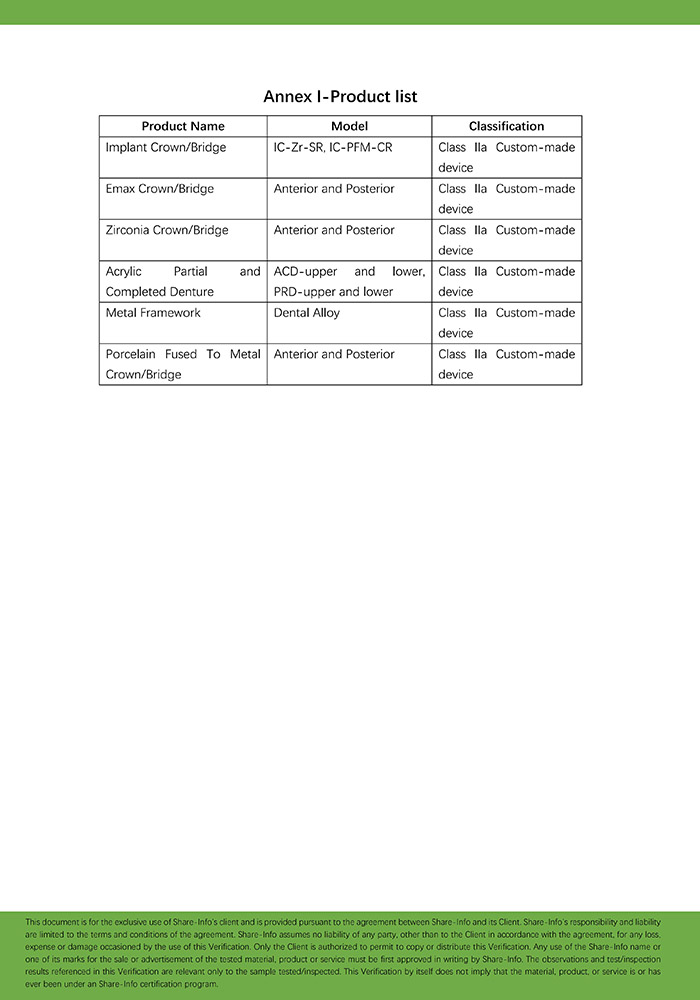
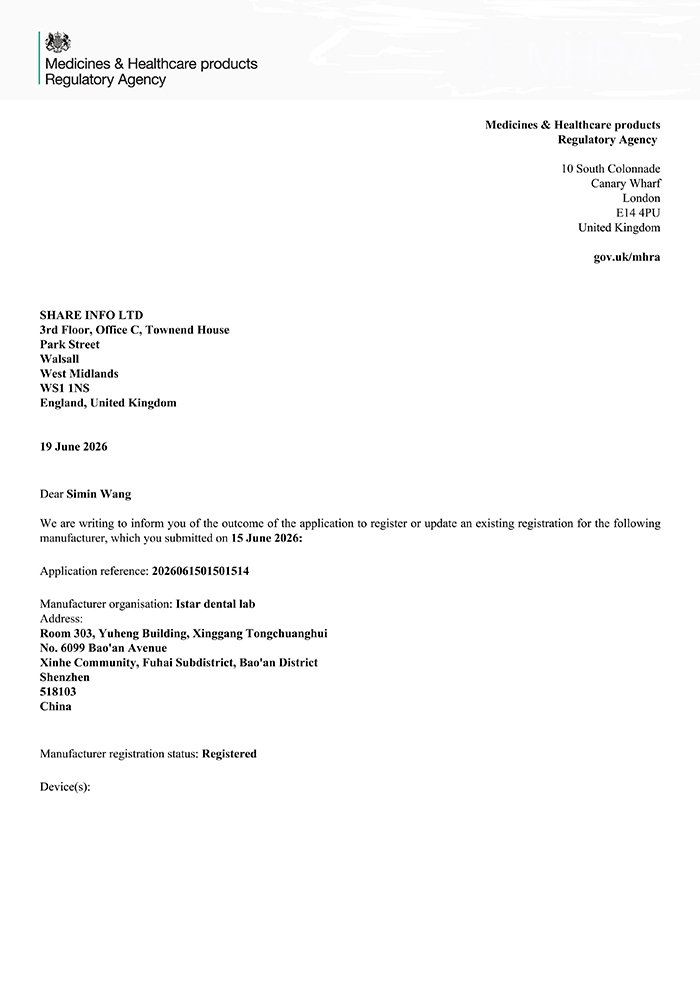
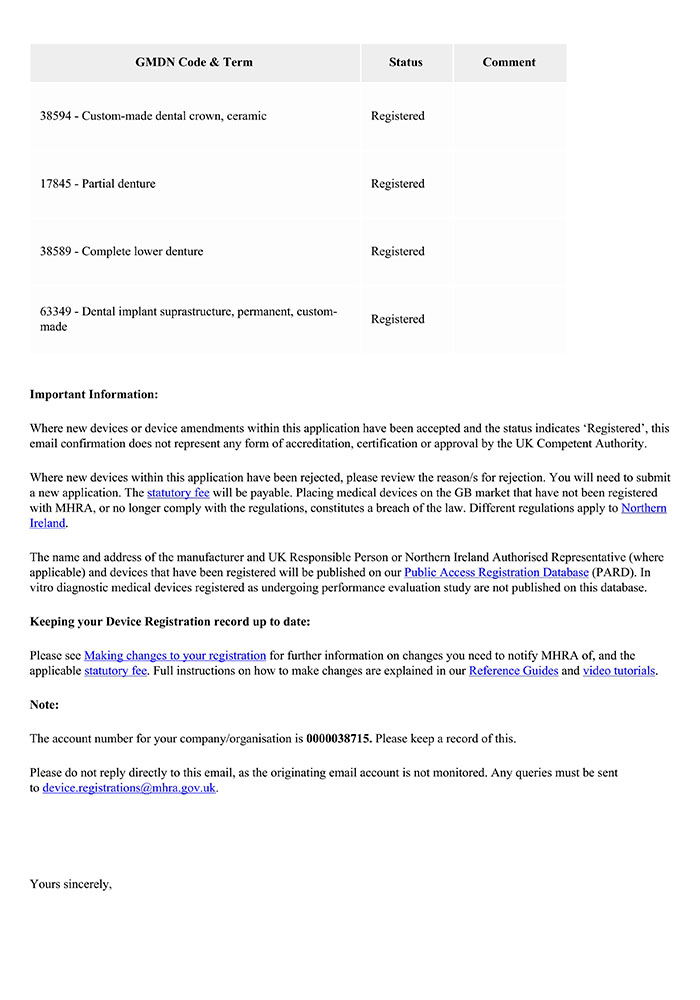
We’re a top-3 dental lab in China, CE & FDA & ISO certified, NADL member. 25 years of quality restorations, implants, and dentures. Your trusted dentistry partner.

What Our Doctor’s Say
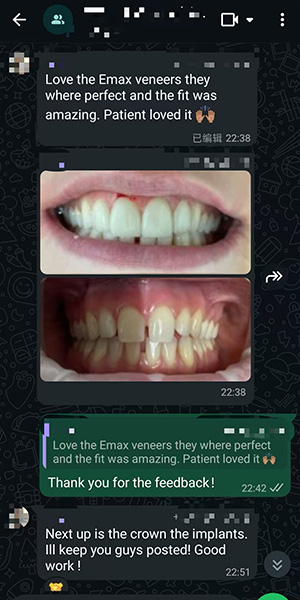
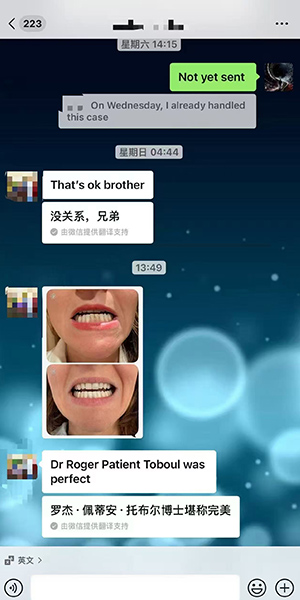
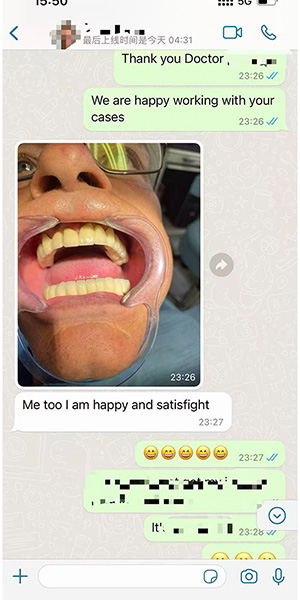
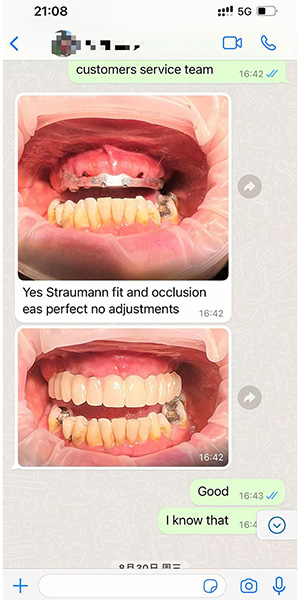
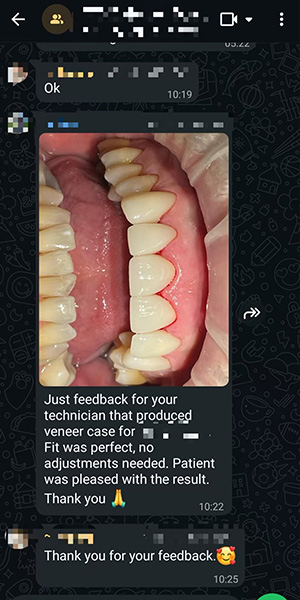
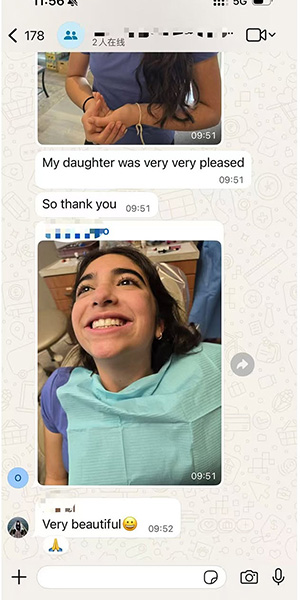
The happiest moment for us isn’t when we receive payment from a dentist, but when we hear that they truly value and appreciate our work. That’s when we feel we’ve genuinely helped them.
Start A Case
We take single cases to open. We take scale when you scale. Get in touch with our sales team to open an account, request the B2B price list and materials list, or scope a trial batch of custom dental guards, custom mouth guards or custom fit mouth guards. If you already work with us, forward this page to the person in your practice who owns the referral relationship — everything above is written for them.
Custom Mouth Guards FAQs
Short, source-backed answers to the questions we actually get at intake. The FAQ block below is marked up as FAQPage schema for Rank Math.
Overlapping vocabulary, different appliances. A custom mouth guard in the sport sense is a full-coverage protective device built to ANSI/ADA Std No. 99 categories. A custom dental guard is often used interchangeably with an occlusal splint or bite splint prescribed for bruxism / TMJ management. We build both; the design brief for each is different.
Typical options are hard acrylic or rigid copolyester for a hard splint, soft EVA for a soft splint, and a dual-laminate stack when you want soft internal / hard external. We build to your prescription; if you want us to recommend based on the case, we do so on the design call.
Whatever your prescription specifies. For a sport custom fit mouth guard, the historical EVA target sits near 4 mm under lab conditions, but comfort, retention, arch anatomy and sport all trade against thickness — see the EVA thickness study. There is no single universal number.
Dental-trauma reduction is well supported. Concussion prevention is not settled — see the systematic review of mouthguards and concussion. We won’t market a device on that claim.
Evidence is limited. The Cochrane occlusal splint review reports insufficient evidence to support or refute effectiveness for sleep bruxism. Splints are protective and management appliances; we build to that use.
Devices at establishment level are registered and listed under FDA registration and listing; the classification most custom dental guards sit under is Product Code OBR; where a device is 510(k)-cleared, we cite the clearance. Biocompatibility on the material side is evaluated to ISO 10993 / ISO 7405. Records available per case.
No. Every case runs inside our facility. The team is sized so we have production headroom, not the other way round.
Yes. Shenzhen and Huizhou. In-person and video-audit both available; arrange with sales.
United States, Netherlands, Germany, France, Belgium, Austria, United Kingdom, Luxembourg, Switzerland and other European markets. Direct-to-location shipping for multi-clinic groups.
Digital: email the scan and prescription. Impression: request a shipping label. Standard revision policy is one design plus two free revisions.
Send it back with a note (photos help). We evaluate. Where it’s a lab-side fabrication issue, we remake at no cost to you.
Latest from Blog
Explore dentistry trends, dental lab insights, digital dentistry updates, and tips for dentists on implants, crowns, restorations, and dental technology.