CoCr Full Cast Crown: All-Metal Strength for Back Teeth

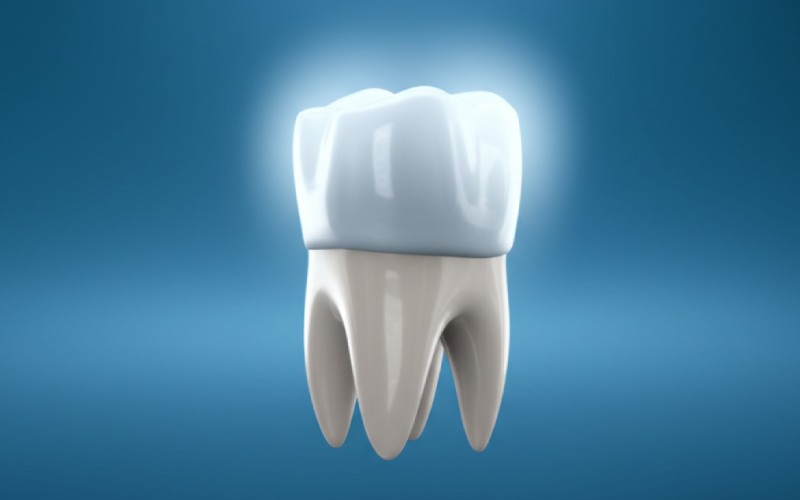
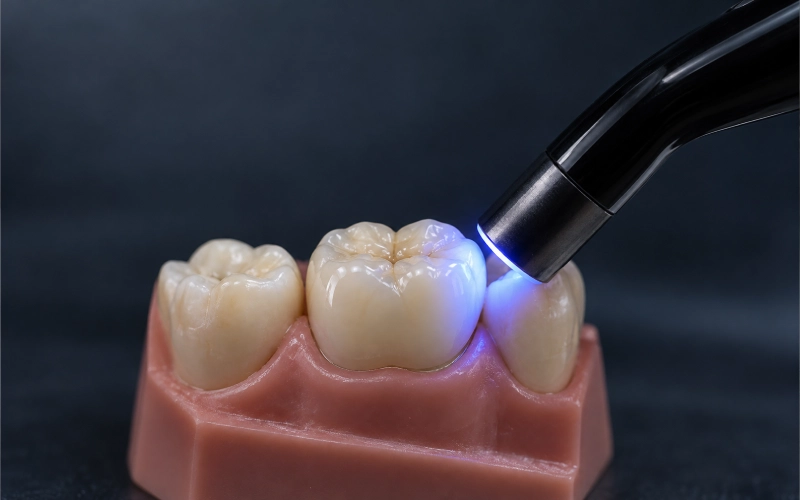
A CoCr full cast crown is a one-piece cobalt-chromium restoration with no porcelain on top. It’s the crown you reach for on second molars, tight bites and teeth nobody sees when the patient smiles. At ASD Dental Lab, we design it, cast or mill it, fit-check it and polish it in our own labs, then ship it back to you with the alloy on record.
Least reduction. Nothing to chip. An alloy you can look up.
- 2–3 working days · In the lab for routine crowns and bridges
- 3-year warranty · On crowns and bridges
- Nickel-free on request · Beryllium-free options too
- Alloy certificate · Brand, batch and composition, in English
Our CoCr Full Cast Crown Range
Every unit below is solid cobalt-chromium from margin to occlusal surface. You choose the design. We take care of the metal work.
Single CoCr Full Cast Crowns
Full-coverage crowns for molars and premolars. We shape the anatomy to the opposing arch and the adjacent teeth, then finish to a high polish or a satin surface, whichever you prescribe.
Full Cast Bridges
Three-unit and longer posterior bridges with solid metal connectors. We review spans of five units and more with you before production. That’s where abutment support, connector size and bite force start to decide the outcome.
Nickel-Free Cobalt Chrome Crowns
Tell us on the Rx and we’ll make the crown in a nickel-free, beryllium-free CoCr alloy. It’s the same workflow and the same checks, and the certificate shows the alloy we used.
Low-Clearance Designs
When the bite leaves little room, metal is often the only material that still works at that thickness. We measure the clearance on the model and design for it. If it’s too tight, we tell you before we cast.
When a Cobalt Chrome Crown Is the Right Call
Material choice for a posterior crown mostly comes down to position, space and load. A cobalt chrome crown wins when esthetics drop off the list and those three take over.
- Second molars and teeth outside the smile line. Nobody sees them, so you don’t have to trade strength for shade.
- Short clinical crowns and limited occlusal space. Metal holds up at thicknesses where ceramics need more room.
- Heavy bite and bruxism. We keep the occlusal surface even and flat, with broad contacts that spread the load.
- Cracked molars. Full metal coverage wraps the whole tooth with the toughest, most impact-resistant material we offer.
- Patients who’d rather pay for function than looks. Some patients just want a crown that lasts on a back tooth. A full cast crown does that job well.
When to choose something else: anterior teeth, premolars that show when the patient smiles, and patients who won’t accept a metal color. For known metal sensitivities, see the alloy notes below.
Why Choose an ASD CoCr Full Cast Crown
All-metal isn’t a step down. It’s a choice you make for the structure. Here’s what you get with ours.
Less Tooth Reduction
Of all our crown materials, metal needs the least room. You keep more healthy tooth structure, and that counts most on short or heavily restored molars.
Nothing to Chip
There’s no veneering porcelain, so there’s no porcelain to fracture under a heavy bite. What we polish in the lab is what the patient chews on.
Thin, Clean Margins
Metal can be finished to a fine, well-defined margin without going fragile. Your margin line stays easy to read on the die and in the mouth.
A Team That Does Metal Every Day
Our finishing group of about 70 technicians works on metal and porcelain all day, every day. Your crowns go to people who know how CoCr behaves on the bench.
An Alloy You Can Verify
On request, every case can come with the alloy’s brand, origin, batch number and a material certificate, all in English. The idea is the same one behind alloy identification certificates for dentists and labs: you should be able to look up exactly what went into the mouth.
Backed After Delivery
Crowns and bridges carry a 3-year warranty. If a remake is needed, we pay the return shipping on the new restoration. Our overall remake rate runs at 2–3%.
Full Cast vs Zirconia, PFM and E.max
Metal alloys are still one of the established options for indirect restorations, alongside ceramics and metal-ceramics, as the ADA’s overview of materials for indirect restorations shows. Here’s how we’d place a CoCr full cast crown next to the other crowns we make.
- CoCr full cast crown. The highest toughness and impact resistance, with the least reduction. Fully opaque and metal-colored. Best for hidden posterior teeth and cracked teeth.
- Monolithic zirconia. Very high flexural strength with a tooth color, for molars, bruxism and limited space when the patient wants white. It needs a bit more room than metal.
- PFM. A metal coping under porcelain. Strong and familiar, but it needs the most reduction, and a dark line can show at the gingival margin.
- Pressed E.max. The best translucency of the group, for anterior esthetics and selected posterior crowns. Use it with care on bruxers.
How We Make Your CoCr Full Cast Crown
Every step runs in our own labs in Shenzhen and Huizhou. We don’t outsource any of it.
1. Case Review and Clearance Check
Before design, a technician checks the scan or model, the Rx and the tooth number. We measure the occlusal clearance. If something needs your call, such as a tight bite, a large undercut or an unclear margin, we contact you. We can also tuck a note in the box saying which tooth needs how much reduction.
2. CAD Design
We design the anatomy, contacts and occlusion digitally. Want to see it first? Ask for design approval. Production starts once you sign off, which adds 1–2 days.
3. Casting or Milling
We produce full cast work by lost-wax casting or by milling, matched to the case. Accuracy depends on the manufacturing technique, as a systematic review on the accuracy of manufacturing techniques explains, so we don’t assume a fit. We check every unit.
4. Fit and Defect Inspection
We seat every crown on the model to confirm fit and support. We check the margins under magnification for closure and flash. Metal work is inspected for porosity, cracks and distortion.
5. Finishing and Polishing
We work through coarse grinding, fine grinding and polishing pastes, then clean with ultrasonic and steam, so the crown arrives smooth and residue-free. Each alloy goes through its own sandblasting and polishing equipment and dedicated tools, so different metals never cross-contaminate.
6. Final Inspection and Traceability
Each case carries a unique number. It links the technician, the equipment, the alloy batch and every QC result. 95% of cases pass final inspection. Anything that doesn’t is reworked or remade before it ships.
What’s in a Base Metal Crown
A base metal crown like ours is mostly cobalt and chromium, usually alloyed with molybdenum or tungsten for strength. That mix gives you a stiff, corrosion-resistant metal that holds up in thin sections.
We never swap the alloy without asking. If a material change is needed, we tell you first and wait for your OK, written or verbal. We can also supply an English declaration of custom-made device with your cases.
Metal sensitivity to CoCr alloys is documented, and the research on toxicological risks of cobalt-chromium alloys in dentistry covers it. So for a patient with a known metal allergy, check the certificate and choose the alloy with your patient. We’ll make the alloy you specify.
Prep and Rx Tips for a Non-Precious Full Cast Crown
A non-precious full cast crown is forgiving, but a few details make the difference between a crown that seats first time and one that doesn’t.
- Reduction. As a general guide, about 1.5 mm on functional cusps, about 1.0 mm on non-functional cusps, and about 0.5 mm axially. If your clearance is less, tell us. We’ll design to it or flag it.
- Margin. A light chamfer gives the clearest margin. A feather edge works with metal too. A very thin knife edge is harder to read on the scan and on the die.
- Subgingival margins. Retract, clear the sulcus, dry the prep and scan slowly around the margin, so the margin line comes through unbroken.
- Files. Send STL from any open intraoral scanner, including 3Shape TRIOS, Medit, iTero, Primescan, Shining 3D and others. Separate the prep arch, the opposing arch and the bite scan. [link: Digital Workflow page]
- Cementation. A base metal crown can be cemented conventionally with glass ionomer or zinc polycarboxylate, or with a resin cement.
Working With ASD: From First Case to Delivery
Getting started takes one case. Single trial cases are welcome, and an ongoing partnership suits regular case flow best.
- Get the price list. Our sales manager sends the B2B price list and answers questions about materials and turnaround. [link: Contact / inquiry form]
- Send your case. Upload a scan with your Rx and photos, or ship impressions or models. You pay inbound shipping on physical impressions and models. [link: Send a Case guide]
- We review and confirm. You hear from us before production if anything on the case needs your decision.
- We make it. Routine crowns and bridges take 2–3 working days in the lab. Practices sending 10 or more cases a month get free rush service on any case. We commit to the rush ship date. The arrival date depends on international shipping and customs.
- We ship it back. ASD pays return shipping on every finished case, remakes included. [link: Shipping page]
Quotes are itemized to what you ask for, not one bundled price. Unit count sets the base, the material sets the base rate, and design complexity is added on top.
Registered and Documented
ASD is an FDA-registered establishment, Registration Number 3039441248. You can verify it in the FDA establishment registration and device listing database. Our labs run under ISO 13485. For the EU, custom-made restorations follow the MDR custom-made device procedure. [link: Quality page]
FAQ: CoCr Full Cast Crown
Which CDT code applies to a CoCr full cast crown?
In the US, a cobalt-chromium full cast crown is usually reported as D2791, crown, full cast predominantly base metal. D2790 covers high noble and D2792 covers noble metal. The billing decision is yours, and the alloy certificate supports it.
What file format and size should I send?
STL is all a posterior metal crown needs. Keep each arch under about 150 MB, put each case in its own folder, zip it (not RAR) and use one case ID prefix on every file name.
Can you ship straight to my client’s clinic?
Yes. If you’re a dental lab sending us overflow, we can ship to any address you name. The sender address on the waybill can’t be changed.
How does billing work?
Most clients are invoiced per shipment batch. Monthly statements are available for regular accounts.
Can I see the lab before I send cases?
Yes. Book a factory visit or a live video tour with our sales team. You’ll see the design, metal and QC departments working on real cases.
Try Your First CoCr Full Cast Crown
Send us one posterior case and judge the fit, the margins and the paperwork yourself. Ask for the alloy certificate. We’ll include it.