SP / High Precious Full Cast Crown: Solid Metal, Alloy on Record


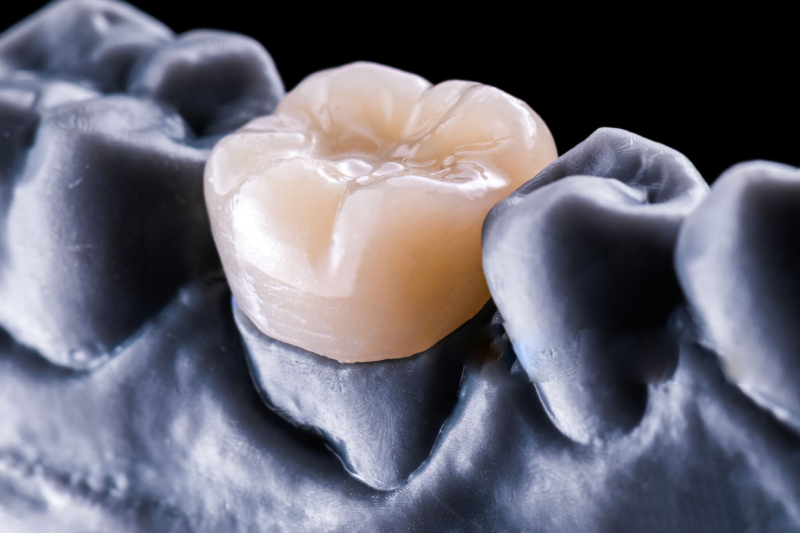
Need an all-metal crown for a back tooth, in a noble alloy? Our SP / High Precious full cast crown comes in two grades: SP (semi-precious) palladium-silver and High Precious gold. You pick the grade on the Rx. We cast it, fit it and polish it in our own labs, then send it back with a certificate that names the exact alloy.
Two noble grades. Thin, strong margins. Nothing to chip.
- 2–3 working days · In the lab for routine crowns and bridges
- 3-year warranty · On crowns and bridges
- Alloy certificate · Brand, batch and composition, in English
- FDA-registered establishment · Registration No. 3039441248
SP vs High Precious: Two Grades, Two Alloy Classes
“SP” and “High Precious” show up side by side on a lot of Rx forms, and they’re easy to mix up. They aren’t the same thing.
Alloys are graded by how much noble metal they contain: gold, platinum, palladium and the rest of that group. Silver doesn’t count, even though it’s a precious metal in everyday speech. The classes US offices code by are set out in the ADA’s overview of materials for indirect restorations.
- SP = semi-precious = ADA “noble.” At least 25% noble metal. No gold minimum.
- High Precious = ADA “high noble.” At least 60% noble metal, with at least 40% gold.
- Below 25% = base metal (non-precious). That’s our [link: CoCr full cast crown].
So an SP / High Precious full cast crown isn’t one alloy. It’s two grades. Write “SP” or “High Precious” on the Rx and that’s the alloy you’ll get, no swaps.
Our SP / High Precious Full Cast Crown Range
SP Full Cast Crown (Semi-Precious)
- Alloy: palladium-silver, noble class
- Color: silver-white
- At the bench: a hard, stiff alloy that holds its shape in thin sections and across short spans
- Good for: molars and premolars where you want a noble alloy without high gold content
- US code: usually D2792, full cast crown in noble metal
High Precious Full Cast Crown (High Noble)
- Alloy: gold-based, high noble class
- Color: rich yellow gold
- At the bench: softer and more ductile, so margins can be burnished for a closer seal
- Good for: second molars, patients who ask for gold, and cases where margin adaptation comes first
- US code: usually D2790, full cast crown in high noble metal
Both grades are nickel-free and beryllium-free. The certificate lists every element, so your team can code the SP full cast crown and the high precious full cast crown correctly.
- Full cast bridges. One alloy per bridge, from abutment to abutment.
- Surveyed crowns. Rest seats, guide planes and retentive undercuts shaped to your partial denture design.
- Inlays, onlays and 3/4 crowns. For when you’d rather keep healthy tooth structure.
Why Dentists Still Prescribe a Full Cast Precious Crown
Zirconia handles a lot these days. But some teeth still call for metal, and a noble alloy gives you a few things nothing else does.
Less reduction. Cast metal stays strong in thin sections. You take off less tooth than for PFM or layered ceramic, which helps on short clinical crowns and tight bites.
Nothing to chip. It’s one piece of metal. There’s no porcelain layer to fracture under a heavy bite.
Margins that fit. Metal casts to a fine edge. A high precious full cast crown can also be burnished at chairside to close up the last few microns.
A finish that stays smooth. There’s no glaze layer to wear through. The polish is the surface, and we take every occlusal surface to a high shine.
Steady in the mouth. Noble alloys hold up well against corrosion and tarnish, which is a big reason they’ve been in use for so long.
A long track record. Cast gold has a long history in practice. A review of 1,314 cast gold restorations followed restorations that had been in service for up to 52 years.
When to Choose It, and When Not To
Good cases for an SP / High Precious full cast crown
- First and second molars that don’t show when the patient smiles
- Limited interocclusal space or short clinical crowns
- Cracked teeth that need full coverage
- Heavy bite forces, where a porcelain layer would be at risk
- Abutments under a partial denture
- Patients who want gold, or who’ve done well with it before
When another crown fits better
- Visible teeth. Go with Zirconia crown or E.max crown instead.
- No metal wanted. Some patients just don’t want to see metal at all. Multilayer zirconia covers most of those cases.
- Known sensitivity to an alloy element. Check the certificate, then switch grades or go metal-free.
- You need metal strength with a tooth-colored surface. That’s what our PFM crown is for.
Prep and Cementation Tips
An SP full cast crown and a gold crown take the same prep, so you can choose the grade after the scan. These are general clinical guidelines for cast crowns. Your own prep protocol always comes first.
- Occlusal: about 1.5 mm on functional cusps, about 1.0 mm on non-functional cusps.
- Axial: about 0.5 mm. A chamfer or feather-edge finish line both work well with gold alloys.
- Taper: around 6°, with walls long enough to hold the crown.
- Finish line on scans: trace it by hand. Don’t rely on the scanner’s auto-detect.
Short on room? Say so on the Rx. We’ll design to the space you’ve got and tell you before casting if any spot falls below the alloy’s minimum thickness.
For seating, conventional luting works well: zinc phosphate, glass ionomer or resin-modified glass ionomer. On short or over-tapered preps, many dentists move to a resin cement.
How We Make Each Crown
Every SP full cast crown and every high precious full cast crown is made in-house at our four labs in Shenzhen and Huizhou, China. About 460 people work across them, and we’ve been at it since 2012. Nothing gets outsourced.
- Case check. We go through the Rx, the scan or impression, the bite and the alloy grade. If something’s unclear, we ask before we start.
- Design. We design scan cases in CAD and wax up impression cases on stone dies. Contacts, occlusion and anatomy are set here.
- Pattern and investment. The design becomes a burnout pattern, then gets sprued and invested.
- Casting. We cast precious alloys in validated melting and casting equipment, with temperature and atmosphere checked on a schedule.
- Fit. We devest the casting, seat it on the die, check the margins under magnification, and adjust contacts and occlusion on the mounted models.
- Polish. The crown goes through coarse and fine finishing, then polishing compound, then ultrasonic and steam cleaning.
- Final inspection. One last check of fit, contacts and bite. Then the crown is packed with its alloy certificate.
Precious Alloys Stay Separate
Precious alloys get their own work area, tools, blasting units and polishing stations, and their scrap is sorted on its own. Nothing crosses between gold, palladium-silver and base metal, so the alloy on the certificate is the alloy in the crown.
Every Case Is Traceable
Each case gets a unique number. It links to the technician, the equipment, the alloy batch and every QC result. If you ever need to know who made a crown, or which batch of metal went into it, we can tell you.
Alloy Documents and Compliance
You’ll know exactly what’s in the box and who made it.
- Alloy certificate. Brand, origin, batch and composition for each case, in English.
- Manufacturer data. Biocompatibility (ISO 10993) and technical data from the alloy maker, on request. Dental alloys are typed by strength under ISO 22674, from single crowns up to bridges, so you can check an alloy’s type before a longer span.
- US. ASD is an FDA-registered establishment, Registration No. 3039441248. Look it up in the FDA establishment registration database. No login needed.
- EU. Custom-made restorations follow the MDR custom-made device procedure, with a statement for each custom-made device.
- UK. Registered with the MHRA.
- Quality system. Our labs run on an ISO 13485 quality management system, and we welcome client audits.
We never change the alloy without your OK. If a grade ever has to change, we’ll contact you first, and nothing goes ahead until you agree in writing or verbally.
Working With ASD: From Rx to Delivery
- Send the case. Intraoral scans from 3Shape TRIOS, Medit, iTero, CEREC, Shining3D Aoralscan or Planmeca are all fine. Send STL, PLY, OBJ, DCM or a .3oxz package, or order through 3Shape Communicate or Medit Link. Physical impressions are fine too. Disinfect them first, because customs in the US, the EU and Australia often hold back undisinfected impressions.
- Fill in the Rx. SP or High Precious, finish line, contact tightness, occlusal notes. Add a photo or the old crown’s scan if you want its shape copied.
- Approve the design (optional). Want to see it before casting? We’ll send screenshots or an STL by email or chat. It adds 1–2 days.
- We make it. 2–3 working days in the lab for routine crowns and bridges.
- We ship it back. It ships with the alloy certificate, to any address you name. Return shipping is on us.
- Seat it and tell us. Bite high in the mouth but fine on the model? Send a new scan or bite record and we’ll recheck it on our side to find the cause.
- Rush cases, no surcharge. Free for any case type if you send 10 or more cases a month. We guarantee the ship date. Arrival depends on customs.
- Shipping. You cover sending impressions or models to us. We cover shipping finished work back, remakes included.
- 3-year warranty. On crowns and bridges.
- 2–3% remake rate. That’s cases sent back by clients, across everything we make. It’s a separate number from our 95% pass rate at final inspection.
Starting with one trial case is welcome. After that, an ongoing partnership works best for practices and labs with a regular case flow. See Digital Workflow, How It Works for the full details.
FAQ
Can one bridge mix SP and High Precious units?
No. A bridge is cast in a single alloy, start to finish. Mixing alloys in one framework creates weak joints and corrosion risk, so pick one grade for the whole span.
My patient has reacted to metal before. Which grade should I choose?
That’s your call with the patient. Gold contact allergy is documented, though how much it matters clinically is still debated. Send us the patient’s patch-test results if they have them, and we’ll check them against each certificate before you choose.
Can you match the shape of the patient’s old crown?
Yes. Send a scan of the old crown, the temporary or the opposite tooth. We’ll copy or mirror the form in the new design.
What if a crown doesn’t seat?
Send us the crown, or a new scan or impression, and tell us what you’re seeing. Shipping it back to us is on you. If it qualifies for a free remake, shipping the new crown back to you is on us.
We’re a dental lab. Can you cast our own designs?
Yes. Send editable exocad or 3Shape files and we’ll cast, fit and polish to your design. We also take on separate steps such as design, finishing and polishing.
Try One Case
Send your next posterior crown as an SP / High Precious full cast crown. Choose the grade, and we’ll send it back with the alloy on record.