Implant Dental Laboratory — Custom Restorations from a Direct Production Lab
We are a direct-production implant dental laboratory, not a broker. Every abutment, every crown, every full-arch frame that leaves our factory was milled, layered, finished, and quality-checked by our own technicians.



What this means for the cases you send us:
- One accountable production chain — same team takes the scan, designs the restoration, mills it, and signs it off.
- No sub-contracting to third-party mills. If a frame doesn’t pass our fitting check, we remake it under our rework policy — not ship it.
- A case coordinator follows your case from intake to delivery, with English-speaking support during US/EU business hours.
Why Dental Teams Send Us Their Implant Cases
The page below describes six reasons our partners put forward. None of them is unique on its own. What ties them together is that they all happen inside the same factory, under the same quality system, with the same case team.
# | What you get | Why it matters for implant cases |
1 | Direct production, not brokering | We mill every restoration ourselves. No sub-contracted jobs, no surprise origin. |
2 | Multi-jurisdiction registrations | FDA establishment registration + device listing, MDR custom-device notification, MHRA registration, ISO 13485:2016 quality system. |
3 | Three-stage QC + specialist review | Every case passes intake check, in-process check, and final release check; complex implant and full-arch cases get a senior technician review on top. |
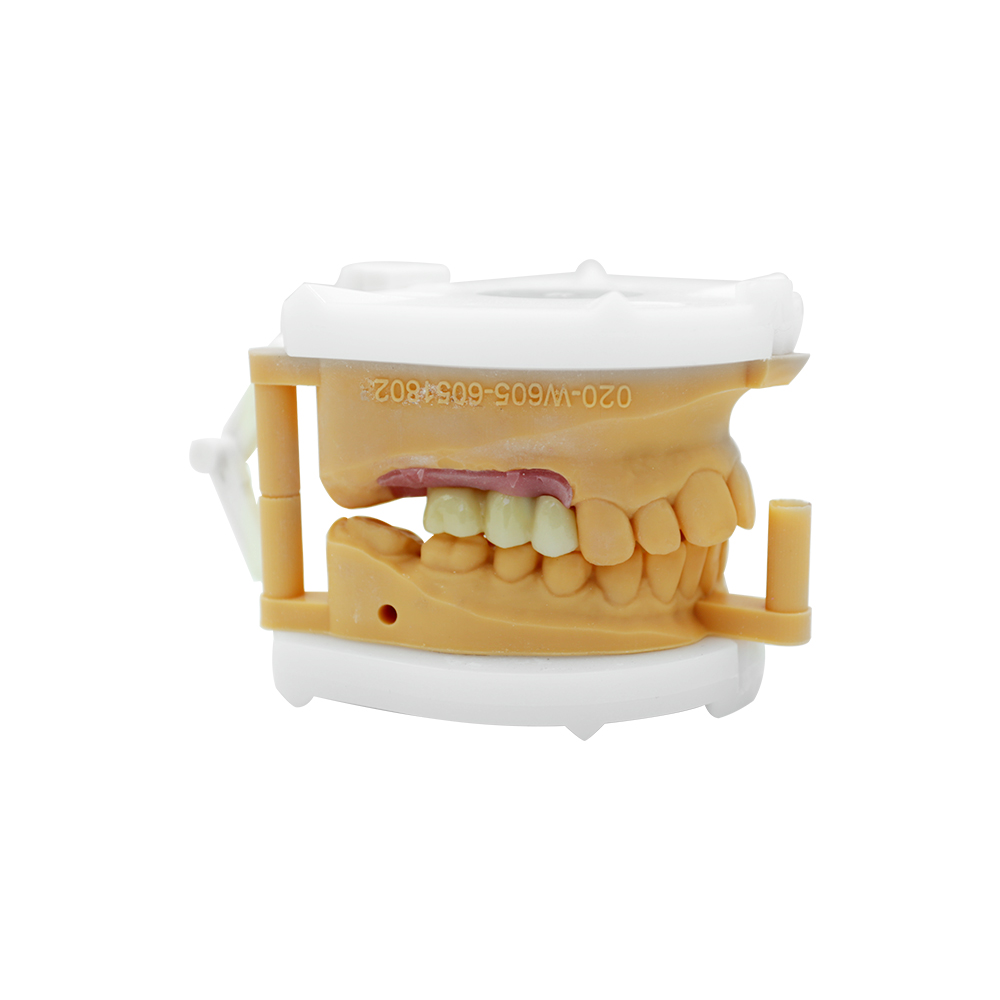
4 | Passive-fit verification on every multi-unit frame | Frame seating is checked on the analog model without screw tension — no force-fit, no spring-back, no rocking. |
5 | Open architecture on files and components | We accept scans from any major IOS, work with original and validated third-party implant components, and ship under your label if you want white-label packaging. |
6 | Routed case coordinator in your language | One coordinator, one phone number, one inbox for the life of the case — not a ticketing queue. |
Implant Restorations Lab: Products & Services
We focus on the eight implant restoration categories that account for the vast majority of what dental teams send us. Each is produced under our ISO 13485 quality system, with full component-level traceability from scan intake to shipped package.
Implant Abutment
Custom-milled titanium and zirconia abutments, plus titanium bases (Ti-base) for hybrid workflows. We work from your scan body library and confirm the implant system, platform, diameter, and connection before any CAD work begins. Custom abutments are designed for cases with non-ideal implant angulation, aesthetic-zone gingival contouring, or complex soft-tissue profiles; stock abutments are routed straight through for straightforward posterior single units.
Implant PFM Crown
Porcelain-fused-to-metal crown on a custom or Ti-base abutment. The PFM option remains the workhorse for posterior implant single units where occlusion takes priority over translucency. Porcelain margin is finished to your specified margin design.
Zirconia Implant Crowns
Monolithic and layered zirconia crowns on custom abutments or Ti-bases. We mill from medical-grade zirconia blanks, finish and polish margins, and stain for shading per your prescription. Full-contour monolithic is the default for high-load posterior positions where chip risk matters; layered zirconia is used in aesthetic-zone cases that need depth of color.
Implant E.max Crown
Lithium disilicate (IPS E.max) crowns on Ti-base or custom abutments. E.max gives the highest translucency of any material we routinely mill, and it’s our most common choice for aesthetic-zone single units where the screw channel can be placed lingually or palatally.
Couronne d'implant vissée
Crown and abutment produced as one piece, retained directly to the implant with a screw — no cement interface. Screw-retained is the default retention mode for single-unit implant crowns because it eliminates cement-related peri-implantitis risk and makes retrieval straightforward. The screw access channel is positioned in the occlusal fossa wherever the implant angle allows.
Couronne d'implant scellée
Crown cemented onto a custom or stock abutment. We recommend cement-retained only when screw channel position would compromise aesthetics (anterior, high smile-line cases) and there’s enough occlusal clearance for a clean cement margin. Excess cement cleanup protocols are documented per case.
Temporary Implant Crown
PMMA provisional crowns and bridges for immediate-load protocols and tissue-shaping during the healing phase. We support chairside or lab-side provisional workflows, with the temporary profile designed to match the planned final emergence contour so tissue shaping carries forward.
Implant Supported Dentures
Removable overdentures on Locator or bar attachments, plus fixed hybrid prostheses (All-on-4 / All-on-X) on multi-unit abutments. Full-arch cases go through our specialist team with explicit verification jig validation, framework passive-fit checks, and try-in protocols before final delivery.
Digital Workflow — What Happens After You Click Send
Le workflow below describes what happens to a typical implant case from the moment your scan lands in our inbox to the moment the package leaves our shipping dock. Routine cases complete in 2–3 working days; complex implant and full-arch cases take 5–7 working days.
Intake & Data Validation
We accept intraoral scans, model scans, and traditional PVS / polyether impressions; send through your scanner’s portal (Trios, iTero, Medit, Shining 3D, Dexis, Primescan, DS Core, Panda, etc.) or via WeTransfer / shared cloud link. On intake, we verify the implant system, platform, scan body version, and that we have what we need to start CAD — no design begins until the data passes this check.
Supported Scanners & File Types
We accept STL, PLY, OBJ from any IOS; if your scanner outputs proprietary formats, export to STL or grant portal access. Scan body brand and model are required with every case for correct digital library matching.
Case-Design Approval
Before milling, you receive a digital preview with occlusal, buccal, and lingual views, connector cross-sections, screw channel position, and emergence profile measurements; production is held until you approve the design in writing or request changes. A try-in or prototype stage is available on request.
Production
Milling happens in-house on 5-axis and wet-milling machines for zircone, PMMA, wax, and Co-Cr; sintering, porcelain firing, and finishing are done in our own ceramic and metal departments. Implant-specific workflows (Ti-base assembly, abutment screw channel angulation up to manufacturer limits) are produced under our implant department’s protocols.
Contrôle de la qualité
Every case passes three checks: intake / pre-production data verification, in-process inspection between major operations, and final release inspection by an independent QC technician before packing. Complex implant, aesthetic-zone, and full-arch cases receive an additional senior technician review covering passive fit, occlusion, and overall form; all review records are archived.
Rework Policy
If a restoration arrives and doesn’t meet the agreed specification, you can investigate the issue through the channel below and we cover the remake under our rework policy. Covered items are documented per case; out-of-policy changes requested after approval are handled case-by-case.
Packaging & Shipping
Each case is packed with labeled screw pouches, analogue models where relevant, and a contents-case slip listing every item by part code. Cases are routed through DHL, FedEx, or UPS depending on destination, with full tracking and customs documentation (commercial invoice, packing list, FDA / CE markings where required).
Documentation & Traceability
Every component in every case carries an internal lot code that traces back to the technician who produced it, the materials lot, and the QC sign-off. This documentation is retained for the period required by our quality system and is available on request for any case.
Materials We Work With
Different materials and jobs make sense for different clinical situations. Here’s how we route them:
Matériau | Where we use it |
Medical-grade zirconia (multiple translucency grades) | Monolithic and layered implant crowns, full-arch frameworks, custom zirconia abutments |
Lithium disilicate (E.max and equivalent) | Aesthetic-zone single-unit implant crowns where translucency is the priority |
PMMA (multiple grades) | Temporary implant crowns, immediate-load provisionals, try-in / prototype phases |
PFM alloys (Co-Cr, noble, high-noble) | PFM implant crowns, custom cast abutments, full-arch PFM frameworks |
Titanium and titanium alloy | Custom-milled abutments, full-arch Ti frameworks, Ti-base components |
Wax and acrylic (for try-in) | Set-up, prototype, and verification phases |
Compliance & Quality System
Our quality system is structured around ISO 13485, with regulatory registrations in our key destination markets. This matters because it dictates the form and the form of documentation the cases are held to. For broader professional standards context, see ADA Dental Standards.
- FDA (US market): Establishment registration and device listing for custom crowns, fixed bridges, inlays / onlays, veneers, custom implant abutments, implant superstructures, full and partial dentures, and temporary restorations. Custom implant abutments and superstructures are listed under the FDA custom-device framework.
- EU MDR: Custom-device notification under MDR Annex XIII for Class IIa custom dental restorations; a custom declaration is issued per case, technical documentation is retained, and EUDAMED reporting is handled via our EU Authorised Representative. This is the EU equivalent pathway for prescription-fabricated dental work.
- MHRA (UK market): Registration on the UKCA / MHRA framework for custom-made dental devices.
- ISO 13485:2016: Our quality management system is certified to ISO 13485:2016, covering the full workflow from order intake to shipped product .
- Traceability: Every component in every case carries a lot code that traces to the production technician, material batch, and QC sign-off.
A propos de ASD Dental Lab
Founded in 2012 across dual production facilities in Shenzhen and Huizhou, ASD Dental Lab serves as the high-precision manufacturing backbone for over 50 commercial dental laboratories, 100 clinics, and 400 dentists across the US and Western Europe. Backed by ~460 full-time technicians, our infrastructure is built to provide consistent industrial-scale capacity and uncompromised seating accuracy.
Why partners work with us:
- Predictable volume capacity: Our facilities reliably deliver ~8,000 zirconia crowns, ~2,000 zirconia bridges, ~20 All-on-X arches, and ~4,000 removable dentures each month, ensuring stable lead times regardless of case volume.
- Deep departmental specialization: Cases are routed through dedicated, specialized divisions rather than a general labor pool—including CAD design (100 technicians), implant restorations (80), milling (70), ceramic & metal (70), removable dentures (55), and an independent quality control department (25).
- Peak-season delivery protection: We maintain an active reserve team of ~50 trained technicians to absorb seasonal order surges without extending turnaround times or compromising fitting standards.
- Dedicated communication support: A 40-member customer service and case coordination team ensures responsive, direct communication aligned with US and EU operating hours.
Implant Restoration Manufacturing & Production
What happens inside the factory is what determines whether your case arrives on time and fits on the first seating. Here are the process points our partners most often ask about.
- 9-step implant production workflow runs from implant system matching and CAD design through casting, milling, ceramic layering, finishing, quality control, and packing .
- Material-dedicated production lines: Zirconia, PFM, PMMA, and acrylic each run on their own equipment and finishing line to prevent cross-contamination and keep finish quality consistent.
- Specialist teams: Complex implant, full-arch, and aesthetic-zone cases are routed to dedicated specialist teams rather than the general production pool.
- Three-stage QC pipeline: intake check → in-process inspection → final release, with senior technician review on top for complex cases.
- Component-level traceability on every case via internal lot codes linking each component to technician, material batch, and QC sign-off.
Implant Lab FAQs
The questions below are the ones our case team fields most often from clinicians and lab partners evaluating a new implant lab. Each answer is short and points to the longer discussion above.
We accept scans from any major intraoral scanner (3Shape, iTero, Medit, Shining 3D, Dexis, Primescan, DS Core, Panda, etc.) in STL / PLY / OBJ. We work with most major implant systems on the market — Straumann, Nobel, MIS, Dentsply Sirona, BioHorizons, Zimmer Biomet, and others. Confirm your specific system with your first case.
Routine implant cases complete in 2–3 working days; complex implant and full-arch cases take 5–7 working days. Transit time is on top of that, depending on the carrier and destination.
Every full-arch frame is seated on the analog model without screw tension; we check for natural drop-in, no spring-back, no rocking. Verification jigs are used where multi-implant span or scan complexity warrants it. Frames that don’t pass are re-machined under our rework policy.
You can investigate the issue through the channel below; covered items are remade under our rework policy. Out-of-policy changes requested after design approval are handled case-by-case. Shipping for covered rework items is on us.
We ship via DHL, FedEx, or UPS depending on destination, with full tracking. Customs documentation (commercial invoice, packing list, FDA / CE / UKCA markings, MDR custom-declaration paperwork) is prepared on our side; destination-side questions go through your case coordinator to our shipping team.
CAD-design stages are reviewed by senior design technicians; finished cases are checked by dedicated QC staff; complex implant, full-arch, and aesthetic-zone cases get an additional senior technician review covering passive fit, occlusion, and overall form. All review records are archived.
Send a Case / Talk to Us
Two ways to start:
- Send a Case — Use the form below or upload through your scanner’s portal. Include the implant system, platform, scan body photo, your Rx, and any clinical photos. A case coordinator will confirm receipt within one business day.
- Talk to Us First — Email or call with questions about material choice, system coverage, capacity, or pricing. We respond inside one business day during US / EU business hours.