Flexible Denture 2 Teeth: Upper Anterior Case Study
🕢 [ Remplissez le formulaire et nous vous répondrons dans les 30 minutes ! ]
When a patient walks in with two missing anterior teeth, the dentist’s prescription lands on your bench with one clear expectation: deliver something that works now and doesn’t lock out what comes next.
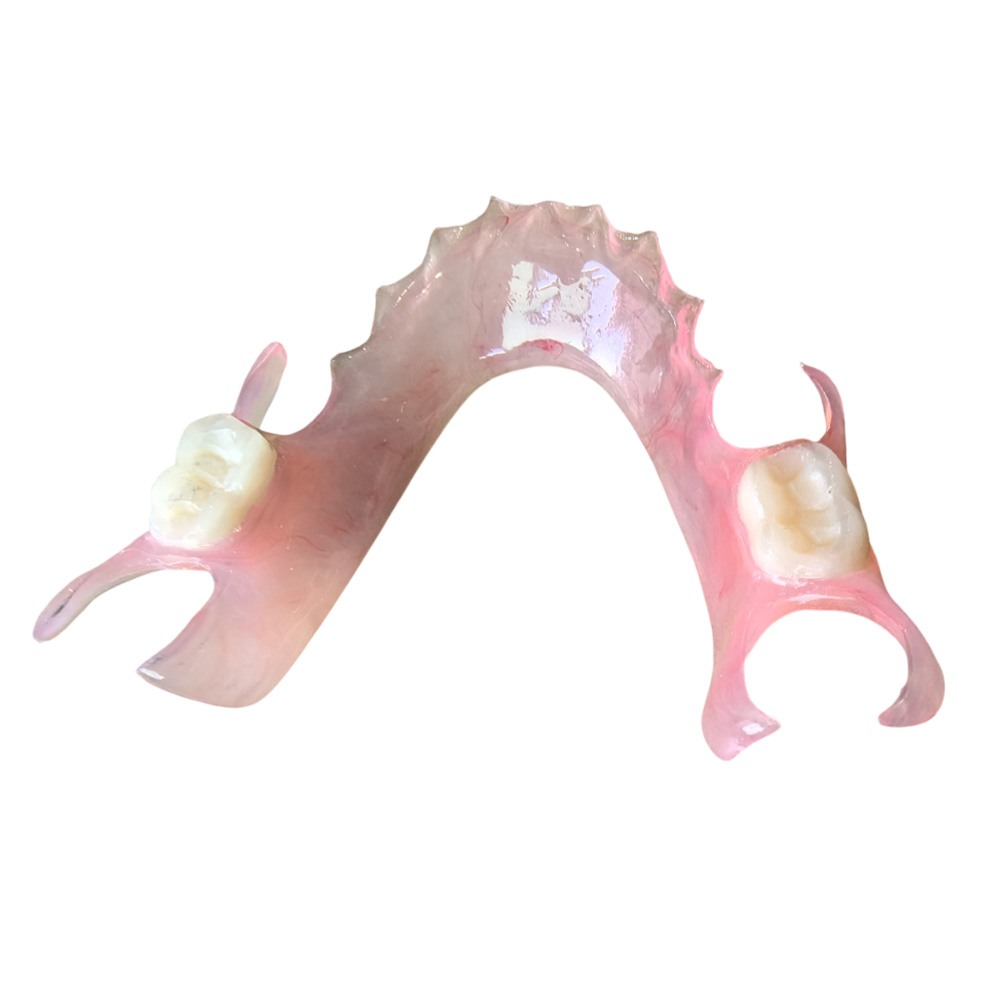
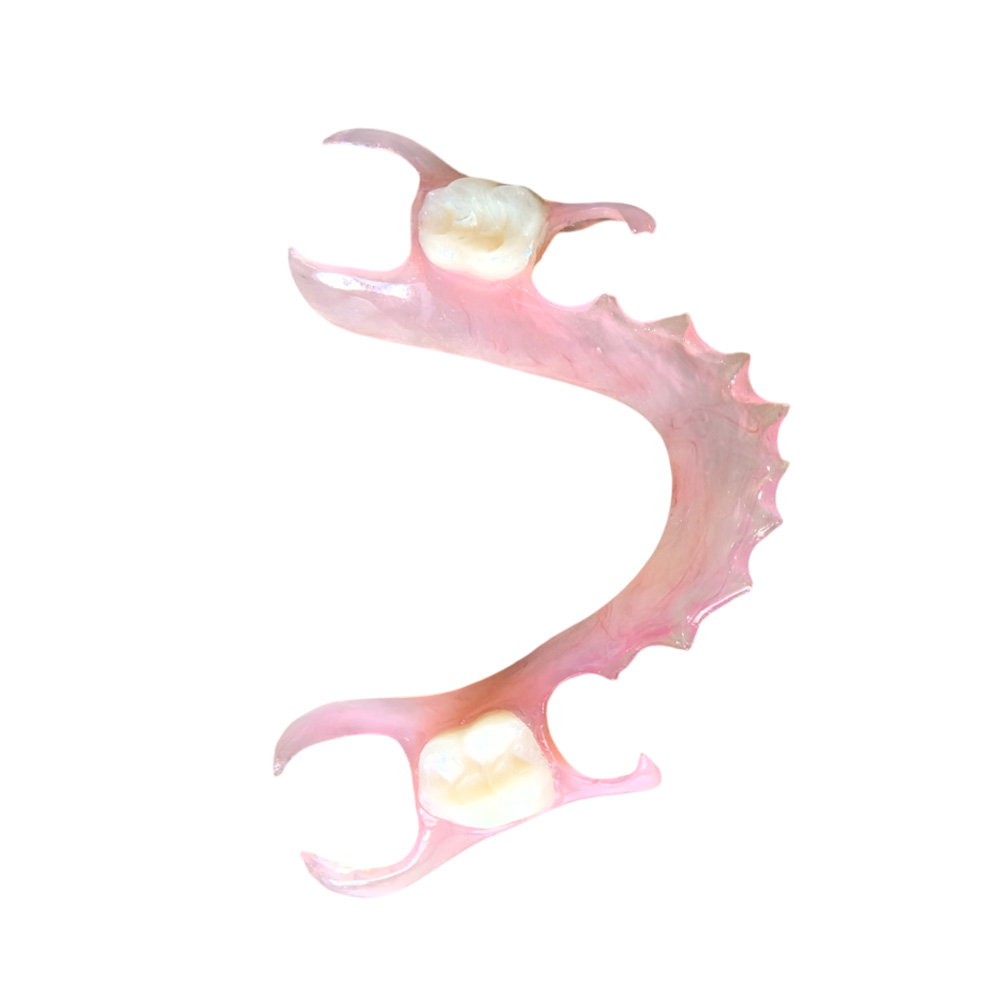
This case shows how we handled a flexible partial denture for two upper anterior teeth—what the patient needed, what the doctor asked for, and how we built it.
Patient Situation
- Missing teeth: Upper central incisors #8 and #9
- Cause: Congenitally missing (never erupted)
- Patient age: Late teens / early twenties
- Context: The patient had lived with the gap through adolescence. By the time they sought care, the adjacent teeth had drifted slightly, and the ridge had resorbed in the edentulous span.
Why this matters for the lab: The adjacent teeth aren’t ideal abutments—minor positional shifts mean you’re designing retention around what’s there, not around textbook anatomy. The anterior location puts the appliance directly in the smile zone, so clasp visibility isn’t negotiable. And because the patient is young, this restoration is almost certainly temporary—a bridge to implants, a bridge, or ortho down the road, adhering to sound clinical decision-making for missing anterior teeth.
Doctor’s Requirements
The prescribing doctor came in with a clear set of priorities:
| What the doctor wanted | Why it mattered |
| Metal-free, no visible clasps | Anterior esthetic zone—metal would show |
| Conservative on the abutments | Preserve enamel for future restorative work |
| Comfortable from day one | Patient had never worn any appliance |
| Reversible | Keep options open for implant or bridge later |
| Quick turnaround | Patient was anxious to fill the gap |
The doctor also noted that the patient had voiced concerns about metal sensitivity, which ruled out a cobalt-chrome framework with clasps from the start.
Flexible Denture for 2 Teeth: Design and Fabrication
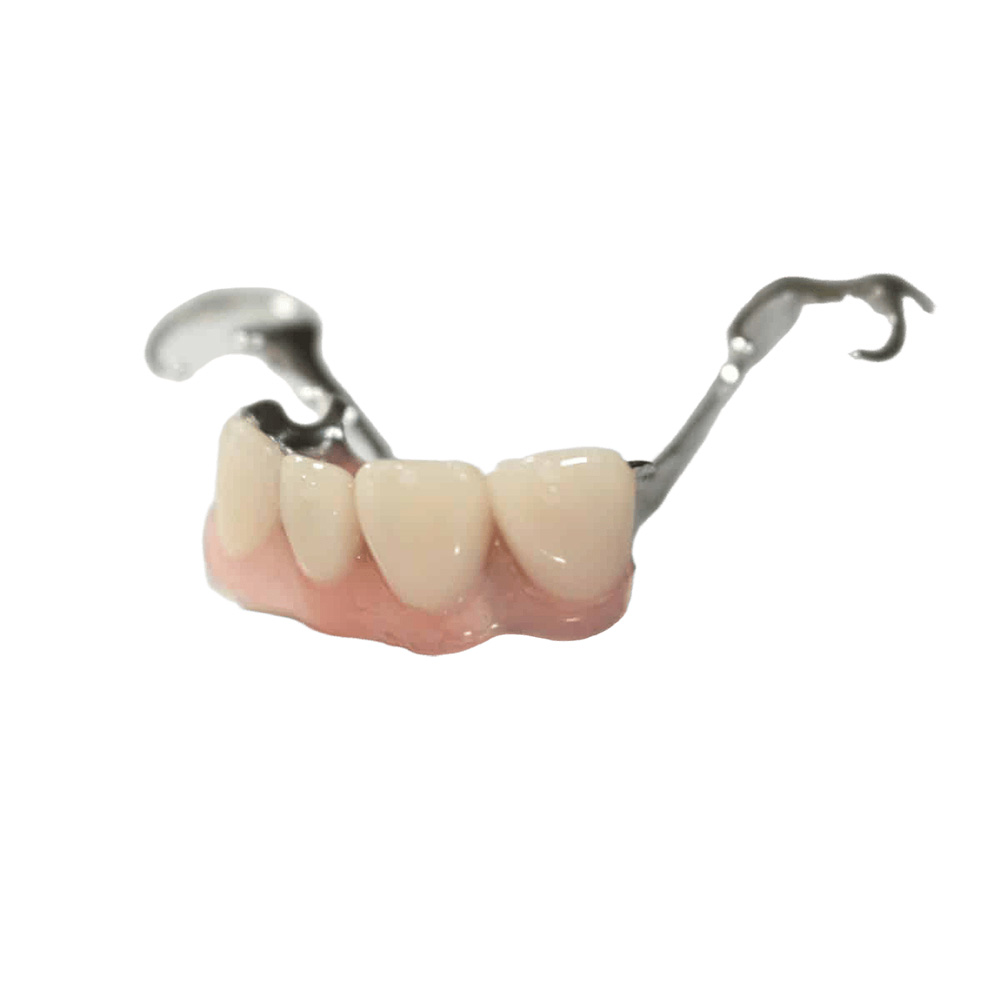
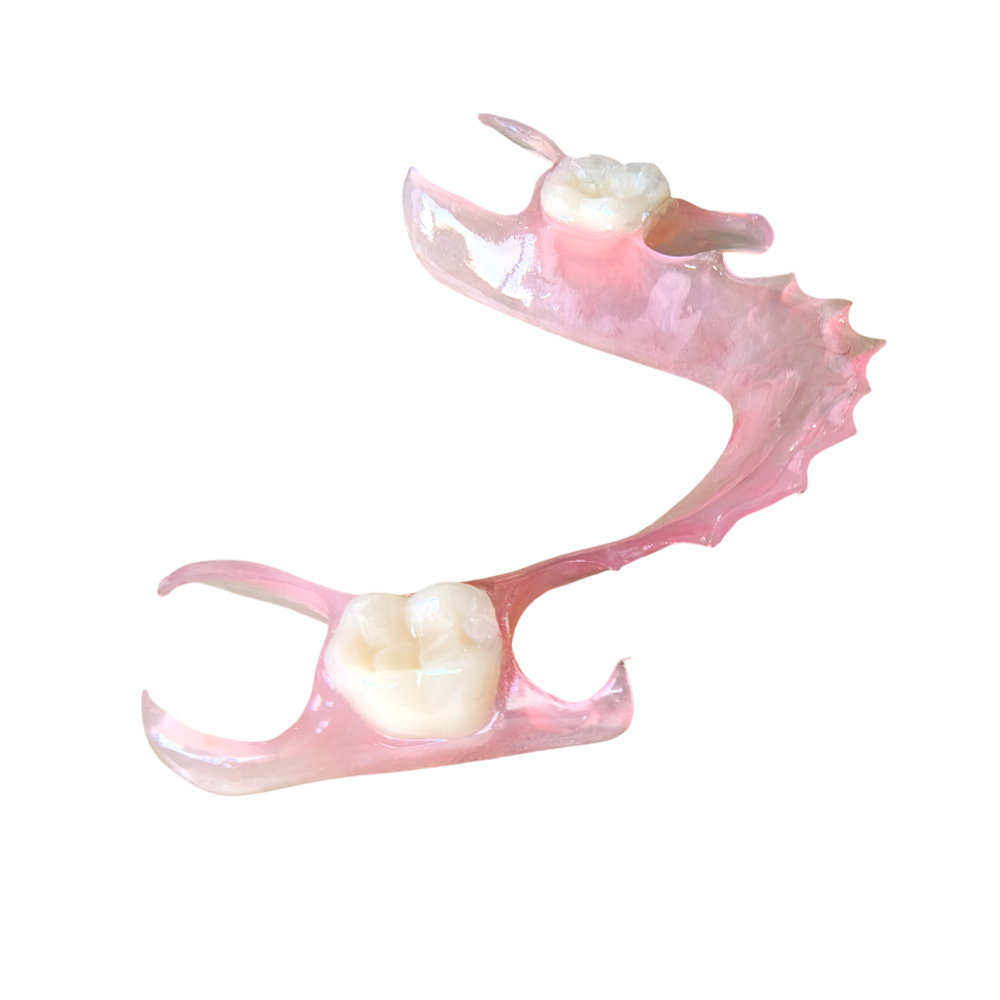
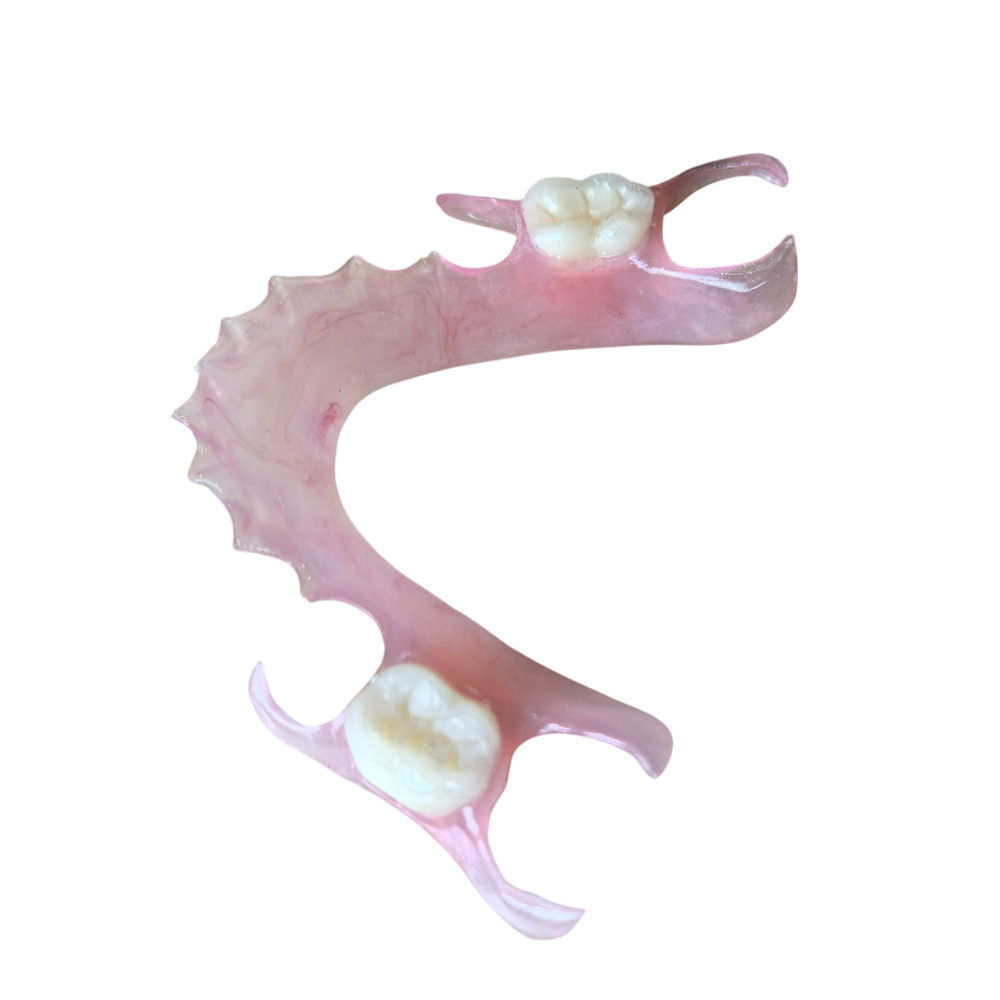
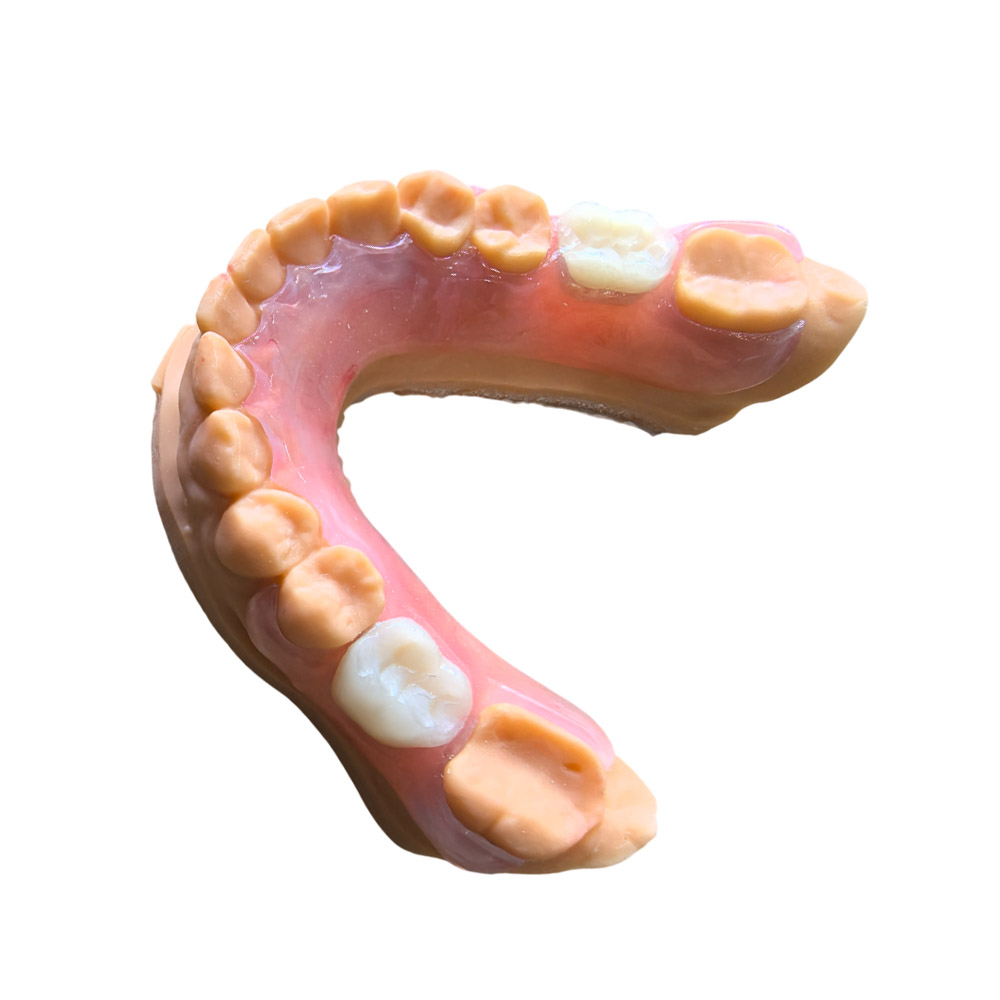
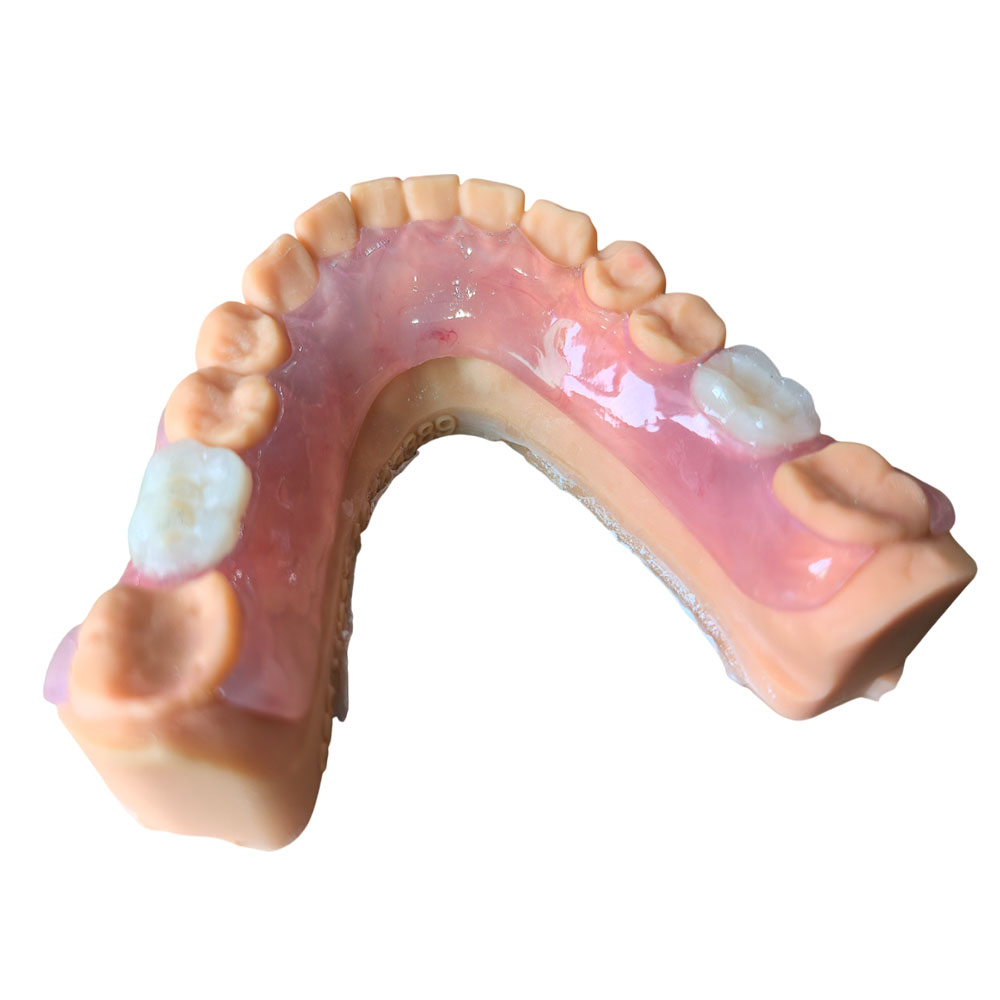
We built this as a flexible partial denture (Valplast-style thermoplastic design), chosen because it hits all four doctor-stated priorities without compromising on fit:
Sélection des matériaux
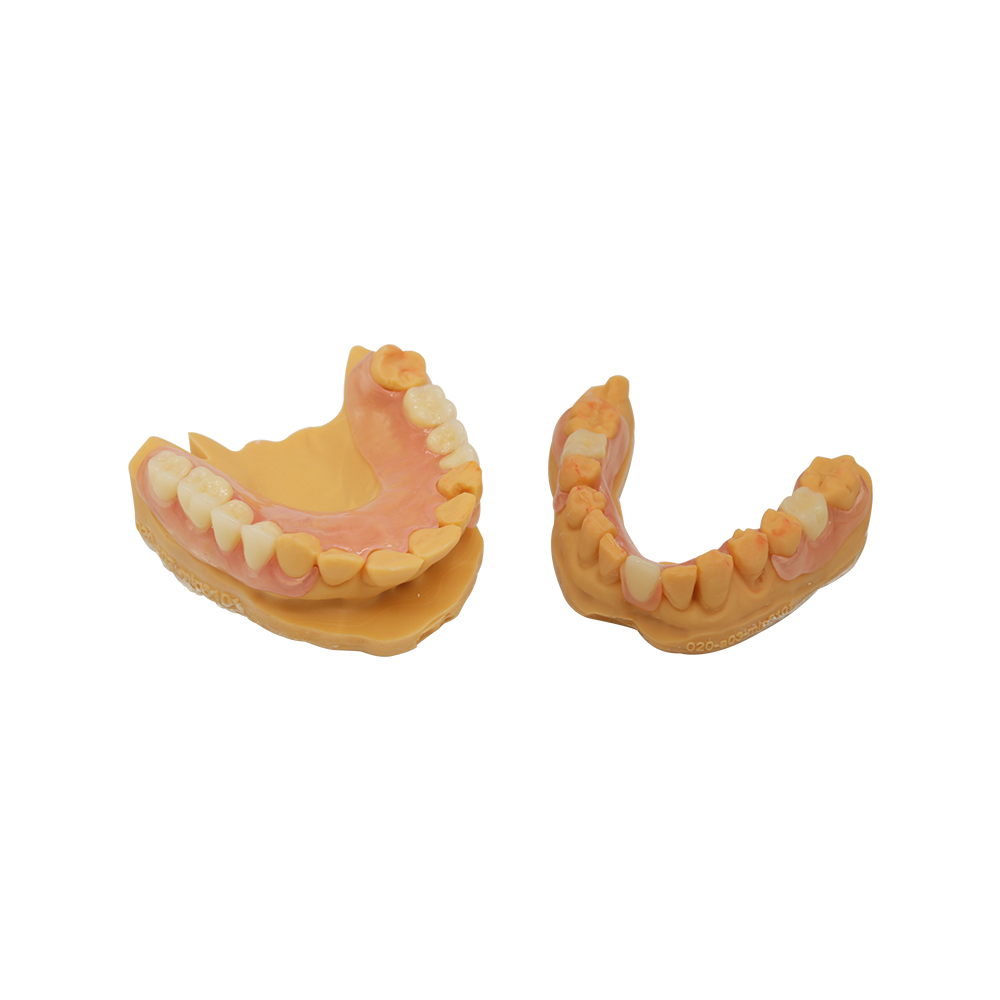
We went with a thermoplastic nylon-based base (no monomer, no metal) and stock composite resin teeth in a shade matched to the patient’s natural dentition. Per standard dental materials reference terminology, the base can be heat-cured, self-cured, injection-molded, or 3D-printed, and the teeth can be composite resin, acrylic, or porcelain. For this case, injection molding was the right call—pressure-formed during polymerization, it shrinks less and seats more precisely than a traditional heat-cured base.
Design approach
- Retentive elements sit on the lingual/palatal surfaces only—no buccal clasps, no facial show.
- Flexible arms engage mild undercuts on the lingual of the adjacent teeth, avoiding any prep on healthy enamel.
- The base plate is trimmed to cover only the edentulous span, leaving the palate free wherever possible.
- Teeth set with the patient’s facial midline and smile line as the reference, not the residual ridge position.
Why flexible for this case
The fit is straightforward: single or short-span anterior gaps in patients with normal occlusal load and reasonable ridge form. The case isn’t a fit when bite forces are heavy, when the base would need to span a wide edentulous area, or when abutment undercuts are extreme—and that’s part of why the case was a clean candidate for this material.
How We Met Each Requirement
| Doctor’s requirement | How we met it |
| Metal-free, no visible clasps | Thermoplastic base, no metal framework; all retentive surfaces on the lingual |
| Conservative on abutments | No tooth prep; retention via flexible arms into shallow undercuts |
| Comfortable from day one | Flexible base reduces pressure spots; thin base plate over the ridge |
| Reversible | No tooth modification—appliance is removable and tissue-only |
| Quick turnaround | Routed through our removable department (55 dedicated denture technicians); standard turnaround |
Final Result
The appliance seated on the first try. Esthetics were acceptable on delivery—no chairside adjustment beyond minor occlusal refinement.
Functional outcome:
- Patient reported no sore spots at the 1-week follow-up.
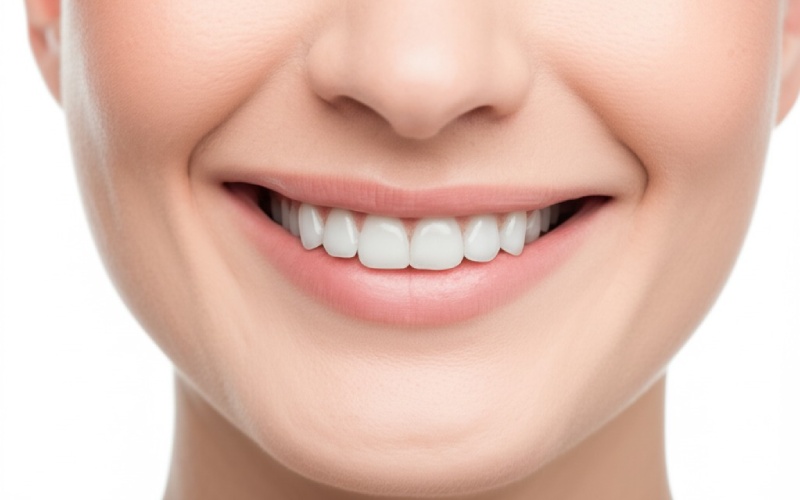
- Esthetic match to natural dentition—clasps invisible in normal conversation and smiling.
- Phonetics unaffected after a short adaptation period.
- Appliance stable during eating (patient advised to avoid very hard/sticky foods).
What the doctor noted:
- Easy to insert and remove for the patient.
- No abutment stress observed at delivery.
- Easy to relay adjustment instructions because the base material is forgiving if minor pressure points develop.
Long-term note from the lab: This kind of restoration is, by design, transitional. It solves the immediate problem—filling the gap, restoring esthetics, maintaining function—and does so without committing the patient to a path that’s hard to reverse. If the patient later decides on an implant, the appliance comes out, the ridge is preserved, and the work moves forward without starting over.
When Is a Two-Tooth Flexible Partial Denture Suitable?
A flexible two-tooth anterior partial is a reasonable choice when all of these are true:
- Short edentulous span (1–3 teeth)
- Normal to light occlusal load
- Patient wants metal-free esthetics
- Adjacent teeth are healthy and don’t need restorative work
- The restoration is meant to be transitional or medium-term
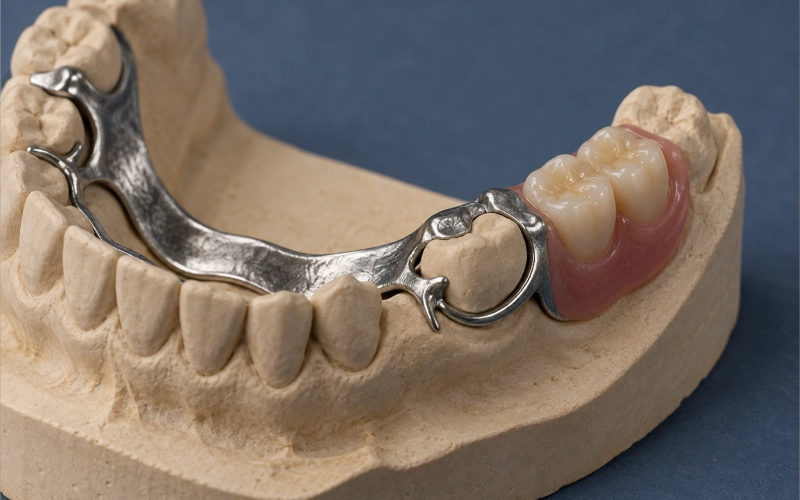
It’s not the right call when the patient has heavy bite forces, when the edentulous span is long, or when the abutments have severe undercuts—those situations call for a cast metal framework or an implant-supported design instead.
Order a Two-Tooth Flexible Denture from ASD Dental Lab
We work with clinics, dental labs, and group practices on flexible, acrylic, and cast-metal removable restorations. Send your case file (intraoral scan or model + bite registration + photos) and we’ll quote and turnaround on the same day.
What we need from you to start:
- Upper and lower models (or digital scans)
- Bite registration
- Shade and mold selection (or stock tooth selection guidance)
- Any old prostheses or wax set-ups for reference
For design sign-off on partial frameworks (cast metal or flexible), our design approval workflow walks through clasp type, rest seat, connector dimension, and mesh coverage before any casting or milling—so what you approve is what we build.
Our removable team (55 dedicated denture technicians) handles up to 4,000 removable cases per month in normal season and scales to 6,500 during peak season, with all production done in-house at our Shenzhen and Huizhou facilities—no outsourcing.