Temporary Crowns for Molars: An Extended-Transition Case Study
Wypełnij formularz, a my odpowiemy w ciągu 30 minut!
Patient Situation
A 52-year-old patient came to the referring practice in the middle of an orthodontic treatment plan. Two years earlier, tooth #30—the lower right first molar—had been root canal treated and restored with a direct composite core after a crack was found during routine radiographs. The core was never covered with a definitive crown, largely because of a scheduling conflict that went on longer than anyone expected.
What finally moved the case forward was the orthodontic work. Teeth #29 and #31 were being repositioned with fixed appliances to correct a crowding issue, and the movement of those two teeth made it impossible to seat a final crown on #30. A full-coverage restoration on the molar had to wait until the adjacent teeth reached their intended positions.
The clinical picture at the time we received the case:
- Tooth #30: root canal treated, composite core build-up, no cuspal coverage, structurally compromised. The remaining coronal tooth structure was thin, with visible marginal breakdown on the mesial surface.
- Adjacent teeth #29 and #31: both carrying orthodontic brackets and an engaged archwire. #29 was being moved distally, #31 was being retracted. Both needed archwire changes roughly every four weeks.
- Periodontal condition: generalized moderate recession in the mandibular anterior region, but healthy attachment levels around #30. No bleeding on probing at the molar site, no mobility.
- Occlusal space: approximately 8.5 mm of vertical clearance over #30, checked against the opposing maxillary molar. Adequate, but not generous.
- Parafunction: the patient reported grinding at night, confirmed by flat cusp tips on both the opposing molar and the neighbouring natural teeth.
The timeline was the crux. The orthodontic phase required six to eight more weeks. That meant #30 needed a full-coverage restoration that could stay in place across multiple archwire changes, tolerate a heavy chewing load, and still come off cleanly at the end so the definitive impression could be taken without interference.
Standard short-term provisionals were not built for that. They are designed around a one-to-two week window before the definitive impression, and they tend to lose marginal integrity, wear through on the occlusal surface, or distort under sustained load well before eight weeks are up.
What the Dentist Required
The dentist had already thought this through and gave us four specific instructions:
- Survive the full orthodontic window without failure — not “hold for a few weeks,” but the whole six to eight weeks, through two or three archwire changes, with the restoration still seated and functional on the final appointment.
- Do not distort the arch — this was the one the dentist emphasized. Because #29 and #31 were actively moving, any bulge on the proximal surfaces of the provisional would either block archwire re-engagement or, worse, push the teeth being repositioned. The proximal contours had to stay clear of the orthodontic movement envelope.
- Keep the occlusal table out of the way — the patient grinds at night. The provisional had to be shaped so that it did not create premature contacts that would transfer load onto the moving teeth.
- Flag the standard’s scope honestly — the dentist wanted to know exactly what the applicable material standard does and does not cover. The relevant specification, ISO 10477:2020 for polymer-based crown and veneering materials, explicitly excludes products made in the dental surgery and applications in stress-bearing areas of posterior teeth from its test scope (see Section 1). The dentist asked us to be straightforward about the fact that a molar provisional sits outside that scope, rather than quoting test values that were never validated for this application.
That fourth point shaped how we answered. We gave the dentist the scope limits first, then described what we do control.
Temporary Molar Crown Design and Fabrication
1. Material Selection
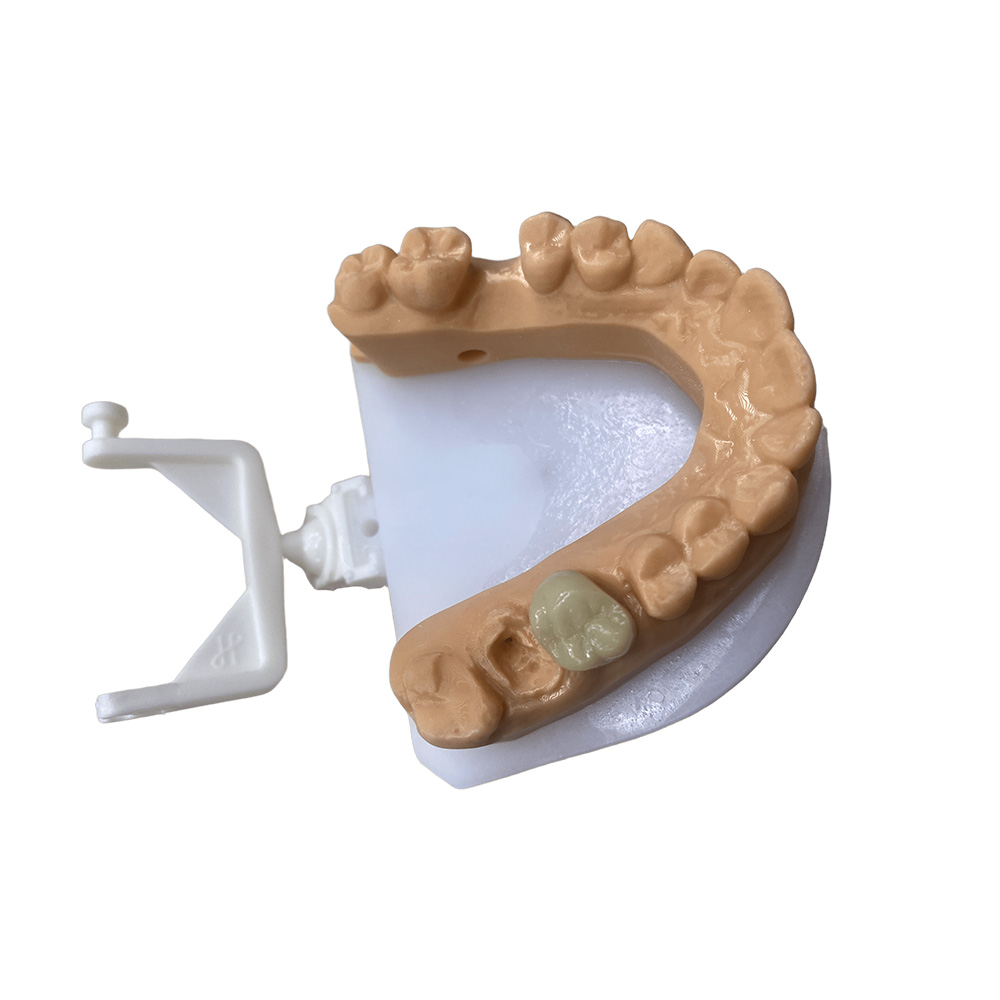
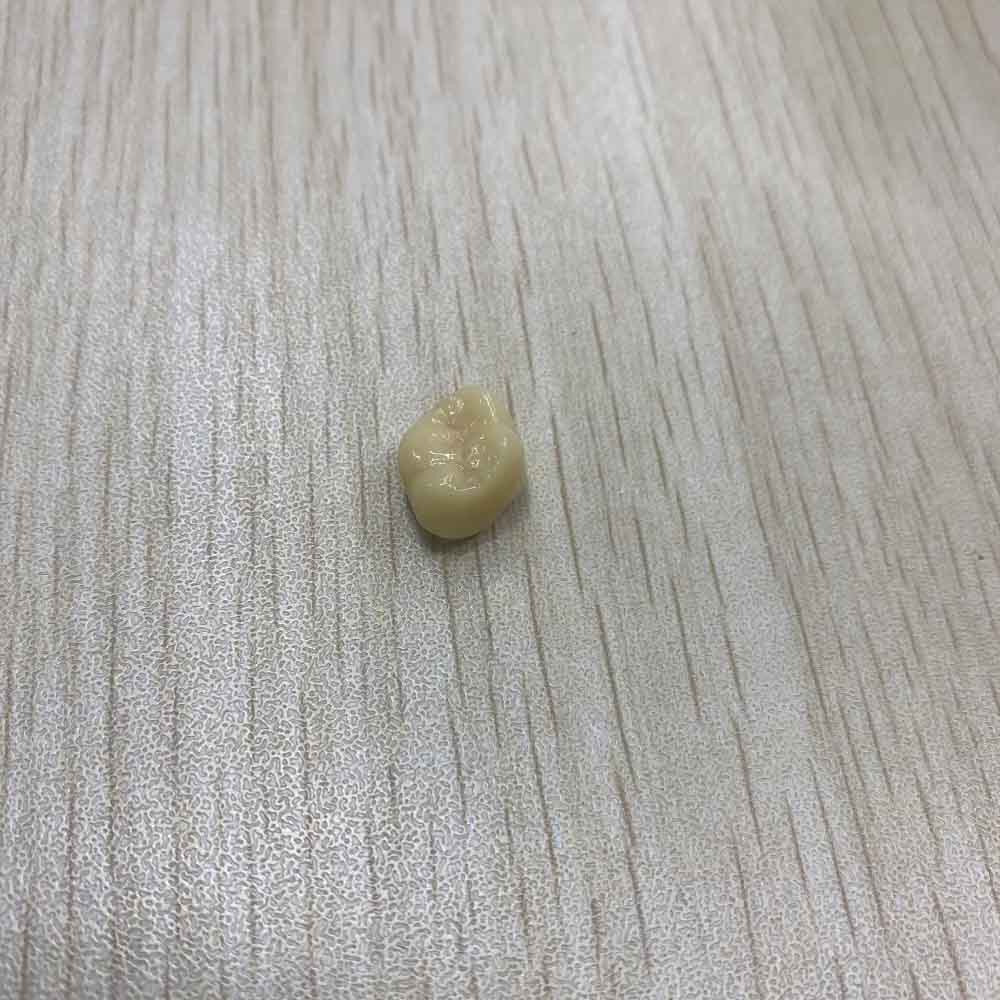
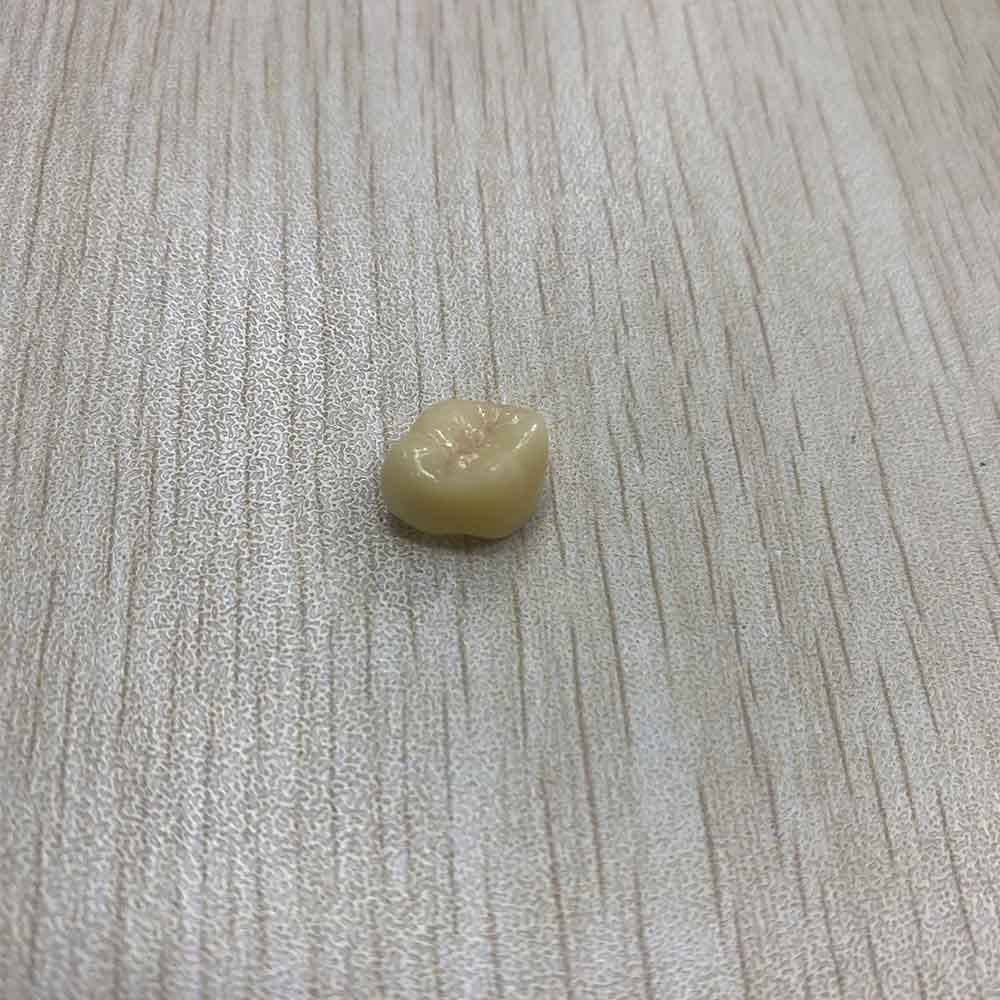
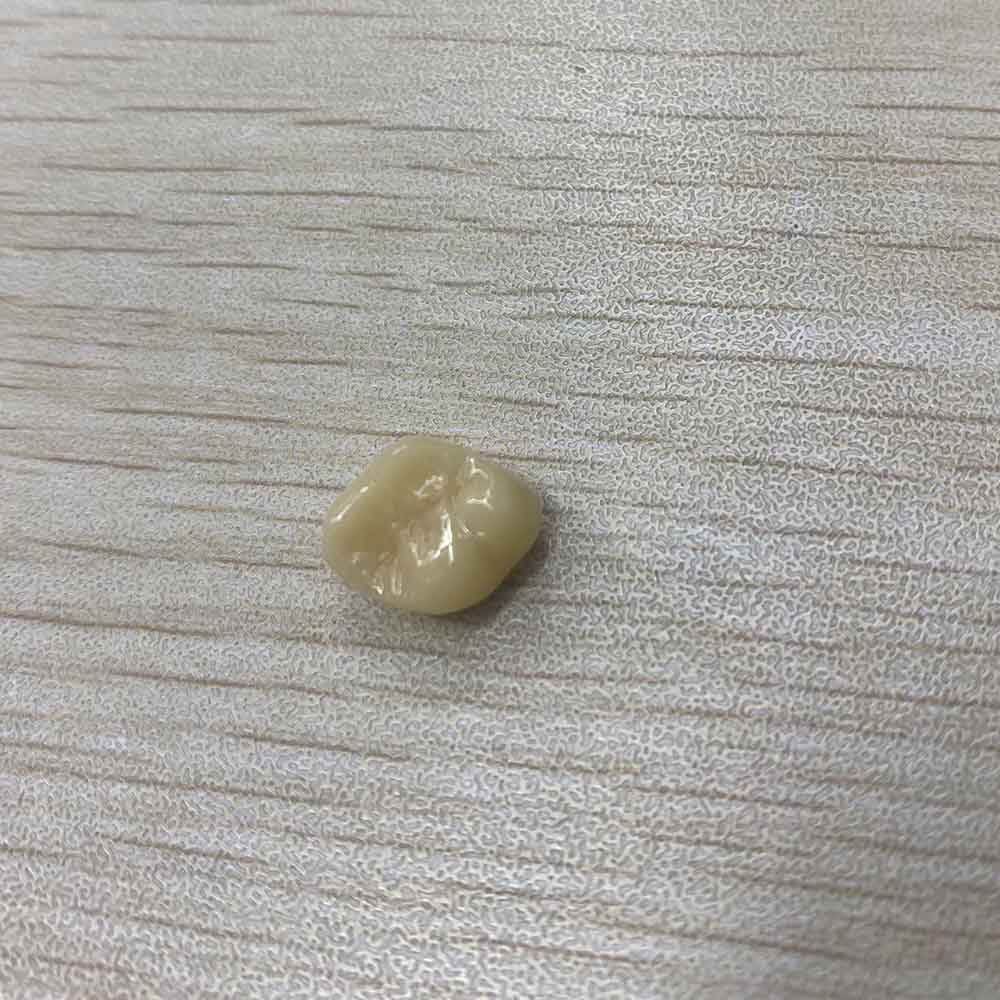
We used a cross-linked bis-acryl composite resin system formulated for extended provisional wear, processed under controlled polymerization in a pressure pot rather than auto-polymerized at the chair.
The reason for the lab processing is mechanical. Chairside auto-polymerizing resins tend to accumulate residual monomer and continue to polymerize at the margins after seating, which shows up as creeping fit loss over weeks. A lab-processed cure is more complete from the start, so the material is dimensionally quieter for the whole six to eight week period.
The supporting evidence is reasonably direct. Research published in PLOS ONE compared lab-fabricated and chairside-fabricated provisionals and found significantly lower marginal discrepancy for the lab-processed group — a mean of 91 μm against 156 μm after four weeks in clinical function. That gap is what makes the difference between a restoration that is still well adapted at week six and one that has opened up.
2. Occlusal Design
Molar provisionals carry a specific mechanical demand. Masticatory forces on a single molar during normal function can exceed 500 N, and this patient added nocturnal grinding on top of that. The restoration has to survive that loading and still stay clear of the opposing dentition.
Three specific design decisions, following the force-distribution principles described in this study on occlusal load distribution in interim restorations:
- Cusp height reduced by 1.5 mm relative to the contralateral natural molar, cutting the lateral force vectors that come into play during excursive movement
- Contact areas spread broadly across the central fossa and buccal cusps rather than concentrated on single points
- Non-functional cusp tips relieved to eliminate the premature contacts that would otherwise drive cement washout under a grinding patient
3. Proximal and Margin Control
The second requirement the dentist raised — keeping the proximal surfaces clear of the archwire — drove how the crown was shaped on the model.
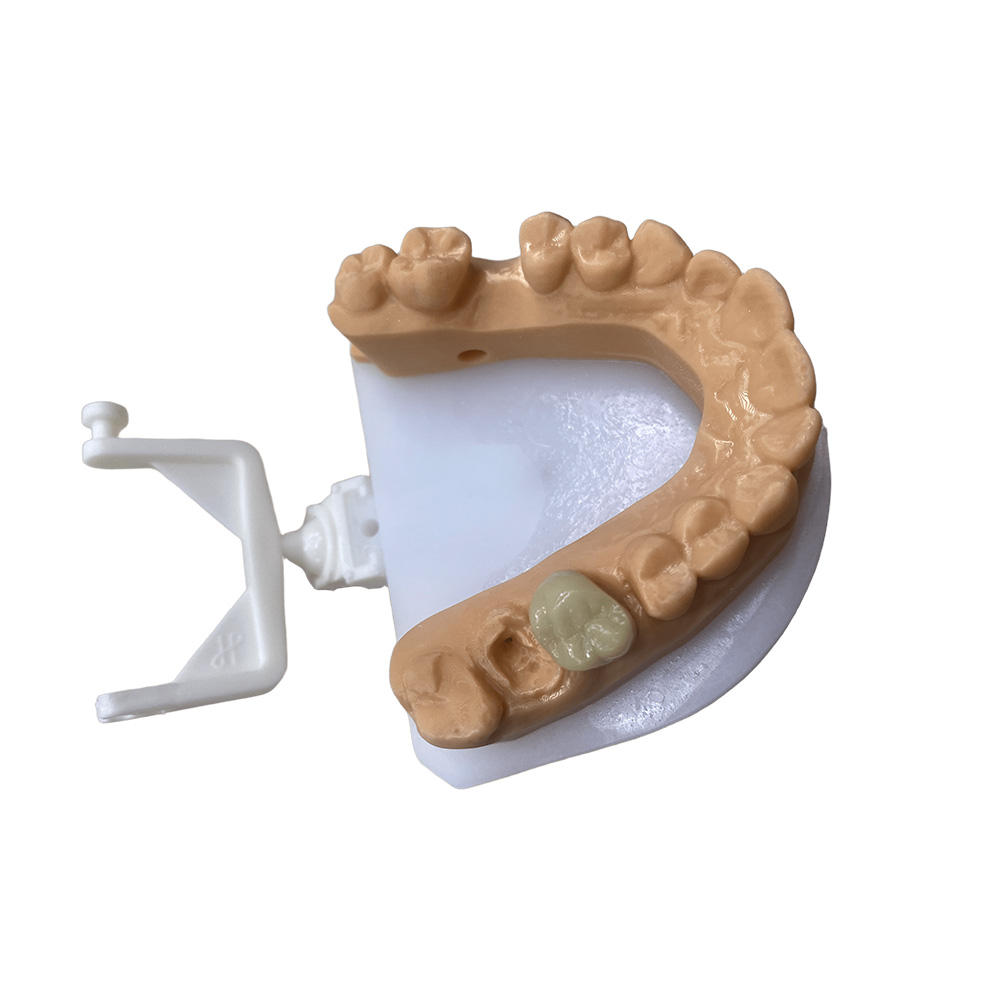
We worked from a cast poured from the dentist’s preliminary impression, which let us check the proximal contours against the archwire path and the bracket positions on #29 and #31 before the restoration left the lab. Contacts were kept clear of the movement path so that re-engaging the archwire at each adjustment would not require removing the provisional.
Margins were finished to a feather-edge profile at the gingival crest, giving a thin, well-adapted interface that resists cement dissolution over the full wear period.
For cementation, the dentist used a zinc oxide eugenol temporary cement with fluoride release. It gives adequate retention for the six-to-eight-week window and still allows the provisional to be removed cleanly at the final impression appointment, which was the whole point of choosing a removable approach here.
After Fitting: Patient and Dentist Feedback
From the dentist, at the final appointment:
The dentist removed the provisional at the impression visit and evaluated the prepared tooth and the abutments before taking the definitive impression. Their assessment:
- Margins were still well defined and clean, with no cement washout at the buccal or lingual
- Soft tissue response was unremarkable — no inflammation, no tenderness, no recession change around #30
- Occlusal anatomy was still intact, with measurable wear confined to the non-functional cusp surfaces rather than a fracture
- Most importantly for the orthodontic plan, the archwire changes across the six weeks had not required any adjustment to the provisional, and there was no proximal interference with the movement of #29 and #31
- The definitive impression came out with crisp margins and intact interproximal contacts, with no need to remove or correct anything before seating the impression
From the patient:
The patient’s own report at the same visit:
- They described the restoration as feeling like a natural tooth rather than a temporary one, and said they had stopped noticing it
- Eating on that side felt normal from the first couple of days; they specifically mentioned no change in how the back teeth met
- They noticed the night grinding felt different — the provisional was smoother than their other tooth surfaces, which they noticed more at the end of the eight weeks than at the start
- The one thing they mentioned was that the bite felt very slightly different on the first day, and had settled by the second
- By the final appointment they had no concerns to raise about the provisional itself, and the question they were asking was about how long the final crown would take to arrive
Key Findings from the Temporary Molar Crown Case
- The timeline, not the tooth, sets the material choice. A six-to-eight-week interval with archwire changes running underneath is a different problem from a two-week bridge. The material has to stay dimensionally stable long after most provisional materials have already lost their fit.
- In a moving arch, the provisional is a constraint. When adjacent teeth are being repositioned, the proximal contours of a temporary restoration are not a free design variable. They have to be checked against the orthodontic movement path before delivery, or the restoration and the treatment plan start fighting each other.
- A grinding patient changes the occlusal design, not just the material. Reduced cusp height, broad contact distribution, and relieved non-functional tips are what keep an eight-week posterior restoration intact under loading that includes parafunction.
- Saying what a standard does not cover is more useful than citing it anyway. The dentist asked for scope clarity, not a compliance claim. Telling them exactly where ISO 10477:2020 stops — outside the dental surgery, and outside stress-bearing posterior areas — is what let the conversation move to the controls we can actually speak to.
Note on Standards and Scope
Worth stating plainly, since the dentist asked about it directly. ISO 10477:2020, the international standard for polymer-based crown and veneering materials, excludes two scenarios from its test protocols:
- Products made in the dental surgery
- Applications in stress-bearing areas of posterior teeth
The practical consequence is that the standard’s mechanical thresholds — flexural strength, water sorption and similar properties — were not validated for a long-wear, load-bearing posterior provisional. That is exactly the case in front of us.
We are not claiming compliance with a standard that does not cover our application. What we can speak to is process control: controlled polymerization, batch consistency between units of the same case, and material choices justified by published comparative data. That is where the confidence should sit, and that is what we told the dentist.
References and Further Reading
- ISO 10477:2020 — Dentistry: Polymer-based crown and veneering materials: the applicable specification; Section 1 sets out the scope exclusions that matter for this case
- Research on marginal accuracy of lab-fabricated vs chairside provisional crowns (PLOS ONE): comparative study on marginal discrepancy after four weeks of clinical function
- Study on occlusal load distribution in interim restorations (PubMed 41014604): force distribution patterns in provisional crowns under functional loading
Our Temporary Crown Manufacturing Capabilities
ASD Dental Lab has been serving dentists, dental practices, and specialty clinics since 2012, with dual manufacturing facilities in Shenzhen and Huizhou, China. Our team of approximately 460 technicians operates across full-service departments — CAD/CAM, milling, implant prosthetics, porcelain and metal frameworks, removable prosthetics, and quality assurance — which lets us handle complex cases in-house without outsourcing to third-party labs.
We work with over 50 dental laboratories, 100+ dental practices, and 400+ dentists across the United States, Netherlands, Germany, France, Belgium, Austria, United Kingdom, Luxembourg, and Switzerland.
ASD accepts facility tours and video inspections for quality verification. If your practice has cases involving long-wear provisional restorations, multi-unit coordination, or lab support across a complicated treatment timeline, get in touch.
This case study describes a patient scenario handled by ASD Dental Lab. Patient and dentist identifiers have been removed to protect privacy.
Szybszy czas realizacji dzięki naszej najnowocześniejszej technologii
Zalecane