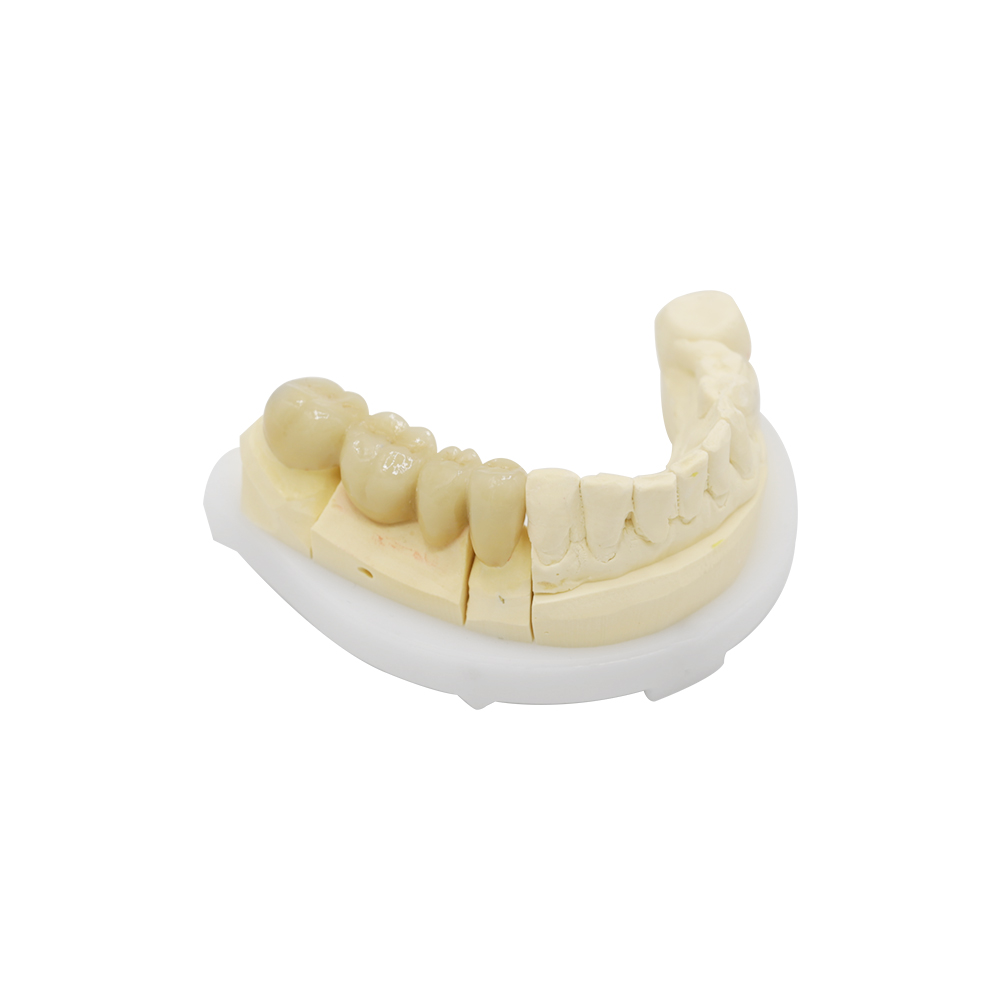
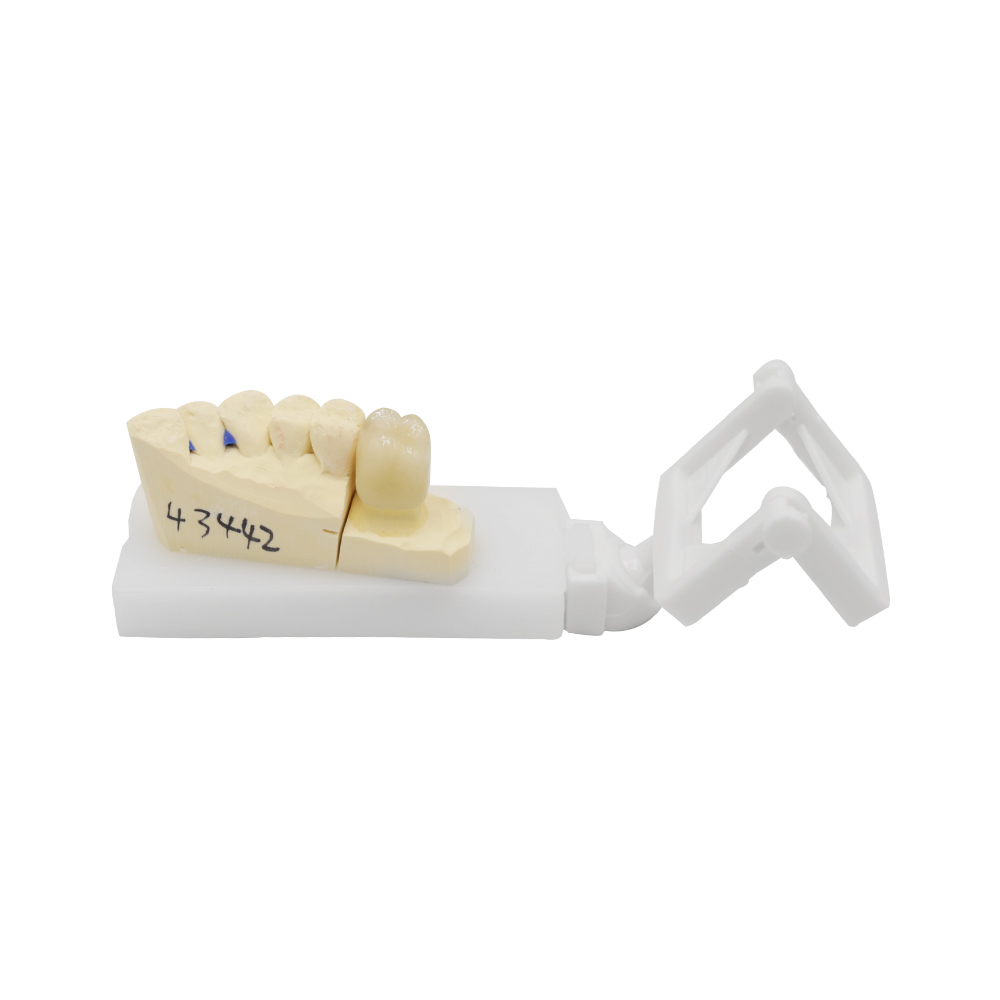
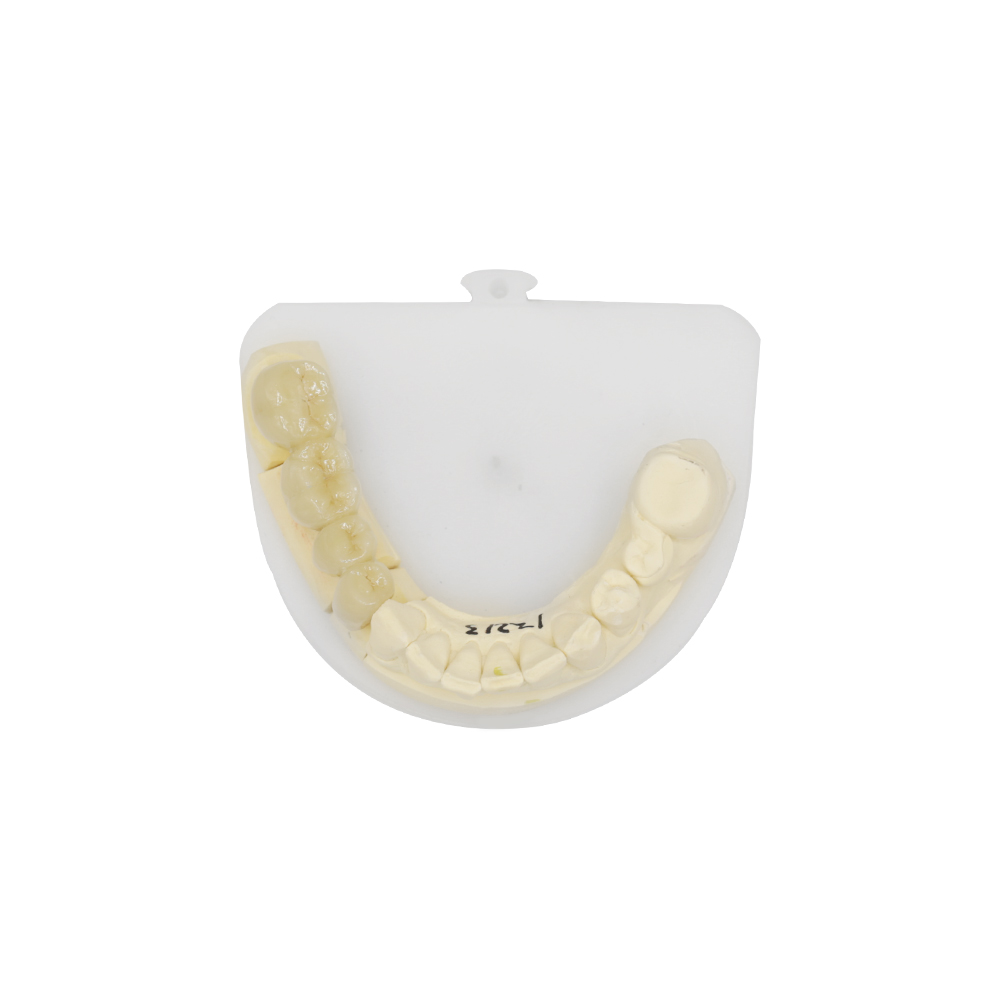
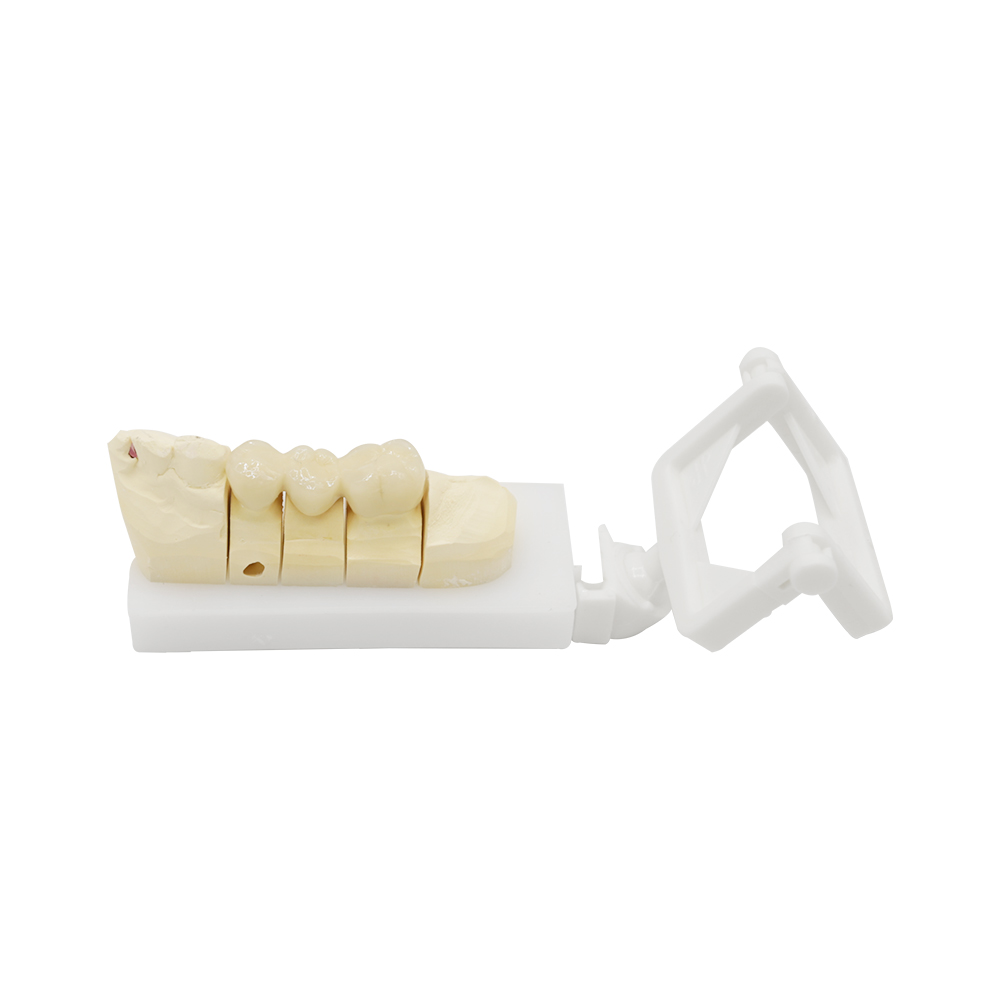
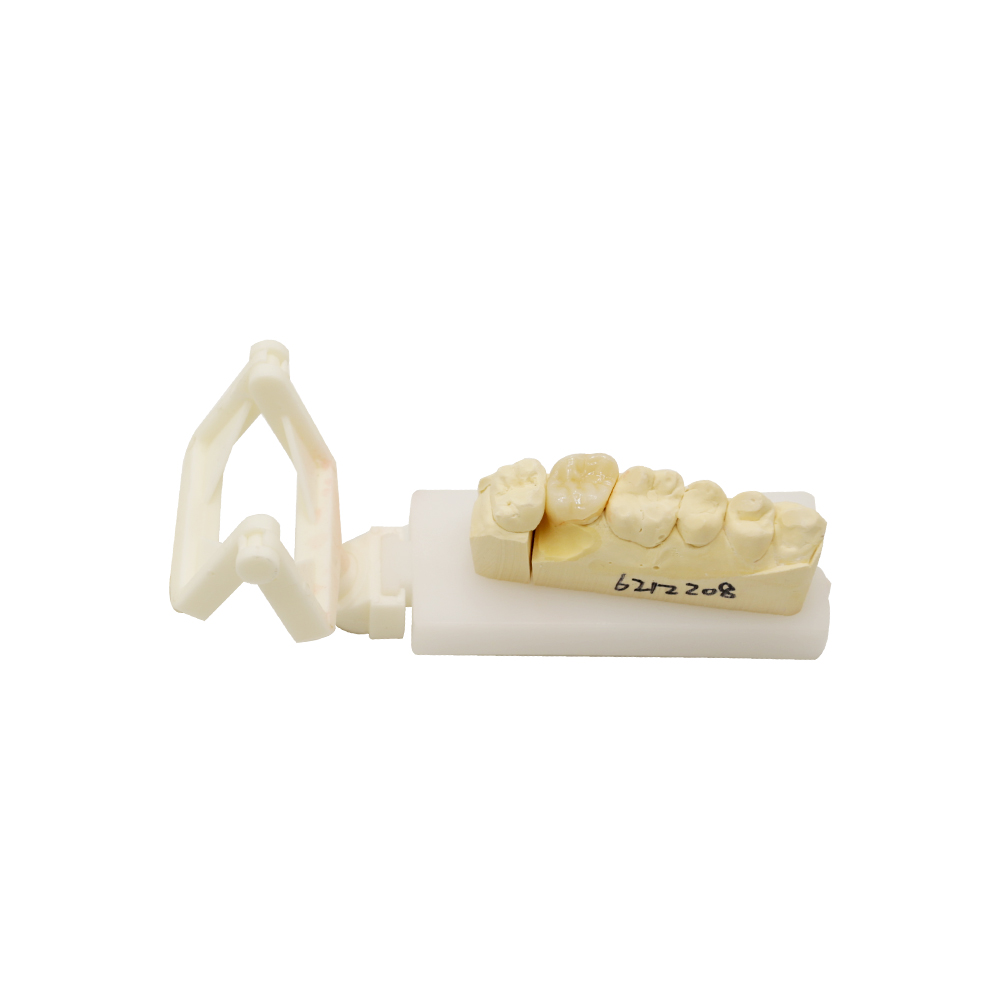
Posterior PFM Crown — Mandibular Second Molar with Tight Clearance
Wypełnij formularz, a my odpowiemy w ciągu 30 minut!
This case was a single-unit PFM for a posterior tooth, referred by a general practice whose patient came in with a failing direct filling and a tight bite against an existing PFM on the opposing tooth. The doctor asked the bench to think through material choice before committing to a prep plan.
What the patient came in with
A late-40s patient, full dentition, no medical contraindications on file, with one finding that drove the whole case:
- Tooth #31 / FDI 37 with a large, failing composite that had debonded twice in the last year. The patient wanted a more durable solution this time.
- The opposing tooth on the upper arch (#16 / FDI 17) already carried an existing PFM crown that was placed several years back and was in good shape. The bite was tight — under 1.5 mm of clearance at the central fossa when the doctor measured on the pre-op model.
- The patient had a self-reported history of nighttime clenching. The doctor saw wear facets on the anterior teeth consistent with that.
- The patient was not interested in long, multi-visit protocols. They wanted the tooth fixed in as few appointments as possible.
That was the situation the doctor sent through. The patient expected a crown that wouldn’t come off and wouldn’t break. The doctor’s concern underneath was that “just slap a crown on” would either over-prep a tooth that didn’t have a lot of structure to give, or push the patient into a material that wouldn’t survive the bite.
What the doctor asked the lab to do
The prescription the doctor sent through was deliberately short. Four lines, in the doctor’s own style:
- Tooth #31, full coverage, PFM was the doctor’s preferred material.
- Buccal margin to be porcelain, lingual and proximal margins metal collar. The doctor wrote this on the work order, not “shoulder where you think it makes sense” — the prescription was specific.
- Functional occlusal contacts to be metal, not porcelain. The doctor didn’t want a porcelain-occlusall-tooth-on-ceramic pair.
- Lab to record alloy, batch, and country of origin on the case file. The practice had started fielding “what’s in my mouth” questions from patients after a piece in the consumer press, and the doctor wanted to be able to hand the patient a clean answer.
A couple of the implicit asks were on the phone rather than the work order, and the bench wrote them back into the work order before starting. The doctor wanted alloy documentation the patient could read. The doctor wanted one adjustment visit, not three. The doctor did not want a lab hold two days before the seat appointment because of a missing bite registration.
Posterior PFM Crown Design and Fabrication
The bench measured the model first. The pre-op clearance at the central fossa was 1.4 mm — under the 2.0 mm a fully veneered porcelain occlusal would have asked for. That single measurement is what pinned the design: the buccal margin would be porcelain, the lingual would be metal collar, and the functional occlusal would be metal. None of those were preferences. All three were forced by the geometry of the bite.
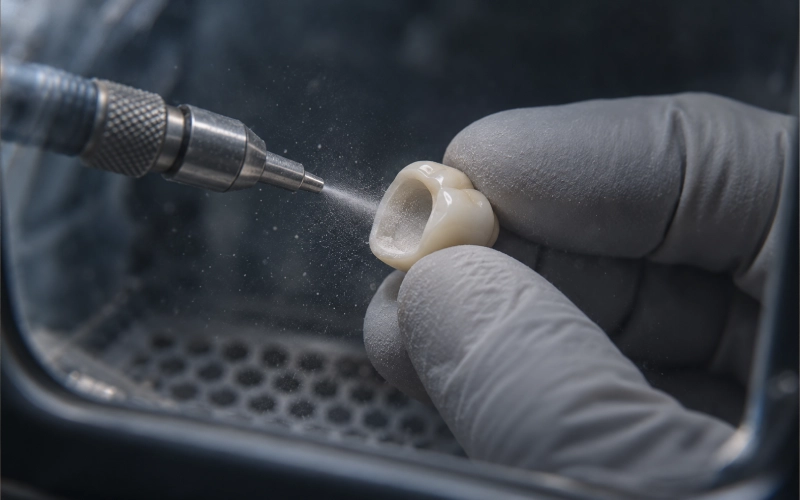
On the casting side, the bench went with a high-noble alloy on doctor’s preference (nickel-free option requested as a precaution given the parafunctional history). The alloy certificate, with brand and lot, was attached to the work order. The coping was cast conventionally — waxed to full anatomy, sprued, invested, burned out per the alloy’s schedule — and finished to a thickness the bench measured with a caliper at four points, not just one. The 0.3–0.5 mm thickness range the bench targets on a single-unit posterior coping was held at all four measurement points.
The margin prep was carried out before the porcelain went on. Buccal: rounded shoulder, 1.0–1.2 mm wide. Lingual and proximal: chamfer, 0.3–0.5 mm. The bench marked the margin under magnification and checked it on the die before opaque went down.
The porcelain layering followed the shade the doctor prescribed — body and enamel layered to match the patient’s existing dentition. The non-functional inclines of the occlusal carried porcelain for esthetics. The functional cusp contacts were left as metal. That split is what made the difference on the seat appointment: there was no porcelain-on-porcelain contact at centric occlusion, and no porcelain-on-PFM lateral interference to adjust.
The bench fired the porcelain within the porcelain system’s recommended firing count. Shade was checked under a standardized light source both before and after glaze. Final fit was verified on the solid model after glaze — not just before — and the final QC technician signed the case out independently of the production bench.
The case was on the bench for two working days from the time the complete data was in the lab. Design-approval time, missing-information time, and shipping time were tracked separately from the lab working time. The package shipped under the lab’s DHL account, with the tracking number sent to the practice the day it went out.
Posterior PFM Crown Specifications and Delivery
| Restoration | Single-unit PFM crown, mandibular second molar |
| Margin | Buccal rounded shoulder (porcelain margin); lingual and proximal chamfer (metal collar) |
| Occlusal | Metal on functional cusp contacts; porcelain on non-functional inclines |
| Alloy | High-noble, nickel-free, brand and lot recorded on the work order |
| Porcelain system | CTE-matched to the alloy, layered per the prescribed shade |
| Lab working time | Two working days from receipt of complete data |
| Shipping | International economy, the tracking number on the day the package shipped |
| Documentation | Alloy certificate, work order trail, final QC sign-off — all attached to the case file |
The case seated at the practice without chair-side occlusal adjustment. One proximal contact was a touch heavy on initial try-in and was eased on the solid model before delivery, with the contact re-verified after the adjustment. The patient was recalled at the practice’s normal crown follow-up interval.
What the practice now has on file
Three things the front desk and the doctor can pull up when the patient calls:
- The alloy certificate. Brand, lot, country of origin, biocompatibility statement. The practice has a copy for the chart; the patient got a copy on request.
- The production work order. Operator, equipment, batch, bench checkpoints, final QC sign-off. The trail that lets the doctor reconstruct what was done if a question comes up later.
- The remake policy in plain terms. What the lab covers at lab cost, what is on the practice, and how the escalation works when a case has to be redone.
The case is now part of the practice’s standard recall file. The patient’s chart has the alloy documentation; the lab has a copy in the production archive. If the patient comes back in two years with a question about the crown, the practice has the answer.
Posterior PFM Crown Design Considerations
A few notes from the bench side, for the office that refers this kind of case:
- The reason PFM worked on this case is that the bite geometry forced the design choices. A different patient — same tooth, same failure mode, but with normal vertical clearance and no opposing PFM — would have gone out as a monolithic crown, not a PFM. PFM is not the default for posterior crowns anymore, but it remains the right call when the case has at least one of: limited interocclusal space, an opposing PFM that needs to be matched, a heavy parafunctional load, or a documented patient preference for a high-noble or noble alloy.
- The margin split on this case — buccal shoulder, lingual chamfer — is the single highest-leverage margin design on a posterior PFM, and is also the one most often left to default rather than prescribed. Worth prescribing.
- A porcelain-occlusal PFM opposing an all-ceramic crown is the contact pattern that produces the most wear complaints from patients. The bench can work around it with a metal occlusal on the new crown, but it is better caught at the prescription stage than discovered at the seat appointment.
- The lab keeps the alloy paper trail for three months from the production date by default, longer on request. If a practice wants a permanent file copy in the patient chart, the lab can ship the alloy certificate with the case, or send it electronically, whichever the office prefers.
- For a single-unit posterior PFM, the lab’s working time is two to three working days from receipt of complete data. Missing bite, missing opposing arch, missing margin scan, or an unclear prescription will put the case on hold and reset the clock. The bench flags missing data within the first 24 hours so the office isn’t surprised.
Notes on evidence and sources
The clinical numbers in this case draw from public dental material specifications and peer-reviewed clinical literature, including:
- ADA guidance on materials for indirect restorations, which recognizes high-noble, noble, titanium, and base-metal alloy categories for fixed prosthodontic work and lays out the composition thresholds for each.
- A peer-reviewed comparison of metal-ceramic and zirconia frameworks, the source of the survival-rate framing in this case (97.1% vs 96.8% at five years, both within the same ballpark, with the exact gap depending on the system and the operator).
- Peer-reviewed work on CTE mismatch between alloy and porcelain, the reference for the 0.5–1.0 × 10⁻⁶/°C working range the bench uses.
- A retrospective clinical study on tooth-supported single crowns, the source of the chipping-rate framing under parafunctional load.
- A clinical study of marginal and internal adaptation of metal-ceramic crowns, the reference for the marginal-gap numbers (around 95.6 μm conventionally, around 77.4 μm CAD/CAM-milled zirconia, both within clinically accepted ranges).
- PubMed-indexed clinical work on PFM survival and complication rates.
The lab-specific numbers (turnaround, alloy availability, production sequence, remake policy, shipping parameters) come from the lab’s own production records.
PFM Crown Material Traceability and Compliance
The lab holds an active ISO 13485 quality system. The lab is registered with the US FDA as an establishment and lists the relevant custom-fabricated dental devices under the establishment registration, which covers custom crowns, fixed bridges, inlays and onlays, veneers, custom implant abutments, implant superstructures, full and partial dentures, and provisional restorations. The lab’s FDA listing does not extend to dental implant bodies themselves. For shipments into the European Union, the lab’s MDR notification under Annex XIII covers the same categories of custom-fabricated dental devices and is filed with the relevant competent authority. Material safety and biocompatibility documentation is available on request.
For each case the lab can produce, on request: the alloy certificate (brand, lot, country of origin, biocompatibility statement), the production work order (operator, equipment, batch, and bench checkpoint trail), and the final QC sign-off.
This case is a documented lab-side composite built from production records of similar PFM cases. Patient, doctor, and clinic identifiers are not included; the workflow, the bench checkpoints, the alloy and material references, and the clinical numbers reflect what the bench actually does on a posterior PFM case of this profile.
Szybszy czas realizacji dzięki naszej najnowocześniejszej technologii
Zalecane