Unilateral Flexible Denture Case Study: 3-Day Turnaround
🕢 [ Compila il modulo e ti risponderemo entro 30 minuti! ]
Patient Background
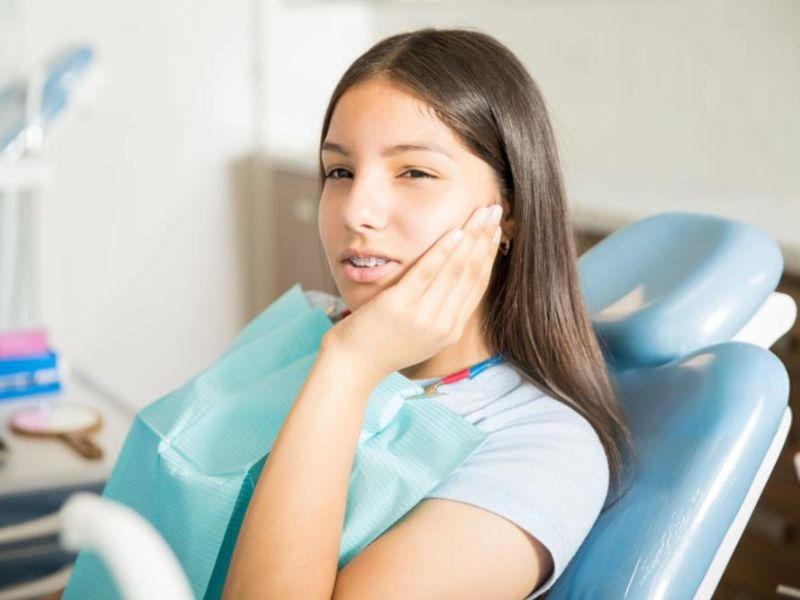
A 38-year-old woman came to her dentist 10 days before her baby shower. She’d been missing tooth #14 (upper right first bicuspid) for about six months — the tooth had fractured due to an old filling that never got fixed, and treatment got delayed. The teeth next to the gap (#13 and #15) were healthy, no decay or looseness.
She wanted to look normal in photos, but her dentist ruled out implant surgery during pregnancy. The plan was to make a temporary partial denture now, then place an implant 6–8 months after delivery.
What the Dentist Asked For
The prescription came in with these specific requirements:
- Replace tooth #14 only — no palate coverage, no metal clasps showing when she smiles
- Material must be flexible thermoplastic (no metal, no acrylic that might cause allergic reactions during pregnancy)
- Delivery deadline: 3 business days from the day we receive the impression
- Design needs to stay out of the future implant site — can’t block surgical access later
The dentist included PVS impressions of both arches, a wax bite registration, and three clinical photos showing her smile line and the edentulous space.
Unilateral Flexible Denture Design and Fabrication
Design Decisions
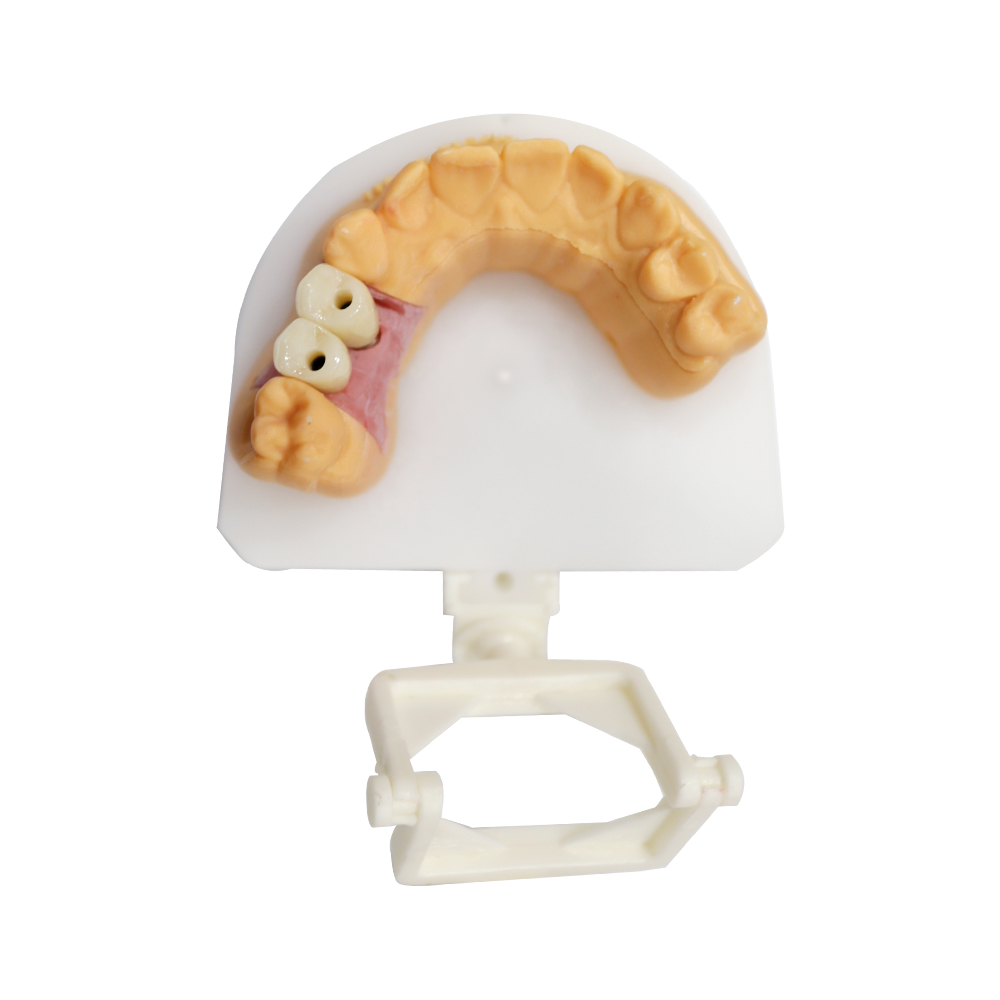
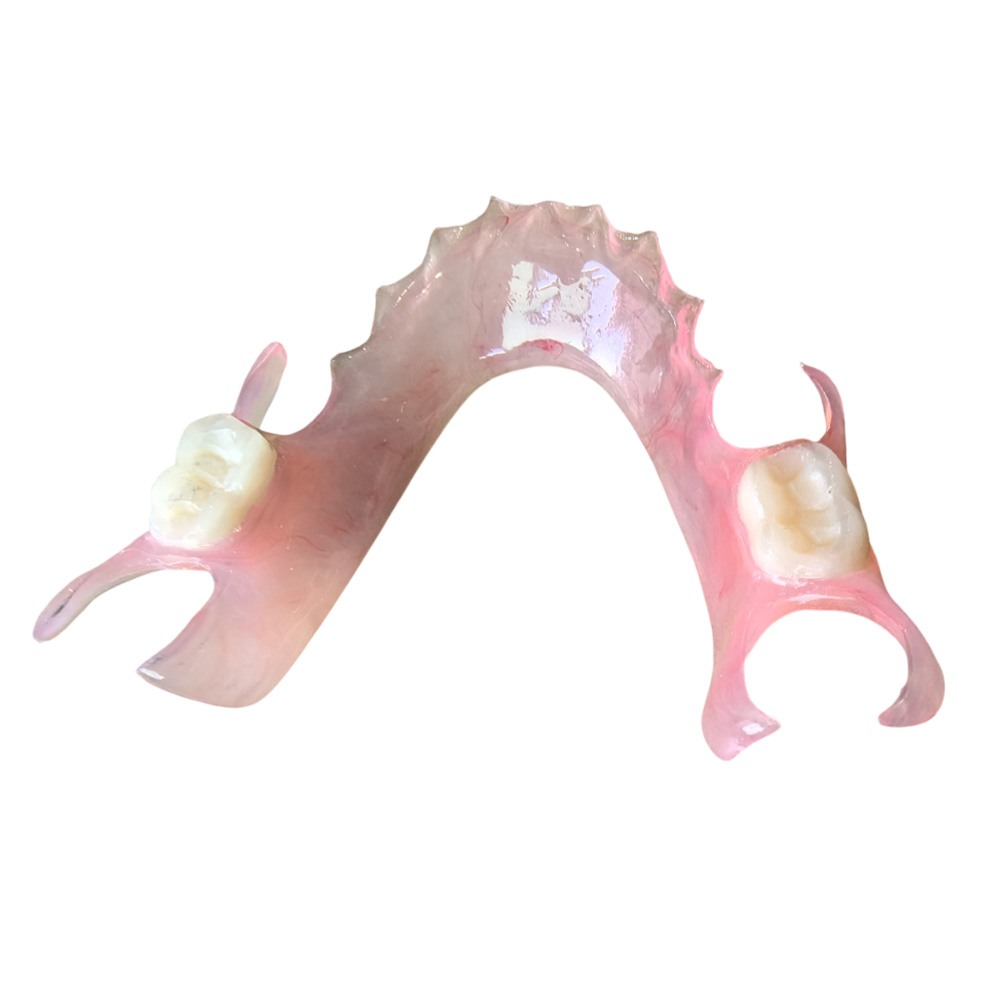
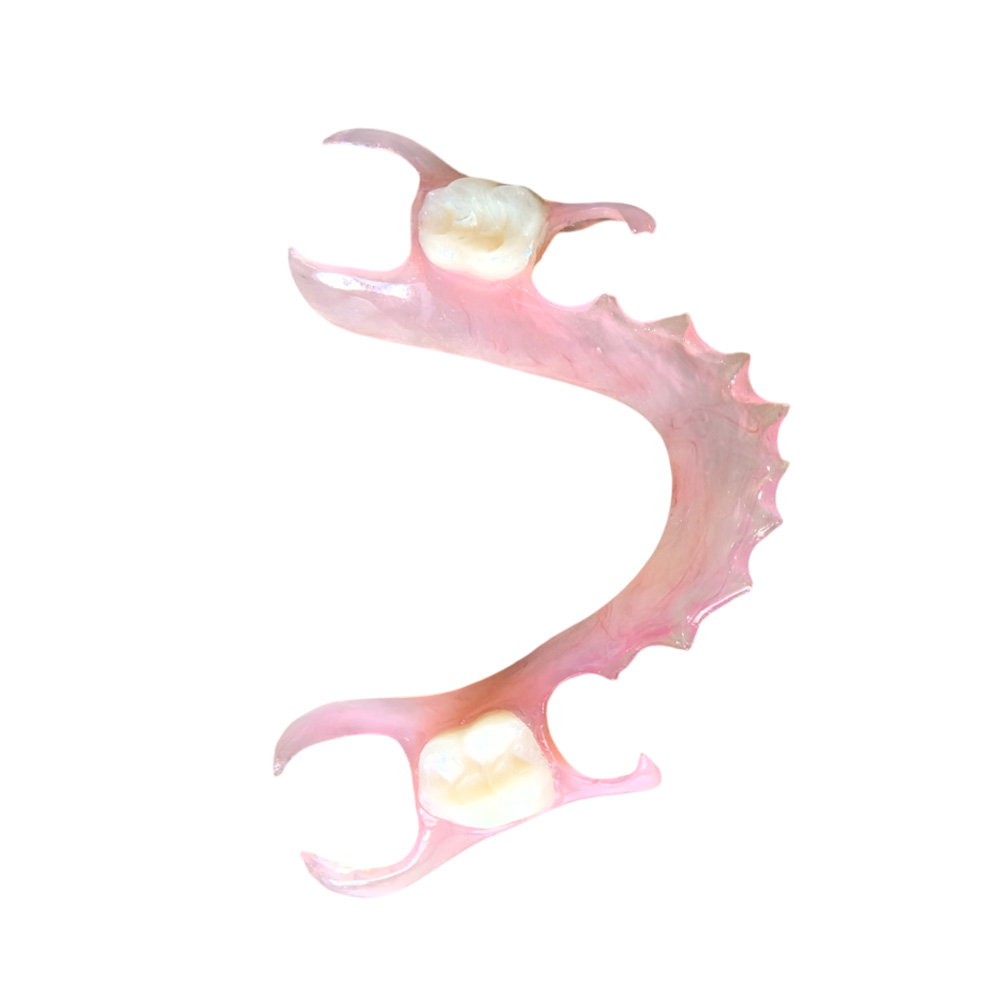
We designed a unilateral partial that sits entirely on the upper right side. Two gingival-pink polyamide clasp arms grip the undercuts on teeth #13 and #15 — we surveyed the model and found 0.25 mm undercut on #13’s mesial side and 0.30 mm on #15’s distal side. Both fell within the range where polyamide can engage without permanent deformation.
The base stops at the ridge crest with no palatal connector. This keeps the implant site completely open and reduces bulk so the patient doesn’t feel like she’s wearing a big piece of plastic.
We verified 1.5 mm of space between upper and lower teeth in the gap — enough room for the prosthetic tooth plus the nylon base without hitting the opposing dentition.
Fabrication Process
Day 0 :
Impressions arrived at 9:00 AM. Our case coordinator logged the Rx, confirmed all required items were present, and forwarded the case to the design team by 10:30 AM.
Day 0–1 :
Digital scan of the master model completed. We designed the partial in CAD software, checking that the clasps would engage those surveyed undercuts at the right angle. Because the dentist requested fast turnaround and provided good photos, we sent a digital preview by email Tuesday at 2:00 PM. Approval came back within 90 minutes.
Day 1–2 :
We 3D-printed a resin model (the physical impression was good, but digital lets us archive the case geometry for future reference). Wax pattern built up, prosthetic tooth set in position, clasp arms sculpted. The pattern got invested in a silicone mold, then we ran the heat-injection cycle at 285°C for 20 minutes using Valplast polyamide nylon (lot #VP2024-Q3-7788 — we log every material batch).
After cooling gradually in the stone jacket for 40 minutes, we deflasked the appliance, trimmed the borders, and pre-activated the clasps. Pre-activation means we heated the partial in 60°C water and seated it on the master cast three times. This trains the clasp arms to engage gradually instead of snapping in too tight on first insertion.
Day 3 :
QC inspection: occlusion checked with blue articulating film (even contact on the replacement tooth, no high spots), clasp retention measured at 7.2 grams insertion force per arm (target range was 5–7 grams, so slightly firm but acceptable), tissue surface verified for smooth adaptation with no sharp edges.
Finished appliance went into a rigid protective case with care instructions and an adjustment guide for the dentist. Shipped via DHL Express Thursday morning.
Total time from impression receipt to shipment: 3 business days.
No rush fee was applied because this clinic’s monthly case volume with us stays under 10 units, which qualifies for our standard-rate expedite service.
Clinical Outcome
The patient wore the partial at her baby shower. The dentist sent us a follow-up note saying the clasps weren’t visible in any of the photos and the patient was happy with how it looked.
Eight months postpartum, the implant was placed. The flexible partial came out without any need to adjust the adjacent teeth — the design had kept the site completely accessible. The patient kept the partial as a backup after the implant healed, which we’ve seen before when patients travel or want a spare appliance.
What We Documented
We keep these records for every case, archived for 36 months:
- Heat-injection log showing material lot number and cycle temperature
- Clasp retention measurement (7.2 g actual vs. 5–7 g specification)
- Digital design file with approval timestamp from the dentist
- QC checklist signed off by the inspector (not the fabricating technician)
The dentist’s comment in the follow-up: “The 3-day delivery saved the appointment. The clasp engagement was firm but not traumatic — exactly what we spec’d. She kept it as a backup after the implant healed.”
Valplast Polyamide Material for the Flexible Denture
This case used Valplast polyamide nylon 12 because the dentist specified it on the Rx and the patient’s timeline allowed for the slightly longer cooling cycle Valplast requires (40 minutes vs. 30 for some other brands). Valplast has low water absorption (about 1% over 24 hours), which means the appliance stays dimensionally stable even if the patient lives in a humid climate or wears it while drinking liquids.
The gingival-pink color came from Valplast’s proprietary dye system. We’ve noticed that tissue-pink shades from Valplast hold their hue longer than generic polyamide nylon — less fading over the first 12 months of wear. For a case where the patient might keep it as a long-term backup, that stability matters.
Injection temperature was 285°C, which is at the lower end of Valplast’s 285–295°C range. We found that running slightly cooler reduces the risk of the resin degrading if the injection cycle runs a few minutes over, which can happen when a technician is managing multiple cases.
How to Order a Unilateral Flexible Partial Denture
If you’re sending us a case like this, here’s what speeds up the process:
Mandatory items:
- Impressions or digital scans of both arches (we need the opposing arch to verify space)
- Bite registration showing at least 1.5 mm clearance at the edentulous site
- Shade selection for the prosthetic tooth (standard mold like “A2, mold 31” or “match natural tooth from photo”)
- Written Rx specifying: missing tooth number, which teeth to use for clasps, material preference, and turnaround expectation
Helpful additions:
- Clinical photos (frontal smile, occlusal view, lateral) — helps us match tissue shade and check that the pontic width fits the smile line
- If a tooth next to the gap has a questionable prognosis, note it on the Rx so we can design the base to allow future tooth addition without a full remake
What slows cases down:
Missing opposing impressions (we can’t verify occlusal clearance and won’t proceed without it), unclear material specification (if the Rx just says “flexible partial,” we’ll default to TCS thermoplastic, which might not be what you wanted), or no shade reference (we’ll use our standard A2 tissue pink, but that might not match the patient’s complexion).
Our case coordination team (40 staff, English-speaking) will email and call within 4 hours if anything’s missing. We don’t guess — industry data shows that 80% of remakes come from assumptions made at the design stage.
About Our Lab
We’re a direct manufacturing facility in Shenzhen and Huizhou, in operation since 2012. The removable denture department has about 55 technicians plus 25 QC inspectors and 40 case coordinators. Normal capacity is around 4,000 removable cases per month; during peak season we can handle up to 6,500.
Every case is made in-house. We don’t outsource any steps — design, fabrication, and quality control all happen under one roof. Clients can schedule video factory audits before sending their first case if they want to see the production floor.
We work with dental labs, clinics, and individual dentists across the US, Netherlands, Germany, France, Belgium, Austria, UK, Luxembourg, and Switzerland. Client base includes over 50 labs, 100 clinics, and 400 dentists.
Sperimentate tempi di consegna più rapidi grazie alla nostra tecnologia all'avanguardia
Consigliato