Full Arch Dental Lab You Can Actually Verify
ASD Dental Lab is a full-service dental lab founded in 2012 — a direct manufacturing facility, not a trading company or a broker. We run the entire full arch dental lab workflow in-house: digital design, milling, zirconia processing, implant components, and quality control, for full arch restoration and full arch dental implants cases submitted by dentists, clinics, dental hospitals, and other dental labs.
Why Dentists Trust Us With Full Arch Cases
One case, one full chain of accountability
Every case is bound to a unique case number tied to the technician, equipment, material batch, and QC record behind it. If something needs to be traced, we trace it — not guess at it.
Fully in-house production
Every step from data intake to shipment happens inside our own Shenzhen and Huizhou facilities — nothing is outsourced to a third party. Full arch implant cases, zirconia frameworks, and dentures are handled by dedicated teams working in separate zones to prevent cross-contamination.
Fast Turnaround Time & Efficient Production
Standard fixed restorations take 2–3 working days; complex implant or full arch cases take 5–7. The clock only starts once we have everything we need from you.
Passive fit isn't a promise
Passive fit and cross-arch accuracy are a standard, unpaid checkpoint on every full arch case, not an upsell.
Remake scope is written down
Lab-side errors get remade free of charge, and we tell you upfront which situations don't qualify — so responsibility isn't a debate after the case ships.
Start Small, Verify with Confidence
New customers can run a trial case before committing to volume, and our Shenzhen and Huizhou facilities are open to in-person visits or live video inspections at any time.
A Dedicated Team Behind Every Case
~460 staff across dedicated departments — CAD design (~100), milling (~70), implant (~80), ceramics/glazing (~70), removable (~55), QC (~25) — and you can ask for the current headcount by department at any time.
Proven Experience, Trusted Worldwide
Founded in 2012, we've served 50+ dental labs, 100+ clinics, and 400+ dentists, with core markets across the world. Every customer gets a dedicated communication channel with English-language technical case support, not just order confirmations.
Full Arch Dental Lab Product Range
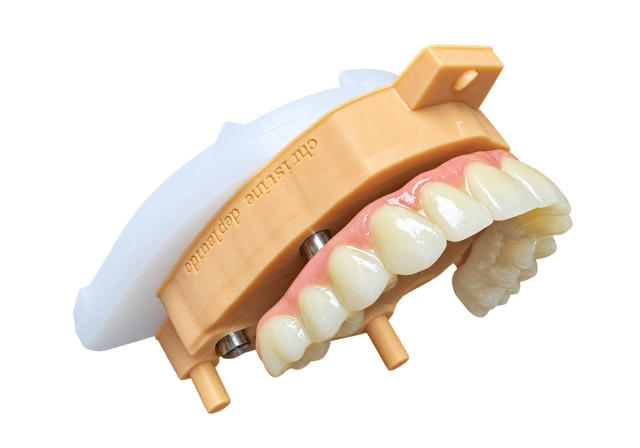
Impianti dentali ad arco completo
All-on-4 / All-on-6 / All-on-X fixed bridges in titanium bar + zirconia, titanium bar + PMMA, monolithic zirconia, or PFM. Built for implant-supported full-arch cases from single-arch to full-mouth.
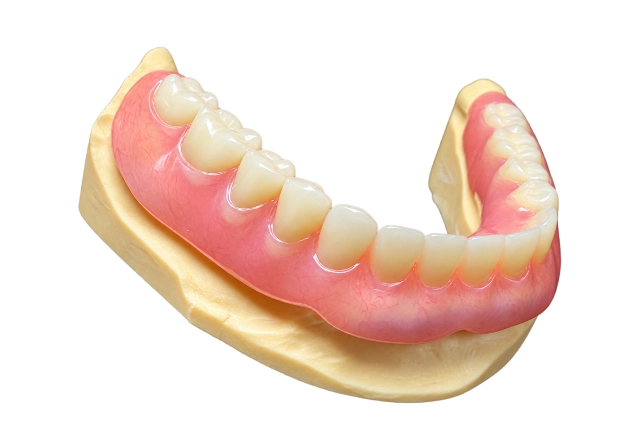
Implant Abutment & Components
Custom abutments, stock abutments, titanium abutments, angled screw channels (ASC), and multi-unit abutments (MUA).
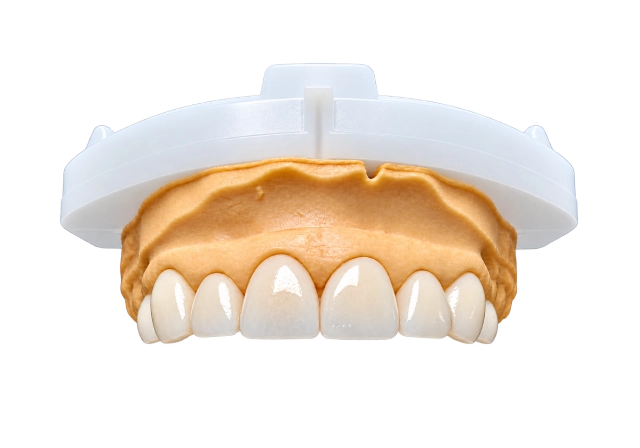
Zirconia Crown & Bridge
Monolithic, multi-layer, and layered zirconia — graded for anterior esthetics or posterior occlusal strength.
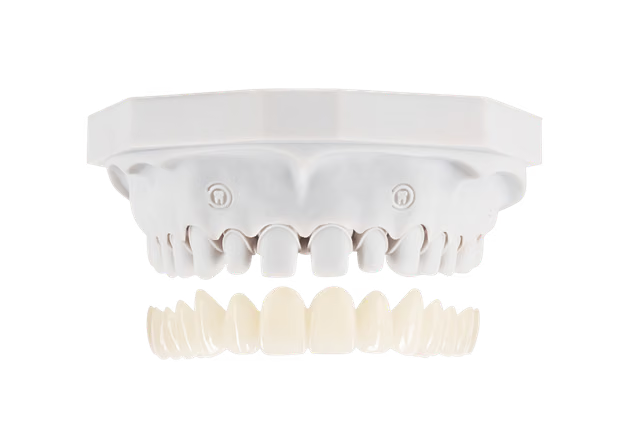
PFM Crown & Bridge
Porcelain-fused-to-metal restorations built for high occlusal load and budget-conscious cases.
Removable & Partial Denture
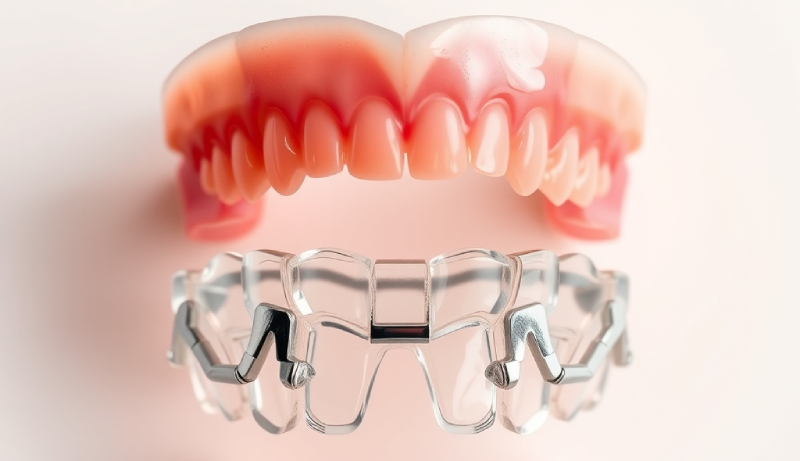
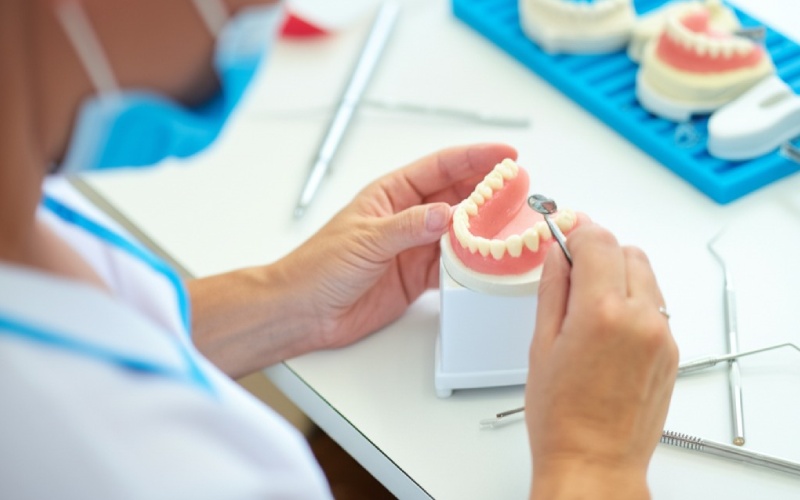
Digital dentures, conventional dentures, and removable partial dentures.
Night Guard / Retainer / Aligner
Occlusal guards, retainers, and clear aligner-related products.
Built From Materials You Can Ask Us to Name
We don’t treat material choice as a black box. Every full arch case is matched to a material tier based on what the case actually needs — not the cheapest option that fits the budget.
- Monolithic zirconia — highest strength of the three zirconia grades, built for posterior teeth and bruxism cases where structural failure isn’t an option.
- Multi-layer zirconia — strength and natural color gradation in one block, the default choice for anterior full-zirconia cases.
- Layered zirconia — the strongest esthetic result available, for cases with stable occlusion where appearance is the priority.
- Titanium bar substructures — pure titanium / titanium alloy bars, multi-unit abutments (MUA), temporary cylinders, and matching screws, built to carry a full arch without flexing under load.
- PFM (porcelain-fused-to-metal) — for cases prioritizing occlusal strength and cost efficiency over maximum esthetics.
- Named, traceable sourcing — we can confirm brand, country of origin, and batch number for any material used on your case, on request.
Craftsmanship — The Checks Behind Every Case, Not Just the Promises
A zirconia crown, a metal framework, and a full-arch implant bridge go through completely different production steps. Here’s what actually gets measured and checked at each stage of production, across product lines:
At the design and scanning stage
Long-span and full-arch scans require at least 30% overlap between segments with stable landmarks as stitching references, and any visible mismatch gets rescanned on the spot. Wide implant spacing gets a verification jig, tried in intraorally before final design, to catch cross-arch distortion.
At the milling, printing, and sintering stage
Sintering furnaces run a locked temperature curve validated against a calibration test block, with every cycle logged and every new material batch test-fired first. Milling burs are swapped on a tracked schedule, not run until they fail, and zirconia shrinkage compensation is re-validated against a standard test block to keep margins in tolerance batch to batch.
At the metal and porcelain stage
Metal copings are caliper-checked against a 0.3–0.5mm thickness spec, and porcelain layering is held to 1.0–1.5mm anterior / 1.5–2.0mm posterior — thick enough to resist chipping, thin enough not to overload the margin. Shade matching is done in dentin/body/incisal layers under a standardized light source, not ambient room light.
At the implant and full-arch stage
Implant interfaces are checked under magnification before a component is used, and anything showing wear or contamination is rejected rather than adjusted and shipped. Passive fit requires zero applied force to seat, with 2mm minimum hygiene clearance, and titanium-to-zirconia bonding follows a fixed sandblast → clean → MDP primer → dual-cure cement sequence.
At final release
Every finished case is checked against the confirmed prescription, not against "close enough" — by a QC inspector who didn't make the case and whose only job is to catch what the floor might miss.
A zirconia crown, a metal framework, and a full-arch implant bridge go through completely different production steps. Here’s what actually gets measured and checked at each stage of production, across product lines:
Certifications — Regulatory Registrations & Quality Systems
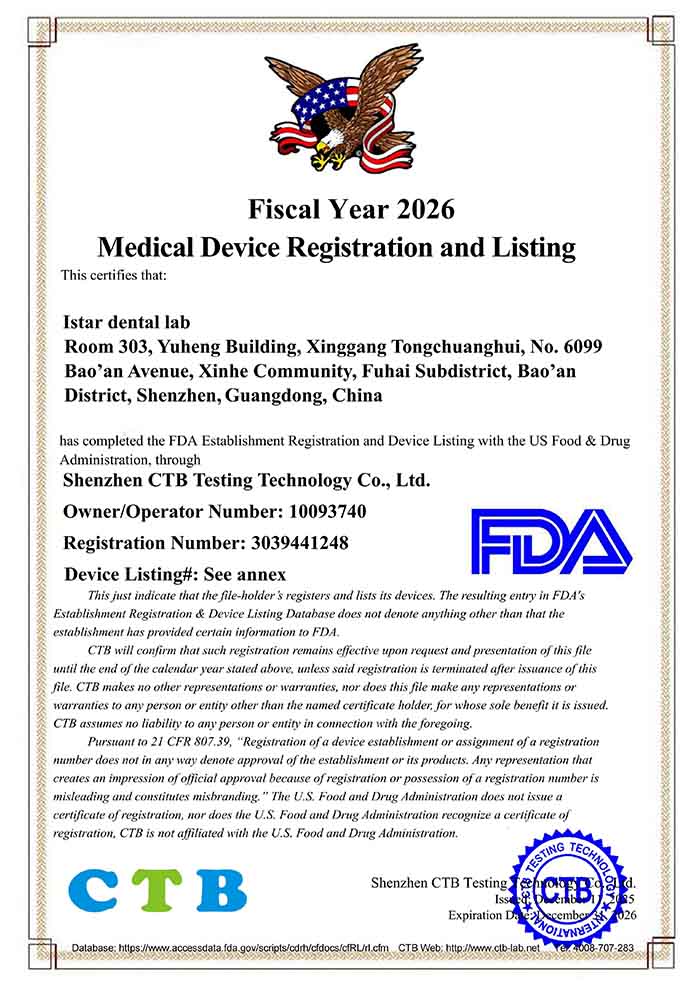
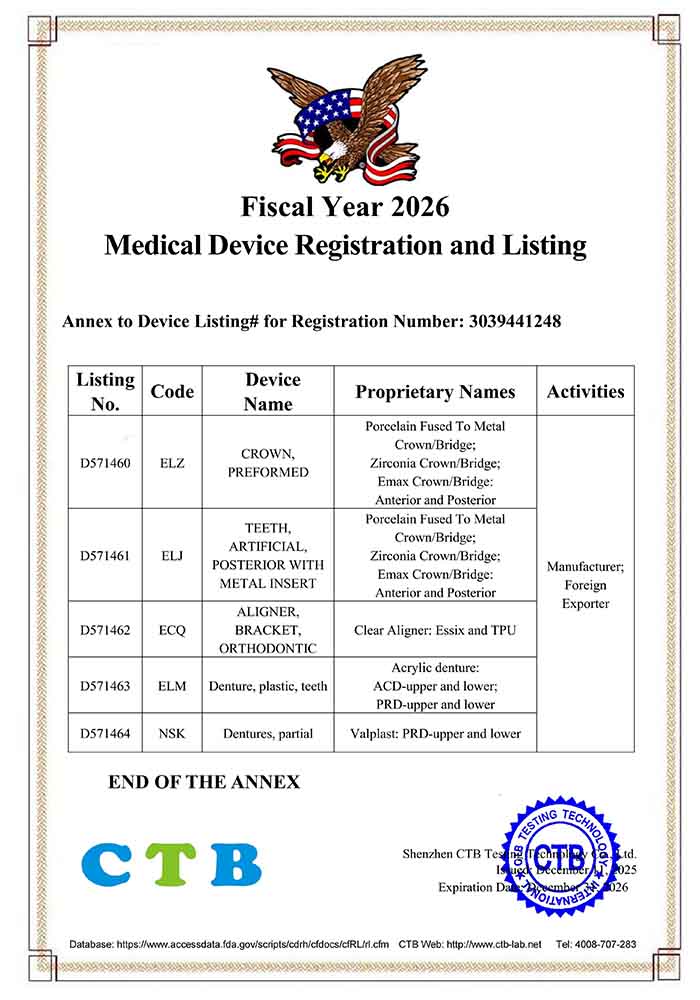
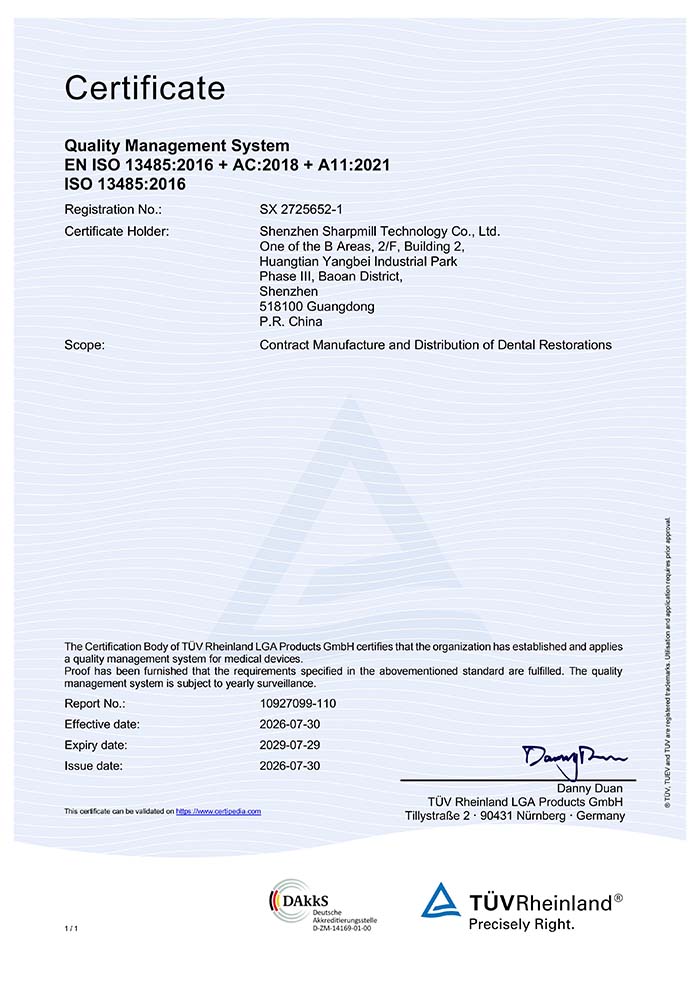
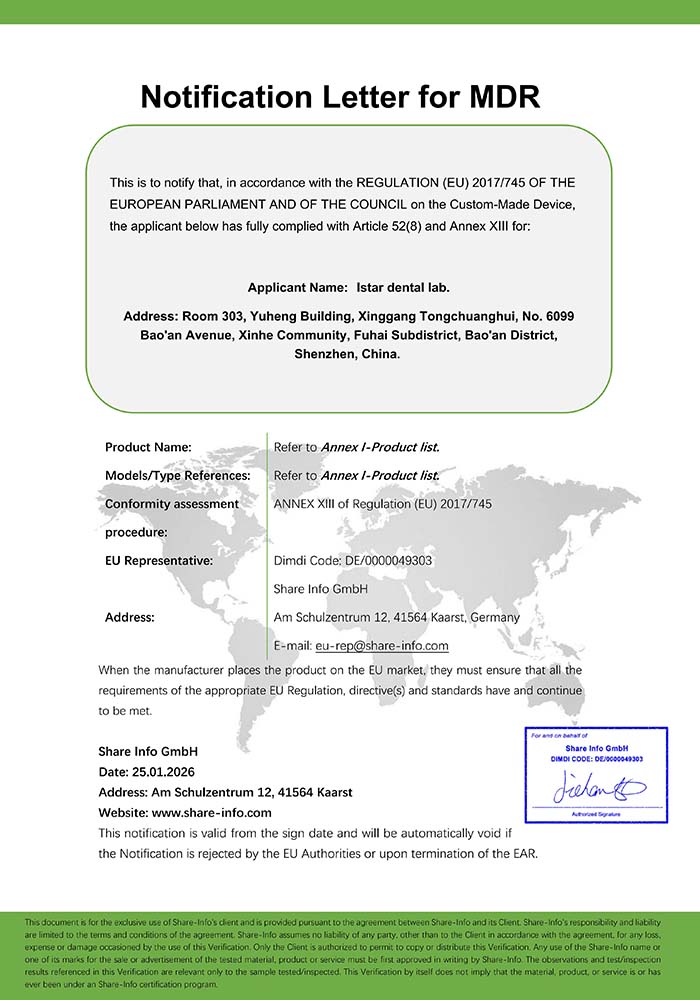
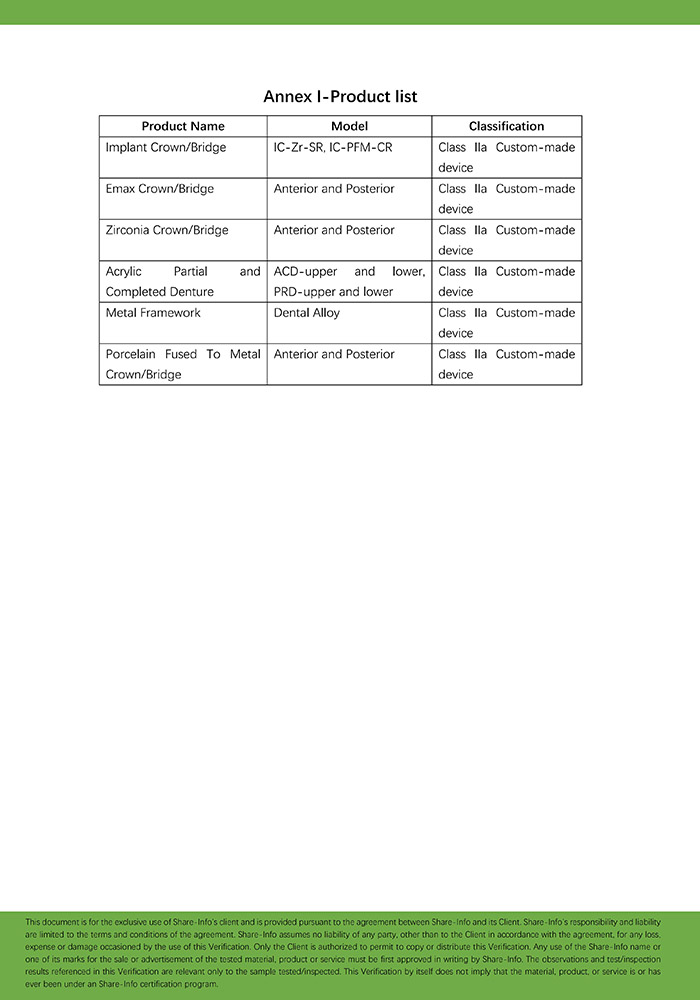
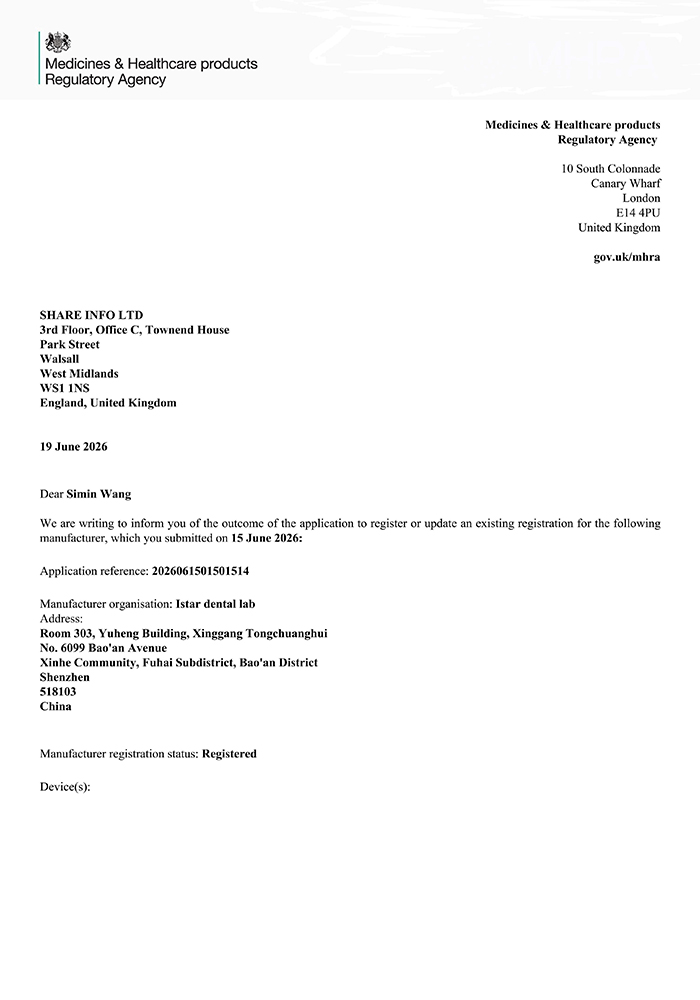
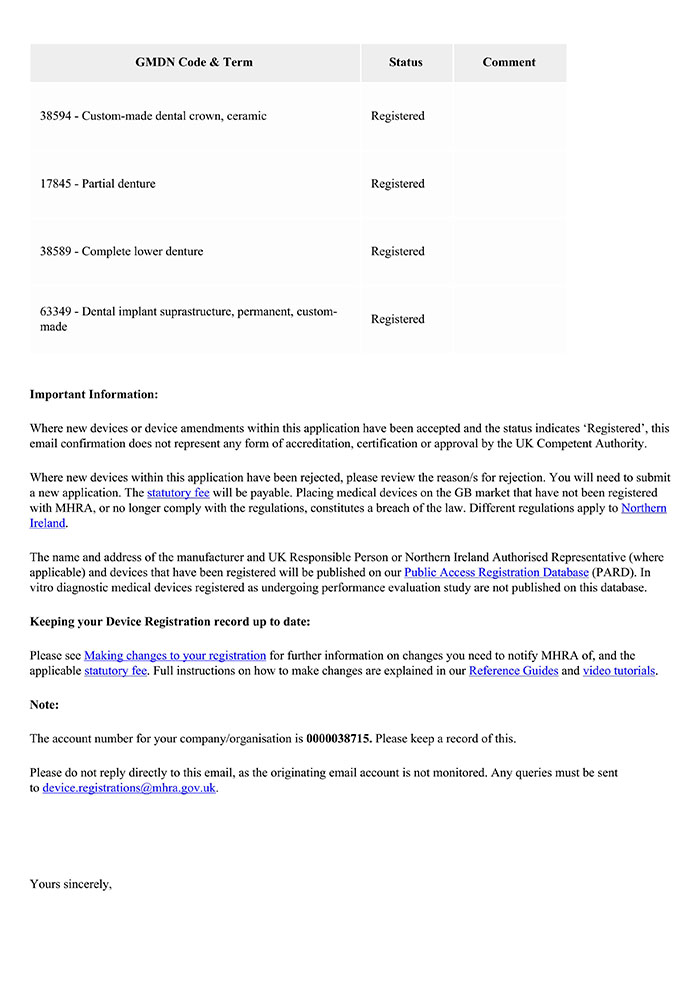
ASD Dental Lab currently holds the following active registrations and system documentation. We can provide the brand, country of origin, batch number, and conformance/material certificate for materials used on a given case, and QC photos or reports before shipment on request.

Inside the Factory
Two production sites in Shenzhen and Huizhou run the entire workflow you’d otherwise have to take on faith: intake, CAD design, 3D printing, CAM milling, zirconia sintering, porcelain layering, polishing, QC, and packing, all under one roof, all visible.
Walk the floor and you’ll see CNC mills cutting zirconia blocks in one zone, sintering furnaces running logged temperature curves in another, and QC benches where a case gets checked against its prescription by someone who didn’t make it. Nothing here is staged for a photo — it’s the same floor that ships your case.
We don’t just say the doors are open — we mean it three ways:
- Come see it in person. Full facility tours in Shenzhen or Huizhou, on your schedule.
- Watch it live. A video call walkthrough of the production line, no need to fly out.
- Ask us to prove a specific step. Want to see a sintering log, a QC sign-off record, or how a specific case moved through the floor — we’ll show you that case, not a generic one.
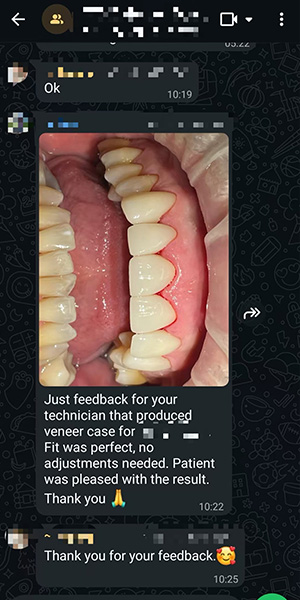
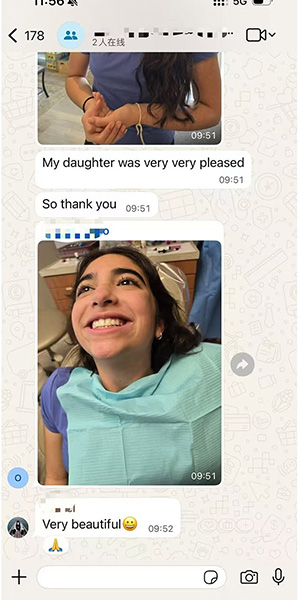
Cosa dicono i nostri medici
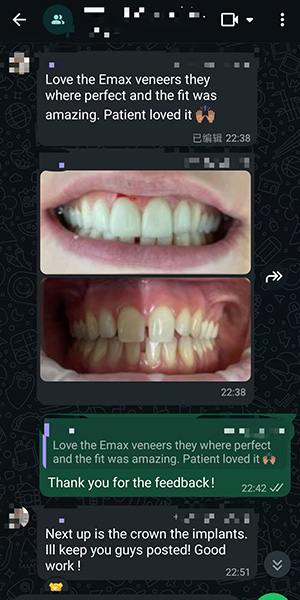
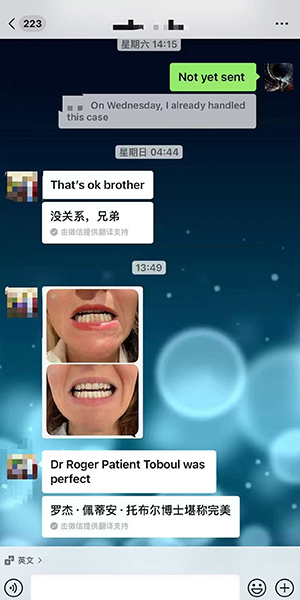
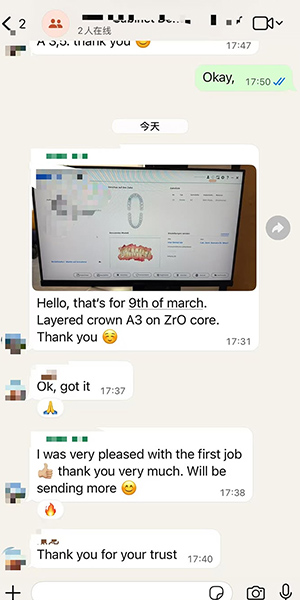
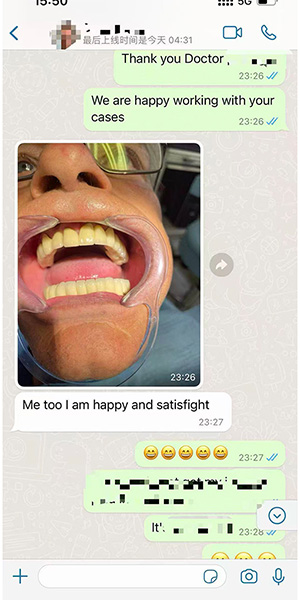
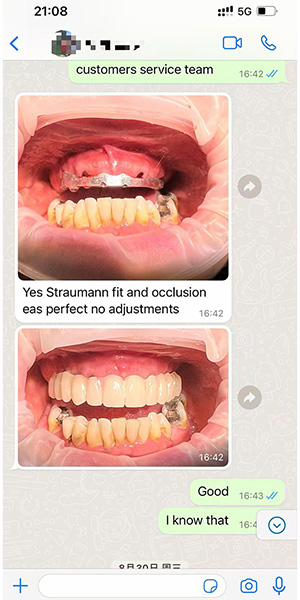
The happiest moment for us isn’t when we receive payment from a dentist, but when we hear that they truly value and appreciate our work. That’s when we feel we’ve genuinely helped them.

Start With a Test Case
You don’t need to sign a long-term agreement first. New customers can send a digital or physical test case, run it through our full process, and verify turnaround, communication, and quality standards for yourself.
FAQ — What Dentists Ask Us About Full Arch Dental Lab Work
These questions are ordered the way most dentists actually ask them when vetting a full arch manufacturing partner. Answers reflect our actual production policy.
It resets once we receive complete files or your design confirmation. Time spent waiting on design approval, missing files, or your reply doesn’t count against the committed turnaround. Turnaround is calculated in working days, and Chinese public holidays are excluded from both production and shipping schedules.
Lab-side responsibility issues — open margins or contacts, high occlusion, crowns that won’t seat, inaccurate shade, or any defect visibly affecting esthetics — are remade free of charge. If the remake stems from a material choice the dentist already specified on the submitted data or impression, or from a customer-requested change to shade/material after approval, it isn’t covered for free, and we’ll quote the cost before proceeding.
Cases with complete, clear files move straight into the workflow. If anything is unclear — an ambiguous shade, an incomplete impression, missing implant parameters — a technician will reach out by email or through our shared messaging channel before proceeding, rather than guessing. You’ll get notifications at design completion, production completion, and shipping, and you can check case status at any point.
Every case goes through 3 QC checkpoints: an intake/file review, a mid-process spot check, and a final inspection with independent sign-off. Implant and full arch cases get additional checks for passive fit, cross-arch accuracy, interface fit, screw channel angle, and component match; complex cases add a technical supervisor review. A case that fails QC triggers an automatic remake — you don’t need to request it.
The framework must seat naturally on the model with no rocking or spring-back and no applied force. We also check midline alignment, arch width, and bilateral occlusal height symmetry to confirm the arch is continuous with no distortion, and that segmented sections fit together tightly. For cases with wide implant spacing or complex geometry, we use a verification jig intraorally to confirm relative implant positions before finalizing the design, reducing fit errors from cumulative distortion.
Roughly 20 All-on-X arches per month off-season, up to 40 at peak. We staff to steady order volume day-to-day, and scale up during peak season through demand forecasting, overtime, and staggered scheduling — while protecting the turnaround of cases already scheduled. New large orders get negotiated delays or split shipments rather than compromising quality standards.
Quotes include design, models, components, packaging, and shipping. Unit count sets the base price, material sets the base rate, and implant components or design complexity add to it. You can confirm the full cost before production starts, and if a design change is approved early — without altering material or basic requirements — it won’t affect cost or turnaround. Multi-unit abutments, titanium bars, and temporary cylinders are billed separately, and we’ll flag that at the quoting stage rather than after the case is done.
Full-arch scan data with dedicated scan bodies, precise occlusal records, facebow transfer or esthetic photos, CT/CBCT data, and implant system labeling (brand, platform diameter, connection type). For vertical dimension cases, we also need your pre-treatment occlusal records so we can replicate them in a try-in for your approval. The step most often skipped: a verification jig for cases with wide implant spacing — skipping it noticeably raises the risk of cross-arch distortion, so we recommend it as standard on these cases.
Yes. Every case is bound to a unique case number that records the technician, equipment, material batch, and QC results at every stage, all archived. That’s exactly why responsibility can be settled with a record instead of two sides guessing.
Yes — most new customers start exactly this way. Digital cases can be sent directly to our email or a file-transfer platform; physical impressions can be shipped using a label we provide, or sent by you with the tracking number shared with us. New customers can apply for 30-day credit terms; full prepayment isn’t required.
Ultime dal blog
Esplora le tendenze dell'odontoiatria, le intuizioni dei laboratori odontotecnici, gli aggiornamenti sull'odontoiatria digitale e i consigli per i dentisti su impianti, corone, restauri e tecnologia dentale.

Do Dentists Take Medicare? Understanding Your Dental Coverage Options in 2026
Quella sensazione di confusione che si prova quando si cerca di prenotare una pulizia dentale e l'addetto alla reception chiede...

I dentisti accettano Medicaid? La mia guida per orientarsi nella copertura dentale
Capire la copertura dentale Medicaid: Il mio viaggio personale Se siete come me, l'assicurazione dentale sembra un puzzle. Quando...
I dentisti estraggono i denti? La vostra guida chiara alle estrazioni dei denti
Quel fastidioso mal di denti che non vi fa dormire la notte. La scossa improvvisa quando si morde qualcosa di freddo. Oppure...