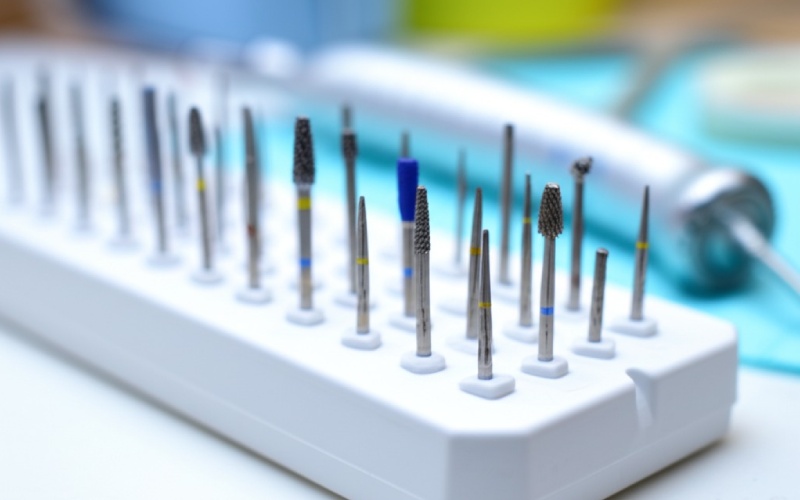
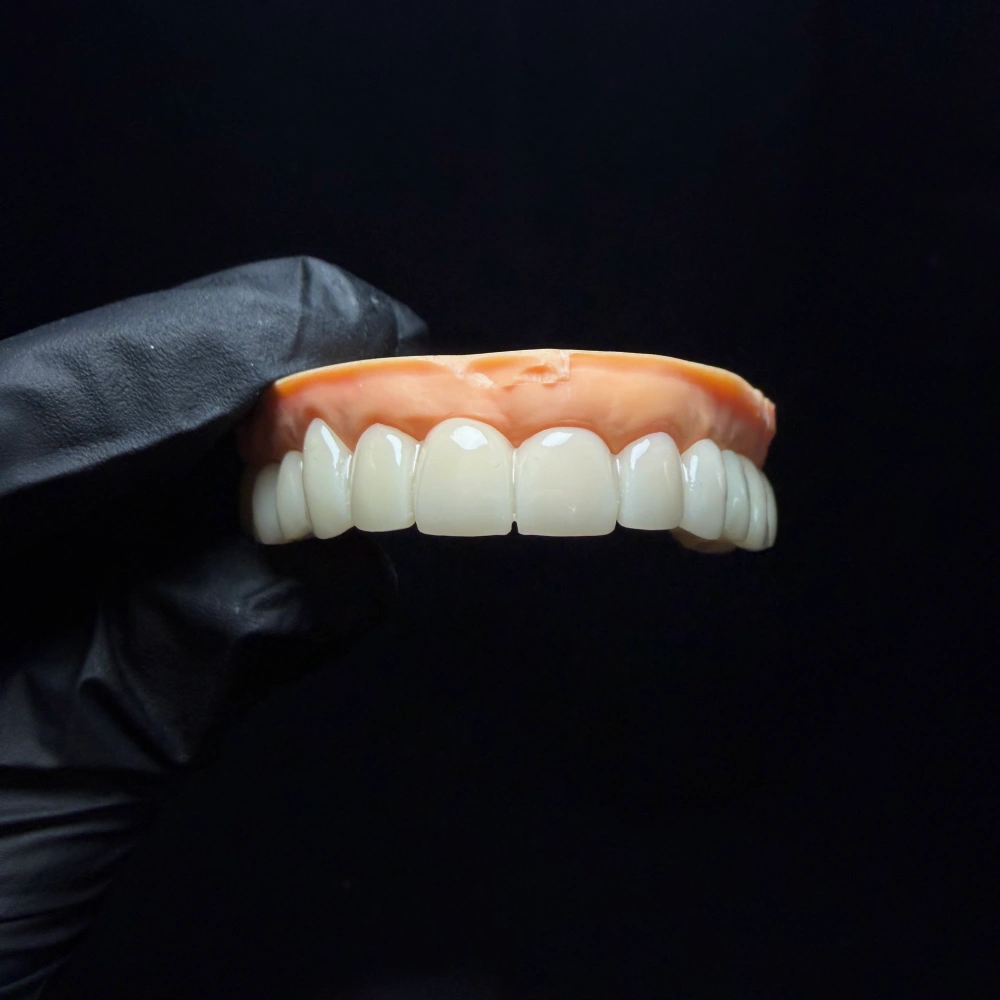
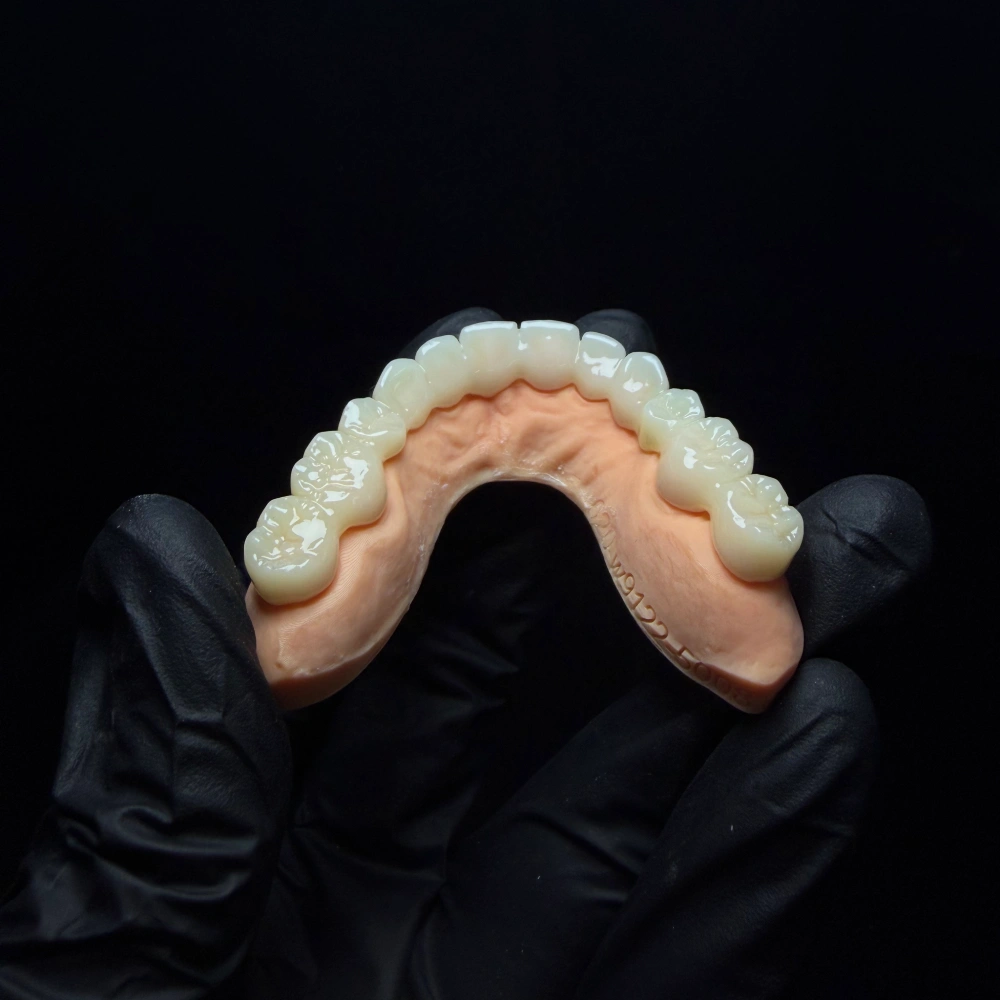
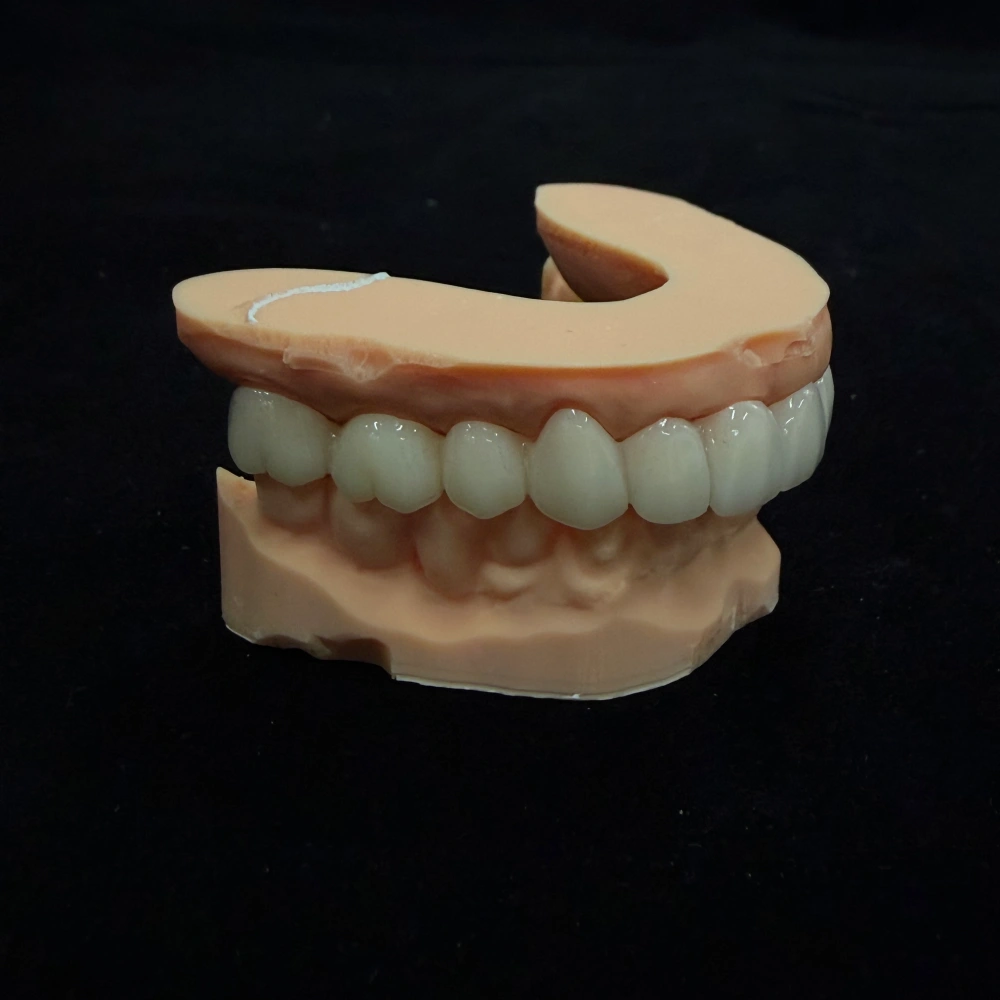
Plastic Temporary Dental Bridge: 4-Unit PMMA Case Study
🕢 [ Compila il modulo e ti risponderemo entro 30 minuti! ]
What the patient brought
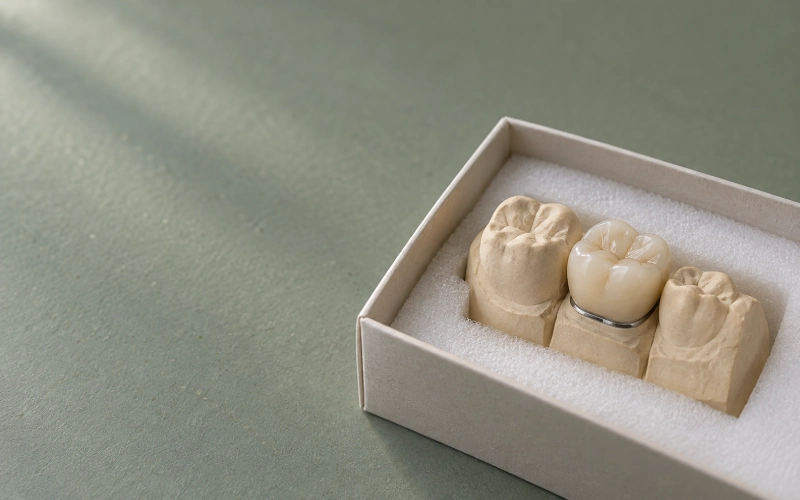
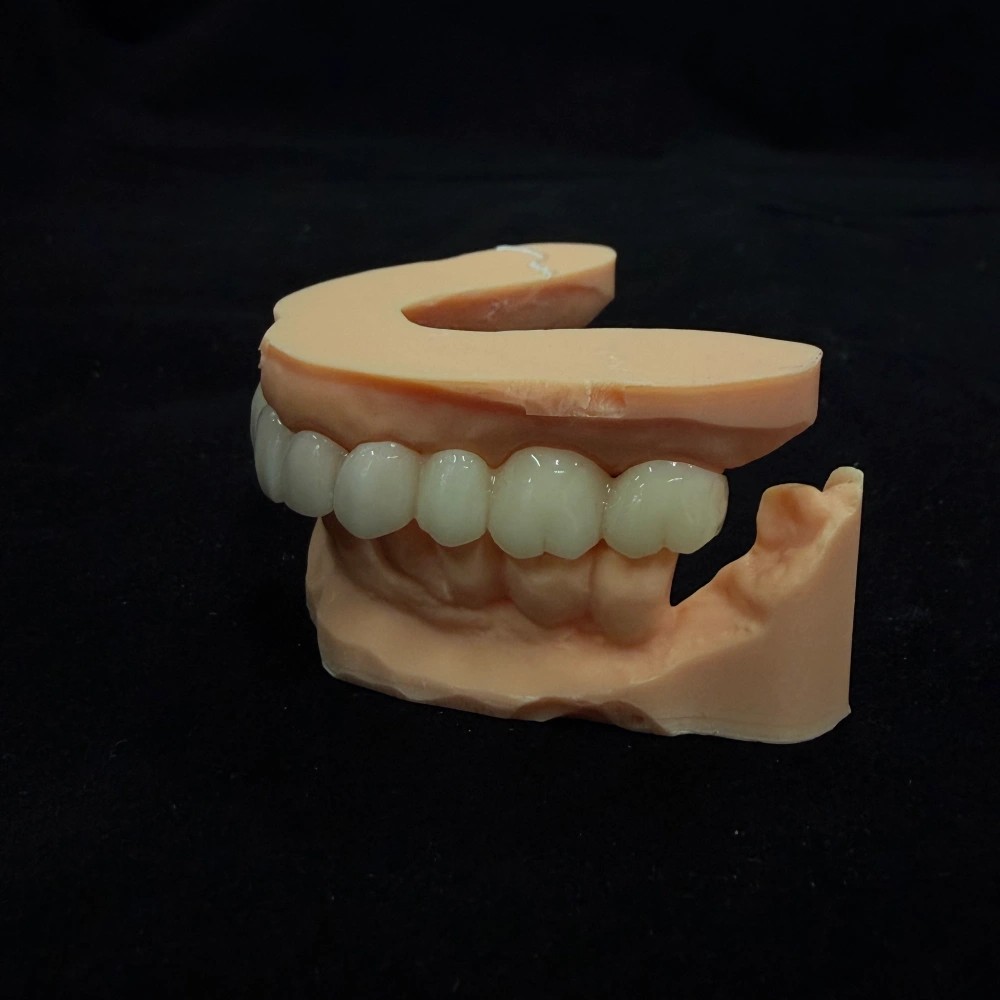
A woman in her late thirties. Very tight bite. Grinding habit—her teeth were worn down to nubs. Molars #4 and #5 already extracted. Teeth #3 through #6 had been prepared for a fixed bridge; #8 and #9 prepped for crowns. She’d already been wearing a bisacryl temporary bridge for the 3–6 span, but it cracked under load.
What made this one hard
Four things converged:
- Long span under heavy load. A four-unit bridge replacing two posterior teeth means the pontic sites—especially #5—carry significant occlusal force. Add habitual grinding, and bisacryl resin does not have the flexural strength to survive.
- No stable emergence yet. The edentulous ridge at #4 and #5 had not fully remodeled; the soft tissue was still adapting. That means the pontic contact with the ridge was provisional—geometry could shift slightly as healing continued.
- One failure already in the record. The patient had lived through a cracked interim. A second failure would undermine trust and delay the definitive prosthesis.
- Time pressure. The prescribing clinician needed a durable interim that could stay in place through final impressions, lab turnaround for PFM on metal occlusal, and a second set of emax crowns—potentially four to six weeks under function.
What the prescribing clinician asked for
The referral came with explicit bench requirements:
- PMMA for a span this long. The clinician’s note said bisacryl was insufficient; a rigid acrylic that can be shaped and relined chairside was essential.
- Night guard fabrication to offload grinding forces during sleep (the clinician called it an NTI-style appliance in the margin notes).
- Controlled occlusion on the interim. Flatten cusp anatomy; verify adequate thickness in centric and excursions; hand-articulate to ensure the paper strips pull without drag.
- Clean contacts and margins. No flash, no ledges, no voids along the preparation line—especially at #3 and #6 where the abutments would eventually carry metal-occluded PFM.
- No undercuts, clear path of draw. The bridge had to slide on without wedging, so the patient could rehearse insertion at home if needed.
- Model, bite record, and written prescription. The prescribing clinician’s lab always sends mounted casts, a face-bow transfer if available, and a two-page narrative covering prep depths, tissue health, and provisional history.
- Turnaround. First try-in within 48 hours; any revision within 24.
PMMA Temporary Dental Bridge Design and Fabrication
We treat every interim bridge over four units as a risk point. Here is how the lab team addressed each requirement, referencing the material families and workflow guardrails held in our process library:
Selezione del materiale
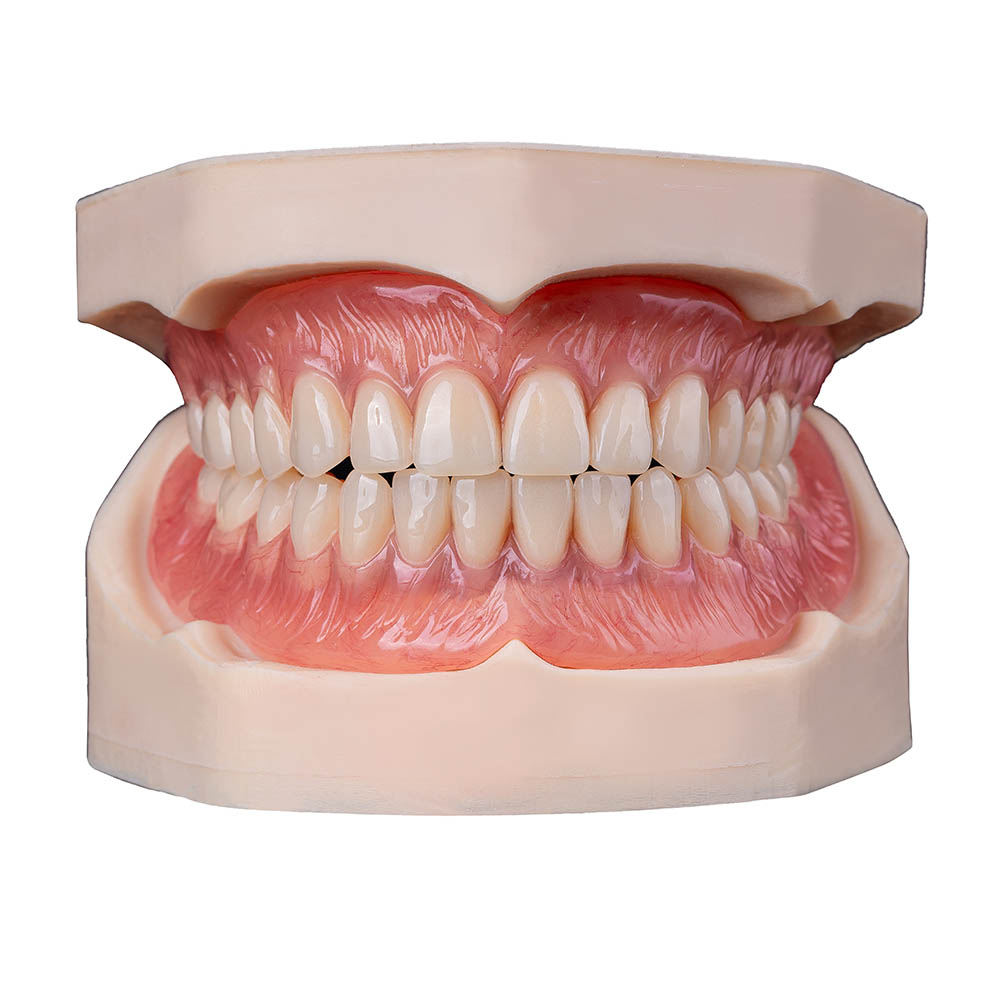
Our process library lists the interim material families: PMMA and composite resin. For spans exceeding five units (or shorter spans under confirmed grinding load), we default to polymethyl methacrylate. PMMA offers higher flexural modulus than flowable or bisacryl composites, and it can be shaped and polished after polymerization without delaminating.
The process library classifies PMMA interim bridges as short-term transitional devices—designed to protect prepared teeth and maintain occlusion until the definitive prosthesis is ready. Not a permanent solution; not a “temporary crown” in the single-unit sense. That distinction keeps our communication with the prescribing clinician anchored in the right outcome window: weeks, not months.
We stock PMMA powder and liquid from three suppliers that our bench technicians trust: Heraeus (Palapress), Ivoclar (Telio), and Shofu (Beautifil). Batch numbers and country-of-origin documentation are logged in our quality binder for every case. If a prescribing clinician specifies a brand or shade system, we honor it; otherwise, we choose based on the prep depth and the patient’s existing occlusion.
Design and geometry
When the prescription describes a span of five units or more, our design checklist requires explicit verification: adequate embrasure clearance, stable pontic contact with the ridge, and a cross-sectional thickness of at least 3 mm in the connector areas. For this four-unit case the span threshold was not crossed, but the grinding history and the bisacryl failure elevated it to the same review tier.
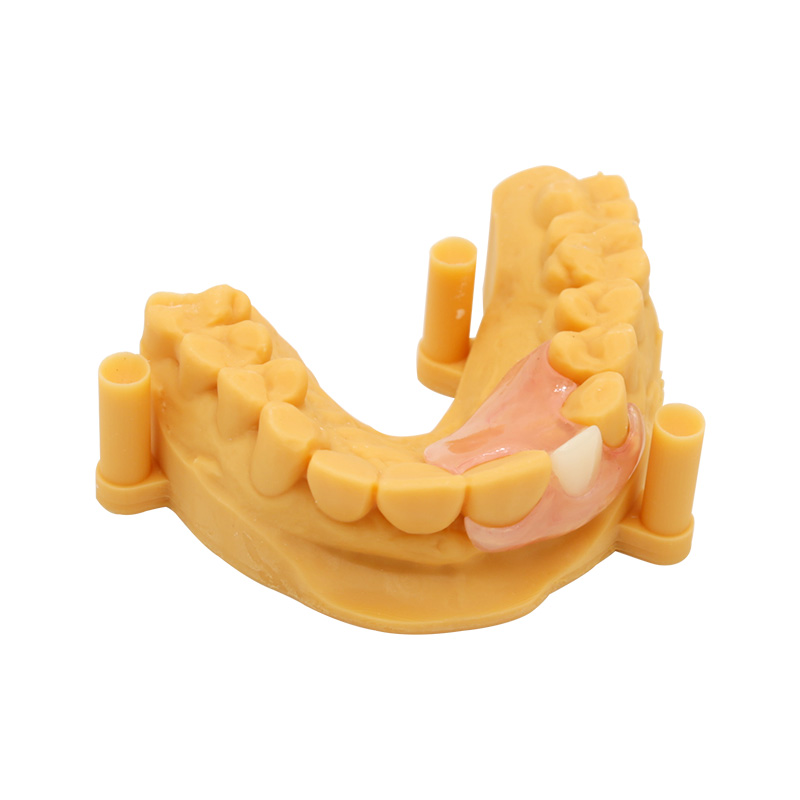
Pontic design always incorporates cleanable space beneath the bridge body. We avoid tissue-draping contours that trap debris. The prescribing clinician’s mounted model showed moderate ridge resorption at #5, so the bench carved an ovate pontic shape that kissed the tissue without pressure, allowing floss or a proxy brush to pass.
Workflow and input requirements
Our standard bench intake form asks for mounted models, interocclusal records, photos, and a written prescription. If the prescribing clinician sends only an opposing model and a hand-scribed note, we build the interim, but we document the missing inputs in the case jacket and recommend a face-bow transfer for the final prosthesis. In this case, we received full-arch silicone impressions, a polyvinyl siloxane bite registration, and a two-page narrative—so the bench had everything it needed to articulate and shape the occlusion.
Every design goes through an approval gate. The bench technician sculpts the wax-up or digital model, then the senior technician reviews it against the prescription. That review typically adds one to two business days to the timeline, but it catches mis-aligned margins or connector weaknesses before PMMA processing. For this case, the senior technician flagged the need for a thicker connector between #5 and #6, and the design was revised before pressing.
Regulatory and traceability
Our facility is FDA-registered, and the polymethyl methacrylate interim devices we fabricate are listed with the agency under the product code for temporary restorative materials. That registration covers the scope of work: custom-made interim bridges, not implant abutments or permanent prosthetics. We keep batch records, supplier certificates, and FDA establishment registration certificates in the quality folder that ships with each case.
Digital and additive options
Some prescribing clinicians ask whether we can 3D-print interim bridges. We own two resin printers that are approved for intraoral temporary restorations, and we can print PMMA-analog materials if the clinician provides a digital prep scan. For this case, the prescription came with silicone impressions and stone models, so we followed the traditional press-and-polish workflow. If a revision had been needed, we would have offered a printed iteration to shorten turnaround.
The process library defines immediate load as placing an interim prosthesis within 24 hours of preparation. This case was not immediate-load; the patient had already worn a bisacryl bridge for an unspecified period. But the escalation—cracked bridge, loss of confidence—put the same time pressure on the bench. We treated it as a priority case: wax-up complete by end of day one, PMMA pressed overnight, finishing and occlusal adjustment morning of day two, shipped for try-in by noon.
Try-in and delivery
Our standard try-in window is two to four business days from the time the prescribing clinician receives the interim and schedules the patient. The clinician seats the bridge, checks margins and contacts, and either cements it or returns it with adjustment notes. For this case, the first try-in was scheduled within 48 hours of shipment. The prescribing clinician’s note after try-in said the bridge seated without force, the occlusion was flat enough to prevent premature contact, and the patient reported it felt “solid” compared to the bisacryl.
Night guard fabrication was completed in parallel. We pressed a hard acrylic splint on the maxillary model, covering the occlusal surfaces and designed to be worn during sleep. The prescribing clinician received both the interim bridge and the night guard in the same shipment.
Plastic Temporary Dental Bridge Try-In and Results
The prescribing clinician’s follow-up note three weeks later said the interim bridge remained intact through final impressions for the definitive prosthesis. The patient wore the night guard consistently. No fractures, no decementation events, and no soft-tissue complications. The clinician requested one polish revision to smooth a rough spot on the distal of #6, which the bench completed and returned within 24 hours.
The definitive PFM bridge and emax crowns were delivered on schedule. The prescribing clinician’s case notes recorded that the patient proceeded with the full treatment plan as scheduled, and no further interim revisions were requested during the three-week follow-up window.
Preventing Temporary Dental Bridge Fractures
Long-span posterior interims fail when the material cannot absorb the occlusal loads. Switching from bisacryl to PMMA is not a cosmetic upgrade; it is a mechanical necessity for spans approaching or exceeding four units under heavy function. The second lesson: a night guard is not optional when grinding history is documented. It offloads the interim, protects the definitive work, and gives the patient a tool she can control. The third: the bench cannot guess. Mounted models, written prescriptions, and a clear narrative about what already failed are the only way to converge on a durable solution the first time.
Note on case construction: This account is a composite drawn from lab workflow records and professional discussions in the dental community. It does not identify a specific patient, prescribing clinician, or practice. ASD Dental Lab is FDA-registered and fabricates custom interim devices under 21 CFR 807. We do not make medical claims. Final treatment decisions rest with the prescribing clinician.
Inviaci il tuo caso
If you are working on a posterior interim that has failed once—or you see risk factors that bisacryl will not survive—send us mounted models, a bite registration, and a two-page note covering prep history, occlusal load, and patient habits. We will design for durability and deliver for try-in within the timeline you specify. No fixed-price quotes; every case is priced after reviewing the inputs and the scope. The contact channel is published on our main inquiry form; this page is a workflow reference, not a contact page.
FAQ
Q: Can you fabricate an interim bridge from a digital scan instead of a silicone impression?
A: Yes. Send an STL or PLY file of the prepared arch and the opposing arch, along with a bite registration scan. We will design digitally and either print or mill the interim, depending on span length and material preference.
Q: How long does a PMMA interim bridge last?
A: PMMA interims are designed for short-term transitional use—typically four to twelve weeks. Longevity depends on occlusal load, patient habits, and whether a night guard is worn. We do not commit to a service life; the prescribing clinician determines when the definitive prosthesis is ready.
Q: Do you provide a night guard automatically with every long-span interim?
A: No. Night guard fabrication is an add-on service. If the prescription mentions grinding, bruxism, or a history of interim fracture, we recommend requesting a hard acrylic guard in the original order to avoid a second shipment.
Q: What if the interim does not fit at try-in?
A: Return it with photos and a written note describing the interference or gap. We will revise or remake at no charge if the issue traces to our bench work. If the issue traces to a change in prep dimensions or soft-tissue remodeling, we will fabricate a new interim and invoice for materials and labor.