Inlays and Onlays from a Full-Service Dental Lab | ASD
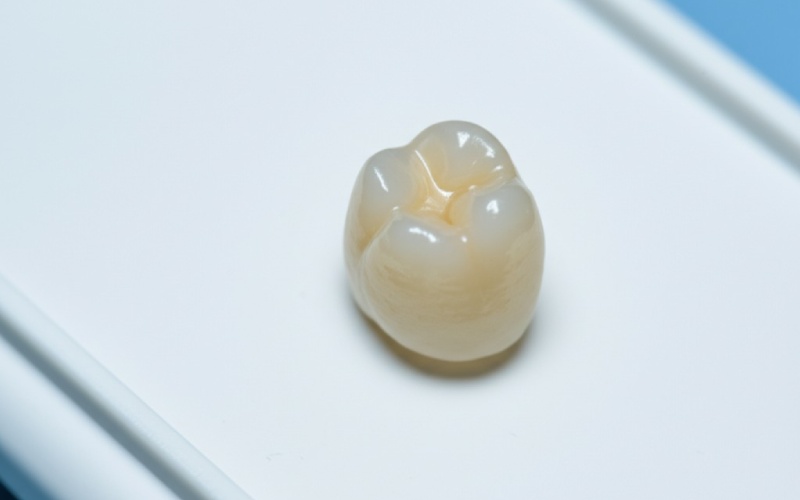
Inlays and Onlays are custom-made dental restorations used to repair damaged or decayed teeth. Inlays fit inside the grooves of a tooth without covering the cusps; Onlays cover one or more cusps to restore larger damaged areas. Both help restore the tooth’s natural shape, strength, and function while preserving healthy tooth structure.
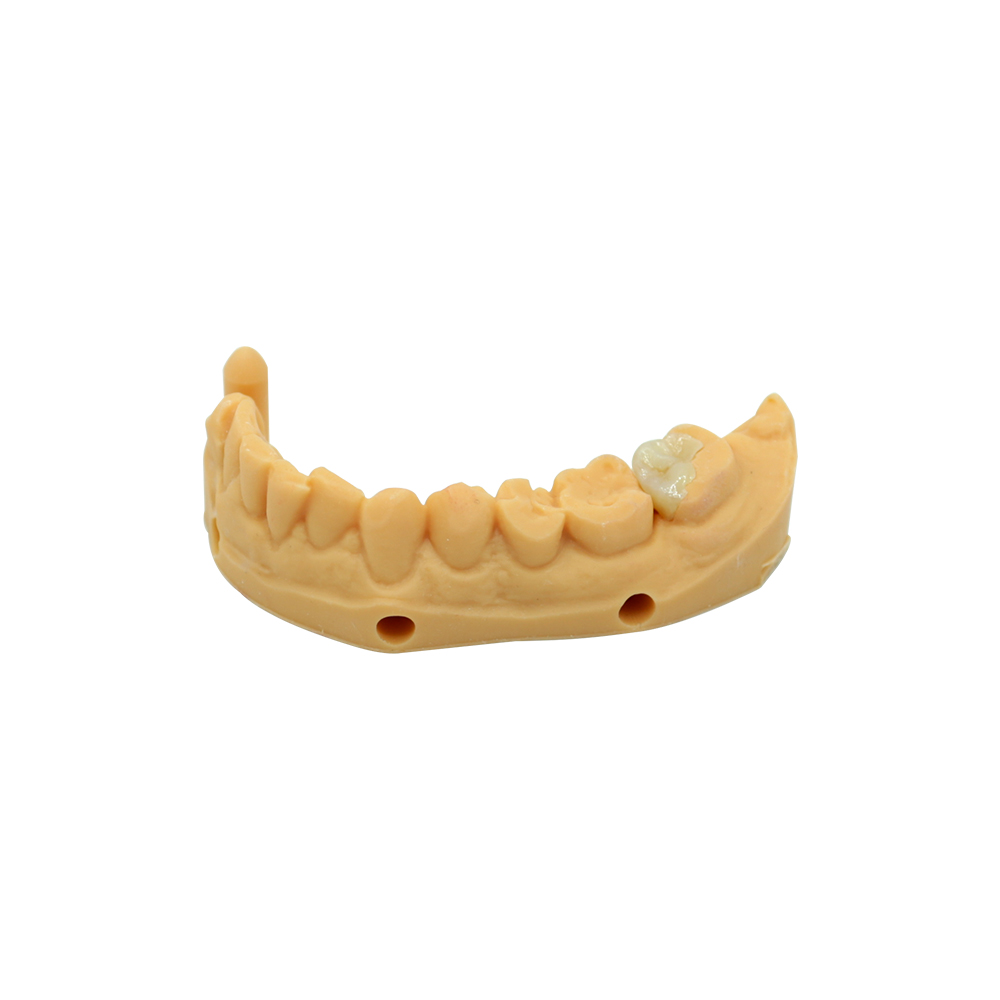
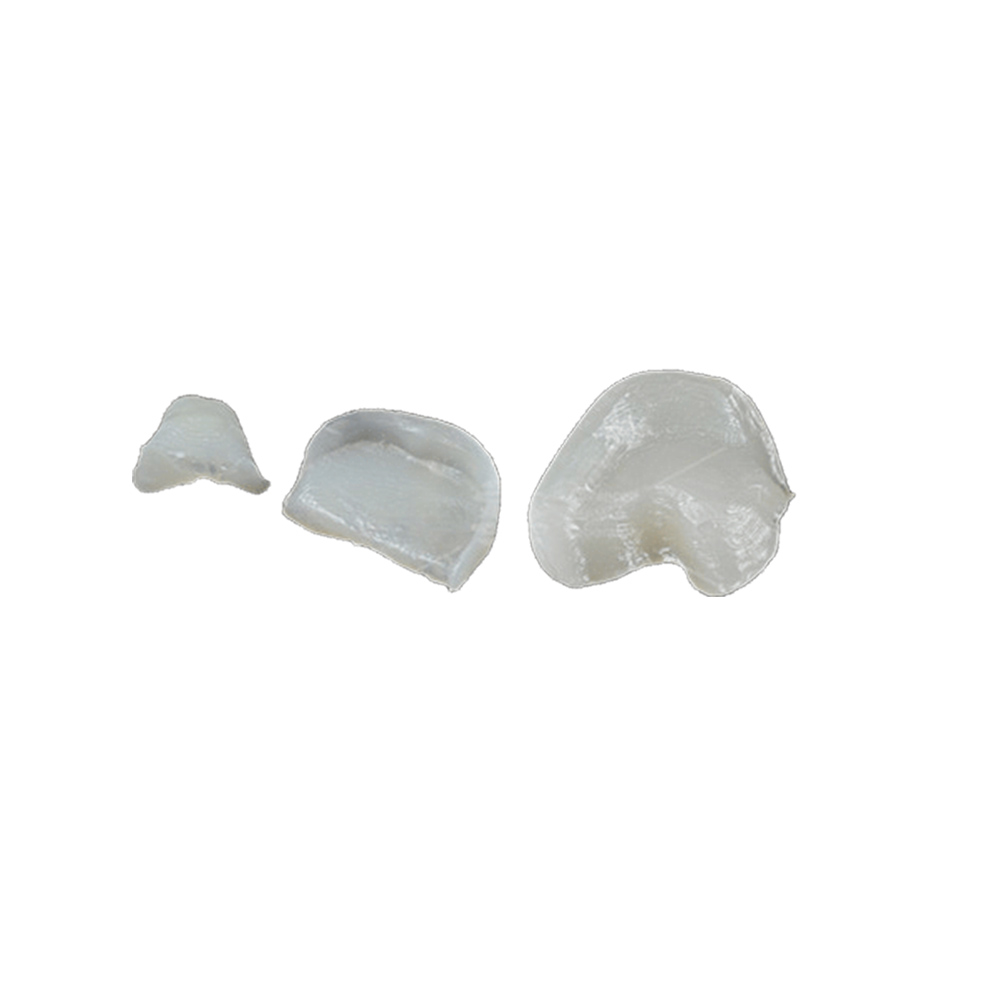
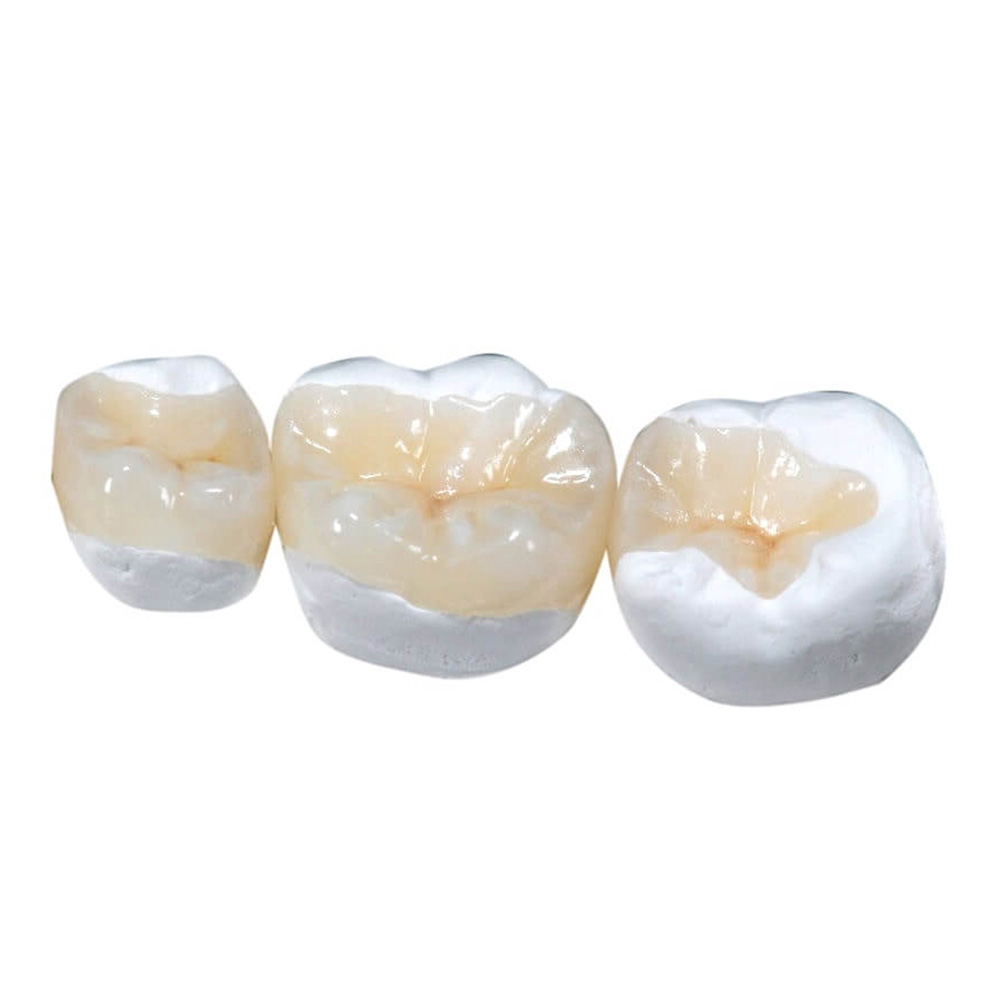
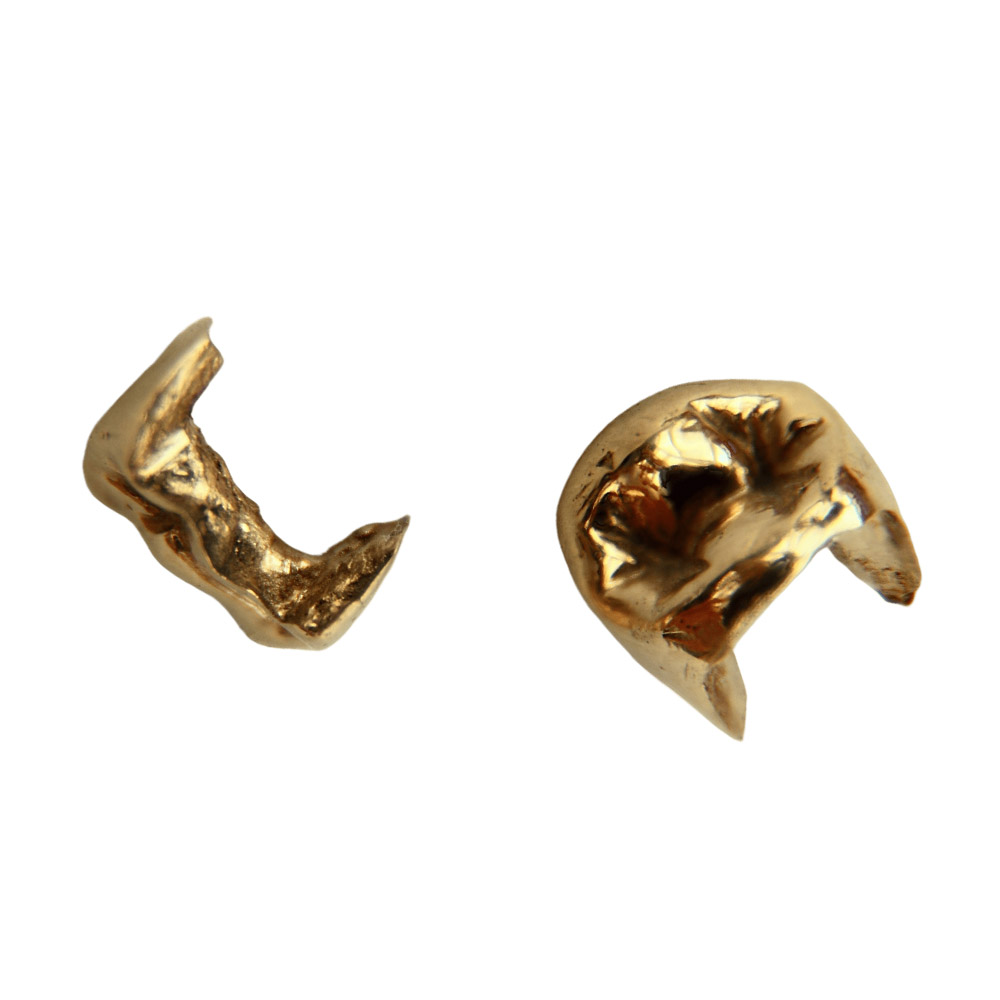
ASD’s Inlay and Onlay Product Range — Four Production Lines, One Catalog
ASD’s inlays and onlays are organized into four production lines by material, each covering the full form family of inlay / onlay / overlay. If a case walks in — pit-and-fissure caries, MOD cavity, fractured cusp, post-endodontic protection — one of these four lines has a matching SKU. Everything below is what ASD ships out of the factory every day; not a talking sheet.
1. Cast Noble Alloy Inlay & Onlay — Gold, Au-Pd
- Forms: inlay, onlay, overlay (all supported)
- Proceso: lost-wax casting → investing → burnout → casting → sandblasting → hand finishing and polishing
- Best fit: large posterior defects, bruxism patients, cases adjacent to long-span bridges, patients who prioritize longevity over esthetics
- Standard lab turnaround: 2–3 days
- Reference data: Kaplan-Meier survival 96.1% at 10 years / 87.0% at 20 years / 73.5% at 30 years — see Long-term survival estimates of cast gold inlays and onlays — Wiley y PubMed 19662053 — ‘direct-wax’ cast gold onlays long-term survival
- Compliance: cast noble metal alloys are U.S. FDA Class II medical devices — 21 CFR 872.3060 y FDA Dental Noble Metal Alloys Guidance
2. Lithium Disilicate (e.max) Inlay & Onlay
- Forms: inlay, onlay, overlay (all supported)
- Proceso: pressed (heat-pressed ingot) o pre-crystallized CAD-CAM milling → crystallization sintering → hand staining / glazing
- Best fit: premolars and molars in the esthetic zone, patients asking for tooth-colored restorations, cases where light transmission close to natural dentition matters
- Minimum thickness: inlay 1.5 mm, onlay 2.0 mm
- Standard lab turnaround: 2–3 days
- Reference data: pressed monolithic e.max — mean 10.9-year follow-up in PubMed 33012530; ceramic onlay 5–10 year success rate comparable to full crowns per PubMed 27287305 — Morimoto systematic review y PubMed 29676497 — systematic review of ceramic onlay longevity
- Material standard: ISO 6872:2024 — Dentistry ceramic materials y FDA Dental Ceramics Performance Guidance
3. Zirconia Inlay & Onlay
- Forms: inlay, onlay, overlay (all supported)
- Proceso: pre-sintered zirconia block CAD-CAM milling → secondary sintering → hand staining / glazing
- Best fit: large posterior defects, limited occlusal clearance, bruxism patients, strict proximal contact demand, metal-sensitive patients (zirconia contains no metal)
- Minimum thickness: inlay 1.0–1.5 mm, onlay 1.5–2.0 mm — thinner design envelope than e.max
- Standard lab turnaround: 2–3 days
- Reference data: PMC 6610968 — Current status on lithium disilicate and zirconia reviews the clinical indication boundaries; Association of sleep bruxism with ceramic restoration failure — ScienceDirect shows nocturnal bruxism is significantly associated with ceramic restoration failure — which is why ASD defaults to zirconia / PFM for bruxism cases
4. PFM (Porcelain-Fused-to-Metal) Inlay & Onlay
- Forms: onlay, overlay (primary use); inlay available for edge indications
- Proceso: cast metal coping → opaque application → porcelain layering → sintering → glazing
- Best fit: posterior teeth, long-span cases, budget-sensitive patients, cases where a strong metal backbone is preferred beneath ceramic
- Standard lab turnaround: 2–3 days
- Reference data: the material comparison behind PFM vs full-ceramic decisions is documented in ScienceDirect — Inlays and Onlays overview topic y PubMed 33882133 — Performance of ceramic partial coverage restorations
Product Matrix — Which Line Ships What
Product Line | Inlay | Onlay | Overlay | Turnaround | Bruxism-Ready | Metal-Free |
Cast Noble Alloy (gold, Au-Pd) | ✅ | ✅ | ✅ | 2–3 days | ✅ | - |
Lithium Disilicate (e.max) | ✅ | ✅ | ✅ | 2–3 days | conditional | ✅ |
Zirconia | ✅ | ✅ | ✅ | 2–3 days | ✅ | ✅ |
PFM (Porcelain-Fused-to-Metal) | edge cases | ✅ | ✅ | 2–3 days | ✅ | - |
Minimum order: no minimum. Single-piece starts; per-piece quotation. Pricing: not publicly listed — contact ASD’s business or sales manager; quotations issued per material tier + ADA/CDT code + case complexity.
What Inlays and Onlays Are — the Same Family, Just Different Cusp Coverage
Before going into cases, one thing to clear up: inlays and onlays and the shorthand dental inlay describe the same family of indirect restorations. The name changes with how much cusp the restoration covers.
- Inlay: sits within the cusps, covers the occlusal pits and fissures but does not extend over any cusp. Suited for pit-and-fissure caries, proximal-occlusal caries, and small-to-moderate defects with intact cusps.
- Onlay: covers one or more cusps but not all axial surfaces. Suited for weakened cusps, cracked teeth, or larger defects where the remaining tooth needs to be wrapped in.
- Overlay: covers the entire occlusal surface and all cusps, sitting between an onlay and a full crown.
When the Clinician Writes an Inlay / Onlay Prescription
These scenarios come up in clinics every day:
- Large cavities, proximal-occlusal caries — the remaining walls are too thin; a direct filling will repeatedly debond or the cusp will fracture.
- Cracked teeth, fractured cusps — the weakened cusp needs to be wrapped in for protection.
- Replacement of old large amalgam fillings — the patient wants esthetics without grinding the whole tooth down for a crown.
- Endodontically treated molars — when the remaining tooth structure is insufficient and a protective overlay is needed.
- Insufficient occlusal clearance but the clinician doesn’t want to sacrifice healthy tooth structure for a crown — onlay thickness is controllable.
If the patient asks “why can’t you just fill it” — the one-line answer: the larger the direct resin volume, the higher the polymerization shrinkage stress and the easier it is for microleakage at the margin, which leads to recurrent caries. Inlays and onlays are processed outside the mouth, where material properties and marginal adaptation are far more controllable. See Restoration of the heavily filled tooth — BDJ (Nature).
Before the decision is made, the clinician typically pulls up a periapical or bitewing radiograph to check interproximal caries depth, pulp-horn proximity, crack orientation, and post-endodontic periapical status — that diagnostic step belongs to the clinic. ASD does not read films or issue diagnoses; we simply fabricate to the tooth boundary and impression (intraoral scan STL or silicone / polyether) defined by the clinician.
Why Choose ASD for Inlays and Onlays — Six Points, Not Talking Points
1. ADA / CDT Billing Codes — The Clinician, the Patient and the Insurer All Speak the Same Language
Inlays and onlays fall under D25xx / D26xx in the current ADA CDT code set (further split by metal, ceramic, resin-based composite, and by two-surface / three-surface / four-or-more-surface). Insurance pre-authorization, the patient invoice and clinic billing all depend on these codes.
Every ASD shipment ships with full ADA/CDT code suggestions, ICD-10 tooth-position recording, and material traceability — so the clinician never has to flip through a codebook at the chairside. See Coding and considerations for crowns, veneers, inlays, onlays — Dental Economics y Preauthorizing inlays and onlays — Dental Economics.
Insurer’s UnitedHealthcare Dental Clinical Policy — Single Tooth Indirect Restorations explicitly lists inlays and onlays as indirect restorations reimbursed differentially by material and surface count — this directly affects the clinic’s insurance pre-authorization step.
2. Warranty and Remake Policy — Written on the Shipping Slip
Every indirect restoration ASD produces ships with a written warranty: under normal chewing, proper oral hygiene, and follow-up visits as prescribed, any debonding, ceramic chipping, fracture, or marginal defect caused by material or workmanship defects will be remade by ASD free of charge.
The warranty period is graded by material — see the shipping slip for the periods covering cast noble alloy, e.max, zirconia, and PFM. This clause is more substantive than “lifetime warranty” rhetoric, because it specifies both the trigger conditions and the material categories.
When the patient asks “will it fall off”, the clinician can simply say: the lab ships with a written warranty; failures caused by material or workmanship are covered by the lab for remake.
3. Standard 2–3 Day Lab Turnaround — No Idle Waiting for the Clinic
Dental inlays and onlays are short-cycle indirect restorations — ASD’s standard lab turnaround is 2–3 days (excluding shipping). If the clinician wants to see the design draft ahead of fabrication (wax-up, mock-up, or CAD rendering), ASD can send previews via WhatsApp / WeChat / email before milling or casting; design confirmation adds 1–2 business days.
Referencia: Digital workflow for indirect restorations — PMC 11068672 y Step-by-step clinical guide: Inlay and Onlay Impressions — DentalReach describe the full chain from digital impression to CAD to milling / 3D printing to sintering.
4. Both Intraoral Scans and Conventional Impressions Accepted — Whatever the Clinic Sends, ASD Receives
ASD accepts sketches, photos of old prostheses, diagnostic wax-ups, and provisional restorations as references — wherever the clinician starts from, we can take it forward.
Formal records preferred — either path:
- Physical impression + bite registration — the conventional route; ASD accepts all mainstream impression materials (addition-cured silicone, polyether silicone, alginate).
- Intraoral scan STL / PLY / OBJ data — the digital route; ASD accepts all mainstream scanners — 3Shape TRIOS / iTero / Medit / Carestream and others.
For long-span bridges or full-arch scans, to avoid cumulative error ASD internally enforces:
- Continuous unidirectional scanning with ≥30% overlap zones
- Stable anatomical landmarks (e.g., cusp tips) used as stitching references
- Fixed head position, moisture and saliva control
- One complete centric-bite acquisition in a single pass
- Pre-check of stitching seams after scanning; rescan on the spot if any misalignment appears
5. The Safety Net for Bruxism, Limited Clearance and Long Spans — Bring Us the Hard Cases
When dentists face bruxism patients, limited occlusal clearance, or long-span cases, the biggest fear is “occlusion comes back too high / fractures under load”. ASD’s internal handling for these edge indications:
- Bruxism / limited clearance / adjacent to long spans — bias toward high-strength zirconia / PFM; design biased toward “thinnest possible” (thin margins, minimum ceramic thickness).
- Limited occlusal clearance — pair with an occlusal splint when indicated.
- Non-parallel abutments (common in long spans) — segment the design, or thicken the cervical margin in non-parallel zones.
- Replicate an existing crown / provisional / contralateral tooth form — digital model with mirror / duplicate functions.
Referencia: Association of sleep bruxism with ceramic restoration failure — ScienceDirect S002239131730495X shows that nocturnal bruxism is significantly associated with ceramic restoration failure — this is also the evidence base behind ASD’s default of zirconia / PFM for bruxism cases.
ASD’s Manufacturing Workflow — From the Moment the Clinic Sends It to the Moment It Goes Back
Step 1: Impression / Scan Reception and Verification
Within 24 hours of receipt:
- Quality check of the impression / scan (margin clarity, proximal recording, bite recording)
- Tooth-position verification (ADA tooth-position record vs. patient information)
- Shade-tab photos, natural-light photos of the tooth surface (when available)
- Communication with the clinic on any re-scan or supplementary items needed
Step 2: Die Scanning and CAD Design
- Physical die → 3D scan; intraoral scan data reused directly
- CAD software designs the occlusal morphology, proximal contacts, margins, and shoulder
- Recommended thickness per material: e.max inlay minimum 1.5 mm, onlay 2.0 mm; zirconia inlay 1.0–1.5 mm, onlay 1.5–2.0 mm
- Design-draft preview can be sent to the clinician (optional service; confirmation adds 1–2 days)
Step 3: Milling / Casting / Sintering / Staining
- Cast noble alloy: lost-wax casting → investing → burnout → casting → sandblasting → try-in → finishing → polishing
- e.max: pressed or pre-crystallized CAD-CAM milling → crystallization sintering → hand staining / glazing
- Zirconia: pre-sintered zirconia block CAD-CAM milling → secondary sintering → hand staining / glazing
- PFM: cast metal coping → opaque application → porcelain layering → sintering → glazing
Step 4: Try-In and Refinement
- Try-in on the die — marginal fit, proximal tightness, vertical dimension
- Adjust to clinical standards
- Automatic remake on QC failure — no clinic follow-up required
Step 5: Cleaning, Disinfection, Shipping
- Ultrasonic cleaning + shock-absorbing foam inlay in a provisional crown-and-bridge box
- Shipping slip attached (with ADA/CDT code suggestions, material traceability, warranty terms)
- Delivery to the clinic
Referencia: Margin and adaptation of CAD/CAM inlays — PMC 12113582 y Clinical outcomes of bonded partial-coverage ceramic restorations — PubMed 41990584 are the literature basis ASD uses internally for marginal adaptation and clinical follow-up.
A Note on 3D Printing
ASD’s 3D printing capability includes surgical guides, models, and provisional restorations — these can be completed under the same roof at ASD. However, custom trays are not within ASD’s service scope — the clinic needs to source them elsewhere.
The Collaboration Workflow — Daily Interaction Between the Clinic and ASD
First-Time Collaboration
- Clinic registration — through WhatsApp / WeChat / email; ASD’s business team sends the onboarding form (with address, billing info, attending dentist registration).
- Qualification exchange — clinic’s business license, clinician practice certificate (when required); ASD provides factory qualifications, FDA Establishment Registration, and medical-device compliance documents.
- Pilot batch — usually 1–3 routine inlay / onlay cases to test response speed, marginal adaptation, and shade accuracy.
- Recurring feedback loop — monthly review of shipment volume and problem points.
Communication Languages
Chinese and English. WhatsApp working groups support photos, videos, and design-draft transmission — the clinician can snap a patient’s occlusion photo on the spot and discuss it.
Shipping
- Shock-absorbing foam inlay in a provisional crown-and-bridge box
- International courier (DHL / FedEx / UPS by default); regional land transport via SF Express, EMS optional
- Rush orders can be arranged with ASD’s sales team
Issue Handling
Issue | ASD’s Approach |
Single-crown path is unstable | Check abutment morphology, undercuts, fit |
Bridge does not seat | Identify interference zones in the design software |
Tight proximal contact on try-in | Proximal contact is over-convex or the adjacent tooth’s undercut was not addressed; re-adjust |
Occlusion comes back high | Check whether the opposing tooth has extruded or whether the bite record is accurate |
Margin does not fit | Impression margin unclear, die trimming error, or material shrinkage — return to the lab for remake |
Design confirmation delays turnaround | Design confirmation adds 1–2 days; ASD flags this in advance |
How Dentists, Clinics, Group Procurement, and Other Labs Start Working with ASD
- Solo dental practices — send patient tooth position + impression or intraoral scan + shade photo via WhatsApp / WeChat; ASD ships.
- Group procurement — monthly framework contract, dedicated business contact, monthly settlement.
- Other laboratories — ASD can take on overflow simple cases (inlays), per-piece collaboration.
Minimum order / minimum volume: no minimum. Single-piece starts; per-piece quotation.
Pricing: not publicly listed — contact ASD’s business or sales manager; quotations are issued per material tier (noble alloy / e.max / zirconia / PFM) + case complexity.
FAQ — Common Questions from Clinics
A: The more tooth structure remaining, the more conservative the restoration — inlays don’t cover cusps, onlays cover part of the cusps, crowns cover all cusps and axial surfaces. In the literature, onlays and crowns achieve comparable 5–10 year success rates for appropriate indications; the clinical decision returns to “how much healthy tooth to keep” and the patient’s oral biomechanics.
A: Cast noble alloy inlays — 96.1% at 10 years in the literature; pressed e.max — average 10.9 years; zirconia and PFM long-term data is slightly shorter but still industry-leading. Individual outcomes depend on bite force, oral hygiene, and grinding habits.
A: ASD’s shipping slip carries a written warranty — under normal chewing, oral hygiene maintenance, and prescribed follow-up, debonding, ceramic chipping, fracture, or marginal defects caused by material or workmanship are remade by ASD free of charge.
A: Cast noble alloys (Au, Au-Pd), lithium disilicate (e.max), zirconia, and PFM (porcelain-fused-to-metal). The clinician decides which one based on indication, occlusion, esthetics, and budget — material traceability is stated on ASD’s shipping slip.
A: Yes — materials bias toward high-strength zirconia / PFM; occlusal splint when indicated. The literature shows bruxism correlates with ceramic restoration failure, so single-layer ceramic inlays should be avoided in these patients.
A: ASD’s 3D printing capability covers surgical guides, models, and provisional restorations. However, custom trays are not within ASD’s service scope.
A: ASD is a full service dental lab operating its own factory in Shenzhen / Huizhou, China — inlays and onlays, crowns and bridges, implant superstructures, and clear aligners are all fabricated in-house. That means one dental laboratory, one shipping slip, one warranty policy across your case load.
Reduzca los plazos de entrega gracias a nuestra tecnología de vanguardia
< class="ct-module-title">
De actualidad