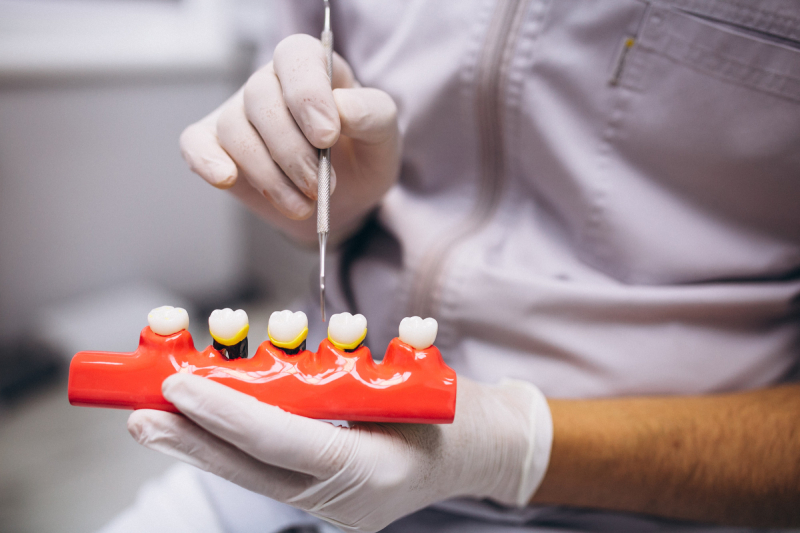
Hawley Retainer With Teeth: A Case Study


🕢 [ Füllen Sie das Formular aus und wir werden innerhalb von 30 Minuten antworten!]
The Case
Patient and presentation
| Patient | Adolescent, in retention |
| Presenting problem | Congenitally missing upper right lateral incisor (FDI 12) |
| Space status | Open, and required to stay open |
| Reason the space must hold | Implant planned, but deferred — bone still developing |
| Previous history | Completed active orthodontic care, now in retention |
| Appliance prescribed | Hawley retainer with pontic, full-time wear |
| Prescription received | Impression / scan, plus written clasp and pontic instructions |
The presentation in more detail.
The upper right lateral incisor was never there — a congenital absence rather than a loss, which changes the reasoning. Nothing had been extracted, so there is no ridge to preserve and no adjacent tooth drifting into the gap. That sounds simpler, but it introduces a different problem: a congenital gap with no tooth to guide the neighbouring teeth is a space that tends to narrow on its own, particularly in an adolescent who is still growing. The bone is not the constraint here — the space is.
The patient was fifteen at the point of referral, having finished active orthodontic care. The other teeth were in good positions, which is what made this a retention problem rather than an active-phase one. Everything needed was already in place except the missing tooth — and that was precisely the part that could not wait, because an implant cannot be placed while the jaw is still developing.
So the requirement was specific: keep the space at exactly the width recorded, hold the whole arch in its current position, and give the patient something in the gap that can be seen. The space had to survive intact for at least another year, and it had to be visible while it did.
What the clinician asked for
| Requirement | Why it was specified |
| A Hawley retainer with a tooth in the acrylic base | Fill the gap during growth, with the implant still deferred |
| Space maintenance at the recorded width | A congenital space narrows without a tooth to guide the neighbouring teeth |
| Full-time wear, not night-time only | Night-time wear permits daytime settling and gradual space loss |
| Clasps on sound teeth across the arch | A single anterior gap leaves almost nothing to clasp onto; retention has to be found elsewhere |
| A labial bow with adjustment loops | Leaves room to tighten or ease as the arch changes during growth |
| The pontic matched to the adjacent teeth | The gap is in the smile line — the replacement tooth will be seen |
| Fit verified on the model before dispatch | A space that is lost in transit cannot be recovered without a new impression |
How we handled it
1. We worked from the model as received, and checked it against the prescription before cutting anything. The arch was recorded exactly as sent. On a space-maintenance case the width is the whole point, so the neighbours either side of the gap were indexed on the model before work began. If the space had shifted between the impression and our bench, it would show up there rather than in the patient’s mouth.
2. We designed retention around the gap, not from it. A single missing lateral incisor in a fifteen-year-old is a weak place to anchor an appliance. The canines and molars still have undercuts, so the clasps were placed further back in the arch and the labial bow did the work of holding the front teeth. The adjustment loops were left accessible, deliberately — at fifteen, in an appliance expected to last a year or more, the arch will change and the fit will need adjusting rather than replacing.
3. The tooth was integrated into the acrylic base, not added to the wire. The pontic was matched against the neighbouring teeth and seated into the base plate before processing, so the acrylic carries it. This matters structurally as well as cosmetically: a tooth held in the base is carried by the same plate that holds the whole appliance, and it does not depend on the wire for support.
4. The base was polymerised slowly, on a stepped water-bath cycle. The acrylic was packed, polymerised on a controlled stepped cycle, and left to cool slowly inside the mould. Fast setting and quick cooling are the two things that cause bubbles, warping, and teeth shifting position within the base. On this case a warped base would not just be a poor fit — it would mean the pontic sat in the wrong position, which on a case built around a space is the failure that matters.
5. Thickness was measured at multiple points rather than judged by eye. The base plate was checked with calipers at several points against the prescription, with particular attention around the pontic area. A thin base flexes, and a base that flexes cannot hold a space — it will be squeezed out of shape by the very teeth it is meant to be retaining.
6. Retention and space width were both verified on the model before dispatch. The appliance was seated and removed on the plaster model to assess the hold, and the gap was confirmed as still open at the width recorded on the way in. This is the last point at which a space can be checked before it is lost, and on a case like this one it is the check that matters most.
7. Every stage carried the patient identifier. Work order, model, and appliance were marked with the same patient number throughout and packed individually. On a case where the appliance has to keep one specific shape for over a year, confusing a stage is not a filing error.
The result at fit
- The gap was held at the width recorded at the impression.
- The pontic sat in line with its neighbours and was accepted by the patient as part of his own teeth, rather than as something removable-looking.
- Retention was achieved through the clasps and labial bow rather than through the gap itself, which was the weakest point of the arch.
- The appliance was seating fully on delivery, with no rocking and no pressure point reported.
After Fitting: What The Patient And The Clinician Said
The appliance was fitted and reviewed. Below is what came back, recorded as it was given to us — in the patient’s own words where we have them, and in the clinician’s where the clinician preferred to write rather than speak.
The patient’s feedback
On the tooth itself. The first thing checked was whether it looked like a tooth that belonged there. It did — matched in shade to the adjacent teeth, sitting at the same height and in line with the arch, so that speaking and smiling did not draw attention to it. The patient stopped mentioning it within days, which is the outcome that matters more than any shade measurement.
On wearing it. Full-time wear is the instruction, and it is not a comfortable instruction to follow. It takes a few days to get used to — most people notice the appliance more in the first week than after it. The specific complaints that came up were ordinary ones: it felt bulky at first, and speech was affected for the first few days. Both settled.
On eating. Patients ask this question every time, and it is the one worth being precise about. Eating with the appliance in is fine for ordinary food. It is not fine for anything hard, chewy, or sticky, and it should not be bitten into — the pontic is not a natural tooth and will take the load differently. Nobody who wears one wants to test that, and the ones who do generally end up with a repair.
On forgetting to wear it. This is the honest problem with full-time retention. Adherence drops over time, particularly once the gap has been closed up cosmetically and there is no longer a daily visual reminder of it. This is the main reason the case needed a lab-made appliance rather than a chairside clear tray: the lab version keeps the whole arch engaged and holds the space continuously, whereas a tray only covers what it touches and can be left out without anyone noticing for days at a time.
The clinician’s feedback
On the space. The first review was the one that mattered: was the space still at its recorded width after the appliance had been in place and adjusted. It was. On a case waiting for an implant, the space holding through the retention phase is the whole result — everything else is secondary to it.
On the fit. No pressure points and no rocking were reported on delivery, which meant the appliance was seating as intended and the retention was doing its job without the patient having to force it. The labial bow was adjusted at review where needed, which is exactly what the adjustment loops were left in place for.
On the patient’s response. The clinician noted the patient was willing to wear it, which is the variable most often underestimated. A patient who does not wear the appliance has not been served by the fabrication, however well made it is.
On what this case needed from a laboratory. The clinician’s view, in short: the hard part here is not manufacturing a plate with a tooth in it — that part is routine. It is holding a space at a precise width for a growing patient over a long period, and confirming that it has been held before dispatch. Those are the parts of the work that get skipped when a case is rushed, and they are the parts that decide whether this case succeeds.
What we would flag to the next practice
- Ask for the space width at the time of the impression, not in a note afterwards. It is the measurement everything else depends on.
- Say explicitly whether the space is to be held exactly as recorded. That single instruction changes how the labial bow and the clasps are set, and it is easy to miss.
- Send a shade reference — a photo showing the tab, or the tab in the frame. Colour is far easier to match before processing than after.
- Plan the review. Full-time retention depends on the appliance being checked, and the adjustment loops exist to be used.
Choosing Between Hawley And Essix Retainers With A Pontic
When a tooth is missing and the space must be preserved, the retention choice is really a choice about how the appliance will be worn and what will happen to that space.
| Hawley with pontic | Essix with pontic | |
| Tooth position in the arch | Carried in the acrylic base | Carried in the thermoformed tray |
| Space maintenance | Strong; holds a planned gap | Weaker; more prone to allowing space loss |
| Full-arch retention | Yes — clasps on sound teeth | No — the tray only covers the teeth it retains |
| Adjustment during growth | Yes — adjustment loops | Nein |
| Appearance | Labial wire is visible | Nearly invisible |
| Sprache | May affect speech initially | Usually less effect |
| Strength of material | Acrylic + wire | Thermoplastic sheet |
| Dauerhaftigkeit | Years | Typically less |
Our read on this: the deciding question is not appearance. It is whether the space has to be held and whether the appliance has to retain the whole arch. If either of those is true, the Hawley is the more predictable option — which is the argument a clinician is making when specifying it, and one that comparison write-ups tend to settle in favour of the clear retainer (Hawley retainer with pontic vs Essix — which wins).
Where appearance is the only concern and there is no gap to maintain, the clear retainer is a reasonable choice — we build those too, and we will tell you plainly if that is the better route for a given case.
What A Pontic Changes About The Fabrication
A pontic adds work in three places, and it is worth knowing where, because it changes what you need to send us.
1. Design. The pontic position has to be set at the design stage, not added afterwards. The base is designed around the tooth.
2. Base processing. The tooth is seated and integrated into the acrylic before the base is processed. Control of that polymerisation cycle matters more here than on a plate without a tooth — a base that has warped puts the tooth out of position.
3. Inspection. Thickness is checked around the pontic as well as across the base, and the whole assembly is verified back on the model.
Two things help us most. The first is a shade reference — a photo or a shade tab in the frame — so the tooth can be matched before the base is processed, rather than after. The second is clear instruction on whether the space is to be held exactly as recorded, because that single instruction changes how the labial bow and the clasps are set.
Ordering a Hawley Retainer With Teeth from ASD Dental Lab
We need
- Model, or a scan with the full arch recorded
- The prescription: clasp type and positions, labial bow configuration, pontic position and count, base shade, tooth shade
- If the space must be preserved — say so explicitly, and whether it must be held exactly as recorded
What helps
- A shade reference in the photo, or a shade tab in the frame
- Any undercut or neighbour relationship you would rather we worked around
- Whether this is a first fit, or a replacement for something that has worn out
Physical impressions are fine for international cases — just note that alginate is a poor traveller, so VPS or polyether is the better choice for shipping. Digital cases avoid the transit time entirely and come through a day or two quicker as a result.
Turnaround counts working days and starts the day the complete case reaches us. Design approval, missing records, and time spent waiting on your reply do not count against the fabrication schedule — the clock restarts when the files are complete. We notify you at design completion, at production completion, and on dispatch, with the tracking number attached.
Consolidating several cases into one shipment is something we can usually arrange, and we can ship on our own factory carrier account.
Working With ASD Dental Lab
Founded in 2012, ASD is a full-service dental laboratory with manufacturing in Shenzhen and Huizhou. Everything on this page — from the acrylic processing through to the inspection — happens in our own facilities. We are a manufacturer, not a trading company.
What that means for a case like this one
- The design, the curing, and the inspection sit with the same team. Nothing is sent out and nothing comes back.
- Roughly 460 people across design, milling, implant, ceramic and metal, removable, quality control, and case coordination.
- Capacity runs at about 4,000 removable cases a month in the normal season and 6,500 at peak, so a case like this is not competing with production pressure.
- Our removable department alone runs about 55 technicians.
- We have supplied more than 50 laboratories, over 100 clinics, and 400+ dentists, mainly in the US and across Europe.
Quality control, in practice
Über 25 people work in quality control on their own department. In-house production means the inspection step is ours too, rather than something we inherit from a subcontractor.
Seeing the work first
You are welcome to visit Shenzhen or Huizhou, tour the production line, or arrange a video factory audit before you place a case.
Häufig gestellte Fragen
Can you eat with a Hawley retainer that has a tooth in it?
Yes, generally — but the pontic is not a natural tooth and should not be used to bite into anything hard or sticky. Take the appliance out for chewy, hard or sticky food. The tooth handles normal light contact fine.
How long does the patient wear one with a pontic?
That is a clinical decision, and it usually differs from the routine retention schedule. If the appliance is holding a space open, the clinician often wants full-time wear for a period rather than night-time only. Ask us to follow your instruction exactly and we will not second-guess it.
How do you know the tooth will match?
You send a shade reference — a photo showing the tab, or the tab itself in the frame — and we match against the neighbouring teeth before the base is processed. Colour is far easier to get right before processing than after.
Can you add a tooth to an existing Hawley later?
Usually, yes. Send the existing appliance plus a model and we will assess whether the base can take a tooth without weakening it. Send it before it is worn out, if you can.
Is a Hawley with a pontic stronger than a clear retainer?
Yes — the acrylic base and wire are simply more robust than a thermoformed tray. That matters if the appliance is going to be worn full-time for an extended period.
What about speech?
Some patients notice a change for the first few days, mostly with the labial bow. For most it settles. Where speech matters a great deal, this is worth raising at the prescription stage.
Wie lange dauert es?
Turnaround is counted in working days from the day the complete case reaches us. Tell us your schedule when you send the case and we will confirm what is achievable.
Why not do this in the practice?
Sometimes a chairside clear retainer is genuinely the right call, and we will say so. It is worth sending this case out when the space needs to hold, when the whole arch needs to retain, or when the appliance needs to last through a growth period without frequent replacement. See when a pontic retainer is worth sending to a laboratory.
About This Case Note
This case note describes a clinical pattern we fabricate regularly — an adolescent patient in retention, with a missing tooth to fill and a space to hold, under a clinician’s prescription. It is written to show our approach to the work, not to substitute for your own prescription. Every fabrication decision on this page follows your instructions.
For technical detail on the appliance itself, see our overview of the Hawley retainer — structure and indications, and for clinical background on how a pontic retainer is chosen and when it is worth sending to a laboratory.
This page describes fabrication of a custom-made dental appliance. It is not medical advice and does not substitute for clinical judgement.
Erleben Sie schnellere Durchlaufzeiten mit unserer hochmodernen Technologie
Empfohlen
Jetzt im Trend