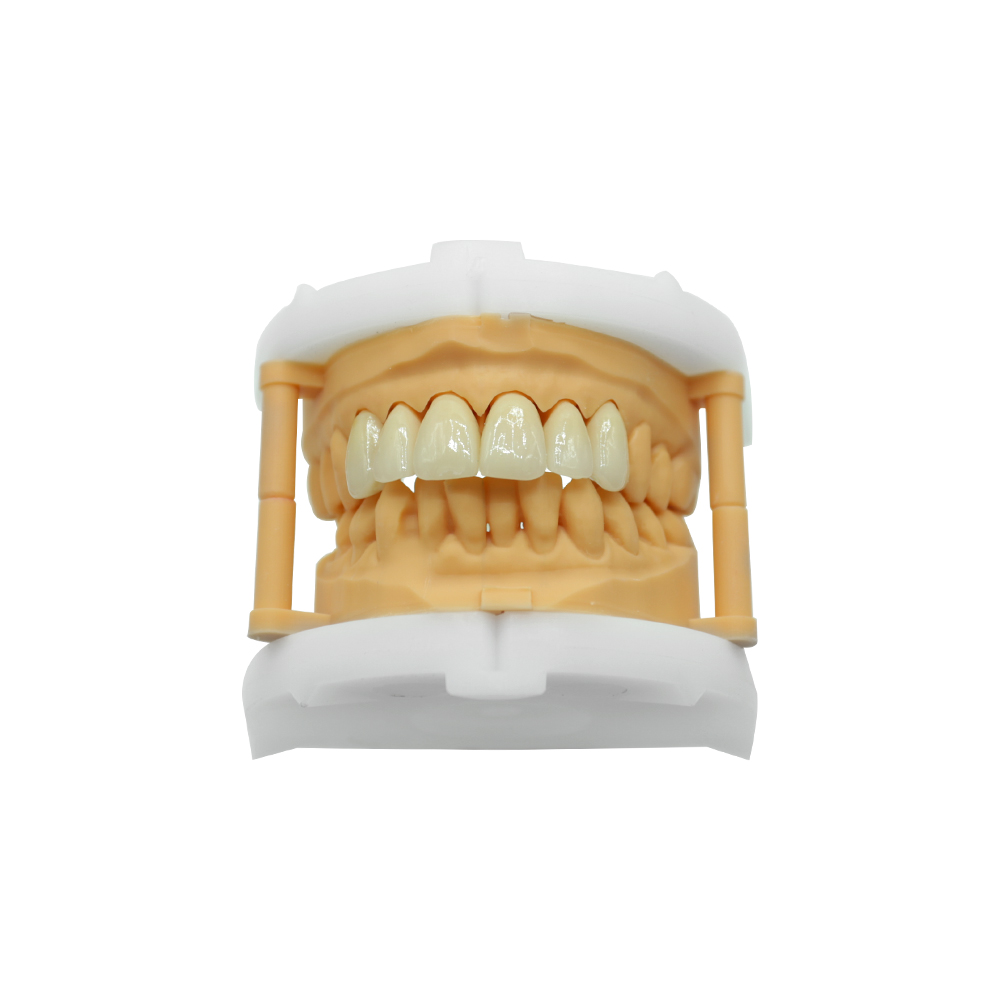
Cobalt Chrome Lower Denture — Composite Case Notes


🕢 [ Udfyld formularen, så svarer vi inden for 30 minutter! ].
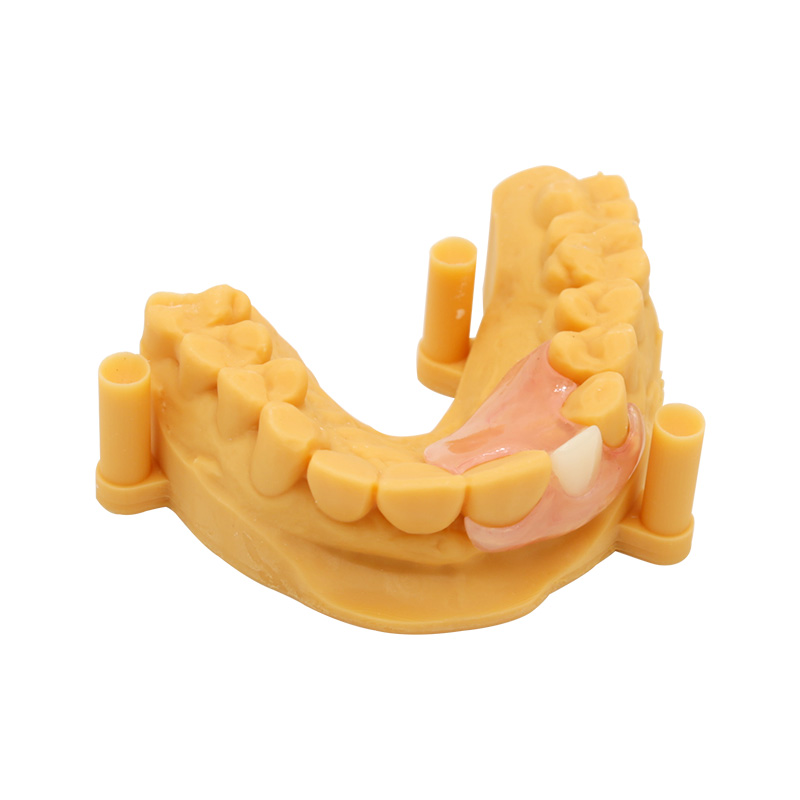
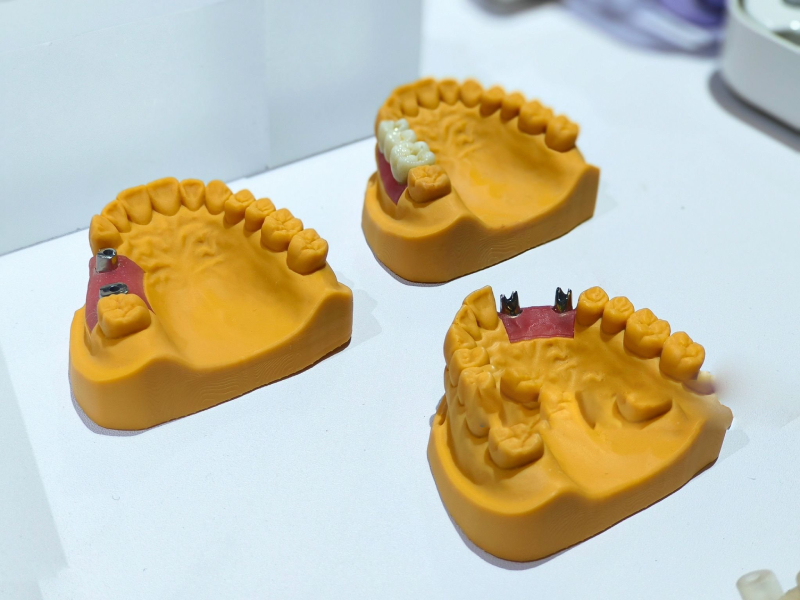
What follows covers a cobalt chrome lower denture framework for a bilateral distal-extension case: the presentation, what the prescribing clinician asked for, how we fabricated it, and what both the clinician and the individual reported after try-in. One thing to clear up first, because the phrase gets read wrong often enough: this is a partial denture framework, clasp-retained, made for the mandibular arch. It is not a full lower denture. Full lower cobalt chrome dentures are rare, for reasons we return to below.
Presentation
A patient presented with bilateral distal-extension edentulism in the mandibular arch — both posterior segments were missing, with no natural teeth distal to the abutments. The edentulous ridges showed moderate resorption. The remaining dentition included lower anterior teeth and premolars, though the prescribing clinician noted that two of the lower incisors carried a guarded prognosis. Periodontal status had been assessed chairside; the laboratory was not asked to make that call.
The chief functional complaint centered on difficulty chewing anything that required grinding. Posterior teeth had been absent for an extended period, and the anterior teeth were bearing occlusal load they were not designed to carry long-term.
Lingual anatomy presented the primary design constraint: bilateral lingual tori occupied the floor of the mouth on both sides, restricting the vertical clearance available for a major connector. The connector would need to pass through whatever space remained between the tori and the gingival margin without impinging on tongue movement.
Cost was a variable in the material discussion. The prescribing clinician was weighing cobalt chrome against all-acrylic and flexible partial options on both functional and financial grounds. There had been a history of inconsistent follow-up before this case was initiated, which influenced how much design detail the clinician wanted locked down before fabrication began.
The clinician expected further tooth loss over time and requested that the framework be designed so that additional teeth could be added later without remaking the entire prosthesis — a future-planned framework, in other words.
What the Prescribing Clinician Asked For
This section lists what came to us in writing on the prescription form and in the accompanying design notes.
Classification and support concept: Kennedy Class I, bilateral distal extension. The clinician specified that this was to be a tooth-and-tissue-borne design, not purely tooth-supported.
Major connector: A lingual bar was specified — not a lingual plate. The prescription stated that the inferior border must remain at least 4 mm above the gingival margin and must clear the bilateral lingual tori. The clinician noted the exact location of the tori on the digital scan and asked that we confirm full soft-tissue capture in that region before proceeding with design.
Rest seats and support: Rest positions were marked on four teeth. The prescription stated explicitly: do not place rests on the two lower incisors with guarded prognosis. Load those teeth as little as possible.
Clasp design: The clinician specified circumferential clasps on the designated abutments. Clasp arms were to engage the undercuts identified on the survey, and reciprocal arms were to be positioned as marked. The prescription asked that we flag any situation where a tooth-coloured clasp could substitute for metal in the aesthetic zone, but only if space and material properties allowed — no forced substitutions.
Forward planning: The prescription asked that the framework be designed with space to add teeth later if loss continued. The clinician wanted acrylic extension kept longer than minimal, with an embedded mesh or lattice so that additional denture teeth could be set without redoing the metal framework.
Occlusion: Balanced occlusion was requested. Centric relation was recorded and supplied as a bite registration.
Approval before production: The clinician asked for a digital design preview before any metal was built, so that the path of insertion, connector clearances and clasp positions could be reviewed on screen. This was non-negotiable.
What the prescription did not include: Undercut measurements were not supplied. The intended path of insertion was not stated. One of the rest seat preparations was not visible on the scan. These gaps came back to the clinician as a checklist before design started.
Cobalt Chrome Lower Denture Design and Fabrication
1. Records Review and Gap Reporting
We ran the incoming records against our standard checklist:
- Full-arch mandibular scan: received, but soft tissue over the left lingual torus was incompletely captured
- Opposing maxillary scan: received
- Bite registration in centric relation: received
- Written prescription: received
- Tooth chart with abutment markings: received
- Rest seat visibility: one rest seat not visible on the digital model
- Path of insertion: not stated
- Undercut distribution: not measured
We returned the gaps by name and requested:
- A supplemental scan or a physical model showing the left torus region in full
- Confirmation of the path of insertion
- Clarification on whether the invisible rest seat had been prepared or was still pending
The clinician re-scanned the torus region, confirmed the path of insertion as a straight vertical draw, and sent photos showing that the questionable rest seat had been prepared but was obscured by soft tissue on the original scan. We proceeded once those three items were closed.
2. Digital Design and Approval
Survey and design were completed in CAD. The lingual bar was drawn to the specified 4 mm clearance above the gingival margin, with additional relief over both tori. Rest seats were placed only at the four clinician-marked positions. Clasp arms engaged the surveyed undercuts per the prescription. Reciprocal arms and guide planes followed the marked positions.
The acrylic denture base extension was kept long, and a metal mesh lattice was embedded distally on both sides to allow future tooth additions. The entire digital design file was archived.
A design preview was sent back for approval. The clinician requested one adjustment: the distal extent of the right acrylic base was shortened slightly to avoid impinging on the retromolar pad. We made the change and received written approval to proceed.
3. Framework Fabrication
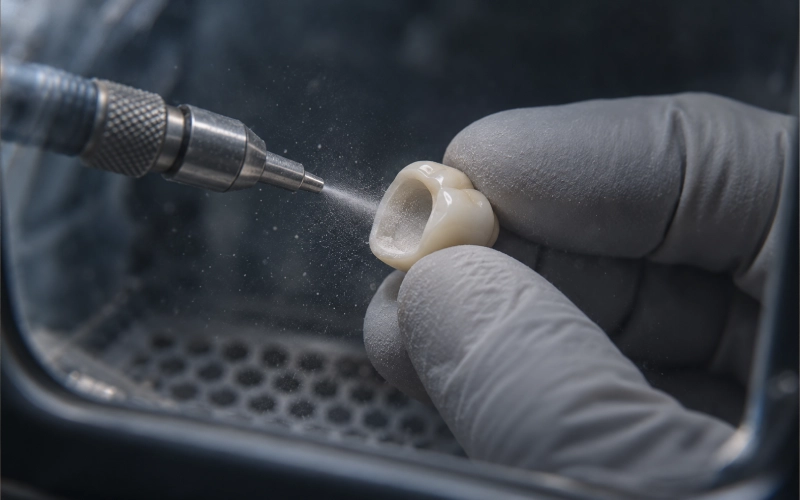
Build method: Selective laser melting (SLM) in cobalt chromium powder Post-processing sequence: Stress relief at the post-build stage → support structure removal → sand blasting → in-house try-in on the master model → electro-polishing → hand finishing and polishing
Why SLM for this case: The prescribing clinician had asked about casting versus additive manufacturing. We explained that SLM-produced cobalt chrome shows better fatigue resistance and higher clasp retention in published comparisons, and that batch reproducibility is tighter. We also stated honestly that seating accuracy with SLM is not always superior to casting or milling — some studies report the opposite — and that we verify fit on the model and at try-in rather than assuming it.
Material traceability: The cobalt chromium powder lot was documented. Batch number, manufacturer, country of origin and the matching material certificate are retained with the case record.
Quality control: The finished framework was inspected by a technician outside the production team. The inspection checked: seating on the master model, clasp engagement, connector clearance over the tori, acrylic and lattice extension, and surface finish. The framework passed and was signed off for the next stage.
4. Acrylic Processing and Tooth Set-Up
Once the metal framework was approved, we processed the acrylic denture base and set the replacement teeth. Occlusion was arranged to the balanced scheme requested. Teeth were set in the positions indicated on the tooth chart, with the understanding that additional teeth might be set later if the forward-planning provision was used.
5. Framework Try-In (Optional Stage — This Case Requested It)
The clinician asked for a framework try-in before final processing. We sent the metal framework alone, without teeth or full acrylic, so that seating, stability and soft-tissue relationships could be checked intraorally before committing to the final prosthesis.
Try-In Findings and Feedback
What the Clinician Reported After Try-In
Seating: The framework seated fully with finger pressure. No rocking or instability was noted. The path of insertion was correct.
Connector clearance: The lingual bar cleared both tori as designed. No tongue discomfort was reported during the try-in, and the clinician confirmed that the inferior border of the bar sat at the specified distance from the gingival margin.
Clasp engagement: All four clasps engaged their respective undercuts. Retention felt appropriate — the framework was stable but could be removed without excessive force. The reciprocal arms contacted as intended.
Acrylic extension: The distal extensions were checked against the tissue and found acceptable. The right-side adjustment made during the design phase had resolved the retromolar pad concern.
Adjustments made at try-in: None. The framework was approved to proceed to final processing. The clinician’s written instruction to the laboratory at this stage was to proceed with tooth set-up and final processing.
What Was Reported After Delivery
The final prosthesis was delivered two weeks after try-in, following acrylic processing, tooth set-up and final finishing.
Initial seating: Insertion and removal of the prosthesis was accomplished without difficulty after brief instruction from the clinician.
Komfort: The lingual bar felt unusual for the first few hours, as expected with any new lower prosthesis, but that sensation subsided within the first day. No persistent tongue soreness or gagging was reported at the one-week follow-up.
Function: Chewing foods that had been difficult or impossible was now possible. Grinding function was restored. The anterior teeth were no longer taking all the occlusal load.
Retention: The prosthesis stayed in place during normal function. No spontaneous dislodgement during eating or speaking was reported.
Aesthetics: Metal clasps were visible on the premolars. This was noted as acceptable and had been discussed beforehand. No request was made to modify clasp design.
Clinician’s assessment at follow-up: Occlusion was checked and found stable. Tissue response was normal. No adjustment was needed. Routine follow-up was scheduled at three months.
Cobalt Chrome Denture Framework: Technical Considerations
On SLM versus Casting
We want to be straight about this, because the SLM story in this trade is told one way almost everywhere.
Where the evidence is favourable. Additively manufactured cobalt chromium compares well on toughness, yield strength and fatigue strength. Clasp retention is reported higher with less deformation. The practical read: better fatigue behaviour, and batch-to-batch reproducibility that hand casting does not offer. Published comparisons are in SLM versus cast RPD framework mechanical performance and in clasp retention and deformation under SLM and casting.
Where it is not, and we are not going to skip it. On seating accuracy and surface roughness, the picture does not follow. In vitro work finds SLM frameworks do not outperform cast or milled ones on those measures, and in some cases come out behind — with the gap narrowing substantially after polishing. See Co-Cr versus PEEK seating accuracy, including findings unfavourable to SLM og den casting shrinkage versus SLM gap data.
So we do not claim that printing a framework makes it fit better. We claim two things: improved fatigue behaviour, and better batch reproducibility. Seating accuracy gets verified, not asserted — on the model at the bench, again at independent QC, and again at framework try-in if you want that stage.
Stress relief is not an optional extra. Omitting it costs you dimensional stability and fatigue life, so it sits in the standard post-processing sequence between build and finishing.
On Lingual Space and Connector Choice
The bilateral lingual tori in this case left limited vertical clearance for the major connector. A lingual bar was chosen because it requires less vertical space than a plate and can be positioned to avoid both the tori and the gingival margin. The 4 mm inferior-border clearance specified in the prescription is a standard guideline to prevent soft-tissue impingement.
When the available space is marginal, the decision between bar and plate comes down to what the anatomy allows and what the clinician judges the tissue can tolerate. We execute the choice — we do not make it.
On Material Traceability and Quality Control
On material limits, the reference to hold is ISO 22674:2022, cobalt and chromium release limits — it is the current standard for dental casting alloys and their hazardous-element limits, having superseded ISO 6871-1 per the ISO record for the standard transition. Ion release under dynamic loading is assessed by this method in dynamic-loading ion release studies, with background on cobalt release in metal ion release from Co-Cr alloys. The wider toxicological picture and its regulatory frame are set out in Co-Cr toxicological risk and EU regulatory framework, and industry bodies have addressed the same ground in the FIDE position paper on cobalt in dental alloys.
The cobalt chromium powder lot used in this case was documented. Batch number, manufacturer, country of origin and the matching material certificate are retained with the case record and can be supplied on request.
On Records and Data Handling
On registrations: this laboratory holds current FDA establishment registration with product listing, MHRA registration, and ISO 13485 certification, with MDR notified-body status for custom devices. The listing covers the custom restoration categories we actually build, including partial and complete dentures. You can verify it yourself — the FDA public database is open, no login needed, and we will point you at the record.
That is regulatory status, stated plainly. It is not a quality claim about any individual case, and we would rather you read it that way.
Case records are retained for three months as standard, with extension available on request. Data transfer runs through encrypted channels. Access permissions are controlled, and deletion requests are honoured. We recommend that clinicians use an internal case number rather than patient names on all transmitted files.
What This Case Does Not Claim
Short section, and an important one.
We fabricate to prescription. We do not choose the major connector, we do not choose where rests go, and we do not select clasp type. Those are design decisions made by the prescribing clinician, and our job is to execute them accurately — or to come back and ask when the records do not support the decision.
We do not make clinical judgements, and nothing on this page should be read as one. We do not describe chairside adjustment technique. We do not state success rates, survival figures or outcome rates, because we will not put a number on something we cannot substantiate across a case mix we have not published.
Material substitution is one area where the line is firm: if we need to change a material, you get told before it happens and we need your written agreement.
The clinician and individual feedback reported in the try-in section above is representative of similar cases, not a verbatim transcript from one specific case. It reflects the range of observations we receive when frameworks seat well and when they do not. We publish it this way because composite case notes are more useful than anecdotes, and because consent for detailed case publication is not always available at the time a page like this needs to be written.
Records We Need Before We Start
Sending this list up front is faster than sending it after a delay. This is the full set:
| # | Record | Note |
| 1 | Full-arch intraoral scan or physical master model | Soft tissue contours beyond the gingival margin matter here — especially over the tori |
| 2 | Opposing arch record | Must match the working arch |
| 3 | Bite record | In the jaw relation the work is being planned against |
| 4 | Written prescription | Connector type, rest positions, clasp positions, path of insertion |
| 5 | Tooth chart | Which teeth are present, which are planned for extraction |
| 6 | Marked diagnostic cast or annotated files | Where the scan alone does not carry the design intent |
| 7 | Approval route | Who signs off the digital design, and how you want to receive it |
| 8 | Anything unusual | Fit complaints on the current appliance, a metal allergy history, a hard bite to work around |
Send data by email or the data transfer platform and we will return a DHL tracking number, or ship to our factory address with the order number quoted. Samples, trial orders and small-batch validation runs are all fine for new accounts — though single cases carry international freight that does not divide well, so batching usually works out better for both sides.
Technical discussions run in English, and we can hold a video session with a technician on a live case. English versions of technical documentation, material certificates and labelling are available on request. We hold a usual 10:00–18:00 window and can extend for cases in progress. Replies land within the hour during working hours, occasionally out to twelve.
Ofte stillede spørgsmål
1. Is a cobalt chrome lower denture the same as a partial denture?
In this page, yes — the case described is a clasp-retained cobalt chrome removable partial denture framework for the mandibular arch. The term “denture” on its own is ambiguous in search results, and plenty of it is aimed at people shopping for finished appliances rather than clinicians ordering frameworks. If you are ordering framework work, the terms you want are partial, clasp-retained, and framework.
2. Can a full cobalt chrome lower denture be made?
It can be built, but it is unusual, and the reason is structural. A cobalt chrome lower framework gets its retention and support from remaining natural teeth. Take those away and you are working with a completely different mechanism, and full-arch cobalt chrome is not the design you would normally reach for. Full lower dentures are normally acrylic. If you are looking at a full-arch situation, talk to us early — the reasoning on why remaining teeth matter is a reasonable place to start reading.
3. Is cobalt chrome suitable for the lower jaw?
Yes, and it is a common choice there. Two properties drive it: rigidity, which lets a major connector stay thin, and fatigue strength, which matters on clasp arms that will flex repeatedly. Published mechanical comparisons are in Co-Cr versus PEEK stiffness data og casting, milling and additive mechanical comparison.
4. Do cobalt chrome frameworks contain nickel?
Cobalt-chromium base alloys are formulated nickel-free, and nickel-free grades are what we run. If nickel sensitivity is in the picture, say so in the prescription so we can match you to the right alloy and document it — background reading in nickel and cobalt dental alloy biocompatibility comparison og Clasp work-hardening and failure behaviour in CoCr.
5. Why do metal clasps show on a lower framework?
Because retention on a partial denure comes from a clasp engaging an undercut, and that clasp has to be visible enough to be effective. Where display matters, options exist — a tooth-coloured clasp made from acetal resin can work where the space allows. Space often does not allow it on the lower arch, because the lingual side is already occupied. When that is the case we tell you, rather than fitting something that will not hold.
6. Can teeth be added to the framework later?
Yes — if it was planned as a forward-planned framework from the start. Acrylic and lattice reserve is retained, and the digital design file is archived so additions or copies have a basis. The caveat is real: the metal itself is not adjusted on site, so the reserve has to exist in the first framework. Also worth knowing, clasp work-hardening is a known failure pathway in this alloy — see clasp failure point analysis across fabrication routes — so a framework pushed to a heavier clasp configuration than intended is a compromise, not an upgrade.
7. What records does the lab need before starting?
The eight-item list above. In short: full-arch scan or master model with soft tissue contours, opposing arch, bite record, written prescription, tooth chart, annotated cast or files, approval route, and anything unusual about the case. We run these back against a fixed checklist and return every gap by name before production.
8. Does ASD provide digital design approval before production?
Yes. A digital design preview goes back for approval before anything is built, and material changes require prior notice and written agreement. If your workflow needs a different sign-off path, or a joint technician session on a live case, that is arranged.
Order a Cobalt Chrome Lower Partial Denture
Send the records listed above and we will come back with questions, a schedule, and a design preview before anything gets built. Pricing on request. Technical questions welcome before you commit — we would rather sort the connector decision out on a screen than after a framework is cast.
Oplev hurtigere ekspeditionstider med vores banebrydende teknologi
Anbefalet