24 Zirconia Crowns: A Full-Arch Implant Case
🕢 [ Udfyld formularen, så svarer vi inden for 30 minutter! ].
Case study · for clinician review
A full-arch zirconia restoration is not twenty-four separate crowns. It’s one arch that has to seat, occlude, and look natural as a single unit. This page walks through one such case — the patient, the difficulties the case presented, what we fabricated, and how it performed at try-in and delivery.
The Patient Behind 24 Zirconia Crowns
Demographics: Male, early 60s, retired, physically active. Non-smoker, controlled type 2 diabetes (HbA1c stable at 6.8%), no contraindications to implant surgery.
Chief complaint: “I can’t eat properly, and the denture moves when I talk.”
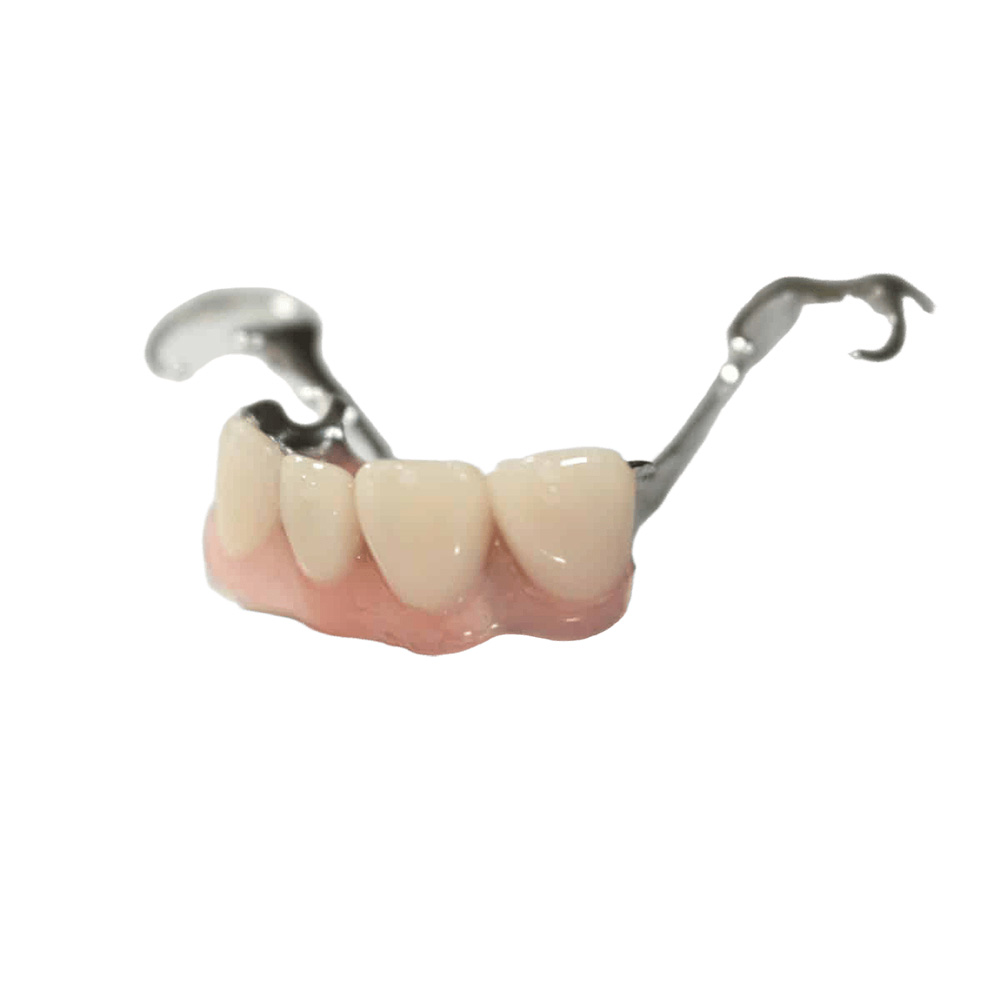
History: Upper arch had been fully edentulous for eight years. Lower arch had four remaining teeth (#22, #23, #26, #27) with Grade 2–3 mobility and 6+ mm probing depths — periodontitis, advanced bone loss, poor long-term prognosis. A conventional maxillary complete denture and mandibular partial denture had been made three years earlier. The patient stopped wearing the maxillary denture within six months due to speech problems (sibilant distortion, denture clicks during conversation) and visible metal clasps on the lower partial. He avoided social situations and had shifted to a soft-food diet.
Examination:
- Maxilla: Fully edentulous ridge, moderate resorption in the anterior zone, Class II ridge relationship. Adequate bone height and width for implant placement without augmentation. Thin soft tissue over the anterior crest.
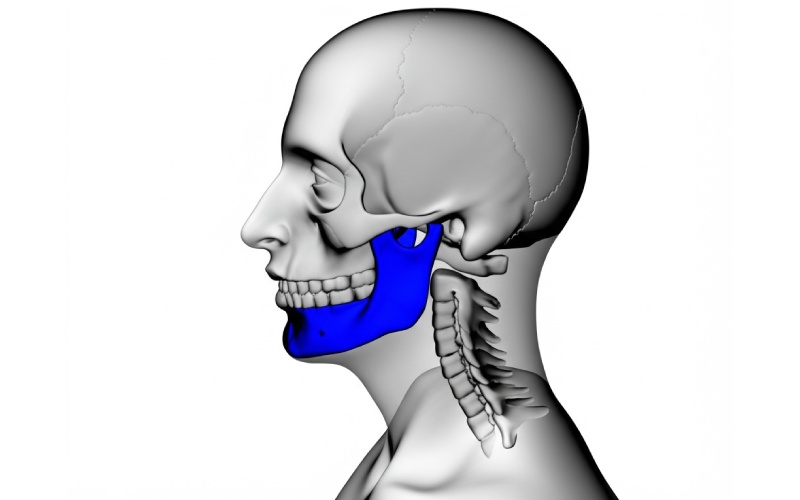
- Mandible: Three implants already present from a prior phase (positions #19, #22, #29 analogs), osseointegrated, stable on exam. Residual natural teeth mobile, not salvageable as abutments. Deep overbite (5 mm), requires vertical dimension adjustment.
- Occlusion: Habitual bite collapsed; patient had adapted to a retruded, low vertical dimension. Opposing natural maxillary teeth (at time of initial consult, since extracted) showed wear facets and compensatory eruption.
- Aesthetic concerns: Patient requested “something that looks like teeth, not denture teeth.” Moderate smile line; upper anterior zone visible during normal conversation and smile.
Case plan: Fixed, implant-supported full arches. Maxillary implant placement (stage one, not covered in this case report). Mandibular full-arch restoration on existing three implants. Vertical dimension increase of 3 mm at occlusal plane, agreed and rehearsed with provisional. Zirconia substructure with anterior layered ceramic for translucency and shade match.
Patient expectations: Fixed prosthesis that doesn’t move. Natural appearance in the smile zone. Ability to return to a normal diet. Cross-border case; patient and clinician required written confirmation of materials, turnaround, and deliverables before committing.
Case Overview
| Item | This case |
| Restoration | Full-arch, maxillary and mandibular (24 units total) |
| Substructure | High-strength zirconia |
| Anterior finish | Layered ceramic (facial cutback + hand-applied porcelain) |
| Implant support | Mandible: three existing implants; maxilla: planned separately |
| Occlusal design | Individually set contact gaps (0.3 / 0.5 / 0.7 mm scheme) |
| Skygge | A2 body, incisal translucency zone, moderate surface texture |
| Scan source | Clinician-submitted intra-oral scan (PLY with color data) |
| Vendepunkt | Standard tier: 12 business days from scan validation to shipment |
Why Zirconia for This Case
When a case like this arrives, the material choice isn’t the first question — it’s what the case itself rules out.
Removable was already tried and abandoned. Speech instability and visible clasps are functional failures, not preference issues. Sending the patient back to the same category wouldn’t address the problem.
Residual teeth with advanced mobility can’t serve as abutments. A fixed restoration needs supports that will be there in five years. Teeth already failing don’t qualify, which removes the tooth-supported option.
What remains is an implant-supported fixed arch. That’s the geometry this case has. Material choice then narrows: the anterior soft tissue here is thin enough that a metal framework risks showing a grey shadow at the gingival margin. Zirconia avoids that problem while keeping the strength the posterior zone needs for function.
The opposing arch also factors in. Full-arch zirconia meeting natural tooth structure has been documented to cause less wear on opposing enamel than feldspathic porcelain — a relevant consideration when the restoration will occlude against natural teeth during function.
So zirconia wasn’t selected because it’s universally superior. It was the only material that cleared the exclusions this case presented: not removable, not tooth-supported, not metal-showing. That’s a sound evaluation.
24 Zirconia Crowns: CAD/CAM Design and Fabrication
Data intake
The clinician submitted an intraoral scan (PLY format with color data), opposing arch, bite registration, and shade photography (macro ring flash, 5500K, standardized camera settings). We validated the scan within one working day: margin continuity confirmed, no mesh gaps, stitch points aligned. Implant positions verified against the prescription.
For a three-implant mandibular case with spans this wide, we requested a verification jig. The clinician fabricated it, confirmed intraoral fit, and sent the jig data. That step caught a 0.4 mm rotational discrepancy at the distal implant — corrected in the design before milling.
Design and occlusion
Occlusion gaps were set point-by-point in CAD: 0.3 mm for balanced contacts, 0.5 mm where minor chair-side adjustment was anticipated, 0.7 mm for posterior disclusion zones. Not left to software defaults. The scheme was documented and sent to the clinician for confirmation before milling.
Passive fit — where the restoration seats without strain across multiple implant positions — was a design requirement. CAD/CAM delivers this more consistently than manual splinting because it eliminates handling variables.
The design was reviewed by a senior designer, then by a technical supervisor (implant cases get a second review). Prescription details — finish line type, pontic design, proximal contact tightness — were checked line by line. As Kahng describes, the bite has to be captured correctly before milling, because “after milling, it is too late for this stage.”
Milling and sintering
Milled in-house from the confirmed design file. No third-party outsourcing. Zirconia sintered under a locked program: fixed temperature, ramp rate, and hold time. Shrinkage compensation set from manufacturer parameters and verified against a test block for this batch. Every load logged with a sintering curve.
Layering and finishing
Anterior units received facial cutback and hand-applied ceramic: dentin layer, incisal translucency, opalescence in a limited zone, fluorescence in the dentin region. Surface texture and dentinal grooves built in. Porcelain firing limited to three cycles to minimize fit shift. Each layer logged by type, ratio, and thickness.
After glazing, contacts and marginal fit were rechecked. Final inspection by an independent QC technician (not the person who milled it). Inspection covered marginal fit, seating, passive fit, proximal contacts, occlusion in centric and excursions, surface finish, screw channels, and freedom from cracks or voids.
Full-Arch Zirconia Prosthesis Try-In and Fit Verification
Try-in: what the clinician checked
The restoration arrived 12 business days after scan validation. Try-in was scheduled the following day.
Seating and passive fit: All units seated without binding. No rocking on the implant platform. Screw channels aligned; abutment screws torqued to manufacturer spec without resistance.
Occlusion: Articulating paper showed contacts at the intended teeth in centric. Protrusive and lateral excursions showed disclusion as designed. No high spots. One posterior contact on #30 was slightly heavier than intended; adjusted with a fine diamond, re-glazed chair-side with a porcelain polish (not grinding through to zirconia).
Marginal fit: Explorer test at all margins, full circumference, all units. Continuous, no ledges, no gaps palpable.
Shade and aesthetics: Shade matched the reference (A2 body). Incisal translucency visible under operatory lighting. Surface texture appropriate for the patient’s age. Midline alignment and incisal edge position confirmed against the pre-op photos and agreed case plan.
Patient response at try-in: “It feels solid. I can close my teeth without the denture shifting.” Patient smiled during the try-in — first time the clinician had seen that in consult records spanning two years.
Final delivery: patient and clinician feedback
Two weeks post-delivery (patient):
The clinician followed up by phone. Patient reported:
- Function: Returned to a normal diet within three days. Eating steak, raw vegetables, and crusty bread without difficulty. No longer avoiding foods.
- Speech: Sibilants clear, no clicks, no lisping. “I can talk on the phone without thinking about my teeth.”
- Komfort: No sore spots, no awareness of the restoration during normal function. “I forget it’s there.”
- Aesthetics: Satisfied with the appearance. One family member asked if he’d “gotten his teeth whitened” (the patient’s natural teeth had been heavily stained; the restoration was shade-matched to a corrected target, not to the pre-extraction condition).
- Tillid: Returned to social activities he’d avoided for two years. No self-consciousness about smiling or speaking.
Clinician’s assessment (at 2-week and 3-month recalls):
- Occlusion stable. No shift, no loosening of abutment screws. Contacts maintained as designed.
- Soft tissue response normal. No inflammation at margins, no pressure points on the ridge.
- Patient compliance high. Using a water flosser and interdental brushes as instructed. Keeping recall appointments.
- No remakes, no adjustments post-delivery. The single occlusal adjustment at try-in was the only chair-side modification required.
Clinician’s note in the case file: “Patient outcome exceeded expectations. Restoration fit as planned, patient function and satisfaction both high. Would use this workflow again for similar cases.”
What Shipped with the Case
- The 24-unit restoration, individually wrapped and packed.
- Occlusal contact scheme documentation (the gaps we built, so the clinician could verify against design rather than guess).
- Material records: zirconia brand, batch, country of origin, with certificates available on request.
- Layering records for the anterior units: porcelain types, mix ratios, layer thicknesses, stain numbers, firing parameters. Archived for reproducibility if a repair or remake is ever needed.
- QC inspection record covering the final checklist.
Working with the Lab
Vendepunkt
Standard tier for full-arch zirconia: 10–15 business days. This case delivered in 12. Rush tier available at 7–10 business days.
We don’t advertise 48-hour full-arch delivery. It’s achievable in some cases, but “usually 48 hours” eventually costs someone a cancelled appointment when the exception hits. If a case has a hard deadline, tell us up front and we’ll confirm whether we can meet it.
Communication
Every account gets a dedicated working group. Case decisions, file uploads, and approvals run through it. Mirrored by email so you have a record you control.
If production identifies a need for an added step or component, we get your approval before proceeding. No silent additions. No silent substitutions.
Submission requirements
What to send:
- Intraoral scan: STL, PLY with color, OBJ, DCM, or 3oxz. Open file formats from any scanner (3Shape, Medit, iTero, CEREC, Shining3D, Planmeca, others).
- File sizes: under 150 MB per arch (STL), under 300 MB (PLY). Over that, reduce sampling density or simplify.
- ZIP only. Not RAR. One folder per case, one CaseID prefix across all files, no Chinese characters in filenames.
- Your prescription, shade record, reference photos.
What’s easy to forget:
- Opposing arch and bite record (not optional for full-arch).
- Verification jig data for widely spaced implants.
- Bite registration material: PVS/VPS silicone for long-span and full-arch (doesn’t absorb water, doesn’t shrink, survives shipping). Avoid bite wax — softens in transit, creeps, gives you an occlusal error that shows up as a low bite.
Trade terms
For clinicians with modest case volume, we can work on a freight-carrying basis. For laboratories, a minimum monthly lab fee applies. Below that threshold we can’t run the work profitably, and we’d rather say so up front.
We accept factory and video audits. We’ll walk you through the production floor.
Key Findings from the 24 Zirconia Crowns Case
Every full-arch case is different. What repeats is the structure: verify the scan early, agree the occlusal scheme before milling, do a try-in before final finishing, and make sure both sides know what’s shipping back.
If you have a full-arch case in front of you and want to discuss it before submitting, send the scan and prescription. We’ll tell you what we see — including if something in the plan needs changing.
Kilder
External references
- Zirconia occlusion and surface integrity - Gordon J. Christensen, DDS, PhD, MSD, “Solving Zirconia Occlusion Challenges,” Dental økonomi (2021)
- Full-arch restoration workflow - Luke S. Kahng, CDT, “Step-by-step: full-arch metal-free zirconia restoration,” Dental Products Report (2015)
- Passive fit and opposing-arch wear considerations - Pocket Dentistry, Considerations for Full-Arch Implant-Supported Restorations
- Chairside vs. lab fabrication decision factors - Glidewell Dental Chairside Magazine, “In-Office Milling vs. Lab Fabrication” (2017)
Internal documentation
- Occlusion gap protocol (0.3 / 0.5 / 0.7 mm) for full-arch zirconia, as used in our design workflow
- Turnaround tiers: full-arch zirconia standard 10–15 business days, rush 7–10 business days
- Scanner format compatibility: 3Shape TRIOS, Medit, iTero, CEREC, Shining3D Aoralscan, Planmeca; open formats STL / PLY / OBJ / DCM / 3oxz
- Regulatory: FDA establishment registration and product listing for custom restorations exported to the US; EU MDR Annex XIII custom-device route for Class IIa custom dental restorations
Case study for professional review. Case parameters reflect one specific patient; individual cases vary. Numerical specifications for sintering cycle, edge gap, and material batch are available on request and confirmed case by case.
Oplev hurtigere ekspeditionstider med vores banebrydende teknologi
Anbefalet