Unilateral Valplast Partial Denture — Lab Case Study


🕢 [ Попълнете формуляра и ние ще ви отговорим в рамките на 30 минути! ]
This page walks through one real unilateral Valplast case end to end: what the patient needed, what the dentist specified, how we fabricated it, and where the design has limits.
Patient Case
A 42-year-old professional came to us after her upper left first molar fractured below the gum line. She needed a replacement that would blend in during meetings and not interfere with eating. Previous acrylic partials at that same tooth position had cracked twice from the localized stress — always at that spot.
Metal clasps weren’t an option for her. That molar sits right in what we call the smile zone when she talks or laughs, and visible metal was a dealbreaker. But more than that, she’d already dealt with the fractured-appliance cycle once before, and wanted something built to bend under chewing force instead of fighting it.
The Clinical Ask
Her dentist needed a few things from us:
Design requirements
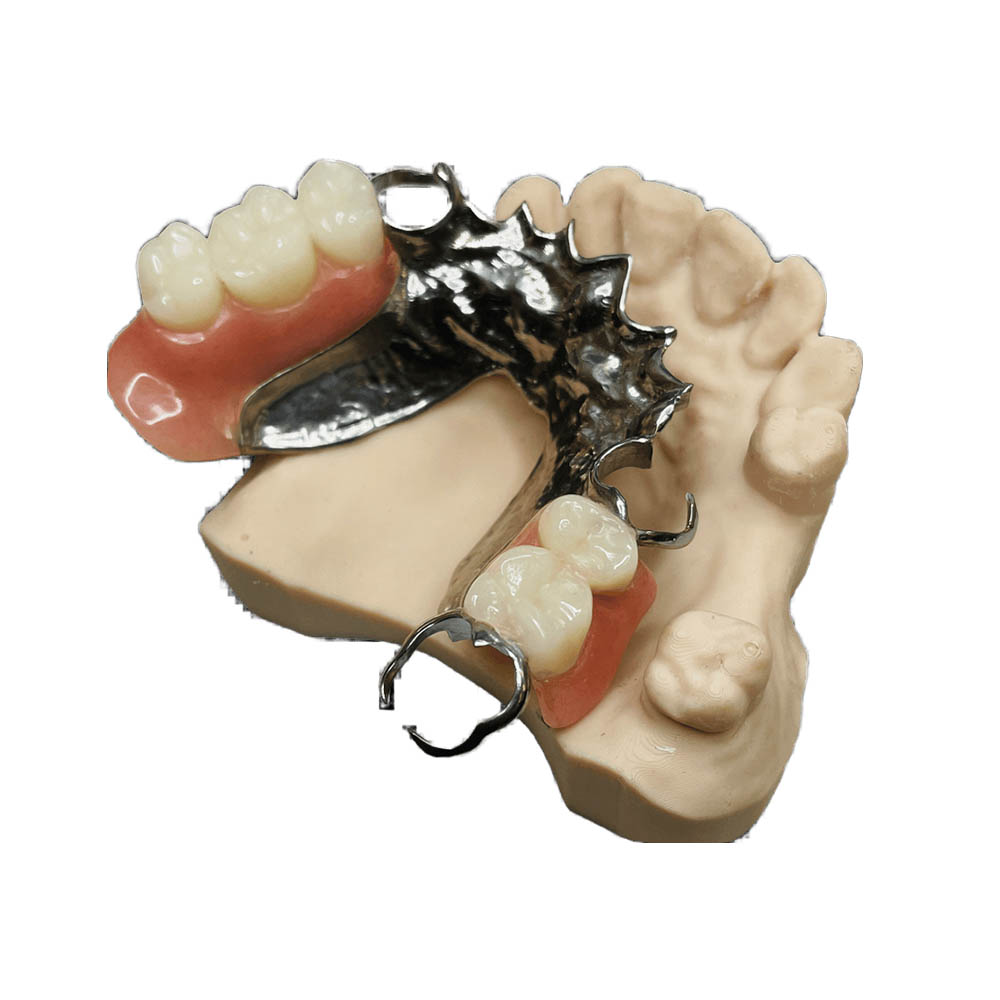
The restoration had to be a one-piece flexible partial made from unilateral Valplast that wrapped around the left quadrant teeth without crossing to the opposite side. That means the whole appliance sits on one side of the arch — there’s no cross-arch bar for stabilization.
That’s a real design trade-off. Unilateral designs may lack the cross-arch stabilization you get when a partial connects both sides, so it has to depend on how well the clasp areas engage the undercuts on the surrounding teeth and how much gum tissue it contacts. There’s no way to fake that stability — if the site doesn’t have enough undercut and tissue support, a unilateral design will rock when she chews.
We measured the available undercut at the abutment teeth and mapped the tissue contact area. Tight enough that we could move forward with the single-side approach. For cases where those measurements don’t check out, the honest call is to recommend a bilateral design or something with a metal framework for bracing.
Material selection: unilateral Valplast (thermoplastic nylon)
The doctor specified thermoplastic nylon for this unilateral design (Valplast) — it’s an injection-molded biocompatible material that flexes under pressure instead of fracturing. Crucially, it’s metal-free, which solved her aesthetic concern about visible clasps.
But that flexibility means the appliance transmits chewing force back to the gum tissue rather than distributing it like a rigid framework would. That’s why thermoplastic partials are tissue-supported, not tooth-supported. When she bites down, the base compresses slightly and the tissue absorbs that load.
How We Met Those Requirements
Digital impression workflow
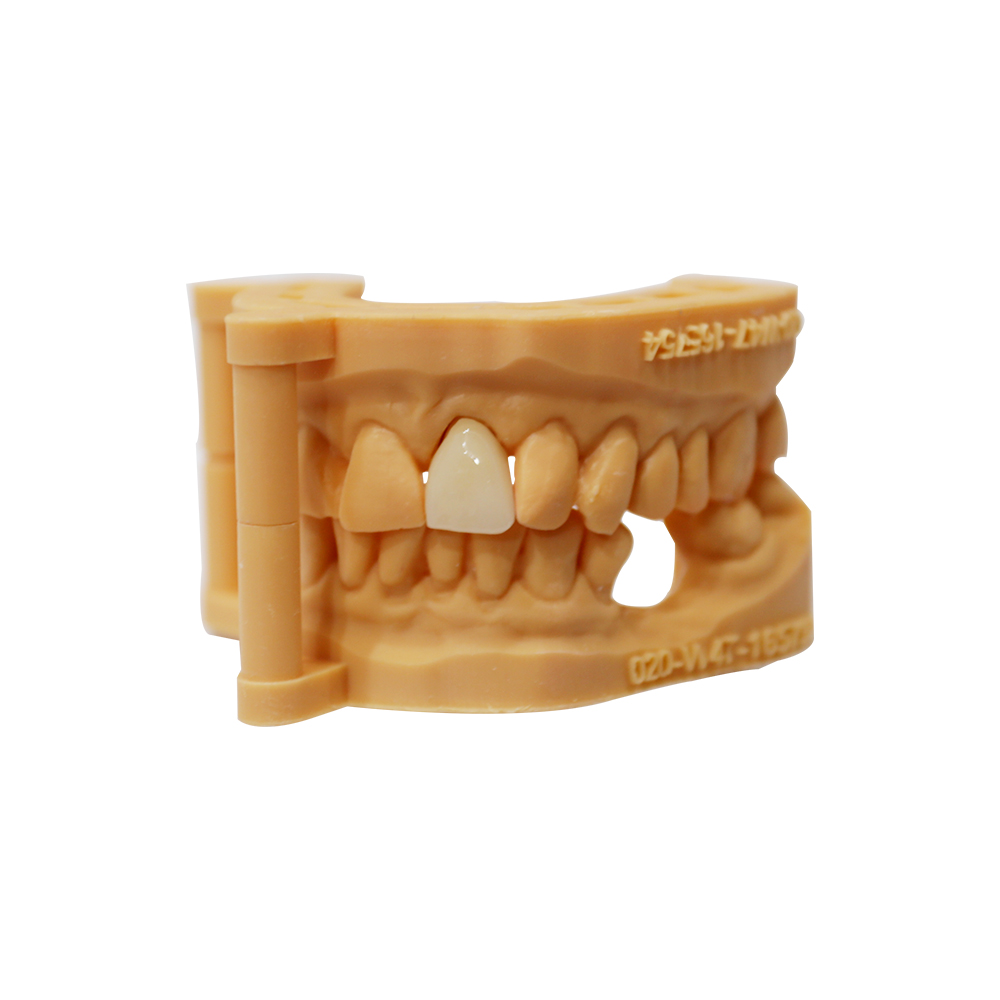
The referring practice sent us a digital scan via our secure portal. We loaded it into our CAD station and checked for complete margin capture and adequate tissue detail in the edentulous ridge. Scan was clean — no need for a re-take.
We designed the restoration digitally first, mapping exactly where the clasp arms would engage the undercuts on the adjacent teeth and how much palatal coverage we’d need for retention. That CAD design went through internal design review before moving to fabrication.
Injection-molded fabrication
Once the design was locked, we injection-molded the Valplast resin using a controlled heat-and-pressure process. The thermoplastic resin gets heated to a specific temperature, then injected into the mold under pressure. After it cools and sets, the unilateral Valplast comes out as a single seamless piece — the clasps, base, and replacement tooth are all part of one monolithic unit.
No soldering joints. No acrylic repair lines. The one-piece construction means there aren’t separate components that could debond later under stress.
Quality control checkpoints
Before shipping, every appliance goes through our internal QC protocol:
- Visual inspection for surface defects, voids, or incomplete margins
- Clasp retention test — the arms have to engage the model undercuts at the specified depth
- Occlusal check against the opposing dentition to ensure no premature contacts
- Tissue-fit verification — the intaglio surface matches the ridge topography with even contact
- Final polish
Manufacturing Notes
Turnaround & capacity
Turnaround depends on case complexity and current workload. For a single unilateral Valplast case like this one — digital scan received, design approved, no revision cycle — our typical ship window is roughly a week to ten days from scan receipt. If the case needs a design revision or comes in during peak season (typically November–January), it allocates from our peak-capacity pool and the timeline shifts accordingly.
We don’t publish a national benchmark for “how long a Valplast case should take,” because the honest answer is that it depends on the lab, the queue, and whether a revision cycle is needed. If you need a committed date for a specific case, ask us for it on that case rather than assuming a standard.
During normal periods we run about 4,000 removable cases per month across all types. Peak season that climbs to around 6,500 cases per month. Our removable denture department has about 55 full-time technicians plus trained backup staff, so we don’t outsource fabrication steps to third-party labs.
Material properties
The thermoplastic nylon we used for this case has a biocompatible composition. It’s designed to withstand oral temperature ranges and moisture exposure without degrading or leaching plasticizers. But it’s not rigid — that flexibility is the whole point. The modulus is lower than acrylic, which means the base will deform slightly under load and then spring back.
That property makes it harder to repair or reline at chairside compared to conventional acrylic. If the fit loosens over time or the patient needs a tooth added later, the appliance typically has to come back to the lab. Some labs can weld new nylon onto the existing base using specialized equipment, but that’s not a chairside procedure.
Final Restoration
The finished appliance seats with even contact along the edentulous ridge. The clasps engage the adjacent teeth at depth we specified, and there’s no rocking when light finger pressure is applied to simulate chewing load. The replacement tooth matches her existing dentition in shade and contour.
Aesthetic result
No visible metal. The nylon clasp arms are tooth-colored and thin enough that they don’t telegraph through in conversational distance. From the front, the appliance reads as natural dentition unless you’re specifically looking for the clasp margins.
Functional fit
She’s able to insert and remove it without tools. The retention is firm enough that it stays seated during normal eating and speaking, but not so tight that removal becomes difficult. That balance is critical — if the clasps grip too hard, patients will avoid removing it for cleaning, and that leads to hygiene problems. If they’re too loose, the appliance shifts during function and causes sore spots.
Patient follow-up
The referring dentist scheduled her for a one-week post-delivery check and a three-month follow-up. At the one-week visit there was a minor sore spot on the lingual tissue where the base edge was a little sharp — we recontoured that area and repolished it. At three months, tissue looked healthy and she reported no discomfort during normal eating.
What This Type of Restoration Can
What it handles well
Single-tooth or short-span edentulous sites where aesthetics matter and the patient has a confirmed metal allergy or strong preference for a metal-free appliance. The flexible base absorbs some of the chewing stress, which can reduce the fracture risk compared to rigid acrylic in cases where the bite forces are concentrated on one or two replacement teeth.
It’s also a reasonable option for patients who want a less visible interim restoration while they’re deciding on an implant or waiting for post-extraction site changes to settle before committing to a definitive plan.
References & Clinical Evidence
- CADTH Rapid Response Report: Thermoplastic vs Conventional Removable Partial Dentures
- PMC 3843478: Flexible denture materials and properties
- PMC 8874059: Clinical performance of thermoplastic vs acrylic partials
- FDA 510(k) Clearance K992956: Valplast
- FDA Guidance: Dental Devices
- CDT Code Reference (ADA)
- Glidewell Clinical Indications: Valplast
- TennCare Clinical Criteria: Removable Partial Dentures