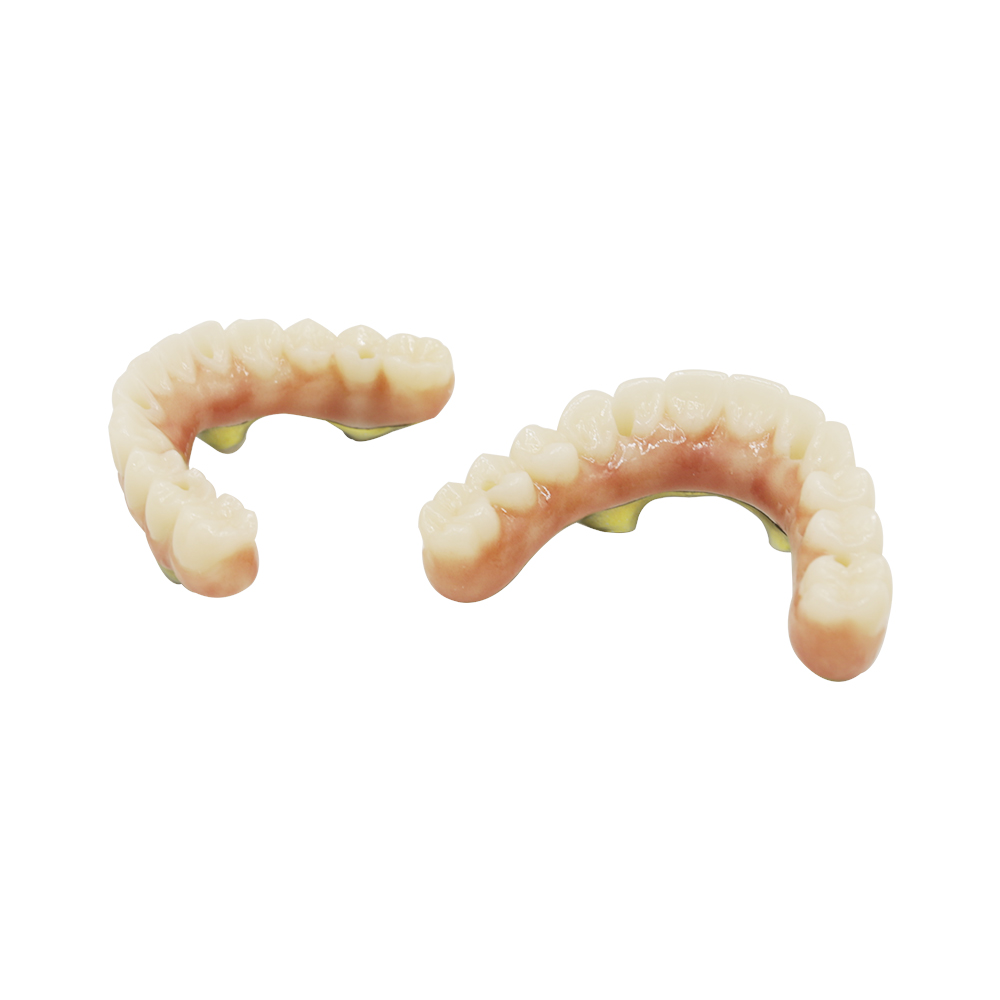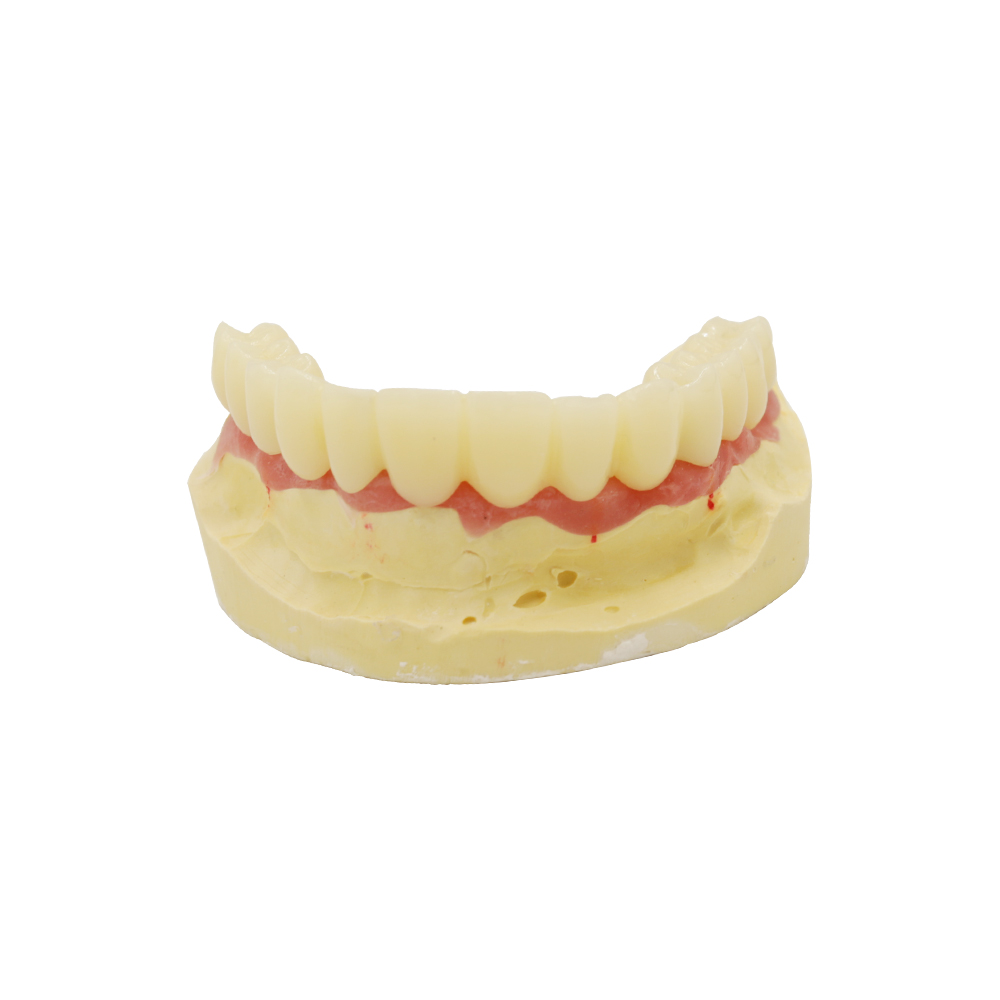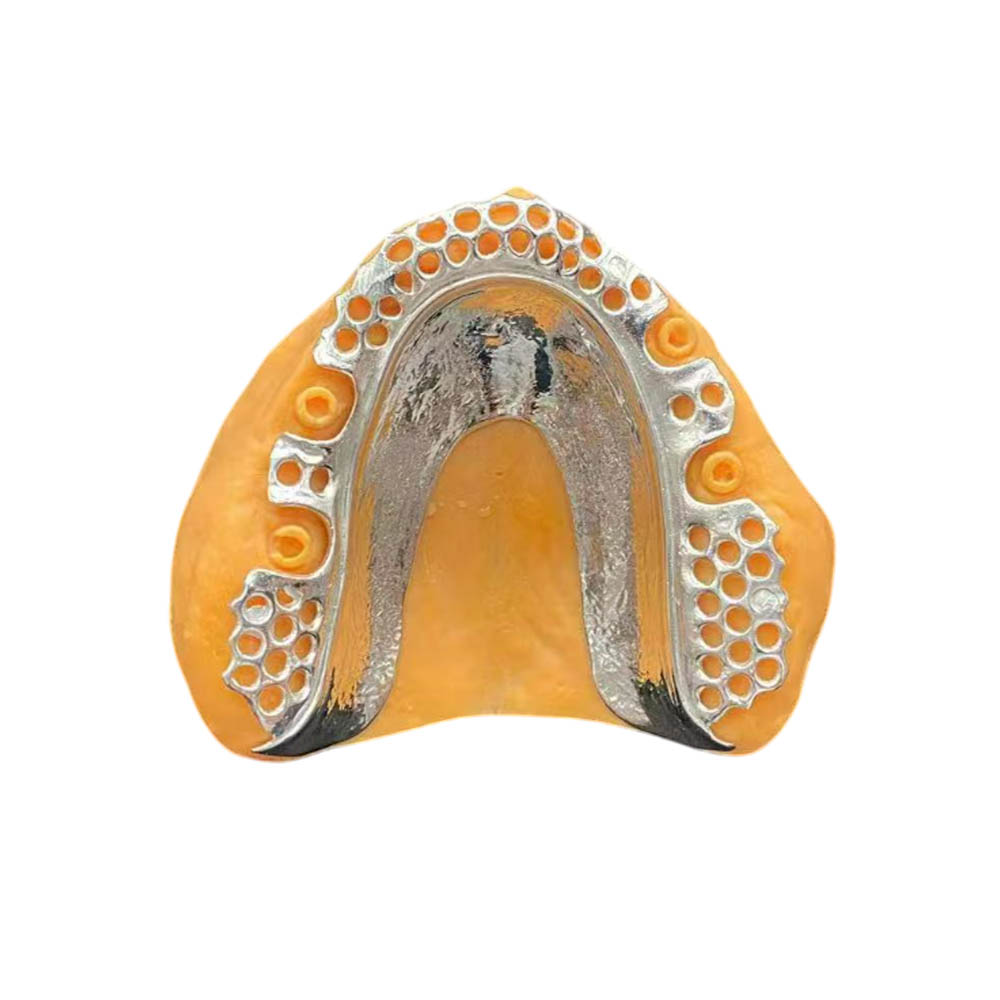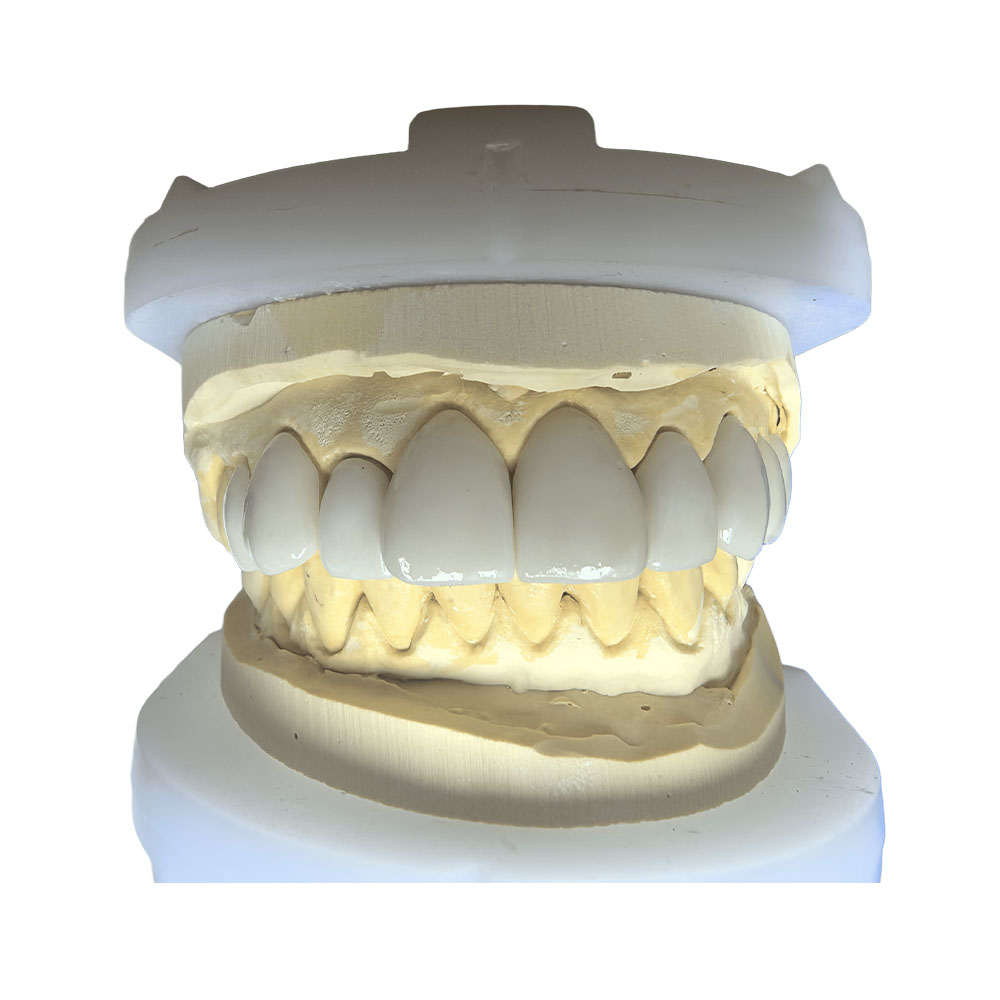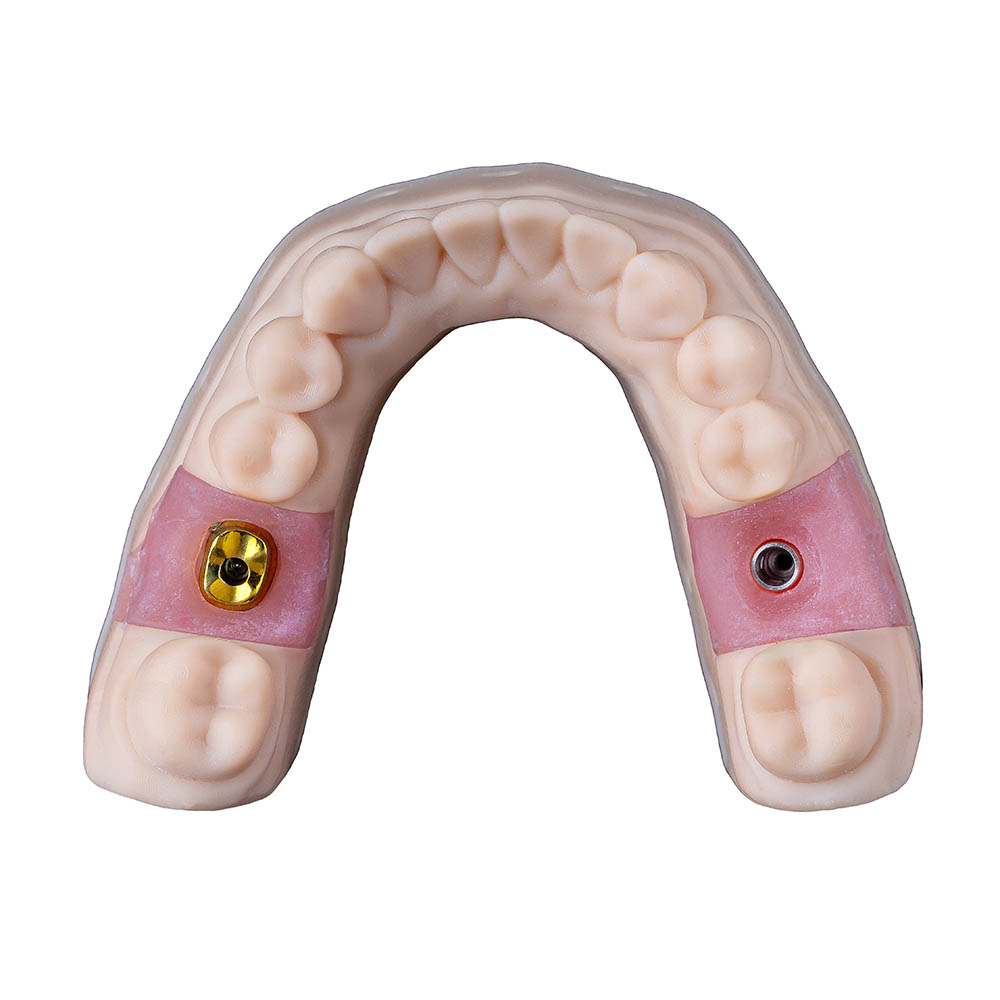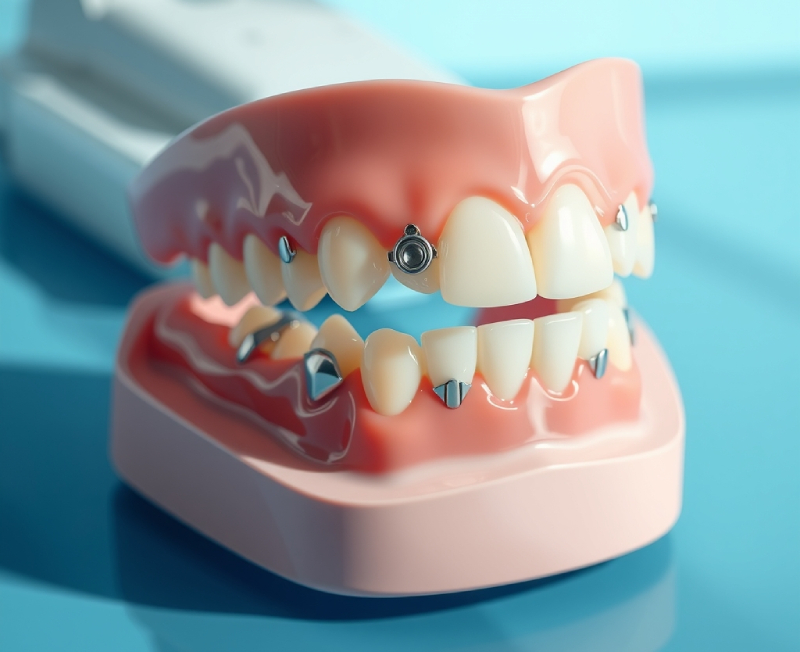
Full Mouth Zirconia Crown: Upper-Arch Case Study
🕢 [ Попълнете формуляра и ние ще ви отговорим в рамките на 30 минути! ]
Patient Situation
A patient in their mid-fifties presented with severe occlusal wear across the entire maxillary arch, generalized decay affecting multiple units, and a history of chronic bruxism. The remaining tooth structure varied significantly — some teeth retained adequate coronal height, while others were worn close to the gingival margin. The available interocclusal space was limited, and the vertical dimension required adjustment to accommodate functional thickness for the restorations.
The patient’s clenching habit had been longstanding, and the wear pattern indicated habitual lateral grinding rather than a simple centric load. The functional occlusion differed from maximum intercuspation, which meant the bite registration had to capture the habitual position accurately to avoid high spots after cementation.
Anterior visibility during speech and smiling was high, so the aesthetic requirement was not secondary. The patient wanted a natural gradient rather than a uniform flat shade, and the final appearance needed to integrate with the facial proportion and existing soft-tissue contour.
Doctor Requirements
The referring clinician specified the following:
| Requirement | Rationale |
| Material: Multi-layer zirconia (3Y-TZP or equivalent, flexural strength ≥900 MPa) | High-strength requirement due to bruxism; multi-layer blank chosen over single-layer monolithic to achieve natural cervical-to-incisal gradient for anterior aesthetics |
| Minimum occlusal thickness 0.8–1.0 mm where space permits; preparation adjusted where insufficient | Limited interocclusal space — thinner restorations would compromise fracture resistance |
| Taper 4–8° per axial wall; shoulder margin, supragingival where possible | Remaining tooth structure varies — steep taper or feather-edge increases seating difficulty and margin vulnerability |
| Bite registration in habitual occlusion, not just maximum intercuspation | Clenching — habitual position differs from centric relation; incorrect bite record produces high spots after cementation |
| Shade: Natural gradient (cervical A3.5, body A3, incisal translucency) | Anterior visibility requirement; posterior units use the same multi-layer blank but with less characterization |
| Full-arch digital scan with ≥30% overlap between segments, continuous single-direction capture, stable anatomical landmarks (cusp tips) as registration references | Accumulated stitching error is the failure mode of full-arch scanning; these steps prevent it |
Submission included:
- Digital scan with verified registration steps (no stitching misalignment)
- Bite registration in habitual occlusion
- Prep design: shoulder margin, supragingival where anatomy permitted, taper within 4–8° range
- Shade guide reference + intraoral photos (natural tooth and shade tab in the same frame; prepared tooth and shade tab in the same frame)
- Contact tightness preference: normal; contact height position mid-third
- Design review requested before milling
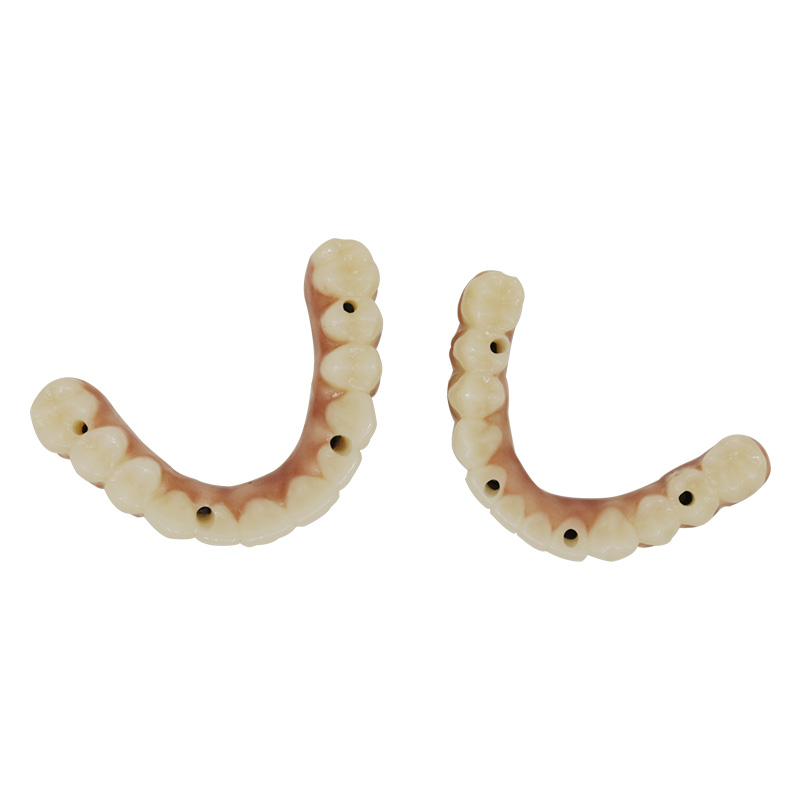
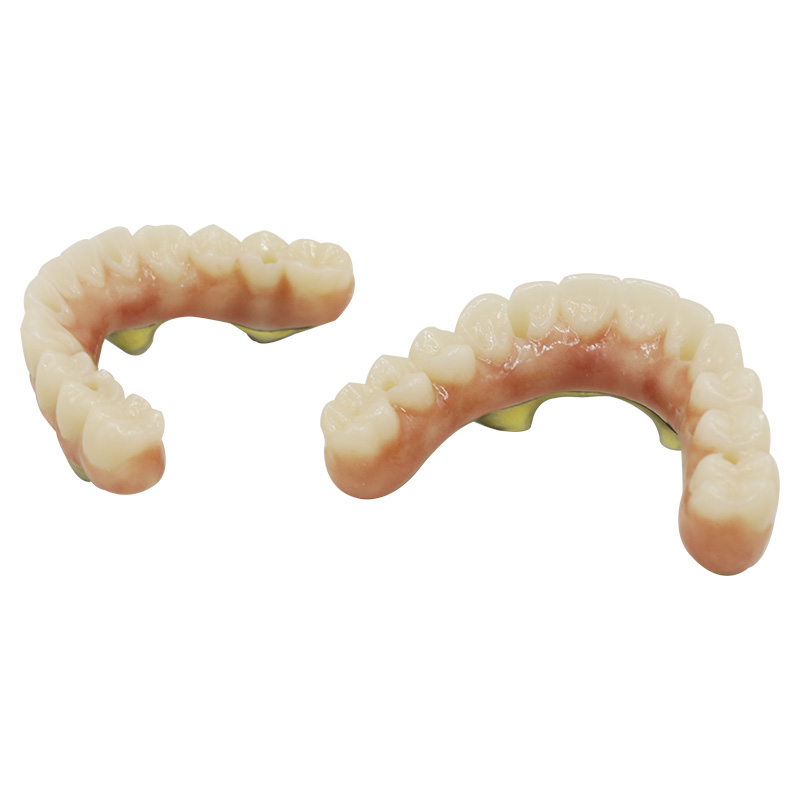
Full-Arch Zirconia Crown Design and Fabrication
The workflow ran entirely in-house. Nothing was subcontracted to another laboratory.
| Стъпка | Какво се случи |
| Intake & design review | Scan data received; CAD designer checked margin clarity, taper, common path of insertion. Margin was identifiable on the mesh — no re-scan required |
| CAD design | Full-arch design; multi-layer zirconia blank selected to match shade target and strength requirement; minimum thickness validated against the design software’s built-in check |
| Design sign-off | Design file sent to the clinician for approval. The clinician requested minor adjustment to the incisal edge position and midline. Revised design confirmed. This step extended the schedule by 1–2 days |
| 3D print & CAM milling | Temporary printed in biocompatible resin; final restorations milled from pre-sintered multi-layer zirconia blank |
| Sintering | Standard sintering program — temperature curve, ramp rate, and hold time locked per material specification. Furnace temperature field verified periodically with a thermocouple; every furnace run’s curve log retained |
| Shrinkage compensation | Compensation value set from the manufacturer’s parameters for that specific blank lot. New material lots go through sample verification before production release |
| Staining & characterization | Cervical depth, body transition, and incisal translucency applied per the shade documentation. Internal masking was not required — the substrate was not discolored |
| Finishing | Occlusal and proximal adjustment, then progressive polishing with zirconia-specific polishing discs. Zirconia is harder than glass ceramic and requires a dedicated sequence to remove the scratches left by adjustment and eliminate the phase-change layer |
| Quality inspection | Full checklist before packing (see Verification section below) |
| Packing & shipment | Foam-lined boxes to prevent impact damage in transit |
Key decision point: The multi-layer zirconia blank provided a built-in gradient (cervical dense, incisal translucent), which eliminated the need for veneered porcelain. This reduced the chipping risk under the patient’s parafunctional load while still delivering a natural-looking anterior result.
On margin design: When the clinician’s margin preparation was not well suited to the material selected, the lab raised it directly in the case coordination chat rather than proceeding and flagging it at delivery. In this case, the margin preparation was appropriate and no revision was needed.
Zirconia Crown Quality Control and Verification
Before packing, each unit was checked against the confirmed design:
| Check | Detail |
| Margin fit | Marginal adaptation verified; no overhang or open margin |
| Internal surface quality | Smooth internal surface; no roughness, no debris |
| Seating & passive fit | Each crown seated fully without rocking; no rotation on any single unit |
| Proximal contacts | Normal tightness as specified; contact height correct (mid-third) |
| Occlusion | Centric, protrusive, and lateral movements checked; no interferences |
| Form & contour | Anatomy, contour, and finish consistent with the confirmed design |
| Цвят | Verified against shade record and the confirmed reference piece under standardized lighting |
| Translucency & fluorescence | Incisal translucency, opalescence, and fluorescence effect checked under standard light |
| Surface texture | Developmental groove form consistent with the specification |
| Symmetry | Midline, form, size, and incisal edge symmetry left vs. right evaluated |
| Surface & polish | Smooth; no rough areas that would retain plaque |
| Integrity | No cracks, porosity, or chipping |
| Design cross-check | Every unit verified against the confirmed design file |
Standard turnaround for conventional crown and bridge work: 2–3 days. Because the clinician requested design review before milling, the schedule extended by 1–2 days.
What “outcome” means in this profile. This case profile describes the fabrication result and the verification standard — the physical characteristics of the restorations at delivery. It does не state survival rates, success percentages, or durability figures. Any such claim would require longitudinal follow-up data tied to specific patients, which a composite profile by definition does not carry. A retrospective series of full-arch zirconia restorations exists in the peer-reviewed literature and is the appropriate source for outcome statistics (PMC12677748).
Post-Try-In Feedback
Patient Feedback
During the try-in appointment, the patient reported the following:
- Удобство: The restorations seated fully without any pressure or binding. The patient did not report discomfort during functional movement or clenching.
- Speech: Phonetics were clear. The patient did not experience difficulty with sibilant sounds or anterior lingual contact during speech.
- Aesthetics: The patient was satisfied with the shade gradient and the natural appearance of the anterior segment. The incisal translucency and surface texture matched the patient’s expectation.
Doctor Feedback
The clinician confirmed the following at try-in:
- Seating: All units seated passively with no rocking or rotation. No interproximal interference was noted during insertion.
- Occlusion: Centric occlusion was verified with articulating paper. Protrusive and lateral excursions showed no interferences. The habitual occlusion matched the bite record used during fabrication.
- Марж: Marginal adaptation was verified with an explorer. No overhang or open margin was detected. The supragingival margins were accessible for cleaning.
- Adaptation: The patient adapted to the restored vertical dimension without difficulty. Facial proportion and lip support were appropriate.
The clinician proceeded with cementation following standard protocols. No adjustment was required at try-in.
Supporting Evidence & Standards
Standards and regulatory context for full-mouth zirconia restorations. Cited as anchor text so the claim and its source sit together.
| Claim | Източник: |
| Zirconia for dental fixed prostheses is covered by an international standard | ISO 6872:2024 — Dentistry, Ceramic materials |
| Custom and non-custom dental restorations are regulated as Class II devices in the US, cleared through 510(k) | FDA — Product Code DEN, Classification Database и 21 CFR 872.6660 — Dental crown and bridge resin |
| Longitudinal performance data for full-arch zirconia restorations | PMC12677748 — retrospective case series, 10 patients, 3-year follow-up |
| Material selection by indication — monolithic vs. layered zirconia | Monolithic vs. layered dental crowns |
| Preparation, material, and bonding considerations for zirconia | Zirconia — preparation and bonding overview |
| Rationale for full-arch zirconia | Why choose full-mouth zirconia crowns |
⚠️ Source quality note. The table above mixes regulatory and peer-reviewed sources with commercial lab and clinic pages. Regulatory and peer-reviewed sources are the appropriate basis for any statement about standards, classification, or performance. Commercial pages are included for material-selection and workflow context. No outcome rate, survival percentage, or durability figure appears on this page — those require longitudinal data tied to identifiable patients, which composite profiles do not carry.
What This Page Is Not
- Not a record of an individual work order. This is a composite profile illustrating case-type requirements.
- Not a source of outcome statistics. No survival rate, success percentage, or durability figure appears here.
- Not a quote or a price list. Pricing is handled case by case through the case coordination team.
- Not a substitute for design review. Every full-arch case is a design exercise, and design review before production is available on request.
Отказ от отговорност: This case profile is a composite illustration for educational purposes only and does not represent any individual patient or work order record. The clinical details, material selections, and outcome patterns are drawn from documented case types handled across the dental laboratory sector and are presented to clarify what this case type requires from the fabricating laboratory.